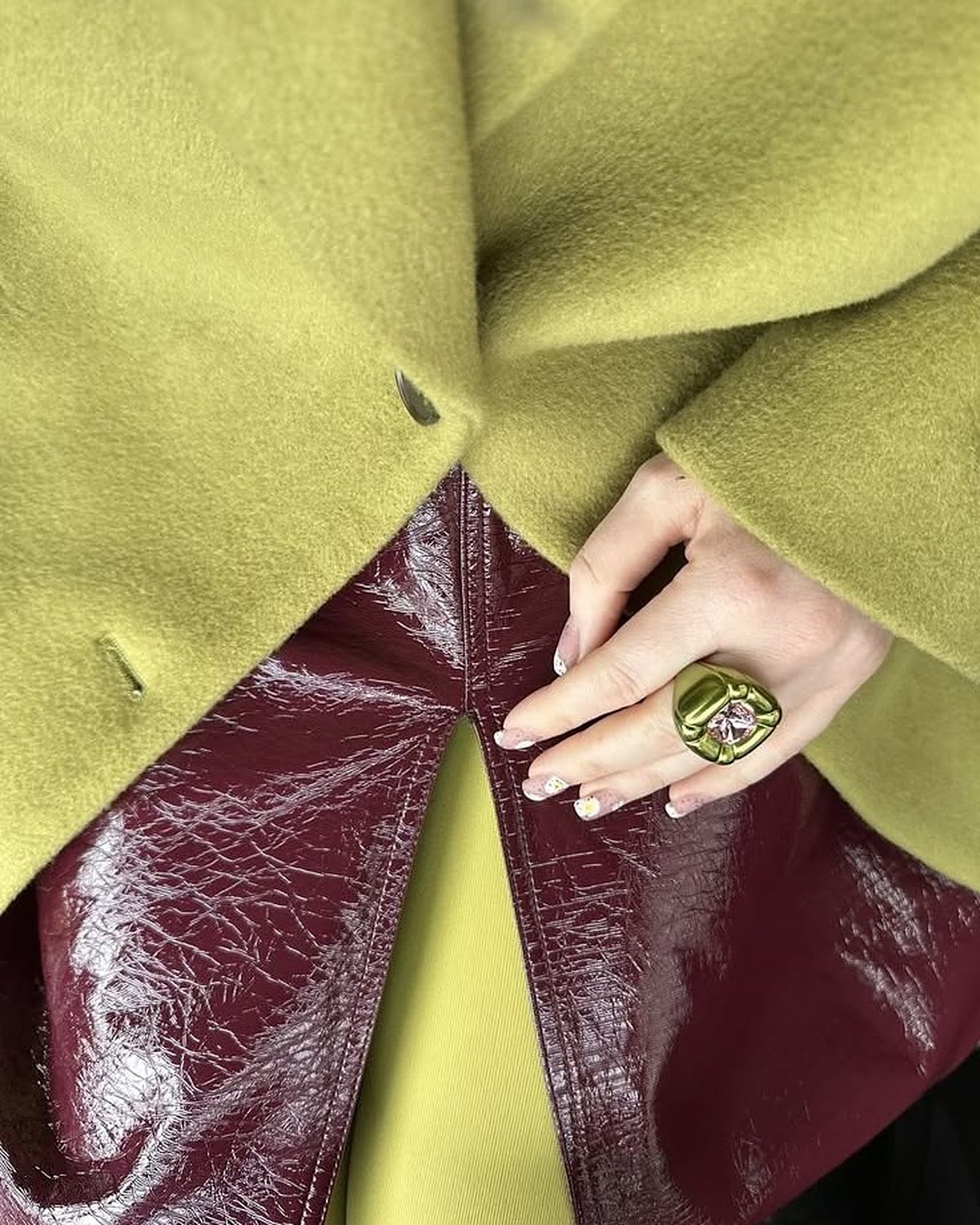
Deirdre Quinn started Lafayette 148 in 1996 with clothing manufacturers Shun Yen Siu and Ida Siu, naming the label after the SoHo address where the three of them began with, as Quinn has told it, a desk and a phone in the middle of a garment factory. The brand built its own production facility in Shantou, China, making it one of the few fashion houses that is genuinely vertically integrated from design through manufacturing.
Lafayette 148

Tops and shirting
Lafayette 148 was built by people who came out of the manufacturing side of the industry, not the runway side, and that shows up as a preference for construction that holds up over one that just photographs well. This grid is where that shows most plainly, in shirting meant to fit an actual working wardrobe. It is not trying to be a trend piece.

Silk Charmeuse Shirt
Lafayette 148
$798

Organic Cotton Poplin Popover Wrap Shirt
Lafayette 148
$798

Oversized Leather Cropped Shirt
Lafayette 148
$2,698

Long Sleeve Convertible Blouse
Lafayette 148
$798

Stretch-Cotton Tank
Lafayette 148
$398

Long Sleeve Convertible Blouse
Lafayette 148
$998

Noir Satin Top
Lafayette 148
$598

Cotton-Silk Peplum Blouse
Lafayette 148
$998
Jackets and blazers
Tailoring is arguably the category the brand is best known for, a direct line back to Quinn's years in production at Donna Karan and Liz Claiborne before she started her own house. The jackets here lean into that discipline: clean lines, fabrication chosen for how it moves rather than how it photographs on a hanger. It is a category built on craft, not on a single season's silhouette.


Knitwear
The brand's own vertical setup, owning its production rather than outsourcing it season to season, tends to matter most in knitwear, where fit and finish are the hardest things to fake. What is collected here reflects three decades of that same production discipline. It is quietly the most technical part of the assortment.


Skirts
Lafayette 148 has always positioned itself as clothing for women's actual, moving lives rather than a fantasy of one, and skirts are a fair test of that claim: fabrics with give, shapes that do not fight the body. This stretch of the edit reads as an argument for that same practicality. It is unglamorous language for what is, in practice, careful design.


Trousers and shorts
Trousers are one of the clearest expressions of the brand's SoHo-manufacturing roots, built by people who understood fit from the production floor rather than the sketchbook. The pieces gathered here favor exact tailoring over decoration. It is a category where the brand's three decades of vertical production experience are hardest to fake.


More from the collection
This last stretch rounds out the edit with the pieces that do not fit neatly into one category but still carry the same instinct: clean construction from a brand still run day to day by the women who founded it. Lafayette 148 has grown from two employees to a company with its own China-based factory without losing that founder-led feel. It closes the assortment on the brand's actual thesis rather than a single trend.

Leather-Trimmed Linen-Blend Jacket
Lafayette 148
$1,698

New York Slim Single-Button Blazer
Lafayette 148
$399.19

New York V-Neck Merino Wool Knit Sweater
Lafayette 148
$319.19

New York Drop-Shoulder Merino Wool Knit Sweater
Lafayette 148
$279.19

Cotton-Silk Maxi Skirt
Lafayette 148
$1,498

New York High-Waisted Nappa Leather Mini Skirt
Lafayette 148
$599.19

New York Gramercy Acclaimed-Stretch Pants
Lafayette 148
$698

Cotton Corduroy Quilted Car Coat
Lafayette 148
$1,498

Belted Cashmere A-Line Coat
Lafayette 148
$4,998

Cotton Coat
Lafayette 148
$1,298

L148 Denim Wyckoff Wide-Leg Jeans
Lafayette 148
$398

Kent Barrel Leg Jeans
Lafayette 148
$598

L148 Denim Wyckoff Wide Leg Jean
Lafayette 148
$398

Embroidered Cotton Shirt Dress
Lafayette 148
$1,498

New York Puff-Sleeve Organic Cotton Poplin Midi Dress
Lafayette 148
$1,298

New York Pleated Stretch Wool Midi Shirtdress
Lafayette 148
$1,498
Our honest take
Our honest take is that Lafayette 148's real differentiator is not any single silhouette but the fact that it still owns its own production, which is unusual for a brand at this scale and tends to show up as fit that holds up over repeated wear. It is not a label chasing runway headlines, which can make it feel quieter than peers with more marketing noise. That quietness is arguably the whole point, and it rewards buyers who prioritize construction over conversation.