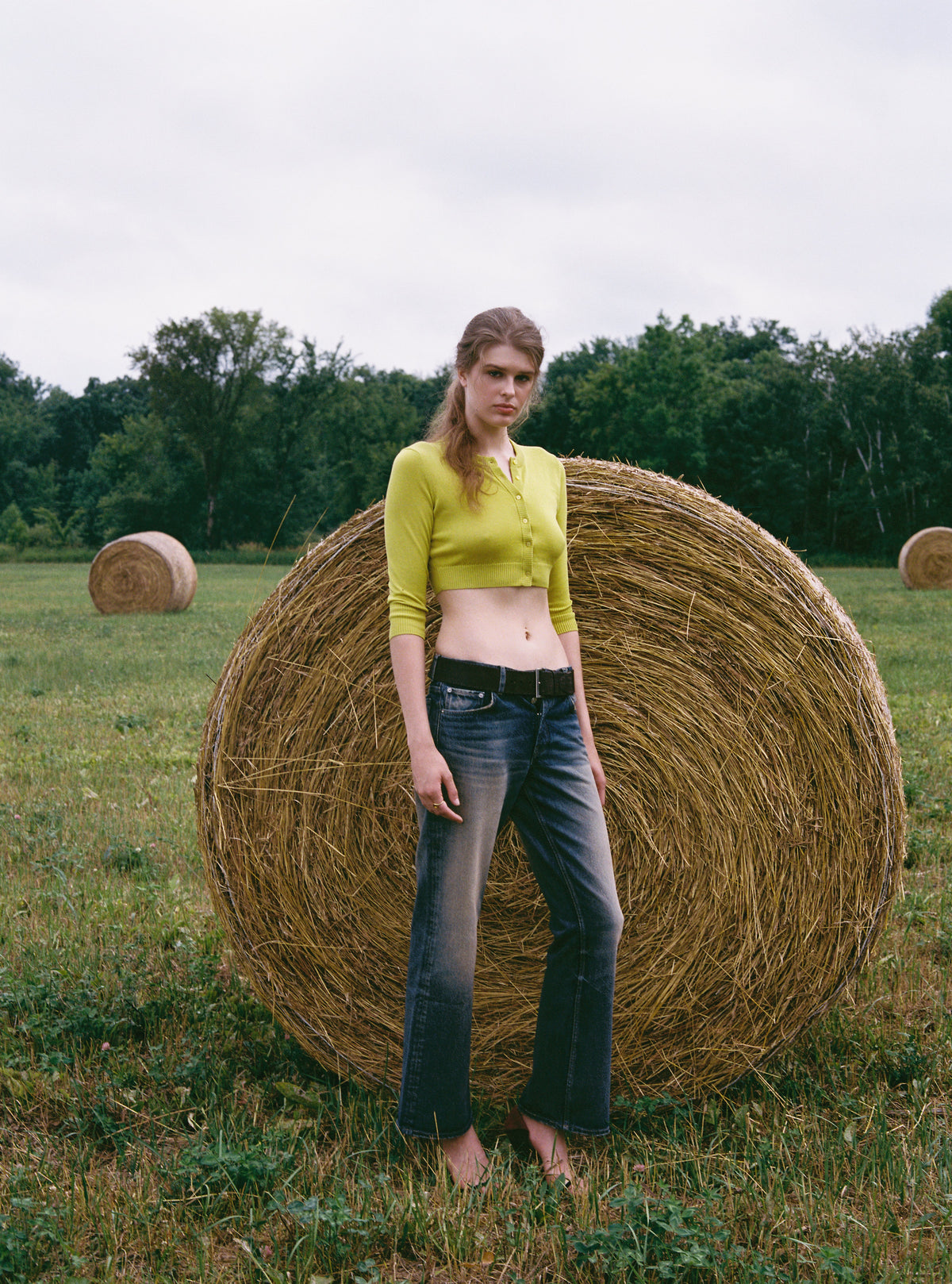
Maria McManus spent two decades as a merchandiser at Edun, Polo Ralph Lauren and Rag and Bone before starting her own New York label in 2020 on recycled and organic fibers. This edit looks at the wide-leg pants, jeans and fabric-first tops that carry that restraint through the whole range.
Maria McManus

Restraint Learned From The Inside
Maria McManus spent more than twenty years inside the fashion industry as a merchandiser, at Edun, Polo Ralph Lauren and Rag and Bone, before she started her own label in New York in 2020. That background explains why the clothes read as edited rather than minimal for its own sake. The brand sources recycled and organic fibers from Europe and Japan and says plainly that the goal is to use less water, fewer chemicals and less waste, not just to say so.
The Crescent wide-leg jeans show that discipline in a familiar shape, a five-pocket cut given a fuller leg so the fabric itself carries the look. The Balloon Drawstring habotai wide-leg pants push further, trading structure for drape while keeping the same quiet attitude. I would look at the cut and the finish before calling any of it simple, because the restraint only works when those choices are deliberate.

Balloon Drawstring habotai wide-leg pants
Maria McManus
$690

Crescent wide-leg jeans
Maria McManus
$690

Crescent corduroy organic-cotton wide-leg pants
Maria McManus
$690

Crescent boyfriend jeans
Maria McManus
$690

Organic cotton-poplin wide-leg pants
Maria McManus
$490

Cotton-blend straight-leg high-waist pants
Maria McManus
$690

+ Maria McManus Corset Wide Leg belted pintucked high-rise jeans
Maria McManus
$450

+ Maria McManus Trouser Wide Leg mid-rise jeans
Maria McManus
$450
Fiber Is The Whole Idea
A top in this range rarely has a print or a flourish to hide behind. The Draped satin cami depends entirely on how the fabric falls, which is harder to get right than it looks. The Cashmere and cotton-blend polo shirt takes a familiar shape and only changes the material, proof that a fiber swap can carry an entire design. McManus's recycled cashmere is certified to the Global Recycled Standard, and her organic cotton meets the Global Organic Textile Standard, so the sourcing behind a piece like the Striped organic cotton shirt is not just a claim on a hangtag.
I would judge everything here by how the fabric drapes and moves, since with almost no decoration, that is the only thing left to judge.

Draped satin cami
Maria McManus
$490

Scarf-detailed satin blouse
Maria McManus
$590

Striped habotai blouse
Maria McManus
$590

Organic cotton-poplin shirt
Maria McManus
$450

Striped organic cotton shirt
Maria McManus
$450

Cashmere and cotton-blend polo shirt
Maria McManus
$590

Striped frayed cashmere and cotton-blend cardigan
Maria McManus
$690

Cashmere and cotton-blend crocheted polo shirt
Maria McManus
$690

+ Maria McManus oversized organic denim shirt
Maria McManus
$490

+ Maria McManus paneled organic cotton camisole
Maria McManus
$500

+ Maria McManus organic and recycled-denim bandeau top
Maria McManus
$230

+ Maria McManus oversized organic cotton-poplin shirt
Maria McManus
$460
Get Close To The Cloth
Maria McManus is not a label that rewards a quick glance, and that seems to be the point. The pants and jeans share a wide, fuller leg that depends on the fabric to look intentional rather than sloppy, while the tops trade almost all decoration for fiber and drape. Cashmere, habotai and organic cotton show up again and again here, which tells you where the actual attention goes. I would not shop this expecting one loud statement piece, because there is not really one to find. Instead I would buy whichever piece has the best hand, the fabric that feels different the moment you touch it, since that is what the whole idea rests on. Judge these clothes by touch and drape before silhouette. A quiet wardrobe still needs that kind of scrutiny to earn its calm.