PanOxyl pimple patches are clear hydrocolloid stickers made to cover a spot and help keep your hands off it. This edit covers the patches and the washes from the brand, its other blemish-care picks, and pimple patches from other labels.
PanOxyl Pimple Patches and the Art of Leaving a Spot Alone

Most pimple advice comes down to one thing: do not pick. A patch is the physical version of that advice, and it is why I keep a sheet in my drawer. PanOxyl launched its PM Overnight Spot Patches on October 5, 2020, and the company behind the brand already had a well-known benzoyl peroxide wash, which it describes as the number one in the United States. So panoxyl pimple patches came from a name people knew for a different job entirely.
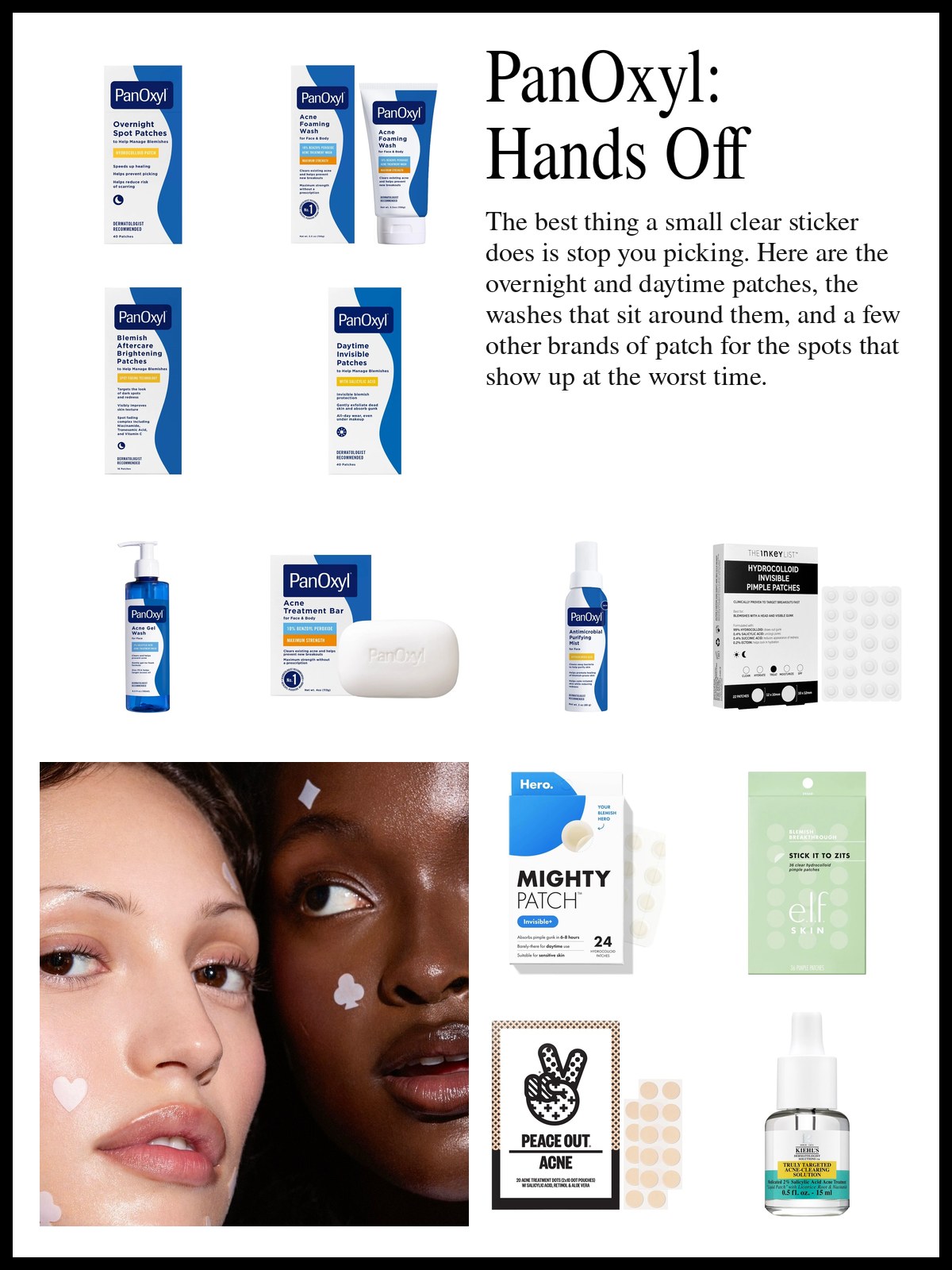
Each box holds 40 clear hydrocolloid patches in two sizes, 9mm and 12mm, which is useful, because a small one suits a single spot and the larger one covers a stubborn one. PanOxyl describes them as vegan and latex-free. The PM Overnight Spot Pimple Patches are what I stick on before bed, over a clean, dry spot, and peel away in the morning.
There are two more patch styles in this grid. The PM Acne Blemish Aftercare Brightening Patches are made for the days after a spot, when the mark is what is left. The Daytime Invisible Blemish Patches with Salicylic Acid are thin enough to wear under makeup, which is the whole appeal. Beside them sits the 10% Benzoyl Peroxide Acne Foaming Wash, the brand's best-known product. Benzoyl peroxide can dry skin and bleach towels, so wash, rinse well and use a white towel.
A patch does not do anything clever. It covers a spot and helps keep hands off it. That is the whole job.


The washes and the mist
If the patches are for a single spot, the rest of the brand is the everyday routine around them. I would go slowly through this part, because these are active products, and more is not better.
The Acne Gel Wash for Face with 2% Salicylic Acid is made for pimple-prone skin, and it is the one to look at if you would rather start with salicylic acid than benzoyl peroxide. The Acne Treatment Bar with 10% Benzoyl Peroxide is a bar you lather up and rinse off. Follow the directions on the pack, rinse well, and start with a couple of days a week.
The hypochlorous acid purifying mist is the odd one out, a mist rather than a wash, and the one I would keep in a gym bag for days you cannot get to a sink.
I would not use the wash and the bar on the same day, since one active at a time is easier to read. Pair any wash with a plain, fragrance-free moisturizer and a sunscreen. Those two steps keep the drying effect in check. If your face starts to feel tight, peel or sting, cut back to every other day, and check in with a dermatologist if your breakouts persist for weeks. That is not something a bathroom shelf can sort out alone.


Patches from other makers
Other brands make patches too, and each has its own habits. I have learned to keep two kinds in the house: a very thin invisible one for daytime, and a slightly thicker one for the night.
Hero Cosmetics' Mighty Patch Invisible is the invisible daytime option, thin and clear by name. e.l.f. SKIN's Stick It to Zits Pimple Patches are the pimple patches from a brand better known for makeup and skincare basics. Peace Out's Salicylic Acid & Hydrocolloid Pimple Patches combine the sticker with salicylic acid. The INKEY List's Hydrocolloid Invisible Pimple Patches + Salicylic Acid are close in spirit, an invisible patch with salicylic acid. CeraVe's Acne Control Patches sit alongside them, made for blemishes on days you want something quiet.
Kiehl's Truly Targeted liquid pimple patch is a different format altogether. It is a liquid with salicylic acid, so it suits the spots where a sticker will not stay on, like the side of your nose.
What I would skip: putting a patch over a spot that is open, sore or infected-looking, and putting one over moisturizer or oil, which stops it sticking. Do not layer several in one place. A patch works best on a clean, dry, closed spot, and it will tell you when it has done its job: it turns white and puffy.
Pimple patches from other brands

Hero Mighty Patch Invisible
Hero Cosmetics
$10.99

SKIN Blemish Breakthrough Stick It to Zits Pimple Patches
e.l.f.
$8

Salicylic Acid & Hydrocolloid Acne Treatment Pimple Patches
Peace Out
$19

Truly Targeted Acne-Clearing Liquid Pimple Patch with Salicylic Acid
Kiehl's
$30

Hydrocolloid Invisible Pimple Patches + Salicylic Acid
The INKEY List
$10

Acne Control Patches
CeraVe
$7.39

Hydro-Star Pimple Patches
Starface
$11

Hydro-Star + Salicylic Acid Patches
Starface
$13
Putting one on, properly
Here is my routine, and it is short. Wash gently, pat dry, put a patch on the spot, press the edges down for a few seconds, and leave it for the night or for several hours. When it turns white, take it off and moisturize.
Patches will not make a spot vanish overnight, and they are not for a whole face of breakouts. They are for a single spot you would otherwise pick. Persistent or painful breakouts deserve a conversation with a dermatologist, and so does anything that scars. Until then, be kind to your skin, keep your hands off, and keep a sheet within reach. I also change my pillowcase more often when I am breaking out, and I remove makeup properly before bed, since a patch will not stick well on top of a day of foundation. Small habits like those quietly matter more than any single product, and you can start tonight. Keep a patch sheet by the bed, so that the decision is made before you are tempted in the bathroom mirror, and leave the spot alone until morning.