Pore strips have been a bathroom-cabinet habit since 1997, and they do one narrow thing: lift the top of what sits in a pore. This edit covers the Bioré originals, the strips and patches from other brands, and the toners and clay masks I use afterwards.
Pore Strips, Honestly: What They Lift, What They Leave
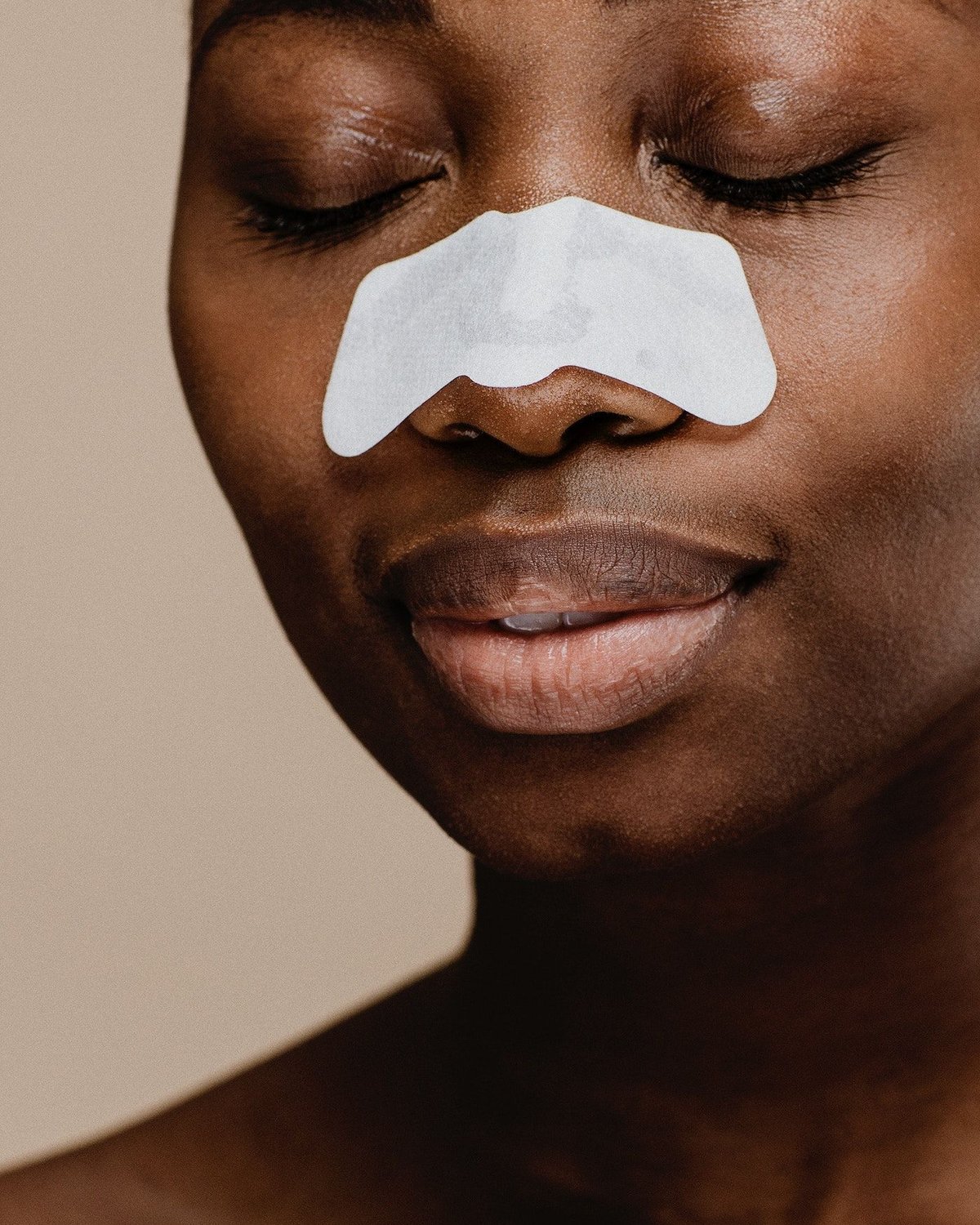
Kao launched Bioré in the United States in 1997, and its Pore Deep Cleansing Nose Strip arrived the very same year. Kao itself goes back much further, to 1887, when it started as a small face-care company with a soap whose name is pronounced like the Japanese word for face. I like that detail, because it explains why Bioré still leans on its Japanese skincare heritage. If you grew up peeling one of these off in a bathroom mirror, pore strips were probably Bioré.
The mechanism is simple. Bioré says its strips use a water-activated positive charge, called C-Bond, to attach to the plugs sitting in your pores. You wet your nose, press the strip on, wait, and peel. What you see on the strip is the top of what was sitting there.
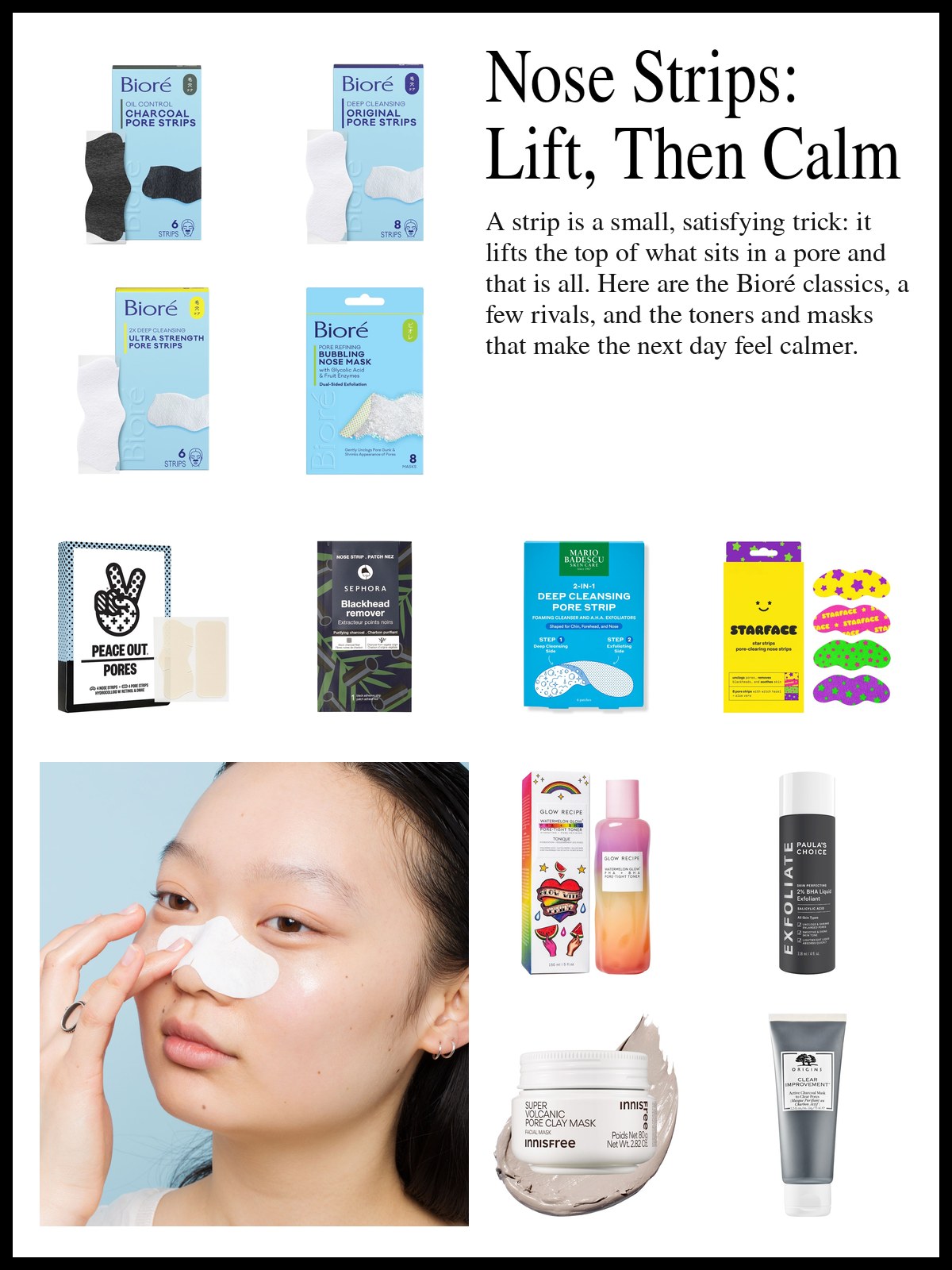
Grid one is all Bioré. The Original is the one everybody recognizes. The Charcoal version is the same idea with a darker, more dramatic look on the pad. The Witch Hazel Ultra is the one I would try first if I had a sensitive-feeling nose, since witch hazel has a tidy, toner-like reputation. And the Pore Minimizing Bubbling Mask Nose Strips are the odd one out, a mask you wear that fizzes a little on your skin, more of a ten-minute treat than a peel.
Keep in mind what they do and do not do. Bioré's own explainer notes that a strip can take the top layer of skin off along with the debris, so this is a once in a while thing.


Other brands, other shapes
Not every nose is the same, and the same goes for strips. There are a few other brands here, and each has its own angle.
Peace Out's Oil-Absorbing Blackhead Strips are the ones for a shiny nose, a strip that also takes care of excess oil at the surface. The Purifying Charcoal Nose Strip from the beauty shop's own label is the no-fuss charcoal option, and I like it for the very plain packaging and the very plain job. Mario Badescu's 2-in-1 Deep Cleansing Pore Strip is an older-style product from a brand known for its spa-style skincare, and it is a solid pick for anyone who wants a traditional strip.
Starface's Star Strips are the fun ones, in the shape of little stars, and they have clear directions: use them on the nose only, once a week, for about fifteen minutes. That is useful guidance for any strip, honestly. Once a week is plenty. up&up's Deep Cleansing strips are the straightforward, everyday version of the original idea, and the one to buy if you just want to try the habit without fuss.
The little test for a good application: wet skin, a flat strip with no air bubbles, and a slow, steady peel in the direction of the skin. A fast rip is how skin ends up red and cross.


What to do once the strip is off
What you do after a strip matters more than the strip itself. The surface is freshly cleared and a bit more exposed, so the next step should be calming and simple.
Paula's Choice's Skin Perfecting 2% BHA Liquid Exfoliant is the benchmark BHA, made for oily or congested-feeling skin. The American Academy of Dermatology notes that salicylic acid works best on whiteheads and blackheads because it unclogs pores and exfoliates, which is why a BHA makes sense after a strip. Farmacy's Deep Sweep 2% BHA Pore Cleaning Toner is a toner version of the same idea, and Glow Recipe's Watermelon Glow PHA + BHA Pore-Tight Toner is a gentler, juicier one for people who find strong acids harsh.
Then there are the clay masks. innisfree's Super Volcanic Pore Clay Mask uses volcanic clay and feels cooling as it dries. Origins' Clear Improvement Active Charcoal Mask is the classic charcoal one. Use either once a week, and always rinse before the clay fully cracks.
One important note: acids can make your skin more sensitive to the sun, so wear sunscreen the next morning, every time.
What I would skip: squeezing or strip after strip on the same spot. The AAD advises never to pick, pop, scratch or squeeze, because it raises the risk of inflammation, infection and scarring. One strip, then leave it alone. I would also skip an acid and a clay mask on the same night.


How I fit a strip into a week
My routine is small. A strip once a week, maybe less, on a clean, damp nose. A BHA a couple of nights a week, never the same night as a strip. A clay mask on a quiet Sunday. Sunscreen every morning, without exception.
The satisfaction of a strip is real, but it is not a long-term plan. It lifts the top of what sits in a pore, and then life carries on. Your skin will keep producing oil, because that is what skin does. If you want steadier results, a toner and a mask do more over time than another strip.
If your skin is irritated, breaking out or hurting, put everything down and ask a dermatologist. Something persistent deserves a proper look, not another round of peeling. Keep it gentle and keep it occasional, and these little strips stay a pleasant ritual instead of a problem.