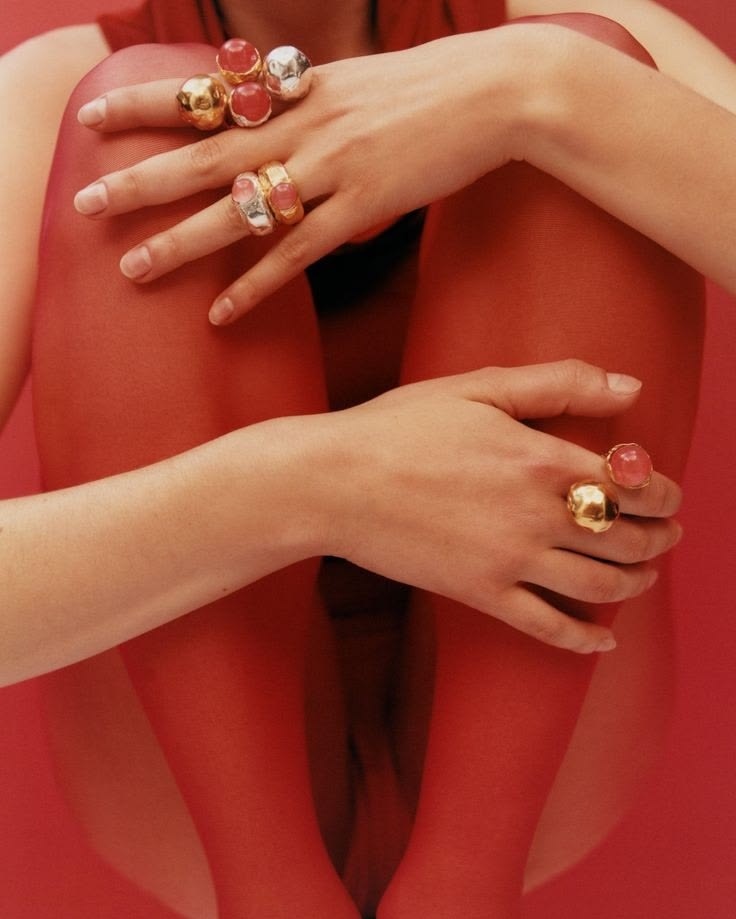
A hallmark tells you what a piece is actually made of. How to read the numbers, what the letters mean, and where the mark should be.
Reading a Hallmark on Gold
The numbers are the part that matters
On gold you will see one of two systems. Karat, written as a number followed by K, describes parts of gold out of twenty four, so 18K is eighteen parts gold and six parts other metal, and 14K is fourteen parts out of twenty four. Or you will see a three digit number, which is parts per thousand of the same thing. 750 is 18 karat. 585 is 14 karat. 375 is 9 karat. 417 is 10 karat. Those five numbers cover most of what you will encounter. On silver, 925 means sterling, which is ninety two and a half percent silver. Anything without a number is the thing to be careful about. Gold plated, gold filled and vermeil are all real descriptions of real products and none of them is solid gold, and the giveaway is usually the absence of a karat mark or the presence of letters such as GP, GF or RGP. A mark reading 14K GF is gold filled, not 14 karat.
Hallmarked gold

14K Stacked Baguette Diamond Huggie Earrings
Jenny Bird
$1,295

14K Princess Cut Diamond Drop Earrings
Jenny Bird
$995

14K Stacked Baguette Diamond Stud Earrings
Jenny Bird
$995

14K Princess Cut Double Diamond Drop Earrings
Jenny Bird
$950

Aurate x Marilyn Monroe: Gold Knot Pearl Necklace
Aurate New York
$788

Gold Station Letter Necklace
Aurate New York
$578

Aurate x Marilyn Monroe: Gold Knot Pearl Bracelet
Aurate New York
$348

Aurate x Marilyn Monroe: Gold Knot Pearl Drop Earrings
Aurate New York
$268
Where to look, and what the other marks are
On a ring the mark sits inside the band, usually at the bottom. On a chain it is on the clasp or on a small tag beside it. On earrings it is on the post or on the back of the setting. If a piece has no mark anywhere, that is not proof it is not gold, since marks wear away and some markets never required them, but it does mean you are relying on the seller. Alongside the number you may find a maker's mark, which is a small symbol or set of initials identifying who made the piece, and in some countries an assay office mark and a date letter, which together can date a piece to a specific year. Those are the marks that make British and other European pieces datable. You may also see stamps that are not about metal at all, such as a design registration or a stone weight. If you want certainty about metal content, an acid test or an electronic tester at any jeweller settles it in minutes.


Our honest take
Learn the five numbers and you have most of what you need. 750, 585, 417, 375 and 925 will cover almost every piece you pick up, and the absence of any of them is the single most useful signal in the secondhand market. Be suspicious of letters attached to a karat mark rather than reassured by them, because GF and GP are doing the opposite of what a casual reader assumes. Do not scrub a hallmark to read it, and do not let anyone polish a piece you are trying to identify, since polishing is how marks are lost. If a piece matters, pay for a test rather than trusting a stamp, because stamps can be applied dishonestly and a tester cannot be argued with. If you take one thing away, look for a number rather than the word gold, because the number is the claim and the word is not.
Shop brands in this edit



Next read
Secondhand Louis Vuitton Damier Ebene Or Damier Azur
Damier Ebene and Damier Azur are the same coated canvas in two colourways, and the secondhand market treats them as two different products.
Read Editorial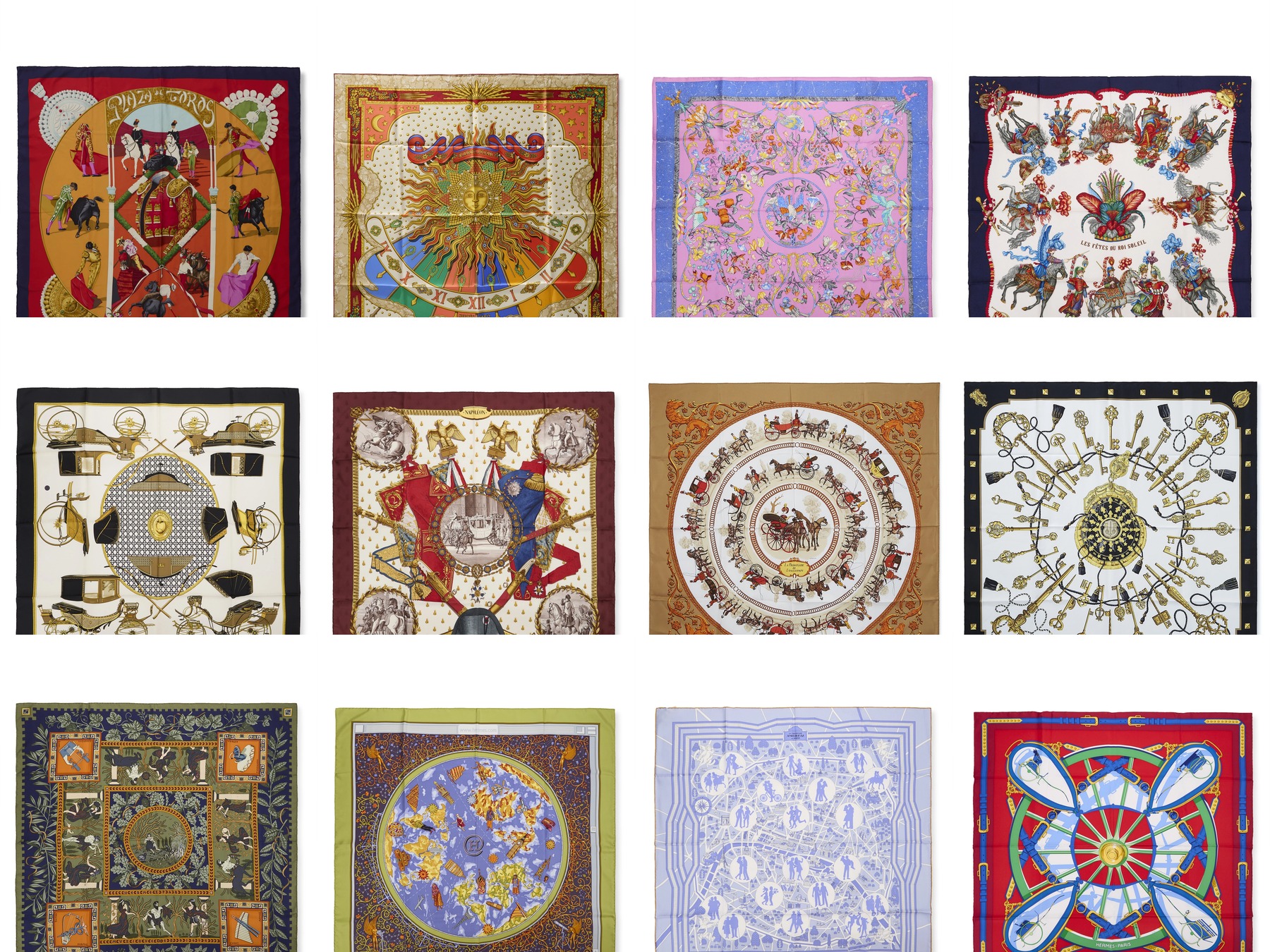
Secondhand Silk My Favs
My sixteen selects of scarves below are all ninety centimetre squares, split into two price bands