Rectangle engagement ring shapes, settings, and styling ideas, from emerald to radiant and elongated cushion cuts. I would compare the silhouette and side profile before picking the setting that feels right on my hand.
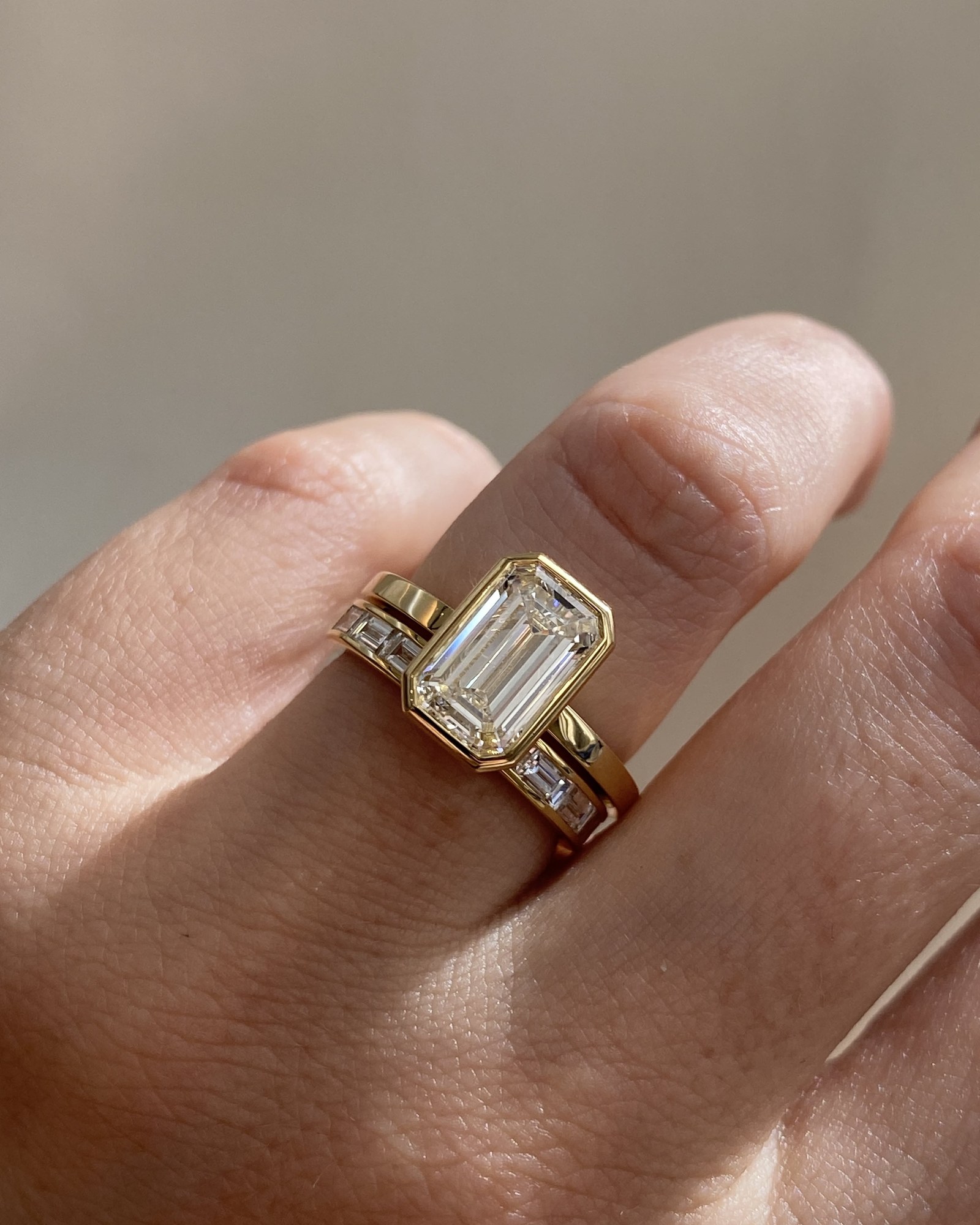
Rectangle Engagement Ring: Emerald, Radiant and Elongated Cushion Cuts, Compared
A rectangle with a past
In Boston, on May 15, 2003, the John F. Kennedy Library and Museum opened an exhibit for the 50th anniversary of Jacqueline Bouvier and John F. Kennedy’s 1953 wedding. Her engagement ring paired a 2.88-carat diamond with a 2.84-carat emerald-cut emerald and tapered baguettes. That is my favorite argument for a rectangle engagement ring: the shape can anchor a whole small composition.
The emerald cut grew out of the older table cut, which the Cape Town Diamond Museum describes as the first widely recognized diamond cut. I like that family tree: a clean, architectural outline, with room for a setting to bring the flourish. Here the settings do that in different registers, from vines and engraving to a pared-back bezel.
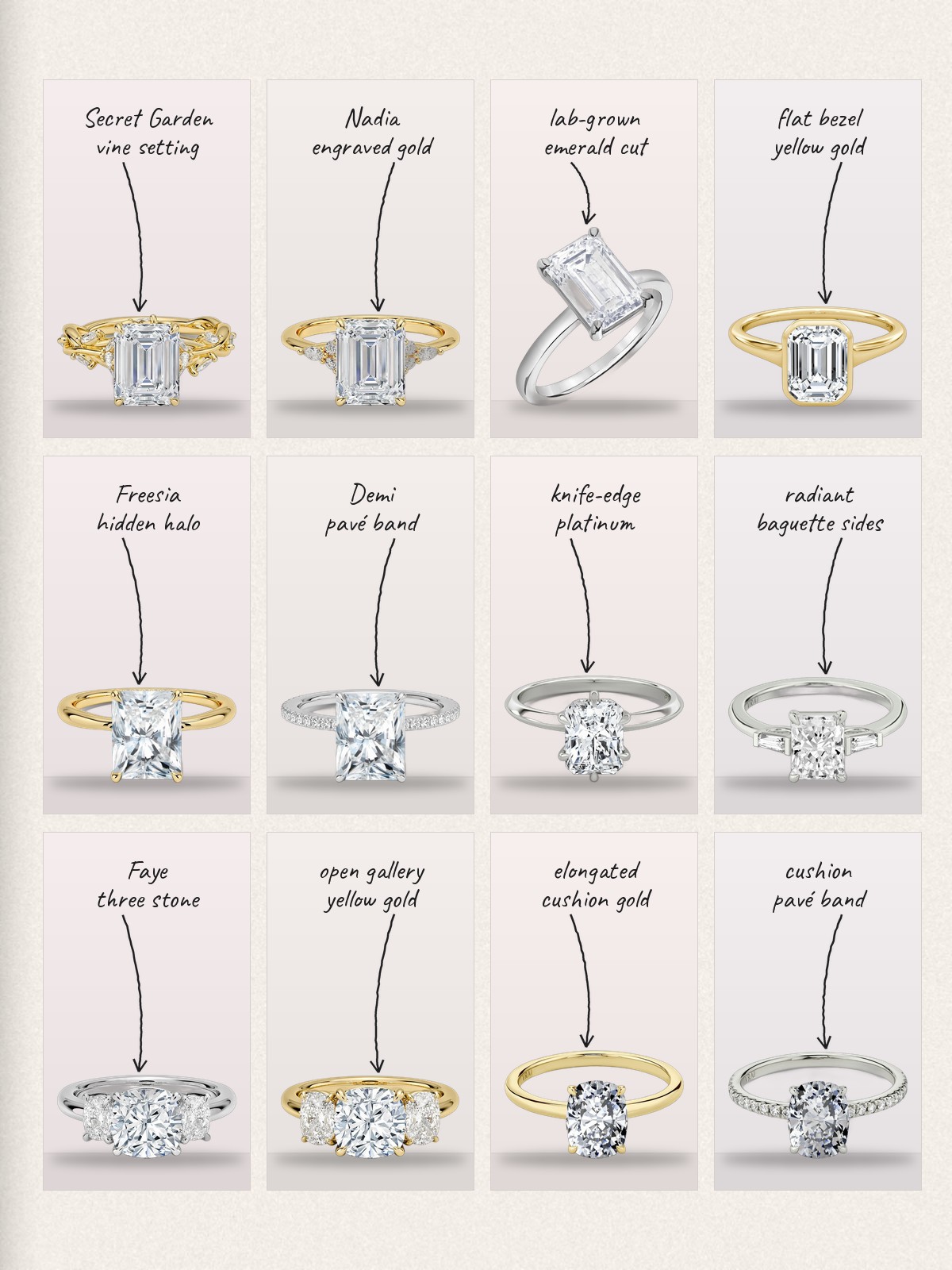
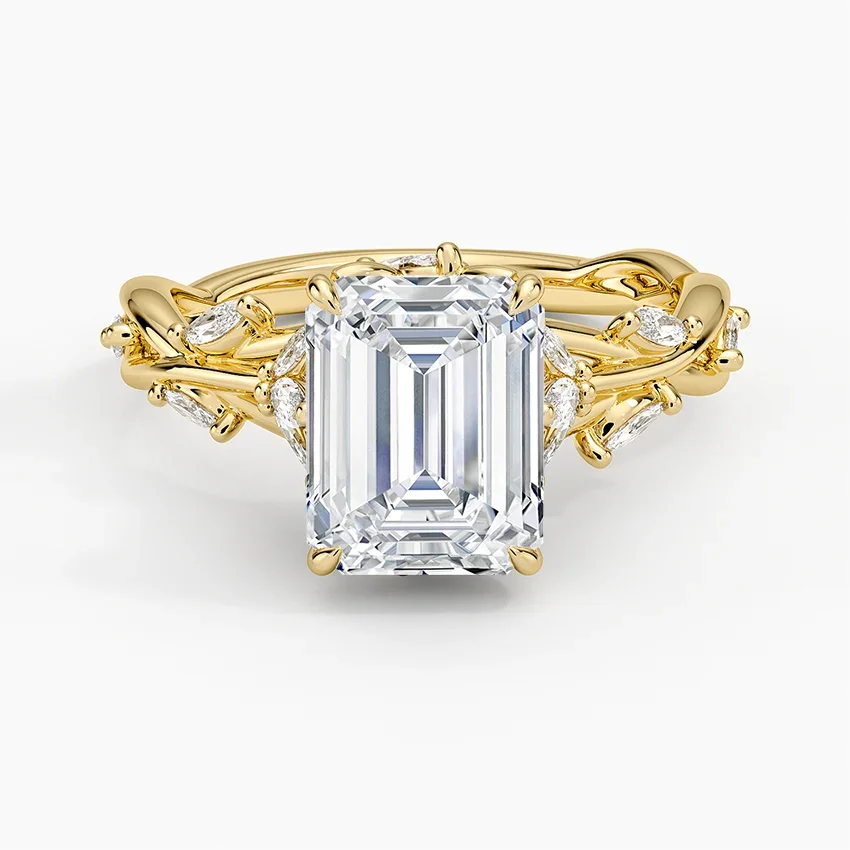
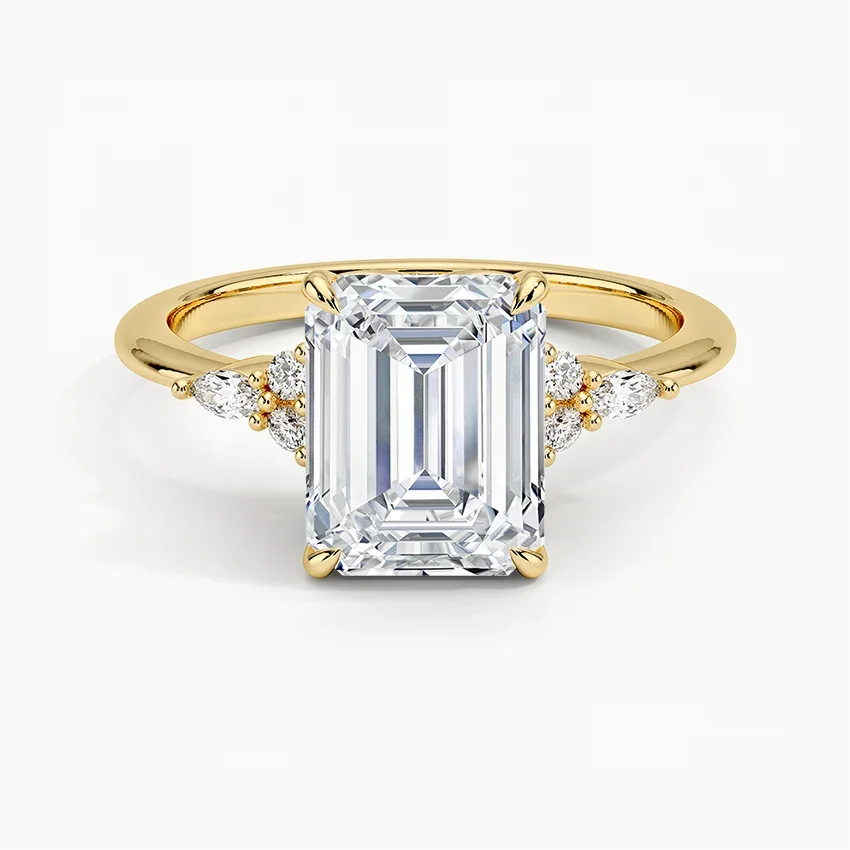
The Secret Garden setting wraps marquise accents around the center like a little vine. I would keep the rest of the hand quiet and pair its yellow gold with a slim band. Nadia makes the botanical idea more worked: hand-engraved gold and diamond accents frame the emerald center, so I would choose it if the jewelry box leans romantic rather than plain. Both are settings, with center stones chosen separately.
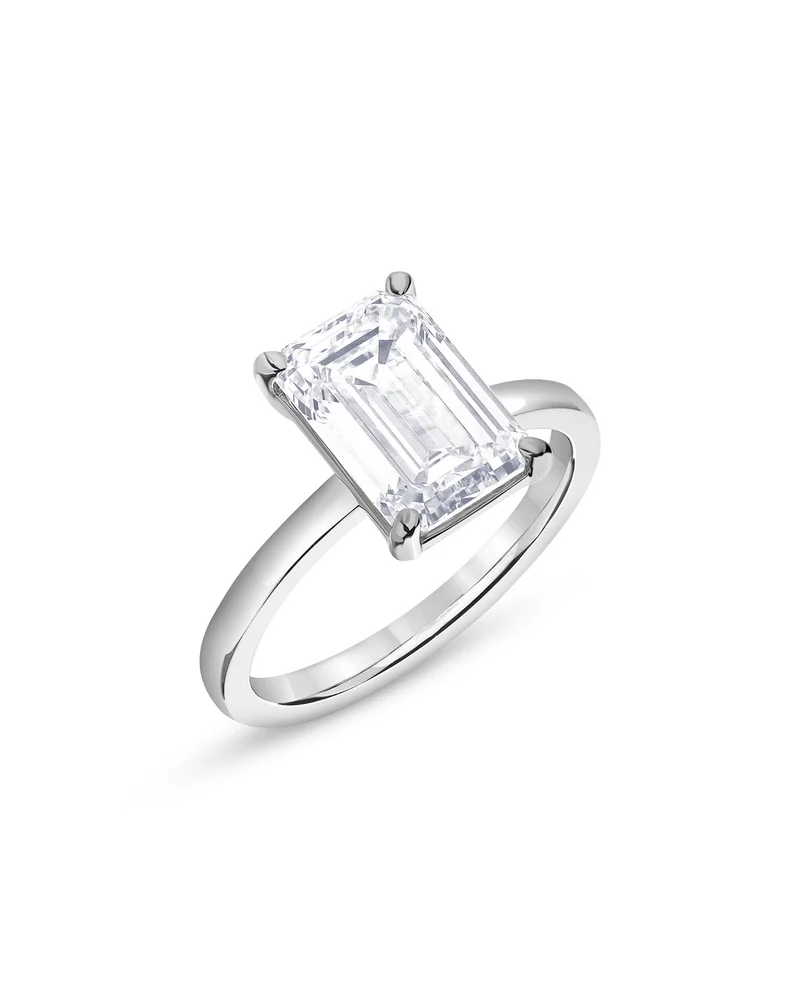
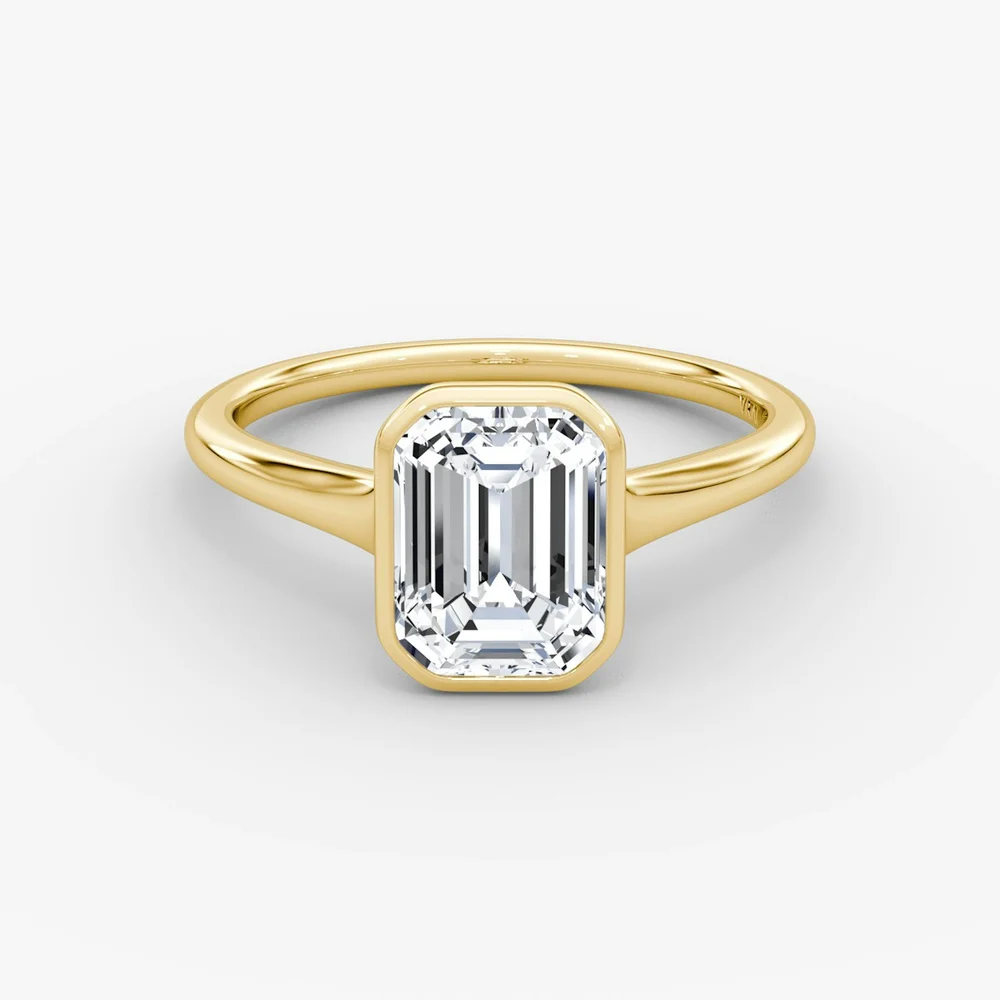
For a more direct outline, the lab-grown emerald-cut ring uses a rhodium-plated 18K white gold setting, while VRAI’s Flat Edge Bezel gives the center a tapered yellow-gold frame and a cathedral bridge. I would compare the ring from above and from the side, then check that the stone you choose sits comfortably with a wedding band. Both views matter more than a label like classic.
Emerald-cut engagement rings
Radiant cuts, sharper edges
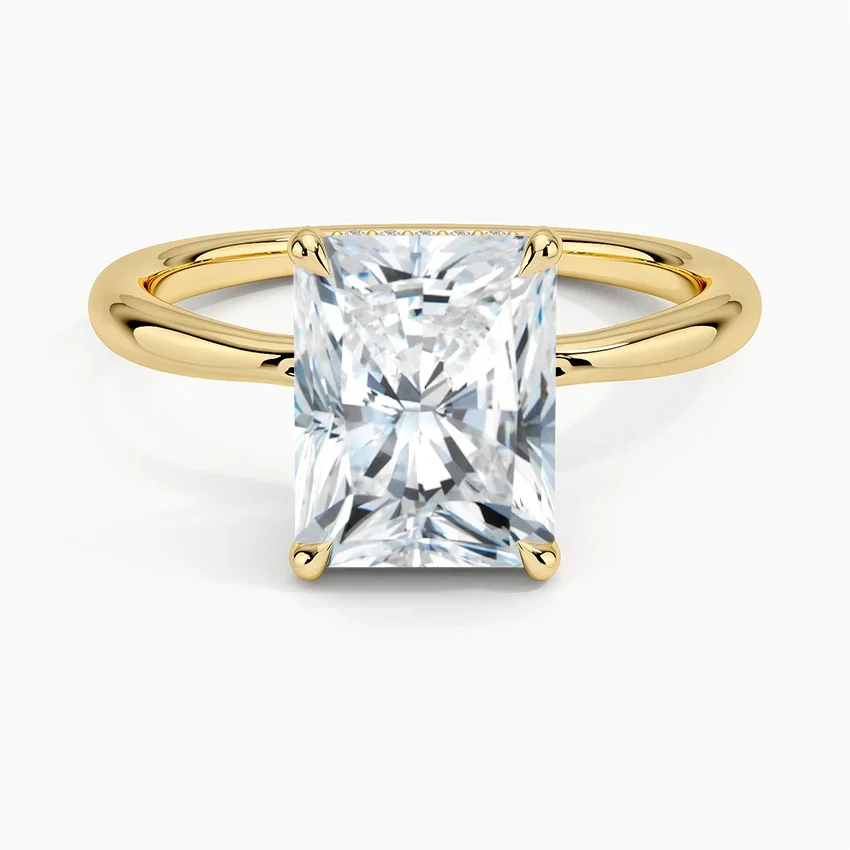
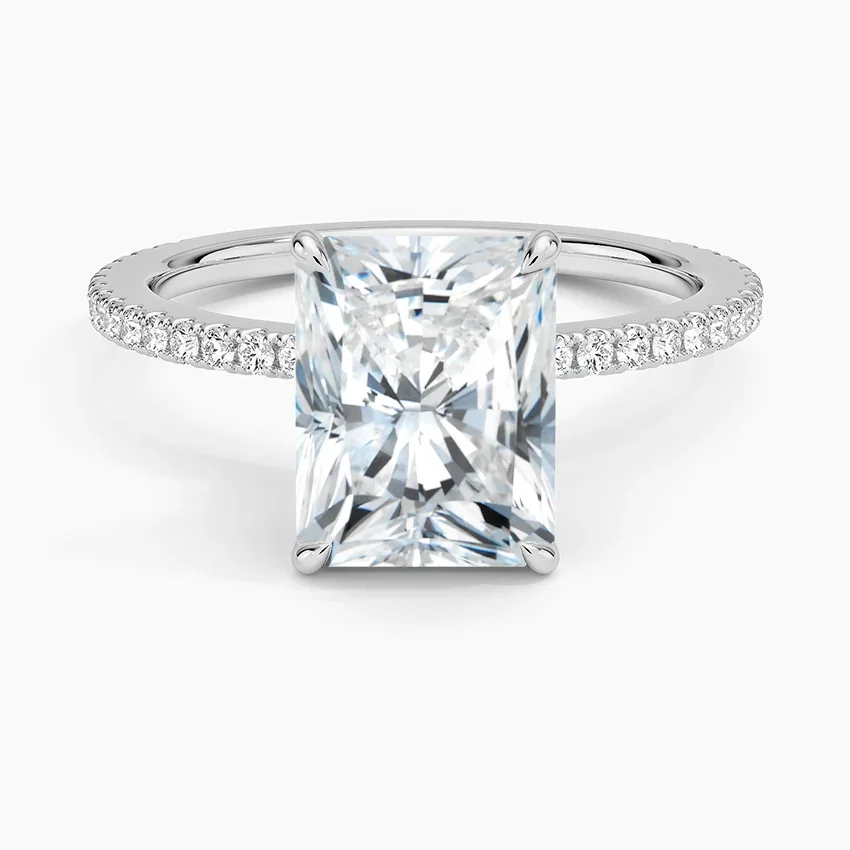
A straight-on view is only half the story with a radiant. GIA traces the style to Henry Grossbard’s patent in the late 1970s, and notes that it mixes step-cut facets on the crown with brilliant facets on the pavilion. I like that split: clipped corners keep a rectangular outline, while the lower facets add a different kind of movement. A rectangle engagement ring in this cut can balance a crisp face with softer light.
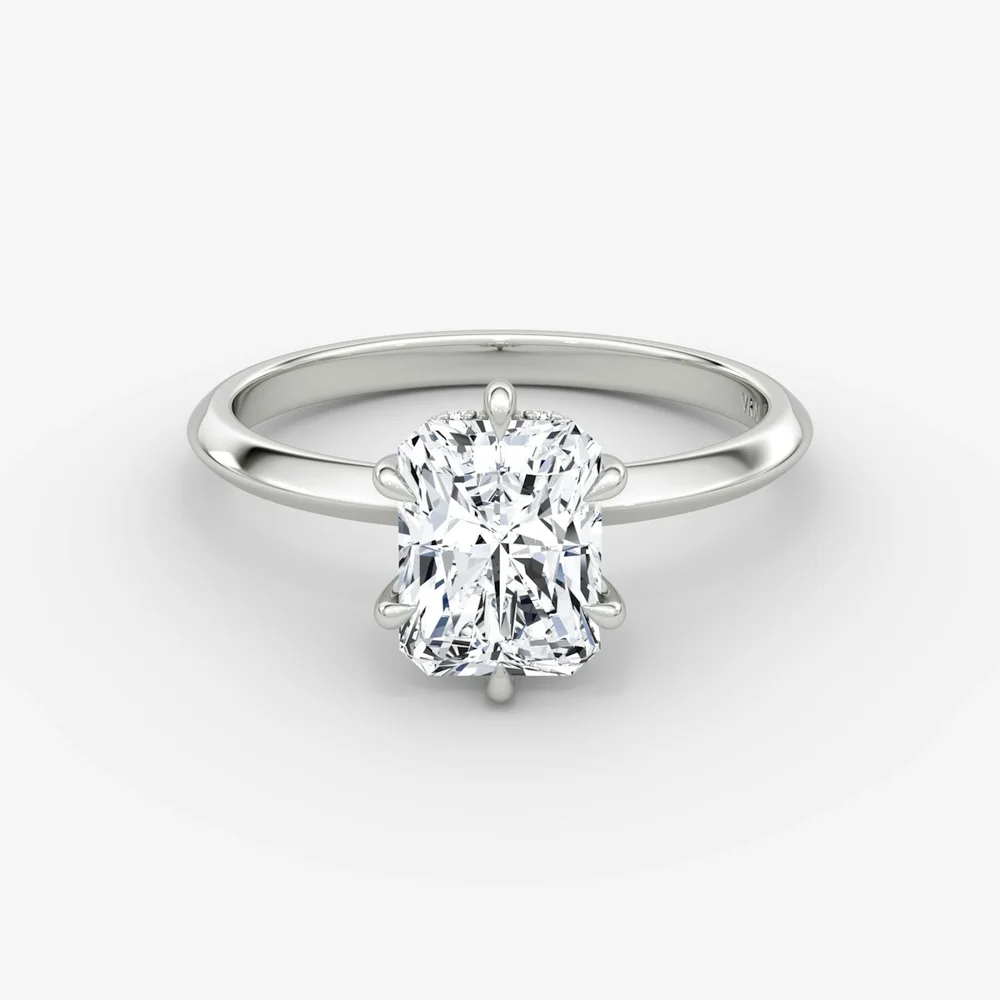
Freesia Hidden Halo has a tapered band that narrows toward its edges; Demi Three-Quarter Coverage tucks a halo beneath the center and places pavé diamonds along three quarters of the band. Both are settings, so if you are choosing a center separately, I would decide on the cut before adding more detail.
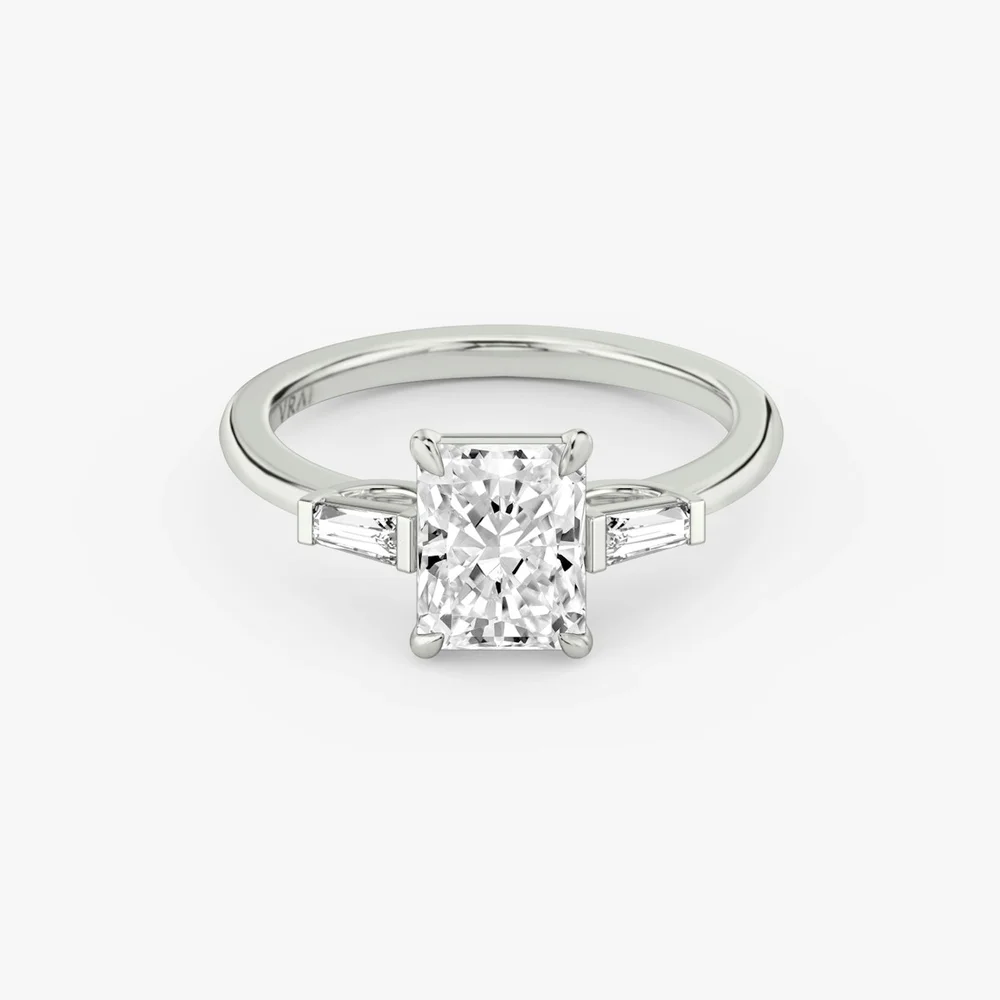
At VRAI, the Knife-Edge Hidden Halo keeps the metal in platinum and its pavé at 0.06 ctw; Three Stone Radiant adds tapered baguette sides with 0.10 ctw. I would pair either with a smooth wedding band, then ask for side and face-up views to see how the halo and shoulders read together. What I would skip: if the center already has clipped corners and plenty of light play, I would not add detail just to fill every inch of the band.
Softer corners, longer cushions
The old mine cut, forerunner of the modern cushion brilliant, dates to the 1700s and was associated with Brazil’s diamond mines. If a rectangle engagement ring feels too crisp, the Faye elongated cushion in platinum softens the outline with cushion side stones, while VRAI’s low Signature elongated cushion in yellow gold sits flush with a wedding band.
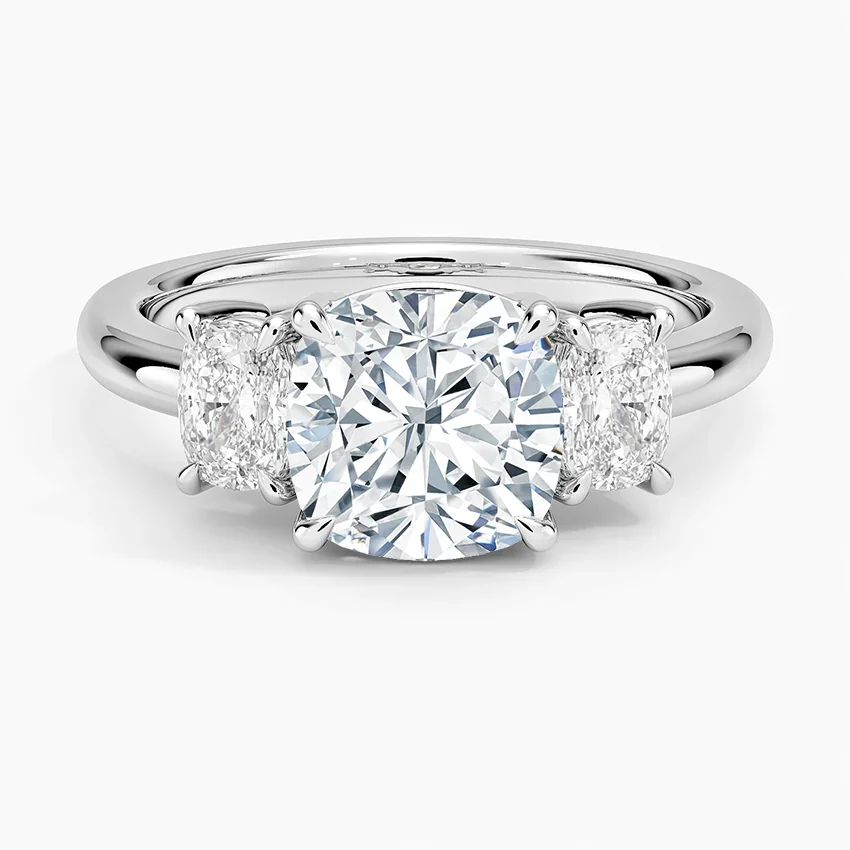
Faye Elongated Cushion Three Stone Diamond Ring in Platinum
Brilliant Earth
$4,290
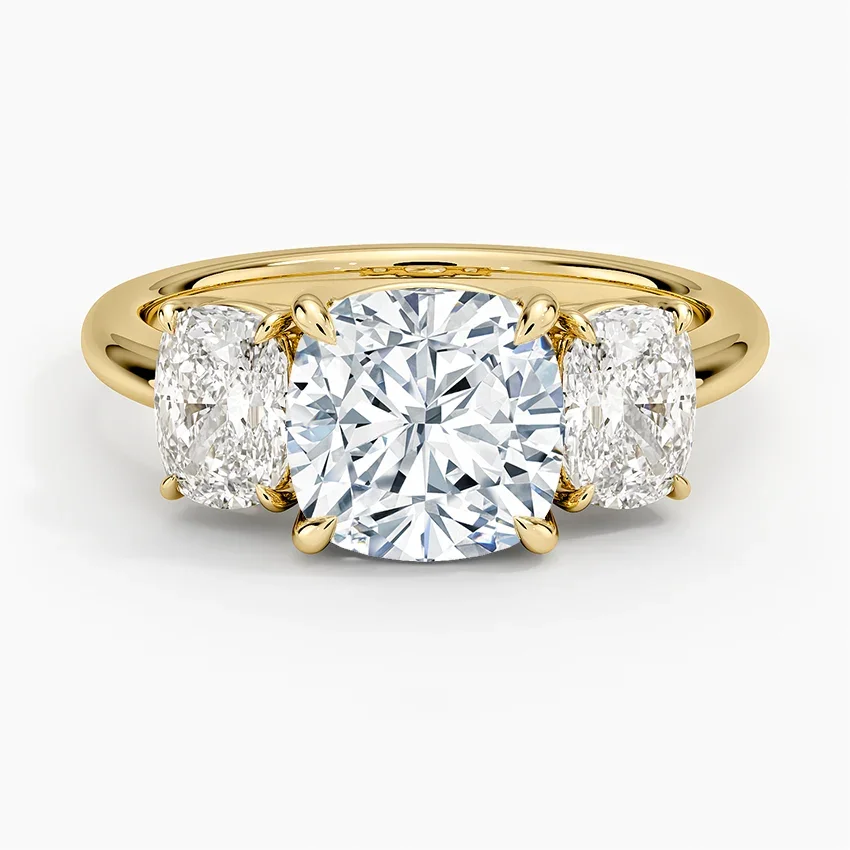
Luxe Faye Elongated Cushion Three Stone Ring in 18K Yellow Gold
Brilliant Earth
$4,690
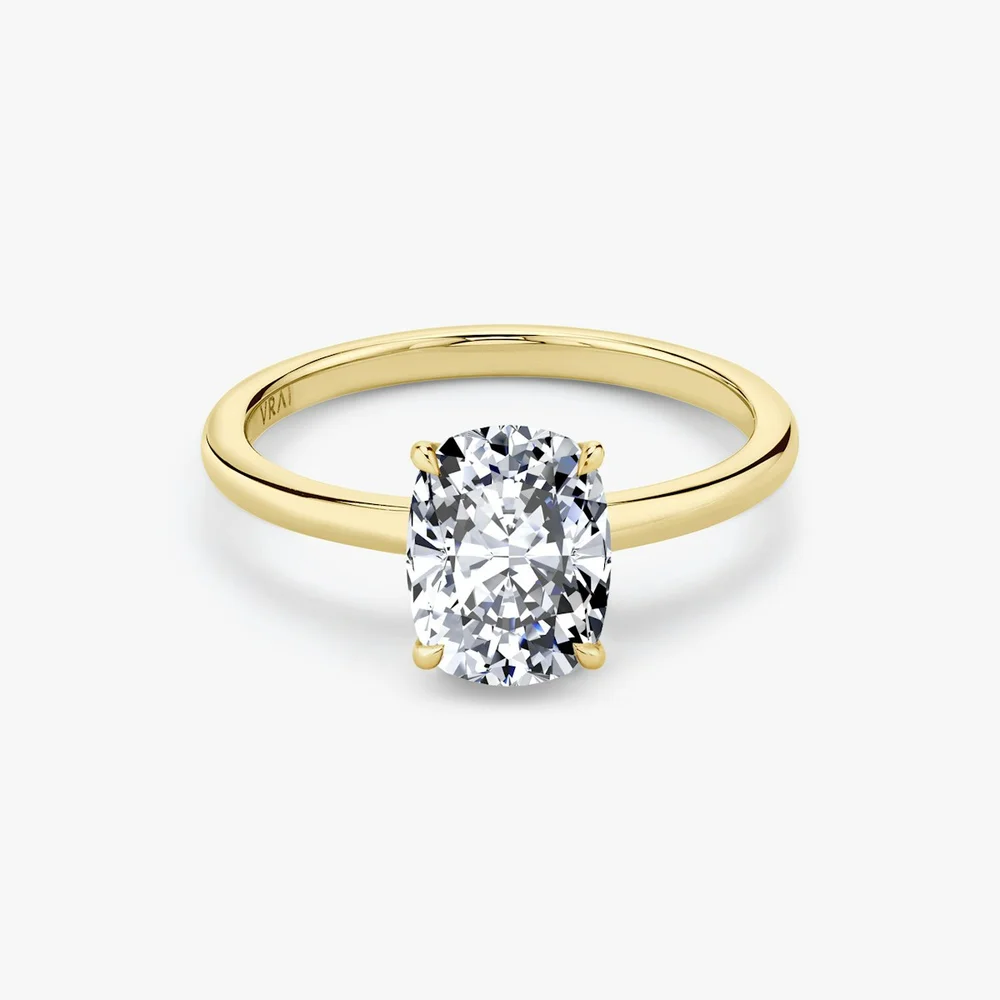
Signature Elongated Cushion Engagement Ring in 18K Yellow Gold with Plain Band
VRAI
$1,150
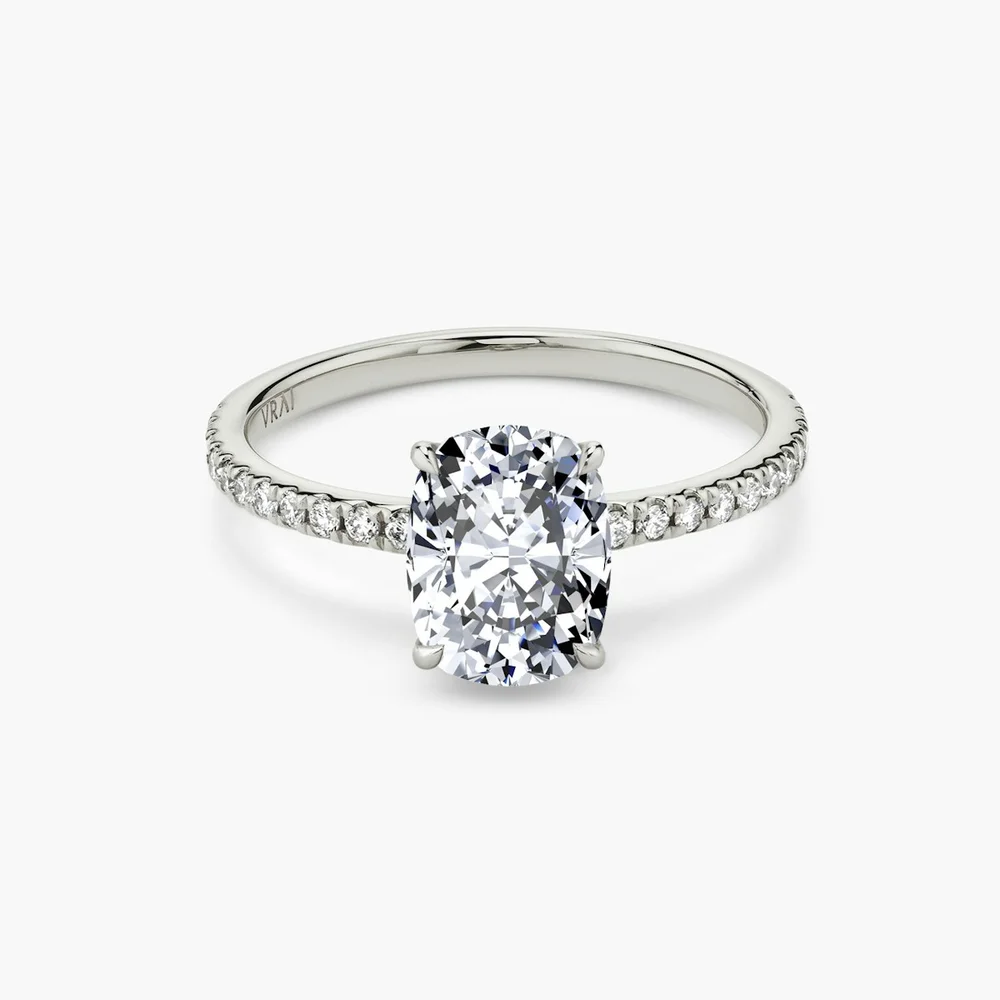
Signature Elongated Cushion Engagement Ring in Platinum with Pavé Band
VRAI
$1,435
Choosing the shape that feels yours
Choosing a rectangle engagement ring is really choosing how much geometry I want to carry every day. Emerald cuts give the ring a long, orderly center; radiants add clipped corners and a mixed facet pattern; elongated cushions soften the outline and can sit low beside a band. I would ask for a face-up and side view, then notice which setting feels like it belongs with the jewelry I already reach for. That Boston exhibit is a reminder that the center stone can be only one part of the story.