Repossi treats fine jewelry as a piece of modern architecture worn on the body. Founded in Turin in 1957 by Costantino Repossi, the family house later moved into a more radical language under Gaia Repossi, whose work draws on art, architecture, and the idea of diamonds floating on skin. The result is precise, graphic, and made to be noticed up close.
Repossi
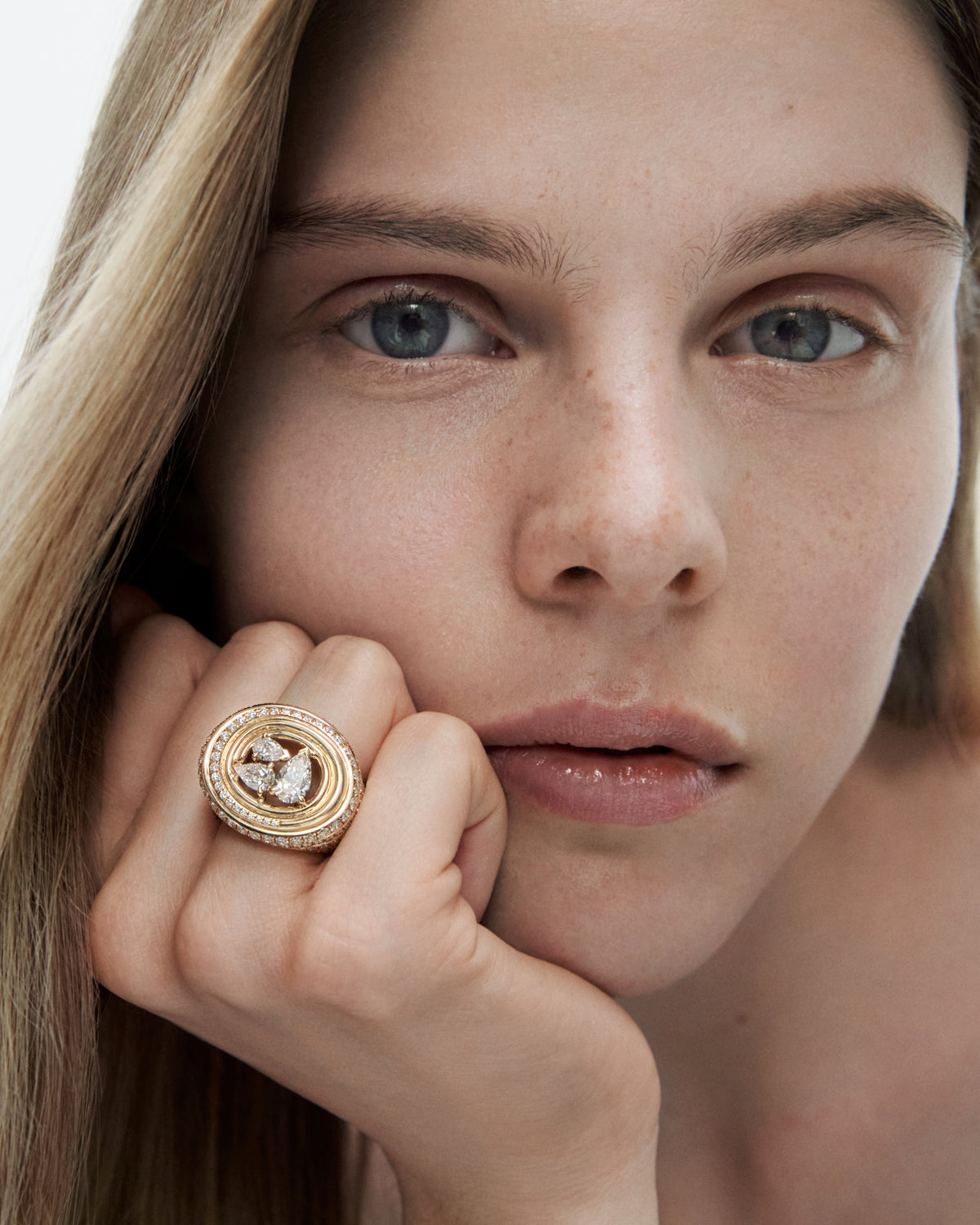
Architectural Rings
Repossi's rings are built from lines, gaps, and tension rather than traditional softness. The house began in Turin in 1957 under Costantino Repossi, while Gaia Repossi later pushed its language toward modern art and architecture. Berbère, Antifer, and Serti sur Vide shapes make the finger part of the design instead of merely a place to set a stone.

Serti sur Vide 18-karat rose gold diamond ring
Repossi
$9,950

Antifer Heart 18-karat rose gold diamond ring
Repossi
$3,600

Berbere 18-karat white gold diamond ring
Repossi
$4,800

Antifer Heart Large 18-karat black gold diamond single earring
Repossi
$3,200

Antifer Heart Small 18-karat black gold diamond single earring
Repossi
$1,450

Berbere 18-karat rose-gold diamond single earring
Repossi
$2,550

Antifer 18-karat white gold diamond ring
Repossi
$10,150

Berbere 18-karat rose gold diamond ring
Repossi
$2,800

Antifer 14-karat blackened gold diamond ring
Repossi
$14,950

Antifer Medium 18-karat blackened gold diamond single hoop earring
Repossi
$6,200

Antifer 18-karat rose gold, lapis lazuli and diamond single earring
Repossi
$2,550

Serti sur Vide 18-karat white gold diamond single hoop earring
Repossi
$3,950

Antifer Heart small 18-karat rose gold diamond single earring
Repossi
$1,350

Serti sur Vide 18-karat white gold diamond single earring
Repossi
$3,950

Antifer Heart Large 18-karat rose gold diamond single earring
Repossi
$3,000

Serti Sur Vide 18-karat white gold diamond ring
Repossi
$20,400

Serti Sur Vide 18-karat white gold, diamond and emerald ring
Repossi
$18,250

Berbere 18-karat rose gold, lacquer and diamond ring
Repossi
$4,950

Antifer 18-karat rose gold, turquoise and diamond single earring
Repossi
$2,450

Antifer 18-karat rose gold, onyx and diamond single earring
Repossi
$2,350

Serti Inversé 18-karat rose gold diamond single earring
Repossi
$2,800

Antifer 18-karat rose gold diamond ring
Repossi
$9,650

Serti Sur Vide 14-karat white gold diamond single earring
Repossi
$8,000

Antifer 18-karat rose gold, malachite and diamond single earring
Repossi
$2,450
Ear Cuffs And Single Earrings
The ear pieces make Repossi's architectural instinct especially clear. Ear cuffs and single earrings create the impression of multiple piercings or a floating stone while keeping the actual construction remarkably spare. Gaia Repossi made the ear cuff a signature, and these pieces are strongest when the rest of the look stays almost blank.

Antifer 18-karat white gold ear cuff
Repossi
$2,550

Antifer Heart Large 18-karat black gold diamond single earring
Repossi
$3,200

Antifer Heart Small 18-karat black gold diamond single earring
Repossi
$1,450

Berbere 18-karat rose-gold diamond single earring
Repossi
$2,550

Antifer Medium 18-karat blackened gold diamond single hoop earring
Repossi
$6,200

Serti sur Vide 18-karat white gold diamond ear cuff
Repossi
$19,900

Antifer 18-karat rose gold, lapis lazuli and diamond single earring
Repossi
$2,550

Antifer 18-karat rose gold ear cuff
Repossi
$2,450

Serti sur Vide 18-karat white gold diamond single hoop earring
Repossi
$3,950

Antifer Heart small 18-karat rose gold diamond single earring
Repossi
$1,350

Serti sur Vide 18-karat white gold diamond single earring
Repossi
$3,950

Antifer Heart Large 18-karat rose gold diamond single earring
Repossi
$3,000

Antifer 18-karat rose gold, turquoise and diamond single earring
Repossi
$2,450

Antifer 18-karat rose gold, onyx and diamond single earring
Repossi
$2,350

Serti Inversé 18-karat rose gold diamond single earring
Repossi
$2,800

Serti Sur Vide 14-karat white gold diamond single earring
Repossi
$8,000
Floating Stone Necklaces
Serti sur Vide necklaces carry the house's most poetic idea: the diamond appears to sit directly on the skin. Repossi's official history describes the collection as a reinvention of the solitaire, using a hidden structure to create the illusion of levitation. Wear one against a clean neckline and let the negative space remain visible.

Serti Sur Vide 18-karat rose gold diamond necklace
Repossi
$9,750

Antifer 18-karat rose gold, onyx and diamond necklace
Repossi
$4,600

Antifer 18-karat rose gold, turquoise and diamond necklace
Repossi
$4,800

Serti sur Vide 18-karat white gold diamond necklace
Repossi
$10,050

Antifer 18-karat rose gold, malachite and diamond necklace
Repossi
$4,800

Antifer 14-karat rose gold diamond necklace
Repossi
$12,900

Berbère 18-karat rose gold diamond necklace
Repossi
$4,250

Antifer Heart 18-karat rose gold necklace
Repossi
$3,100
Graphic Bracelets And Cuffs
At the wrist, the same tension becomes a line that wraps or cuts across the body. Bracelets and cuffs in blackened, white, or rose gold keep the geometry intact while adding more weight to the gesture. One strong cuff is usually more convincing than a pile of competing shapes.

Antifer 18-karat white gold ear cuff
Repossi
$2,550

Serti sur Vide 18-karat white gold diamond cuff
Repossi
$23,100

Antifer 18-karat blackened gold diamond bracelet
Repossi
$22,500

Serti sur Vide 18-karat white gold diamond ear cuff
Repossi
$19,900

Antifer 18-karat rose gold ear cuff
Repossi
$2,450

Serti sur Vide 18-karat white gold diamond bracelet
Repossi
$16,950

Antifer 18-karat rose gold bracelet
Repossi
$9,650

Antifer 18-karat rose gold diamond bracelet
Repossi
$13,750
Our honest take
Repossi is for someone who wants jewelry to look designed, not merely decorated. The prices and hard-edged forms make these a considered purchase, and the pieces reward someone comfortable with asymmetry. If you take one thing away, choose the negative space first, then let the stone or metal follow it.