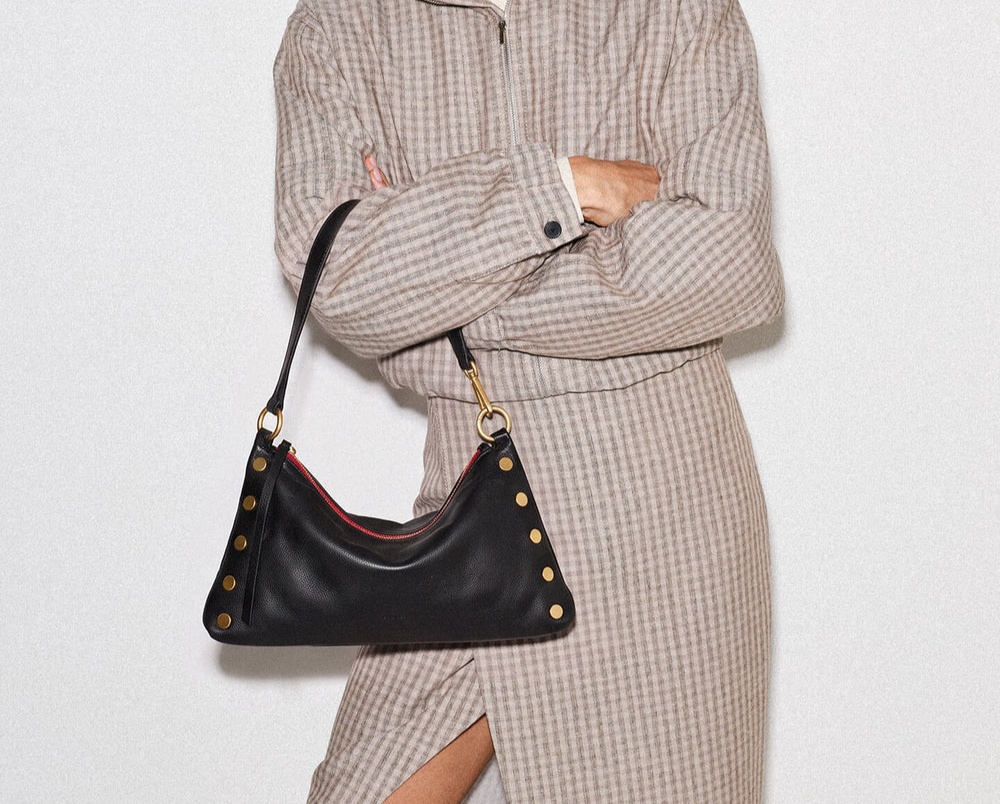
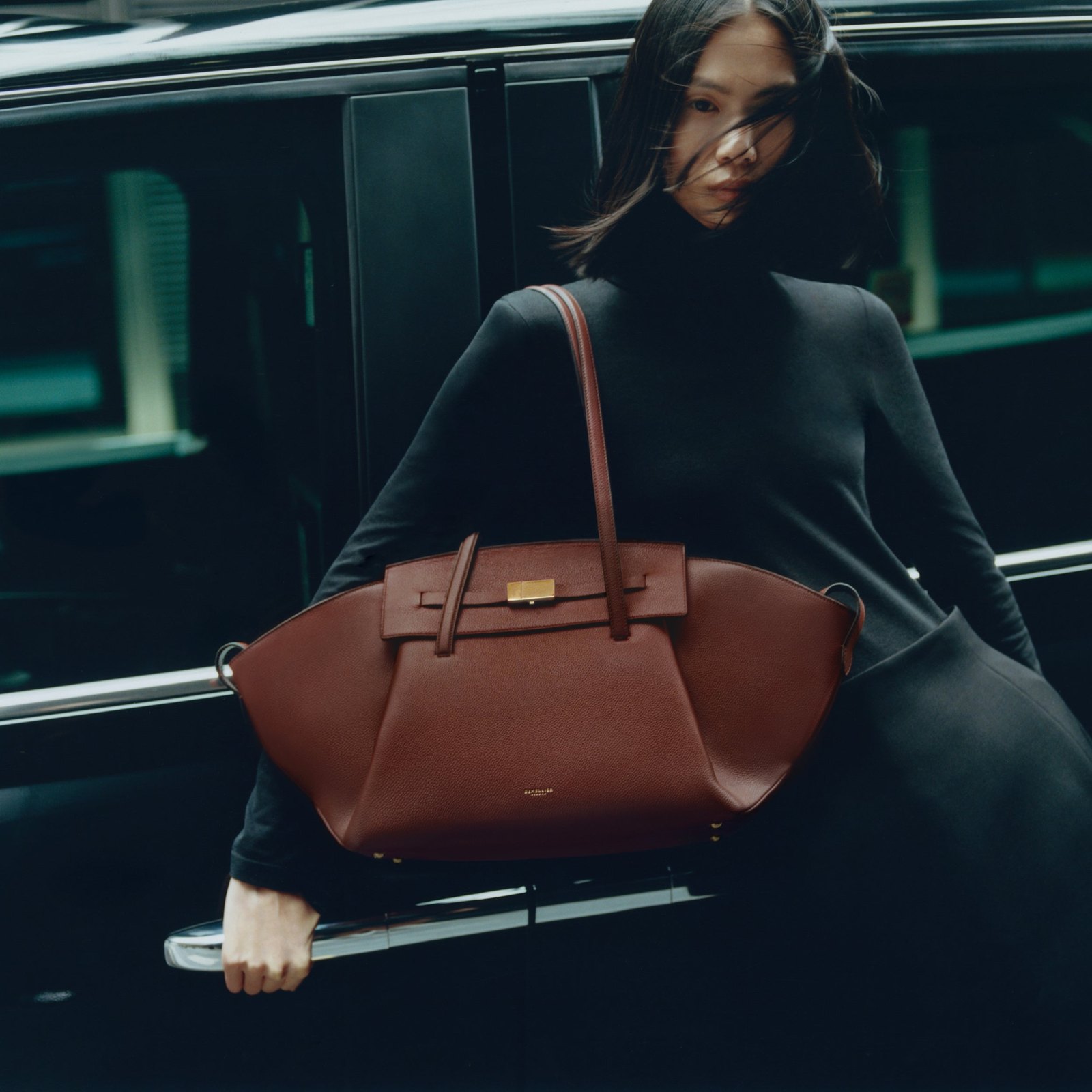
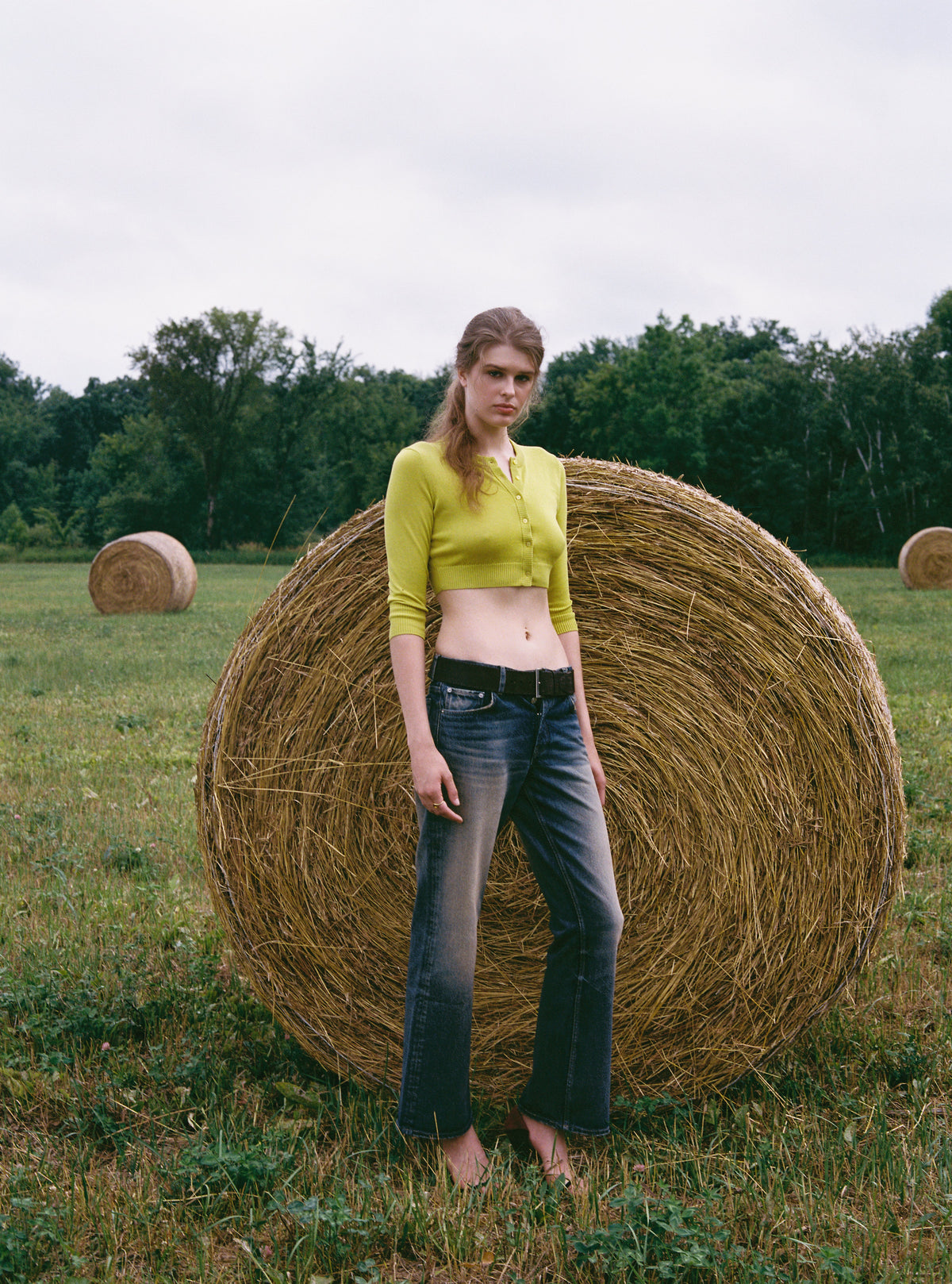
RRL's East West denim starts as Tennessee cotton before it is shipped to Okayama, Japan, rope dyed with indigo and woven on shuttle looms into selvedge fabric, a process Ralph Lauren built the label around in 1993. That fabric obsession shows in the denim, the ranch knitwear and the workwear jackets and shirts.
RRL

Cotton From Tennessee To Japan
RRL's denim starts further away than most labels admit. Cotton grown in Tennessee is shipped to Okayama, Japan, rope dyed with indigo, and woven on old shuttle looms into selvedge denim, then sanforized so it will not shrink out of shape. That is the process behind the label Ralph Lauren built in 1993, naming it for his Double RL Ranch in Colorado and setting out to recreate the work clothes of miners, ranch hands and soldiers rather than chase a trend.
The High-rise straight-leg jeans and the Cropped mid-rise straight-leg jeans carry the plainest version of that construction, while the Denim jumpsuit and the Ida cropped embellished denim jacket show how far RRL will stretch the same fabric into a full shape.

Floral-print high-rise straight-leg jeans
RRL
$395

Paint-splattered boyfriend jeans
RRL
$495

Stockton denim jacket
RRL
$590

Ida cropped embellished denim jacket
RRL
$490

Mid-rise straight-leg jeans
RRL
$365

High-rise straight-leg jeans
RRL
$365

High-rise wide-leg jeans
RRL
$395

Distressed high-rise wide-leg jeans
RRL
$395

Denim jumpsuit
RRL
$595

Cropped mid-rise straight-leg jeans
RRL
$365

Denim jacket
RRL
$390

Buffalo denim shirt
RRL
$275
Rural Comfort, Not Costume
Once you know how much effort goes into the denim, it is easier to see the same instinct in the knitwear. The Bella crochet-trimmed cardigan and the Rory belted alpaca-blend cardigan both draw on early twentieth century rural dress, but the proportions are cut for a modern closet, not a period photograph. Add the wool and cotton-blend vest or the matching wide-leg pants and the look stays soft rather than costumed. None of it needs the denim nearby to make sense. It is simply cut from the same idea of clothes with a working past.


Shape Before Decoration
The workwear jackets and shirts are where RRL's fabric obsession meets a plain, functional shape. The Willett paneled suede jacket and the Asher cotton-canvas jacket both use paneling and heavy cloth to do the structural work instead of relying on trim. The Farrell gingham shirt and the Billie embroidered shirt are lighter, meant to be tucked in rather than worn as an outer layer. Choose the piece with the most texture and build the rest of the outfit around it, plainly.


Built To Fade
RRL treats fabric and process as the entire argument, and that is worth knowing before buying into it. A jacket that starts life as Tennessee cotton, gets dyed and woven in Okayama, and comes out the other side as a jean or jacket is not competing with anything fast or disposable, and should not be judged on those terms. This is a label for someone who wants to know how a garment was made and does not mind paying for that process, not for someone chasing a season of trend pieces. Skip it if a plain cotton canvas jacket at this price feels hard to justify. Start with one denim piece, since it shows the fabric story most clearly, and give it years instead of one winter.