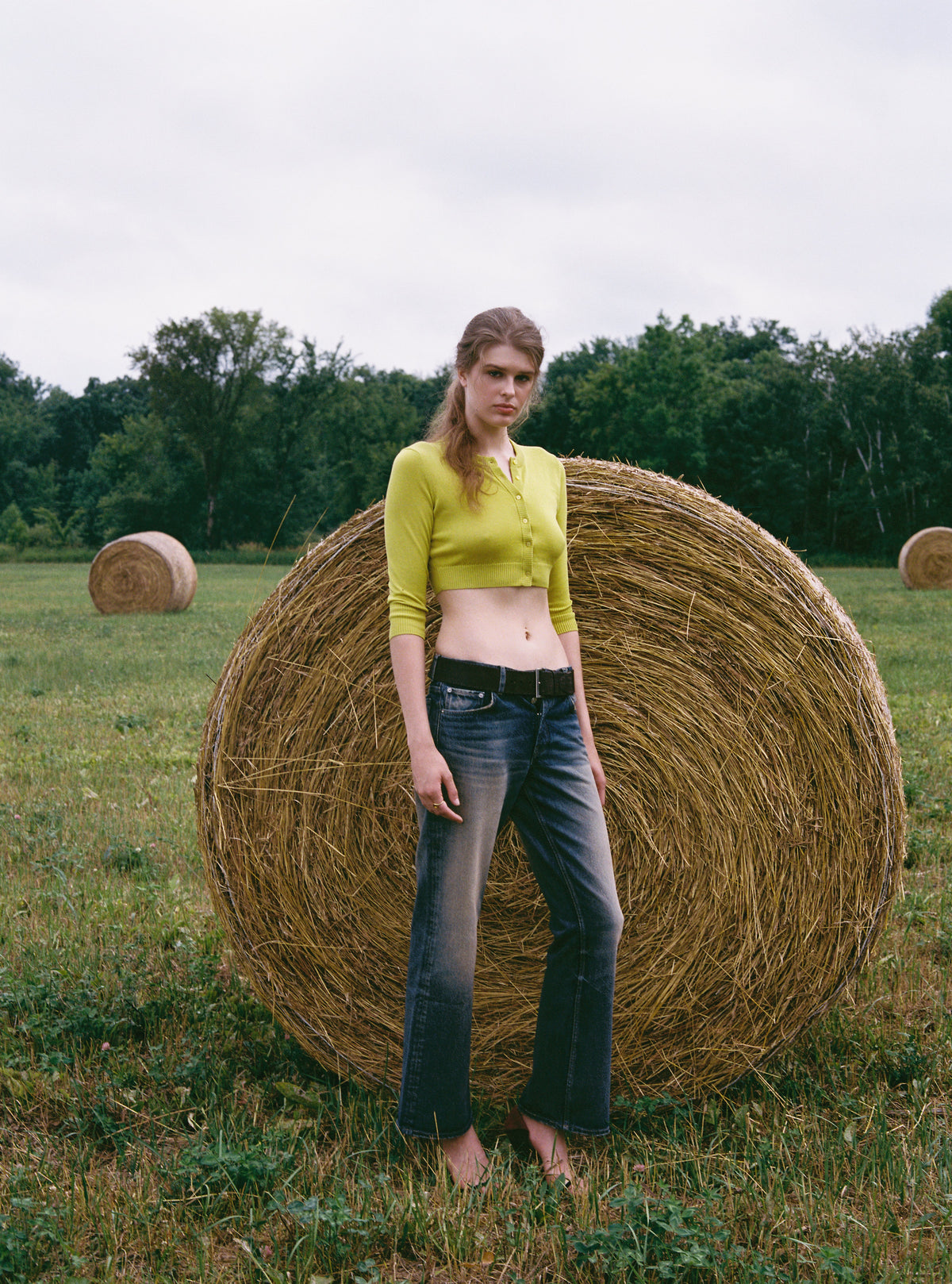
Yves Saint Laurent and Pierre Bergé opened the house in Paris on December 4, 1961, after Saint Laurent's dismissal from Christian Dior, where he had been chief designer since age twenty one. The label reshaped fashion twice over, first with Le Smoking, the tuxedo suit for women, then with the 1966 Rive Gauche line that made designer ready-to-wear a real category, and it has since passed through Tom Ford, Stefano Pilati, Hedi Slimane and now Anthony Vaccarello.
Saint Laurent
Accessories
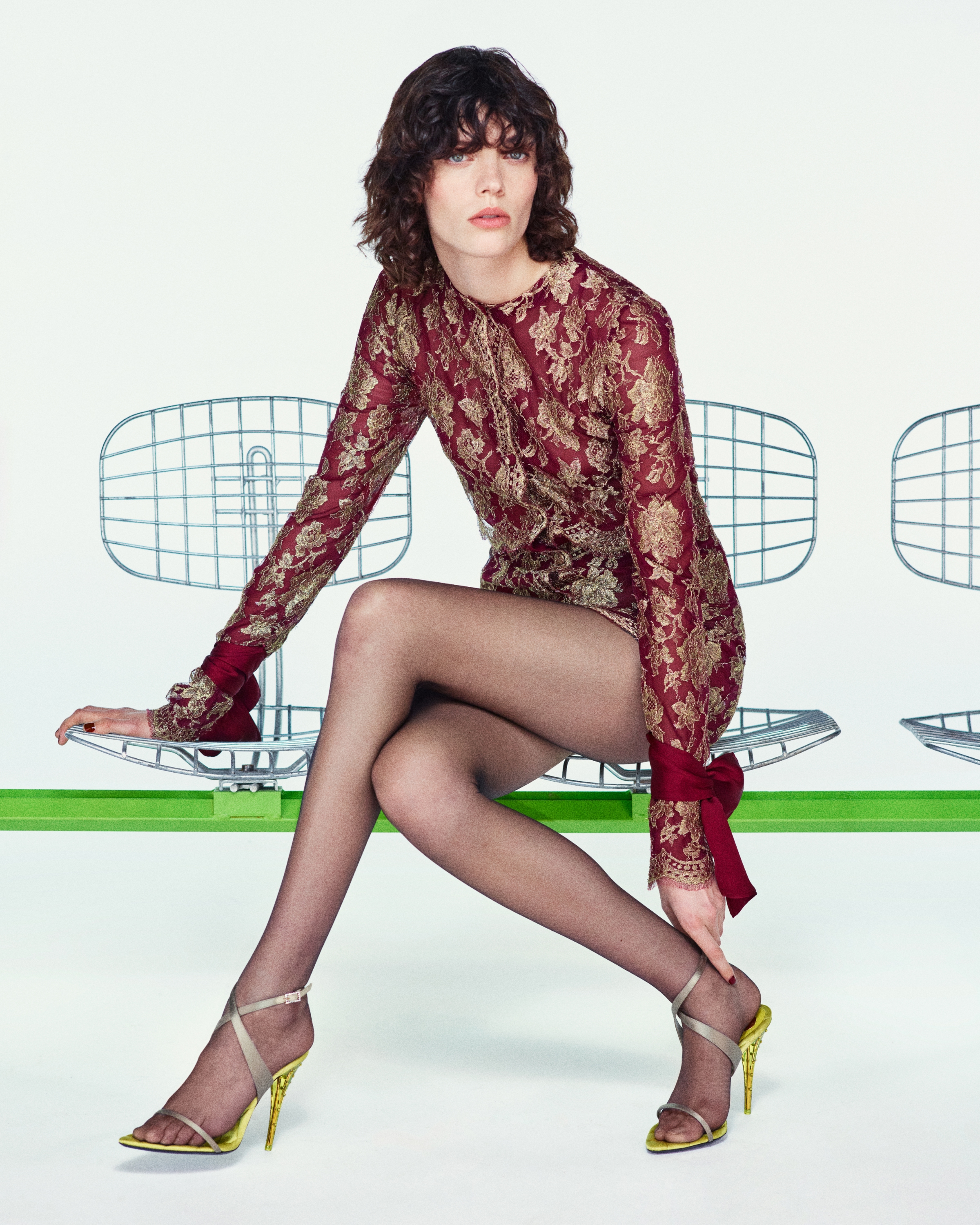
Accessories sit downstream of a house built on borrowing hard tailoring codes from menswear and repurposing them for women, a habit that started with Le Smoking in 1966. The pieces here carry the same graphic confidence, small objects that still read unmistakably like the house. It is a category that has expanded a lot since Hedi Slimane's early 2010s rebrand simplified the name to just Saint Laurent.

Square-Framed Bio Injection Sunglasses
Saint Laurent
$650

Rimless Racer-Frame Metal Sunglasses
Saint Laurent
$610

Cassandra Buckle Leather Belt
Saint Laurent
$790

Oval-Framed Bio-Injection Sunglasses
Saint Laurent
$565

Oval-Framed Bio-Injection Sunglasses
Saint Laurent
$565

Oval-Framed Bio-Injection Sunglasses
Saint Laurent
$360

Round-Frame Bio-Injection Sunglasses
Saint Laurent
$360

Chain Satin Matelasse Wallet
Saint Laurent
$1,250

Thin Reversible Leather Belt
Saint Laurent
$490

Square Silk Scarf
Saint Laurent
$530

Thin Buckle Embossed Leather Belt
Saint Laurent
$680

Chain Satin Matelasse Wallet
Saint Laurent
$1,250

Square-Framed Acetate Sunglasses
Saint Laurent
$650

Leather Chain Wallet
Saint Laurent
$1,700

Jeanne Round-Frame Acetate Sunglasses
Saint Laurent
$495

Chain Belt
Saint Laurent
$4,100

Erin Oval-Frame Acetate Sunglasses
Saint Laurent
$420

Howl Mask-Frame Acetate Sunglasses
Saint Laurent
$595

Howl Mask-Frame Acetate Sunglasses
Saint Laurent
$595

Crocodile-Embossed Leather Belt
Saint Laurent
$850

Square-Frame Acetate Sunglasses
Saint Laurent
$535

Slit Leather-Silk Gloves
Saint Laurent
$780

Erin Oval-Frame Acetate Sunglasses
Saint Laurent
$420

Cat-Eye Tortoiseshell Acetate Sunglasses
Saint Laurent
$520
More Accessories
A further stretch of small leather goods and hardware pieces that lean on the label's long standing logo, designed by the graphic artist Cassandre back in the house's founding years. These pieces tend to be the most direct, wearable entry point into the brand for anyone not ready to commit to a full look. They carry the house codes without much fuss.

Thin Suede Belt
Saint Laurent
$430

Round-Frame Acetate Sunglasses
Saint Laurent
$520

Wellington Acetate Sunglasses
Saint Laurent
$595

Cassandre Chain Belt
Saint Laurent
$1,550

Square-Frame Acetate Sunglasses
Saint Laurent
$475

Thin Reversible Leather Belt
Saint Laurent
$490

Oval-Frame Acetate Sunglasses
Saint Laurent
$495

Oval-Frame Acetate Sunglasses
Saint Laurent
$390

Cat-Eye Acetate Sunglasses
Saint Laurent
$520

Wellington Acetate Sunglasses
Saint Laurent
$595

Aviator-Frame Acetate Glasses
Saint Laurent
$565

Jeanne Oval-Frame Acetate Glasses
Saint Laurent
$460

D-Frame Metal Sunglasses
Saint Laurent
$535

Cassandre Striped Silk Charmeuse Scarf
Saint Laurent
$780

Square-Frame Acetate Sunglasses
Saint Laurent
$550

Square-Frame Acetate Sunglasses
Saint Laurent
$490

Erin Oval-Frame Acetate Glasses
Saint Laurent
$420

Square-Frame Acetate Glasses
Saint Laurent
$490

Erin Oval-Frame Acetate Glasses
Saint Laurent
$420

Jeanne Oval-Frame Acetate Glasses
Saint Laurent
$460

Rectangle-Frame Acetate Sunglasses
Saint Laurent
$495

Aviator-Frame Acetate Sunglasses
Saint Laurent
$305

Aviator-Frame Acetate Sunglasses
Saint Laurent
$305

Square-Frame Acetate Sunglasses
Saint Laurent
$520
Still more Accessories
This grouping continues the theme of compact, logo forward pieces, the kind that have kept Saint Laurent culturally present through several creative director changes. Whoever is at the helm, the accessory line has remained a reliable place for the brand to restate its identity. It is a good gauge of how the house is reading its own history at any given moment.

Cassandre Croc-Effect Leather Belt
Saint Laurent
$700

Flat-Top Acetate Sunglasses
Saint Laurent
$565

Tortoiseshell Acetate Glasses
Saint Laurent
$380

Kate Thin Cat-Eye Acetate Sunglasses
Saint Laurent
$380

Round-Frame Metal Sunglasses
Saint Laurent
$530

Cat-Eye Acetate Sunglasses
Saint Laurent
$495

Howl Mask-Frame Acetate Sunglasses
Saint Laurent
$595

Betty Thin Square-Frame Acetate Sunglasses
Saint Laurent
$420

Round-Frame Acetate Sunglasses
Saint Laurent
$505

Square-Frame Acetate Sunglasses
Saint Laurent
$305

Romy Square-Frame Acetate Glasses
Saint Laurent
$490

Square-Frame Acetate Sunglasses
Saint Laurent
$305

Round-Frame Metal Sunglasses
Saint Laurent
$535

Cat-Eye Acetate Sunglasses
Saint Laurent
$390

Aviator-Frame Metal Sunglasses
Saint Laurent
$520

Rectangle-Frame Sunglasses
Saint Laurent
$465

Aviator-Frame Acetate Sunglasses
Saint Laurent
$305

Howl Mask-Frame Acetate Sunglasses
Saint Laurent
$595

Aviator-Frame Metal Glasses
Saint Laurent
$520

Howl Mask-Frame Acetate Sunglasses
Saint Laurent
$595

Mask-Frame Acetate Sunglasses
Saint Laurent
$565

Aviator-Frame Acetate Glasses
Saint Laurent
$460

Square-Frame Acetate Sunglasses
Saint Laurent
$390

Shield Metal Sunglasses
Saint Laurent
$650
Even more Accessories
The final accessories grouping rounds out smaller items that fill in a wardrobe already anchored by bags and shoes elsewhere in this edit. Saint Laurent has always used accessories to keep the house visible season to season, a strategy that predates the current creative director and will likely outlast him too. These pieces are built to be worn constantly, not saved.

Mica Thin Cat-Eye Acetate Sunglasses
Saint Laurent
$390

Square-Frame Acetate Sunglasses
Saint Laurent
$460

Aviator-Frame Metal Sunglasses
Saint Laurent
$520

Square-Frame Tortoiseshell Acetate Glasses
Saint Laurent
$490

Cat-Eye Metal Glasses
Saint Laurent
$535

Betty Thin Square-Frame Acetate Glasses
Saint Laurent
$420

Aviator-Frame Metal Sunglasses
Saint Laurent
$535

Monogramme Zip Wallet
Saint Laurent
$950
Shoes
Footwear carries forward the same sharp, slightly severe silhouette that has defined Saint Laurent since the Rive Gauche years, when the house first proved ready-to-wear could carry couture level attention to line. Pointed toes and high, thin heels are a recurring house signature here. It is a category where the brand's original attitude, more confident than pretty, is easiest to spot.

Romy TPU Slingback Pumps
Saint Laurent
$2,800

Sibyl TPU Slingback Pumps
Saint Laurent
$3,600

Jerry TPU Mules
Saint Laurent
$1,400

Folie Satin Slingback Pumps
Saint Laurent
$1,850

Anne-Marie Slingback Leather Pumps
Saint Laurent
$1,200

Folie Leopard Grosgrain Pumps
Saint Laurent
$1,350

Emilie Crepe Satin Mules
Saint Laurent
$1,700

Capucine Leather Boots
Saint Laurent
$1,650

Babylone Leather Mules
Saint Laurent
$1,350

Francoise Patent Leather Boots
Saint Laurent
$2,350

Club Leather Slingback Sandals
Saint Laurent
$1,250

Velvet Le Loafers
Saint Laurent
$1,150

Suede Le Loafers
Saint Laurent
$1,150

Brigitte TPU Pumps
Saint Laurent
$3,600

Voltaire Glazed-Leather Slingback Pumps
Saint Laurent
$3,400

Ivresse Satin Sandals
Saint Laurent
$1,900

Velvet Le Loafer
Saint Laurent
$1,250

Collapsible Pony Hair Le Loafers
Saint Laurent
$1,500

Jerry Crystal Crepe-Satin Mules
Saint Laurent
$1,250

Suede Le Loafers
Saint Laurent
$1,200

Leather Le Loafers
Saint Laurent
$1,250

Babylone Leopard Grosgrain Slingback Pumps
Saint Laurent
$1,300

Leather Le Loafers
Saint Laurent
$1,200

Suede Le Loafer
Saint Laurent
$1,200
More Shoes
A second run of footwear that leans into flatter, more wearable silhouettes alongside the sharper heels found elsewhere. Even the softer styles keep the house's tailored, slightly androgynous edge, a throughline from Yves Saint Laurent's original menswear borrowing. The range suggests a house still comfortable moving between severity and ease.

Guermantes Patent Leather Slingback Pumps
Saint Laurent
$1,350

Resille Mesh Pumps
Saint Laurent
$1,200

Ashley Leopard-Print Pony Hair Ankle Boots
Saint Laurent
$1,950

Mon Chéri Leather Charm Sandals
Saint Laurent
$2,550

Franciane Metallic Leather Platform Sandals
Saint Laurent
$2,600

Babylone Leather Pumps
Saint Laurent
$1,300

Ice Leather Sandals
Saint Laurent
$1,550

Franciane Leather Mules
Saint Laurent
$1,100

Francoise Suede Knee Boots
Saint Laurent
$2,350

Babylon Suede Sandals
Saint Laurent
$1,100

Babylon Leather Mules
Saint Laurent
$950

Cassandra Leopard-Print Grosgrain Sandals
Saint Laurent
$1,050

Opyum Satin Sandals
Saint Laurent
$1,350

Babylone Leather Mules
Saint Laurent
$1,200

Franciane Leather Platform Sandals
Saint Laurent
$1,450

Pool Jute Sandals
Saint Laurent
$790

Babylone Leather Pumps
Saint Laurent
$1,300

Babylone Slide
Saint Laurent
$950

Renee Pump Slingback
Saint Laurent
$1,250

Magnum Wisty Boot
Saint Laurent
$3,100

Thierry On Pump Mule
Saint Laurent
$1,200

Thierry On Pump Mule
Saint Laurent
$1,200

Alain Cassandre-embellished leather loafer
Saint Laurent
$1,100

Le Loafer Bateau Cassandre-embellished suede loafers
Saint Laurent
$1,150
Bags
Bags have become one of the house's most visible categories under Anthony Vaccarello, who has led creative direction since 2016, and the pieces here range from structured top handles to slouchier shapes. The house's original 1960s logo, still in use today, appears throughout as a mark of continuity rather than novelty. It is a category built to be immediately recognizable at a glance.

Kate Velvet Clutch
Saint Laurent
$3,200

Mini Wood and Resin Evening Bag
Saint Laurent
$1,800

Small Kate Tassel Suede Bag
Saint Laurent
$3,150

ICare Maxi Shearling Shopping Tote
Saint Laurent
$11,000

Micro Minaudiere Metal and Resin Bag
Saint Laurent
$3,500

Gaby Vertical Leather Vanity Bag
Saint Laurent
$1,750

Medium Niki Chain Shearling Bag
Saint Laurent
$4,700

Jamie Leather Shoulder Pouch
Saint Laurent
$3,300

ICarino Shearling Hobo Bag
Saint Laurent
$3,200

Medium Mombasa Leather Hobo Bag
Saint Laurent
$4,300

Envelope Large Shearling Clutch Bag
Saint Laurent
$1,900

Toy Puffer Suede-Satin Matelasse Bag
Saint Laurent
$2,700

Large Envelope Suede-Satin Pouch
Saint Laurent
$1,400

Y Tote Bag
Saint Laurent
$3,400

Niki Easy/West Small Shopping Bag
Saint Laurent
$2,700

Woven-Metal Evening Clutch
Saint Laurent
$5,500

Gaby Large Quilted Leather Vanity Bag
Saint Laurent
$2,700

Clutch Martele Metal
Saint Laurent
$5,200

Le 5 A 7 Leather Crossbody Bag
Saint Laurent
$2,500

Large Y Leather Tote Bag
Saint Laurent
$4,400

Icare Medium Quilted Leather Bag
Saint Laurent
$4,700

Mini Lemon Resin Minaudière
Saint Laurent
$3,500

Kate Grain de Poudre Leather Clutch
Saint Laurent
$2,200

Jamie Suede Shoulder Pouch
Saint Laurent
$3,400
More Bags
Further bag styles extend the same hardware and proportions found across the house's leather goods, evidence of how consistently Saint Laurent has managed its visual identity across six decades and several designers. These are pieces designed to be carried daily rather than saved for evenings. The house's continuity here is deliberate, not incidental.

Icare Maxi Raffia Tote Bag
Saint Laurent
$5,500

Le 5 À 7 Small Leather Bag
Saint Laurent
$2,800

Beaded Bucket Bag
Saint Laurent
$2,400

Mombasa Large Leather Bag
Saint Laurent
$5,600

Small Hortense Leather Bag
Saint Laurent
$3,500

Le 5 A 7 Vernis Shoulder Bag
Saint Laurent
$2,800

LouLou Small Matelassé Leather Bag
Saint Laurent
$2,750

Sac de Jour Nano Leather Bag
Saint Laurent
$2,950
More from the collection
This grouping widens into ready-to-wear and other categories that carry forward the tailoring instincts Yves Saint Laurent brought from his years at Dior. The clothes lean into precise shoulders and a controlled silhouette, a legacy of a founder who spent his career putting masculine tailoring codes onto women's bodies. It is dressing with a clear point of view.

Silicone-Coated Lace Bodysuit
Saint Laurent
$6,500

Lace-Trimmed Silk Camisole
Saint Laurent
$1,660

Cassandre Lace-Trimmed Knit Top
Saint Laurent
$1,960

Silk Satin Top
Saint Laurent
$2,650

Lace-Trimmed Ribbed Silk Jersey Top
Saint Laurent
$1,450

Lavaliere Bow Silk Top
Saint Laurent
$2,500

Lavallière Taffeta Top
Saint Laurent
$1,900

Long-Sleeved Chiffon Top
Saint Laurent
$1,600

Balloon-Sleeve Nylon Windbreaker
Saint Laurent
$5,800

Strapless Belted Leather Biker Bustier Top
Saint Laurent
$5,200

Lavalliere Silk Long-Sleeve Blouse
Saint Laurent
$2,900

Ribbed Silk Laced Tank Top
Saint Laurent
$1,120

Ribbed Silk Laced Cami Tank Top
Saint Laurent
$1,090

Sequined knitted shirt
Saint Laurent
$2,850

Silicone-Coated Lace Jacket
Saint Laurent
$10,600

Single-Breasted Virgin Wool-Blend Blazer
Saint Laurent
$4,600

Boxy Leather Jacket
Saint Laurent
$7,400

Convertible Shearling Collar Jacket
Saint Laurent
$5,100

Virgin Wool Blazer
Saint Laurent
$4,100

Pocketed Tweed Jacket
Saint Laurent
$4,600

Collared Leather Jacket
Saint Laurent
$7,500

Double-Breasted Wool Jacket
Saint Laurent
$4,400

Short Wool Jacket
Saint Laurent
$2,500

Suede Jacket
Saint Laurent
$5,300
More from the collection
A further stretch of the current collection, showing how the house's ready-to-wear has evolved under successive creative directors while keeping a consistent tailored backbone. What changes season to season is proportion and mood, not the underlying discipline. It is recognizably the same house across very different design eras.

Double-Breasted Prince of Wales Jacket
Saint Laurent
$4,200

Brushed Wool Single-Breasted Jacket
Saint Laurent
$4,600

Embroidered two-tone cotton jacket
Saint Laurent
$3,450

Wavy Enamel and Metal Cuff
Saint Laurent
$2,000

YSL Paris Pendant Metal Earrings
Saint Laurent
$950

YSL Hydrangea Metal Brooch
Saint Laurent
$550

YSL Mulberry Metal Brooch
Saint Laurent
$550

Dove and Lucky Charm Necklace
Saint Laurent
$850

YSL Cabochons Sautoire Necklace
Saint Laurent
$1,500

Gold-Tone Brass Necklace
Saint Laurent
$1,850

Harlequin Cabochons Heart Earrings
Saint Laurent
$1,100

Gradient Disc & Cabochons Earrings
Saint Laurent
$1,600

YSL Mulberry Wood Torque Necklace
Saint Laurent
$1,100

YSL Mulberry Wood Hoop Earrings
Saint Laurent
$895

Silicone-Coated Lace Midi Skirt
Saint Laurent
$7,800

Cotton-Blend Lace Knee-Length Skirt
Saint Laurent
$4,200

Floral Brocade Midi Skirt
Saint Laurent
$2,500

Metallic Leather Midi Skirt
Saint Laurent
$5,600

Checked Tweed Mini Skirt
Saint Laurent
$2,400

Lace-Trimmed Silk Midi Slip Skirt
Saint Laurent
$2,500

Belted High-Rise Leather Midi Skirt
Saint Laurent
$5,800

Belted High-Rise Leather Midi Skirt
Saint Laurent
$5,800

Brocade Midi Skirt
Saint Laurent
$2,500

Silicone-Coated Lace Mini Dress
Saint Laurent
$11,700
More from the collection
Additional pieces continue the label's long running interest in eveningwear and controlled, body conscious cutting, a thread that runs from the 1960s through to today's collections. Saint Laurent has rarely strayed from dressing with a sense of occasion, even in its more relaxed pieces. This section reflects that range.

Lace-Trimmed Silk Crepe de Chine Romper
Saint Laurent
$3,700

Floral Brocade Mini Dress
Saint Laurent
$5,000

Wool Maxi Dress
Saint Laurent
$2,800

Silk Crepe de Chine Midi Balloon Dress
Saint Laurent
$4,100

Sleeveless Draped Silk Tank Dress
Saint Laurent
$5,000

Cassandre Maxi Dress
Saint Laurent
$2,500

Virgin-Wool Flared-Leg Pants
Saint Laurent
$2,250

Ribbed Knit Cycling Shorts
Saint Laurent
$1,260

Ribbed Knit Cycling Shorts
Saint Laurent
$1,260

Bermuda Knee-Length Shorts
Saint Laurent
$5,600

Lace-Trimmed Plisse Silk Shorts
Saint Laurent
$4,300

Rib-Knit Cycling Shorts
Saint Laurent
$1,260

Logo-embroidered two-tone cotton shorts
Saint Laurent
$1,550

Shearling-Trimmed Trench Coat
Saint Laurent
$7,800

Virgin-Wool Single-Breasted Coat
Saint Laurent
$6,200

Relaxed Shearling Coat
Saint Laurent
$15,900

Tweed Wool-Blend Coat
Saint Laurent
$7,300

Water-Repellent Cotton-Silk Canvas Trench Coat
Saint Laurent
$4,900

V-Waist Mid-Rise Straight-Leg Jeans
Saint Laurent
$1,280

V-Waist Long Baggy Jeans
Saint Laurent
$1,230

Authentic Rigid Mid-Rise Straight-Leg Jeans
Saint Laurent
$1,180

High-rise wide-leg jeans
Saint Laurent
$1,320

Sheer Lace Briefs
Saint Laurent
$1,120

Cassandre Credit Card Case
Saint Laurent
$380
More from the collection
The final grouping rounds out the edit with pieces that show the breadth of a house now generating close to three billion euros a year in sales under Kering ownership. It is proof the label has scaled well past its 1960s couture house origins without losing its tailored, slightly rebellious identity. There is enough here to build several distinct looks from one label.


Our honest take
Saint Laurent's throughline, menswear tailoring reworked for women, has survived Tom Ford's glamour, Hedi Slimane's rock and roll edit and Anthony Vaccarello's current sleeker era, which says something about how sturdy the original idea was. That consistency also means the house can feel more like a mood than a wardrobe of surprises season to season. If you want tailored, slightly severe glamour with real historical weight behind it, it delivers reliably.