This Saucony shoes edit covers the Jazz, Shadow, Ride, Endorphin and trail runners that came out of a children's shoe factory in Kutztown, Pennsylvania. I would start with the Jazz Original and build from there.
Saucony Shoes: From a Kutztown Creek to the Jazz and Beyond
This Saucony shoes edit covers the Jazz, Shadow, Ride, Endorphin and trail runners that came out of a children's shoe factory in Kutztown.
Saucony shoes: from a Kutztown creek to the Jazz
In 1898, four businessmen opened a shoe factory in a three-story brick building in Kutztown, Pennsylvania, and it made children's shoes. The name came from Saucony Creek, which runs through town not far from that original factory. That is the whole origin: a creek, a brick building, a small-town shoemaker. Nobody planned a sneaker obsession, yet here we are in October, and Saucony shoes are on half the feet I notice on the street.
What I like about the brand is that it never pretended to be anything but a running company. The logo is the creek, water moving around three boulders, and the boulders stand for good performance, good health and good community. Then the Jazz arrived in 1981, built with a Boston podiatrist, Frank Santopietro, during the running boom. It was an EVA midsole, a nylon upper with suede overlays and a triangular-lug outsole, and runners, women especially, praised that narrow heel.
That is the pair I would start with. The Jazz Original in black and white is the clean, low-profile version: nylon, suede, a striped midsole, and it goes with straight jeans and a chunky gray sweater without any effort on your part. The navy one is softer and a little more grown-up. If you want more sole, the Jazz 9 in suede white and off white, or the navy and gray one, gives you the same retro runner with a stacked, layered base.
The Racer 80 in eggshell and saddle and the Trainer 80 in cadet are the slim ones. I would wear the Trainer 80 with a midi skirt and thick tights, because the low shape keeps the outfit light. Practical tip: look at the suede in daylight before you commit, since pale suede shows every mark, and the black pair hides a lot of sidewalk.
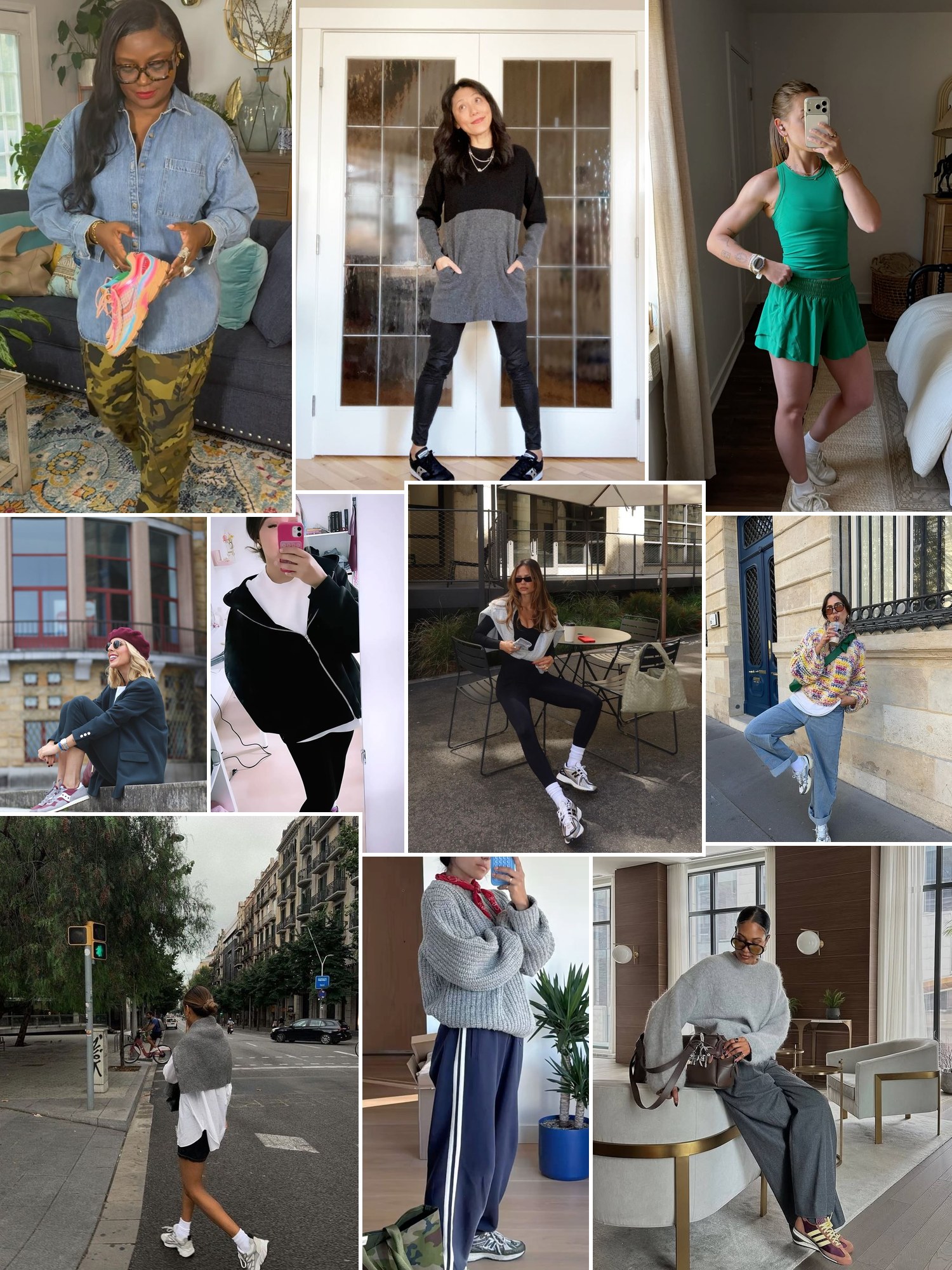
Saucony Jazz and Originals sneakers
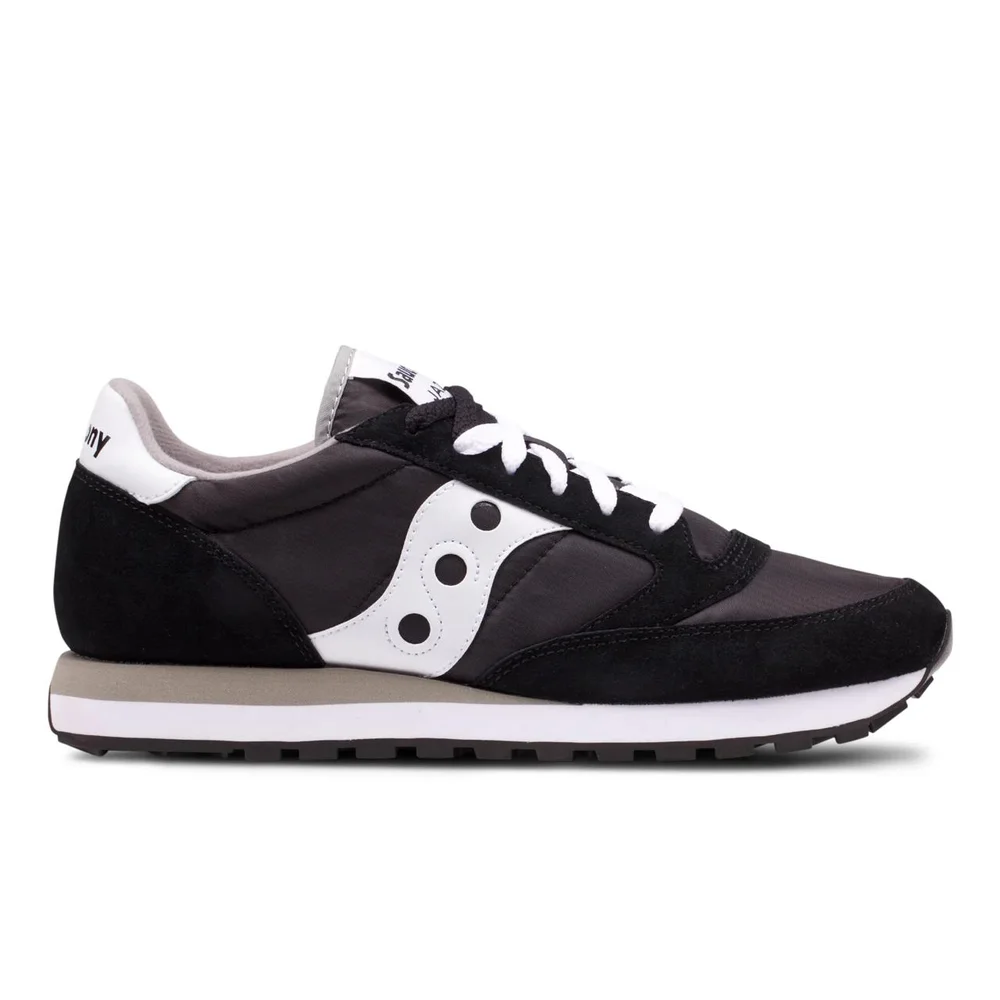
Jazz Original Black/White
Saucony
$90
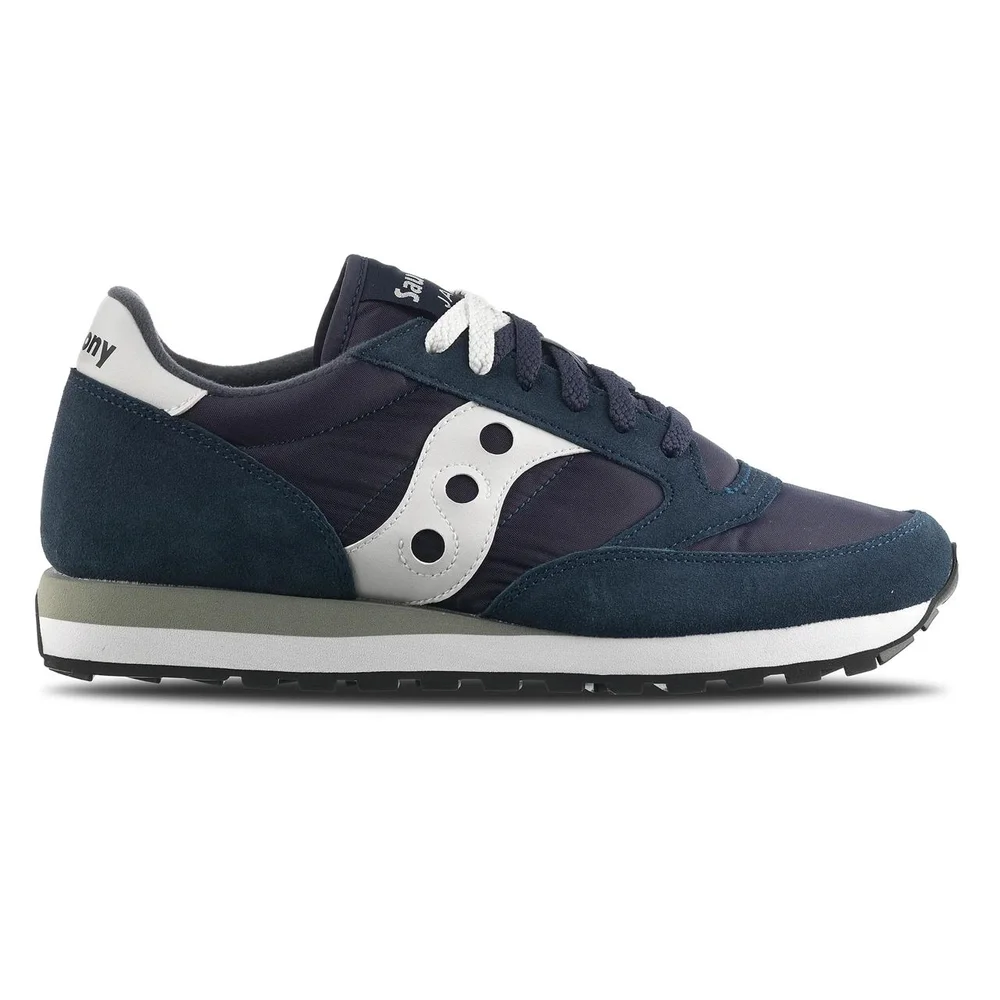
Jazz Original Navy/White
Saucony
$90
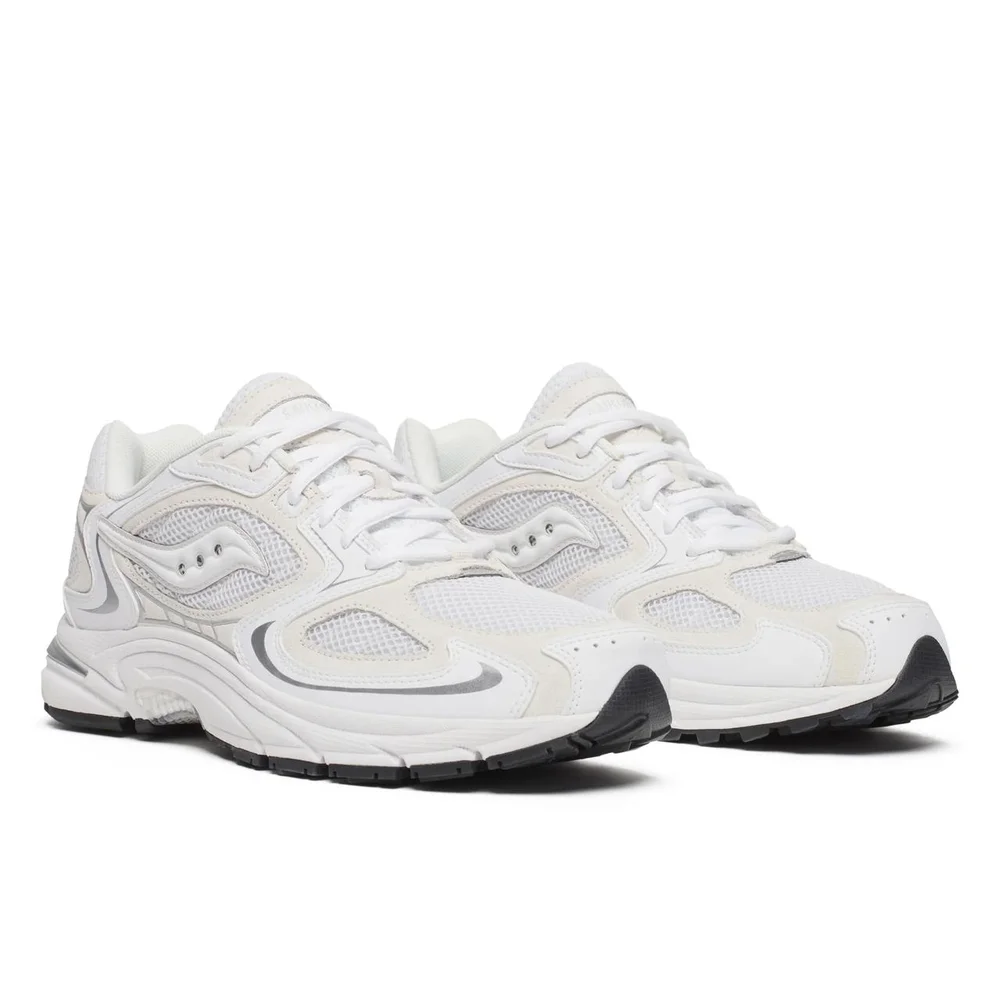
Grid Jazz 9 Suede White/Off White
Saucony
$69.95
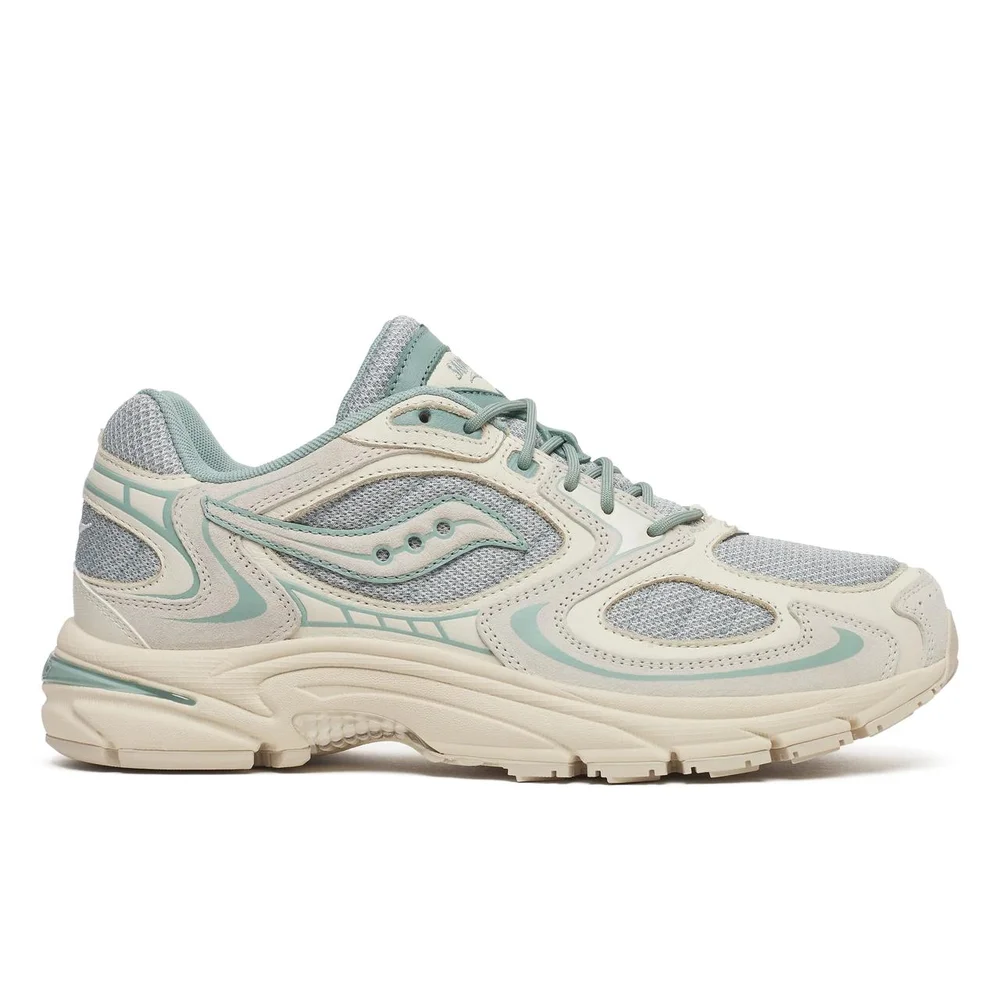
Grid Jazz 9 Premium Blue Surf/Tofu
Saucony
$70.95
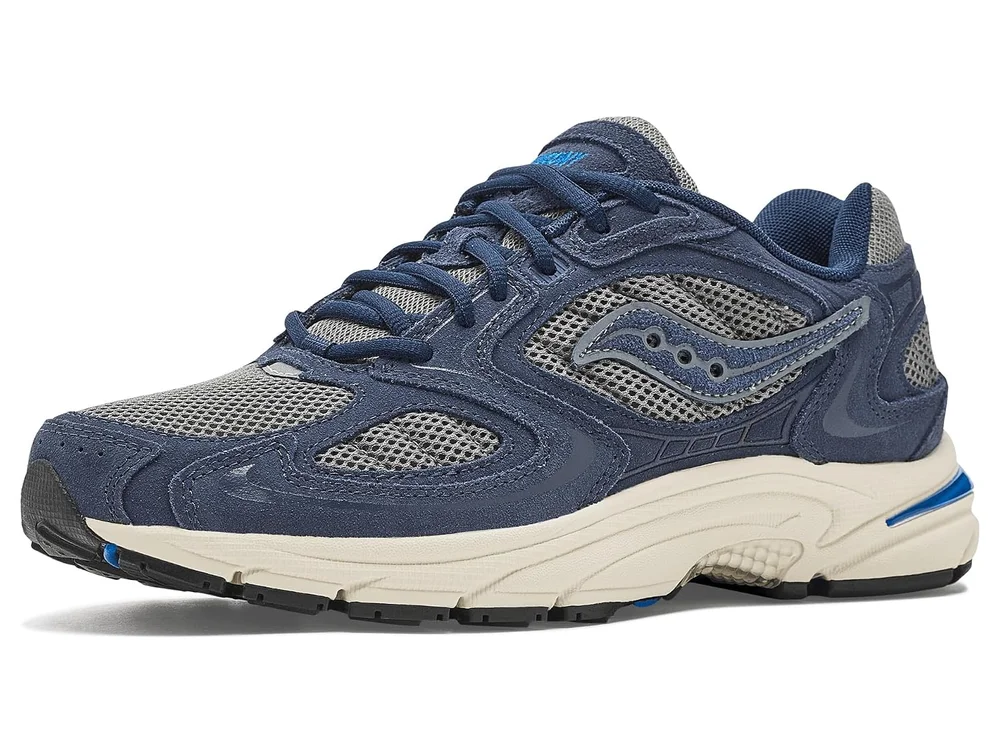
Grid Jazz 9 Navy/Grey
Saucony Originals
$106.25
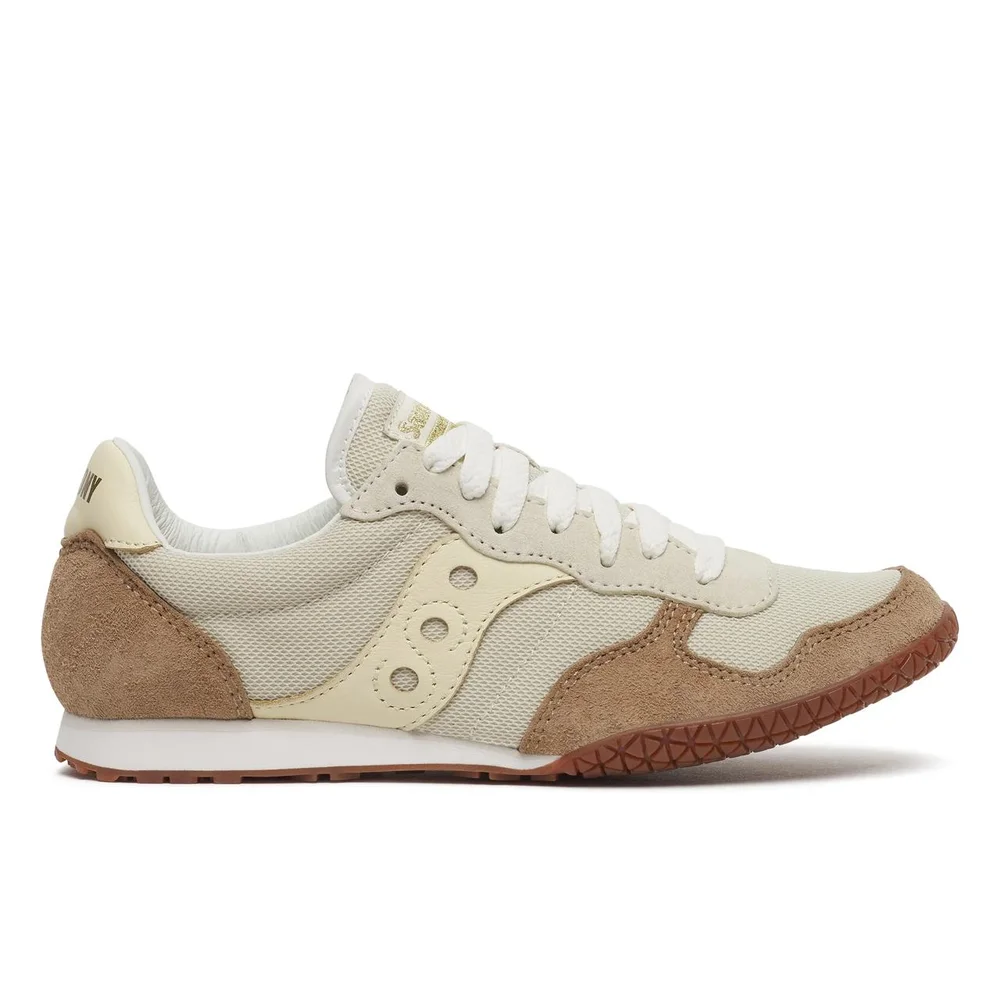
Racer 80 Eggshell/Saddle
Saucony
$110
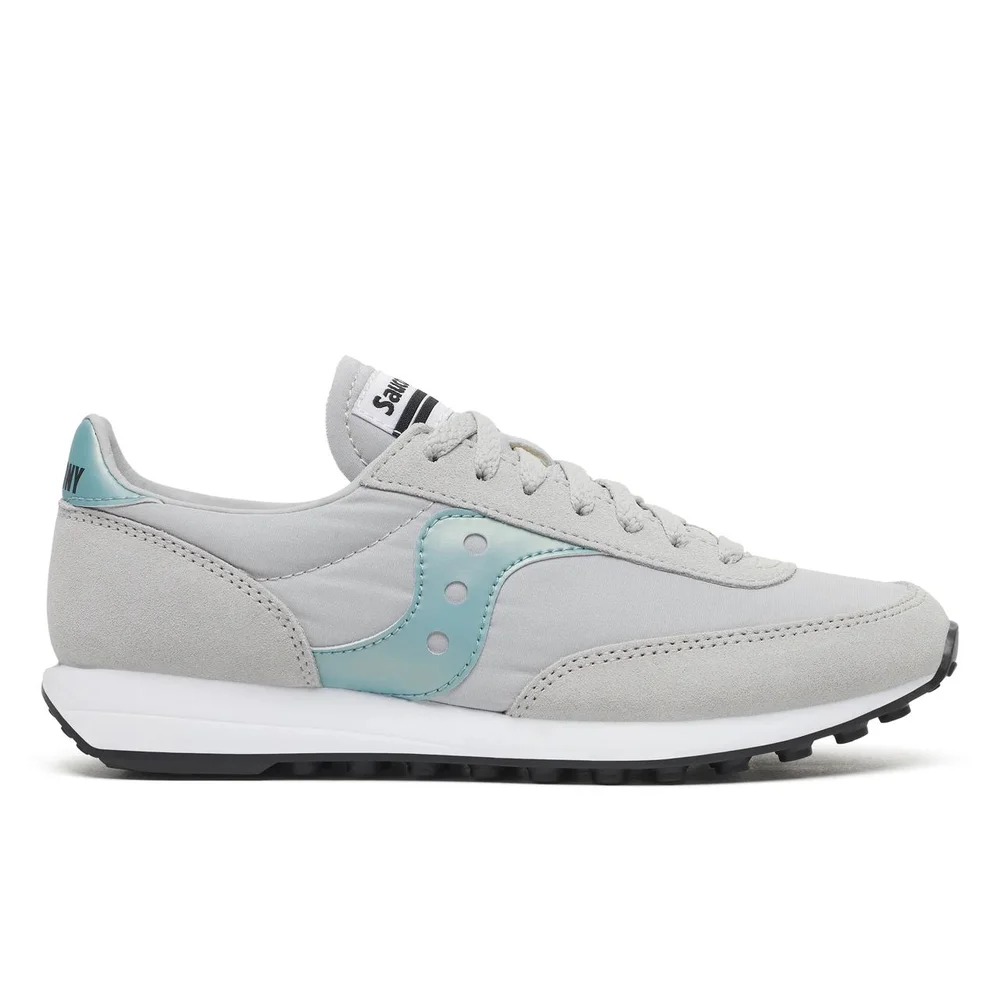
Trainer 80 Cadet/Glassine
Saucony
$100
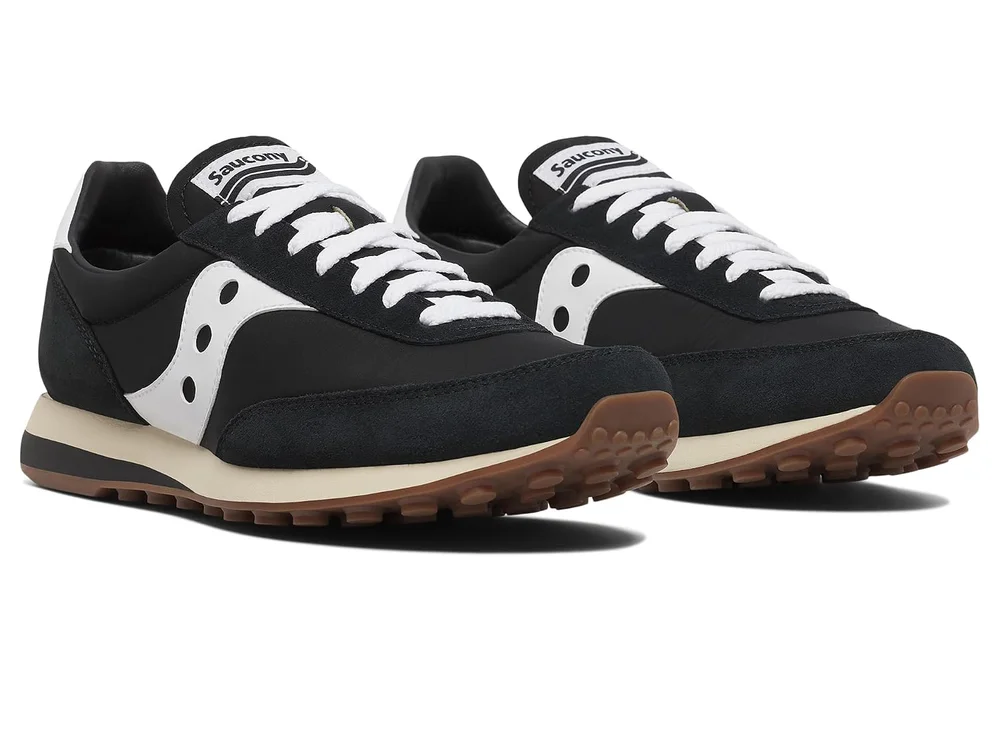
Trainer 80 Black/White
Saucony Originals
$99.95
Shadow and Omni: the chunkier 80s and Y2K runners
The Shadow was introduced in 1985 as a performance trainer, and the brand now files it under Originals, the line for shoes that were pure performance once and became something people simply like to wear. That is a useful way to read this group. These are runners first, which is why they sit so comfortably under real clothes.
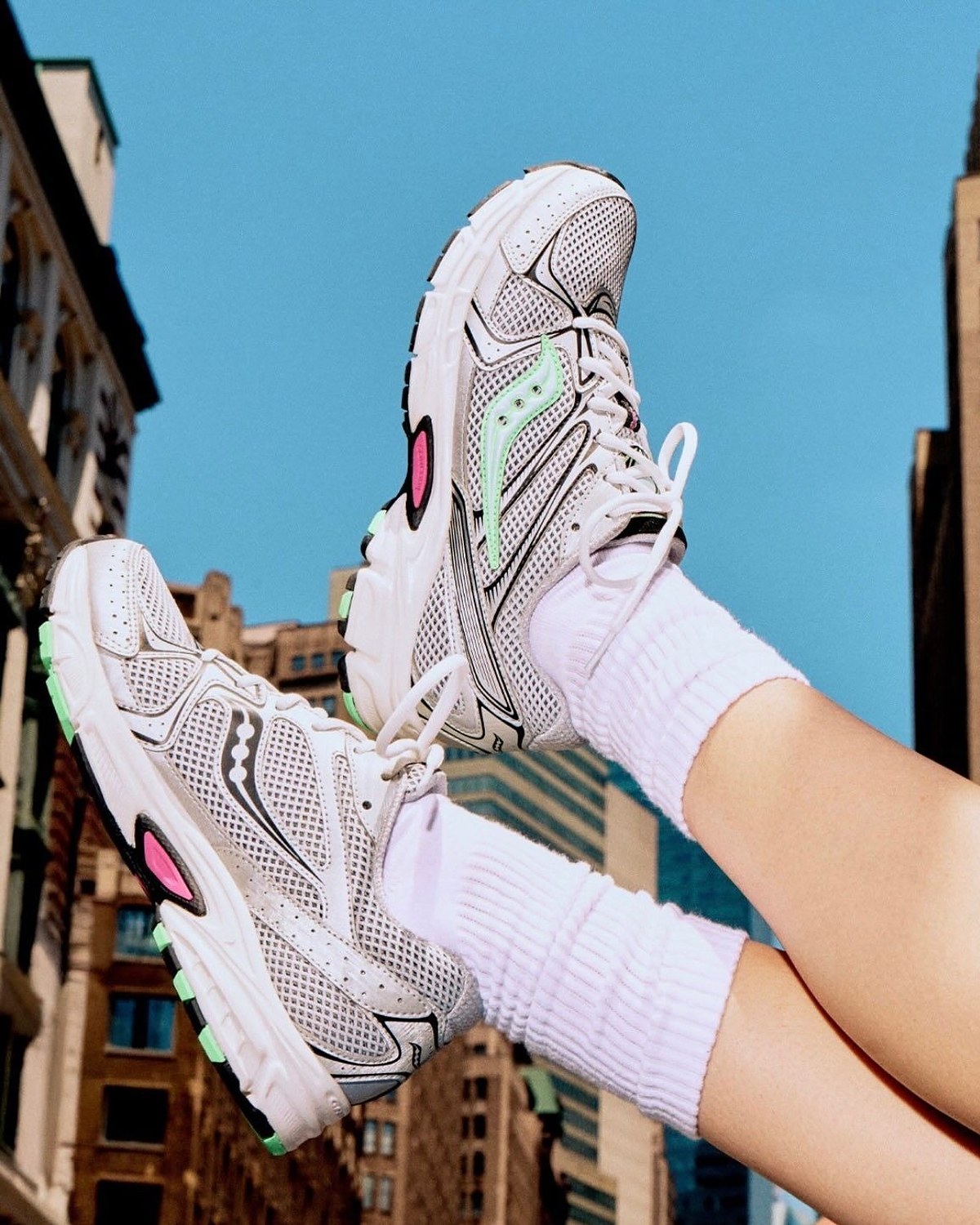
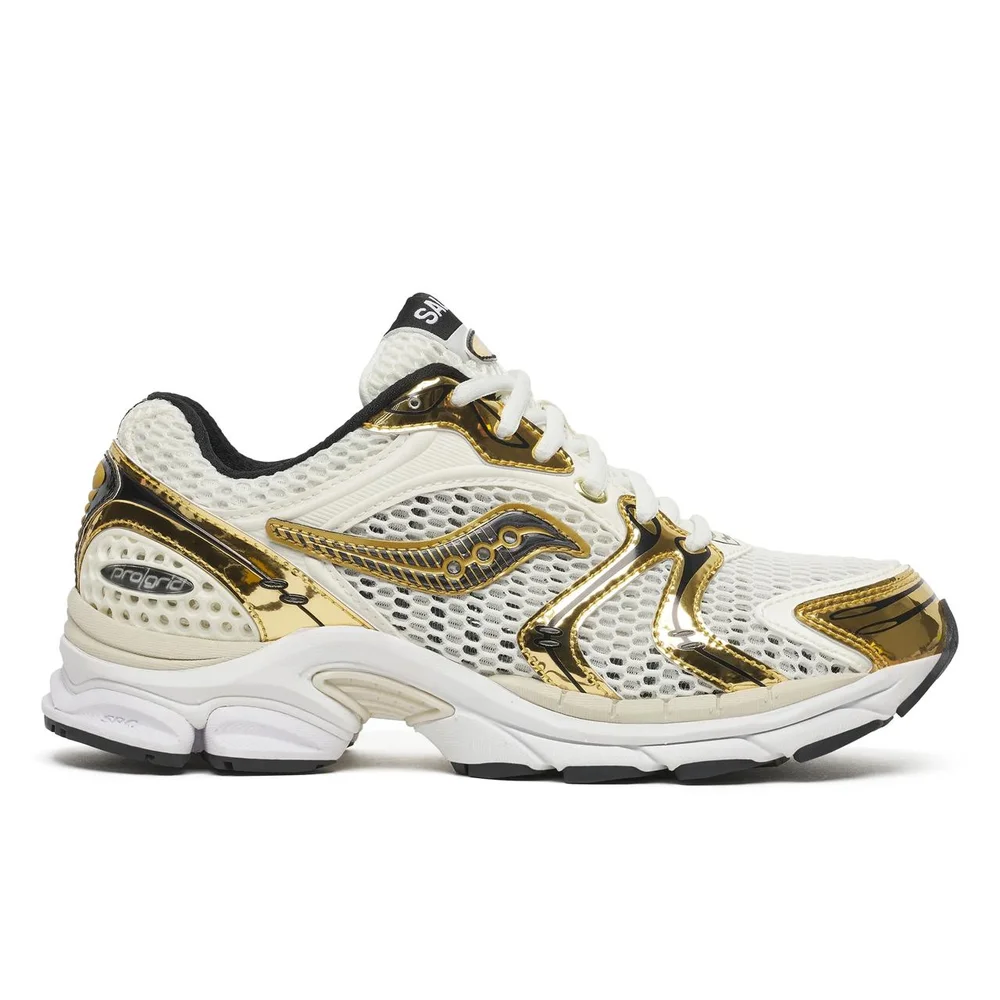
The Shadow 5000 in gray is the quiet one: suede, mesh and a triangular lug sole. The Shadow 6000 in laurel and oak, and the one in plein air, add leather and a layered midsole, and I would pair either with wide-leg cords and a barn jacket for a weekend that involves a farm stand. The Omni 9 is the Y2K one, with open mesh and rubberized cage overlays. The torte and black suede version is the easiest to dress, and the black multi, with its aqua, pink and lilac accents, is the one for a plain gray tracksuit.
The V2 in silver and white or black and silver is slimmer and a little metallic. I would put it with black leggings and a long camel coat.
Buying test: press your thumb on the toe box and flex the shoe. Mesh should give; a stiff, creased front means it will rub. What I would skip: the silver V2 with anything already shiny, because the metallic overlays need a matte outfit to look deliberate.
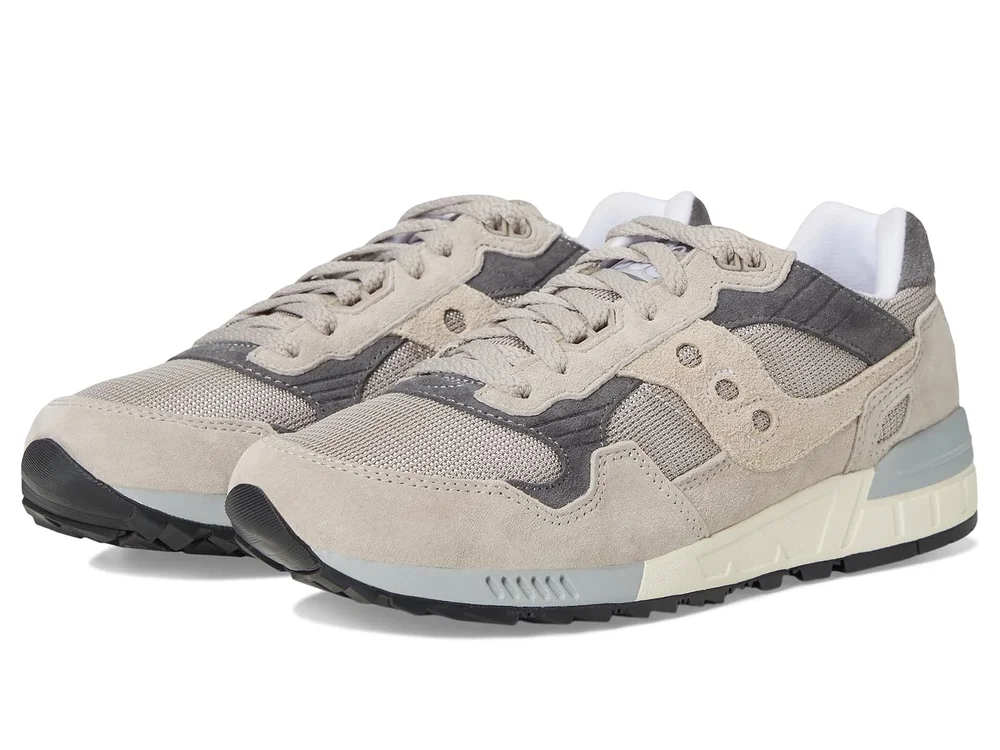
Shadow 5000 Grey/Grey
Saucony Originals
$114.95
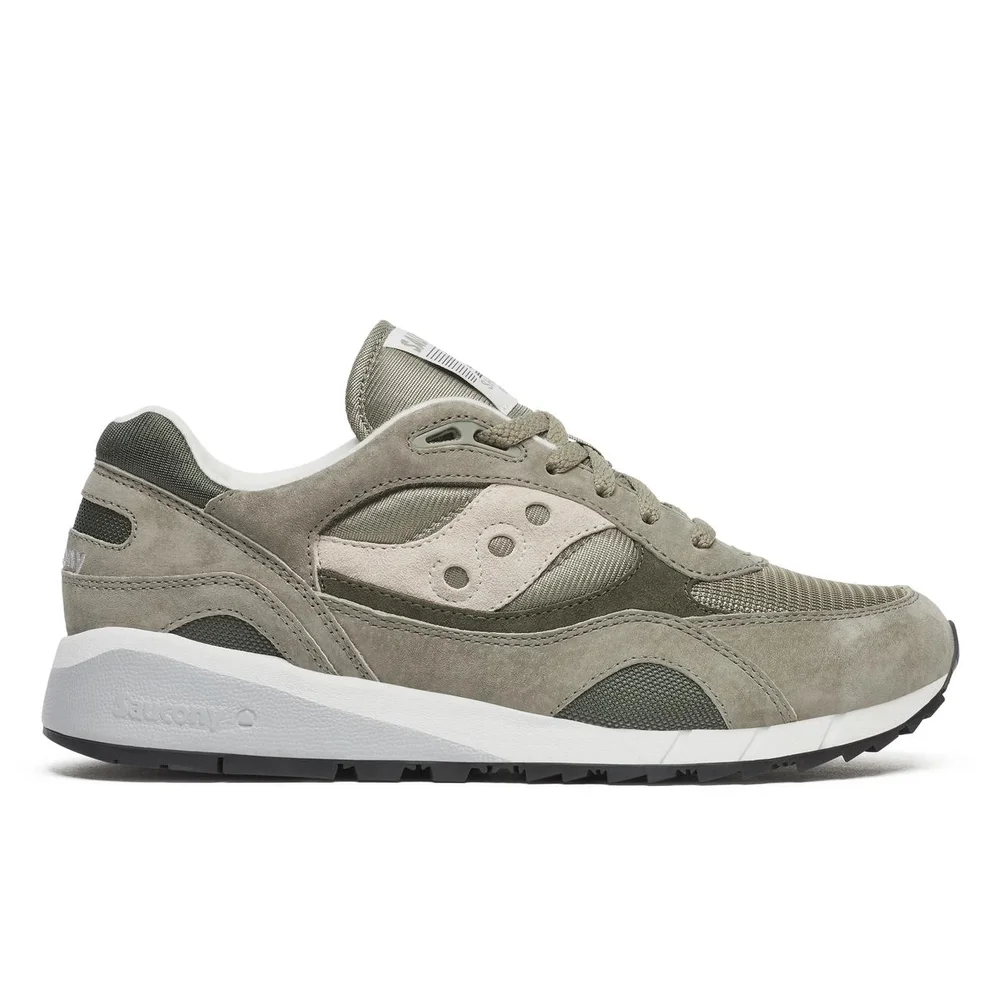
Shadow 6000 Laurel/Oak
Saucony
$77.95
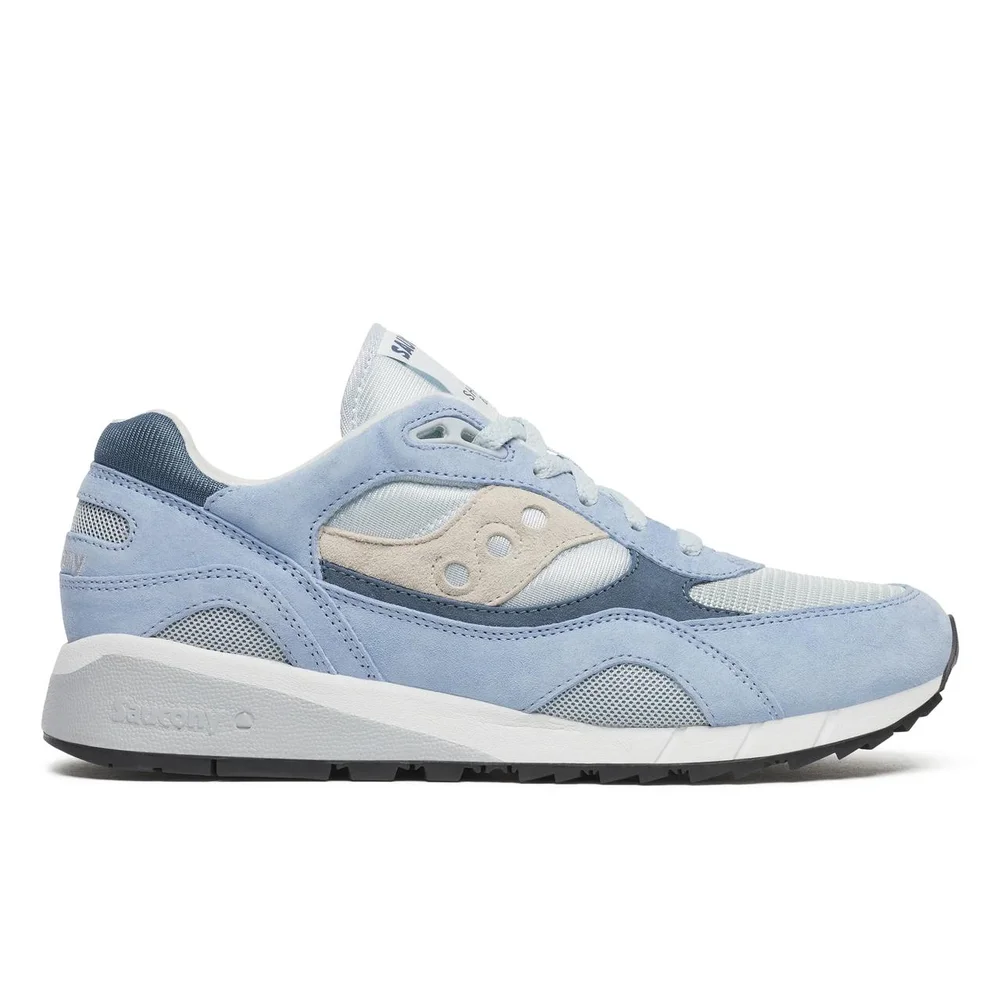
Shadow 6000 Plein Air
Saucony
$97.95
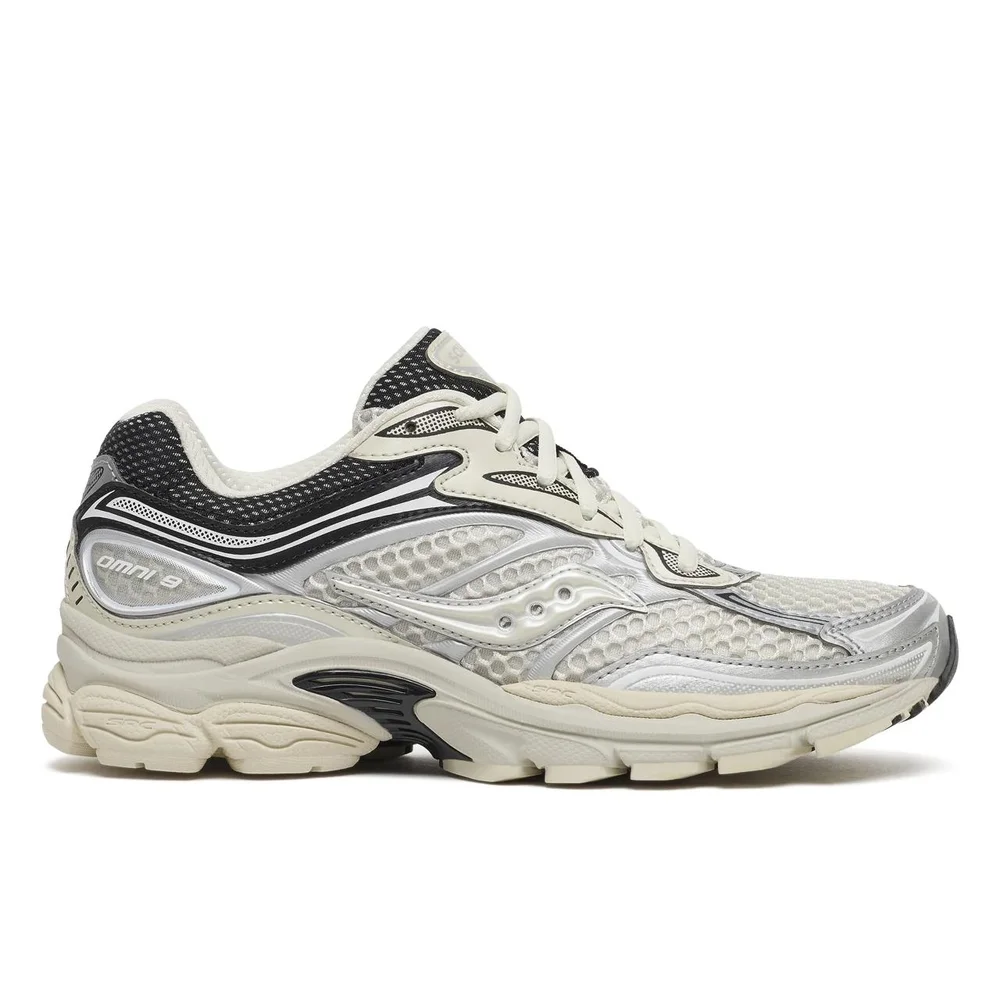
ProGrid Omni 9 Eggshell/Quartz
Saucony
$155
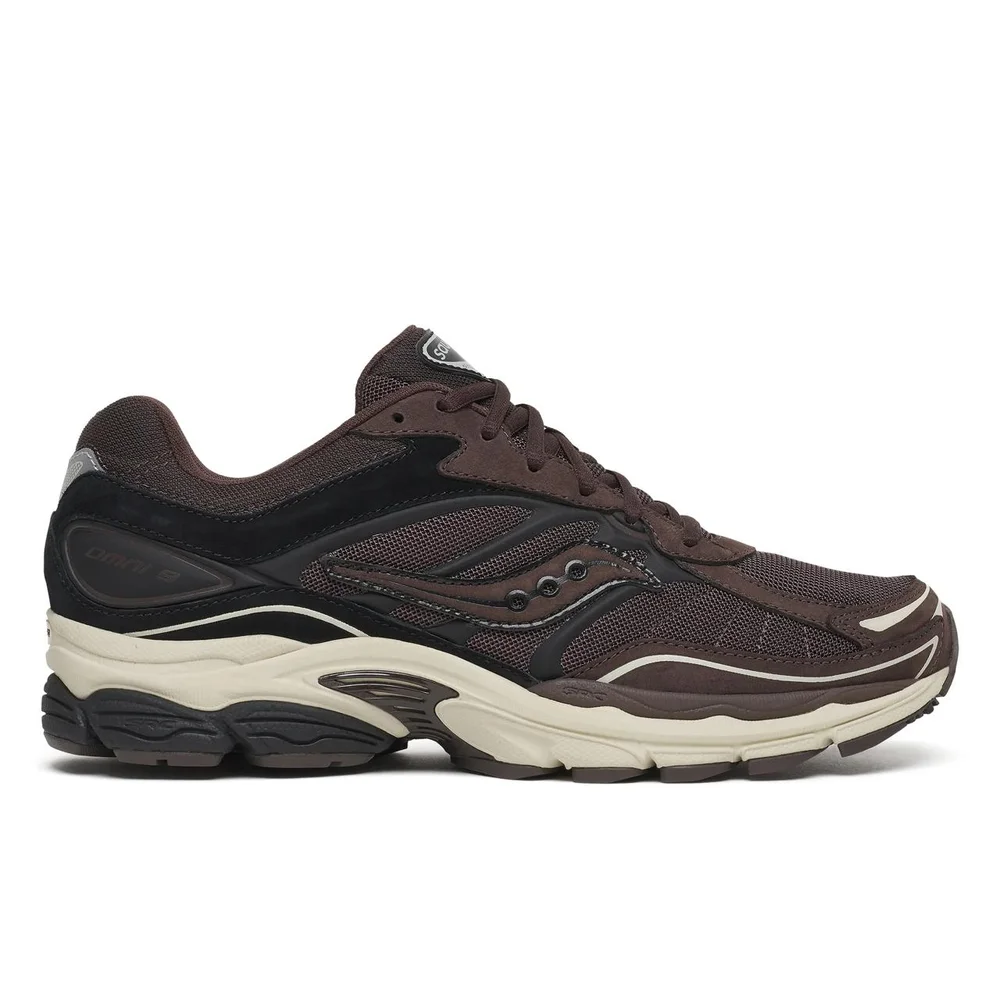
ProGrid Omni 9 Suede Torte/Black
Saucony
$155
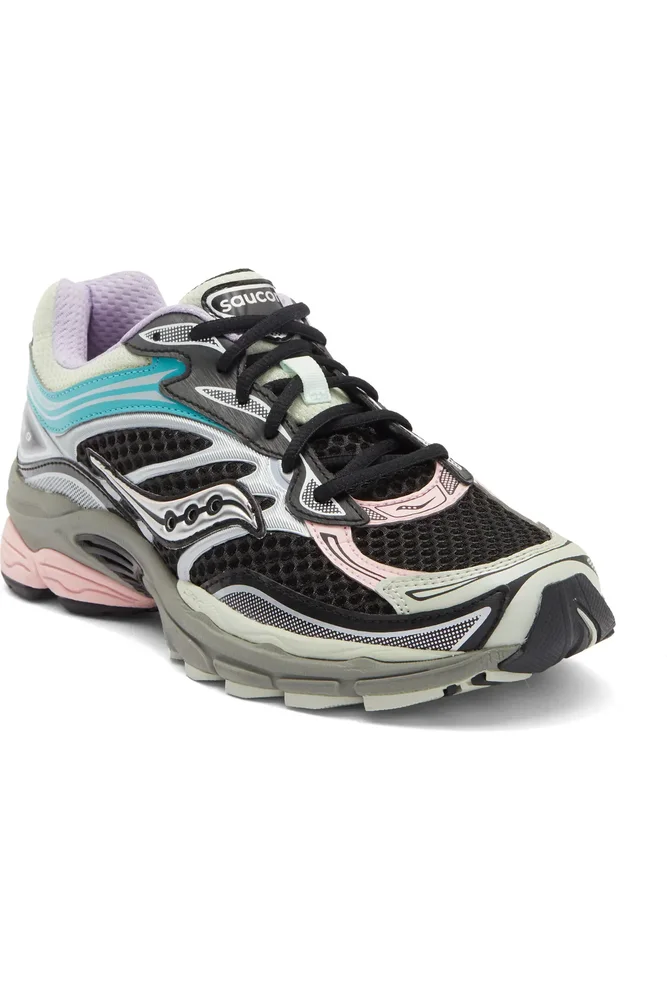
ProGrid Omni 9 Black Multi
Saucony
$155
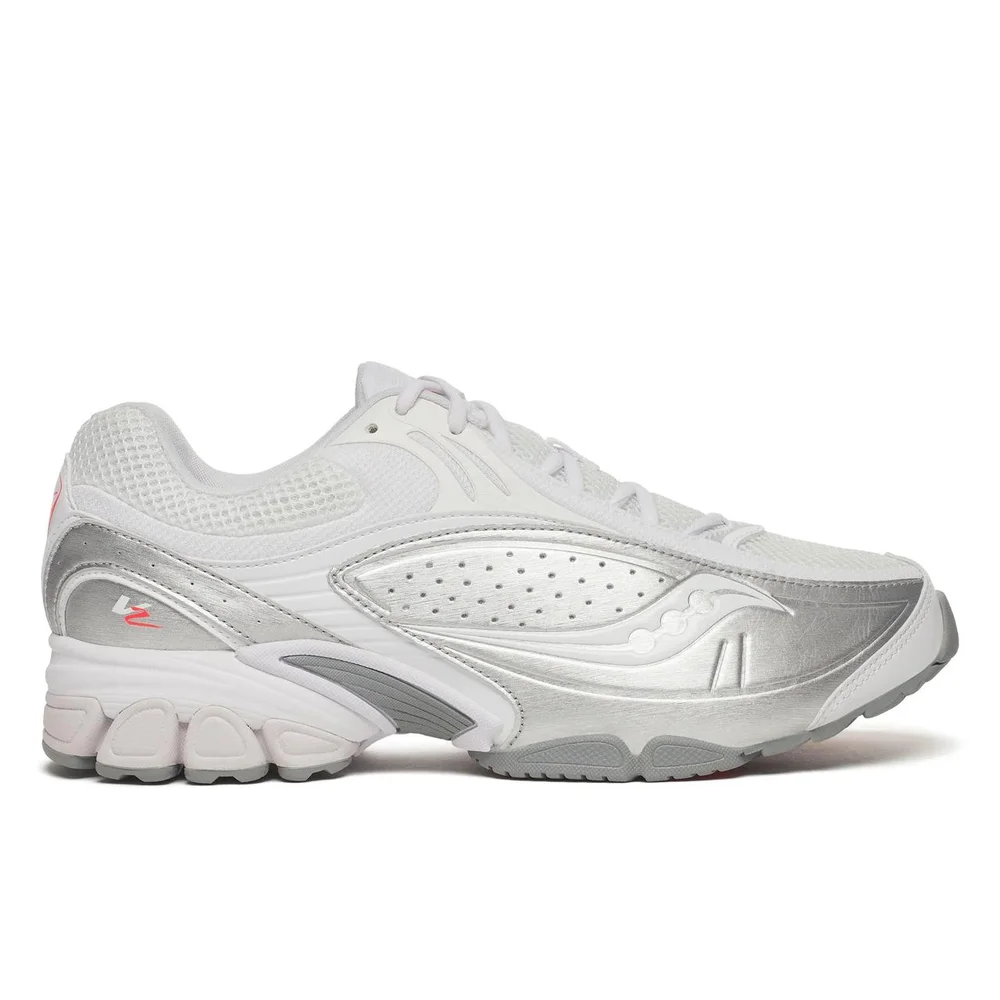
ProGrid V2 Silver/White
Saucony
$95.95
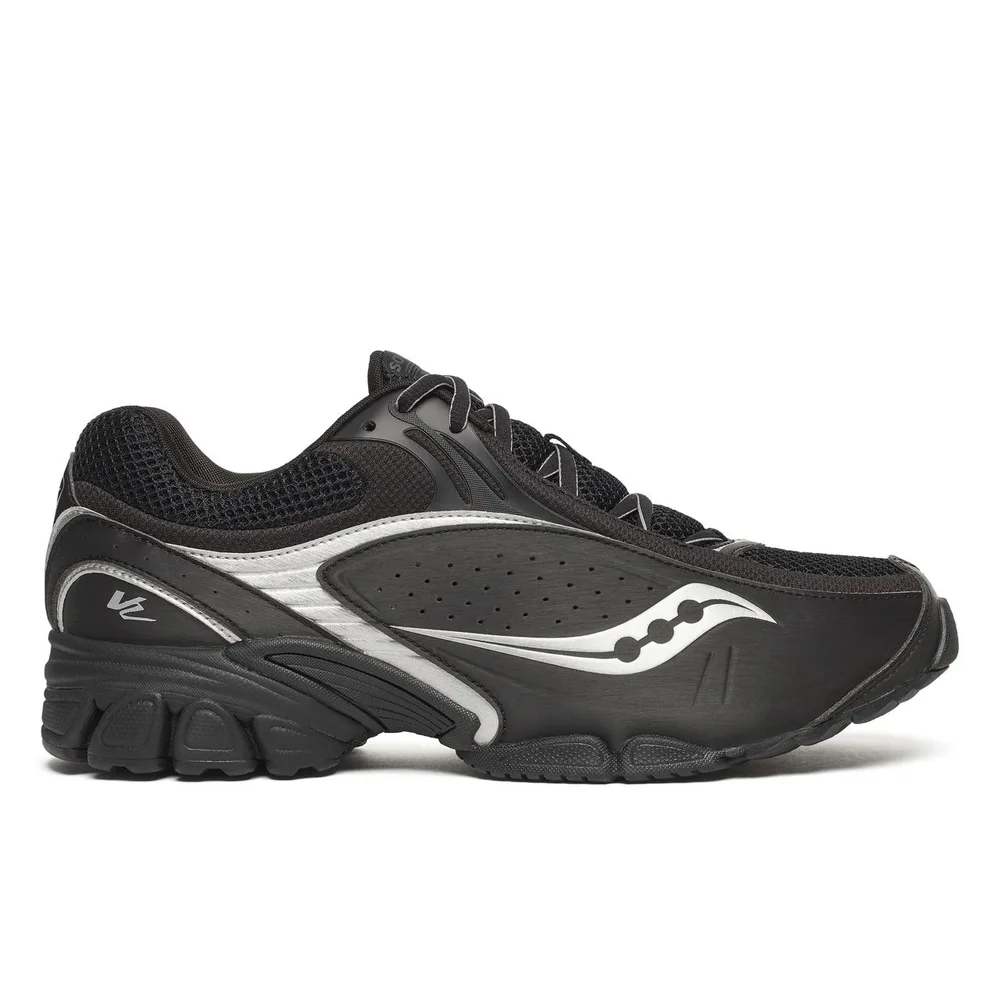
ProGrid V2 Black/Silver
Saucony
$115.95

Ride, Guide and ProGrid daily trainers
The company only started making running shoes in earnest when Hyde Athletic Industries bought the company in 1968, and the daily trainers here are the long answer to that decision. If you walk a lot, or you run a few mornings a week, this is the group to read slowly.
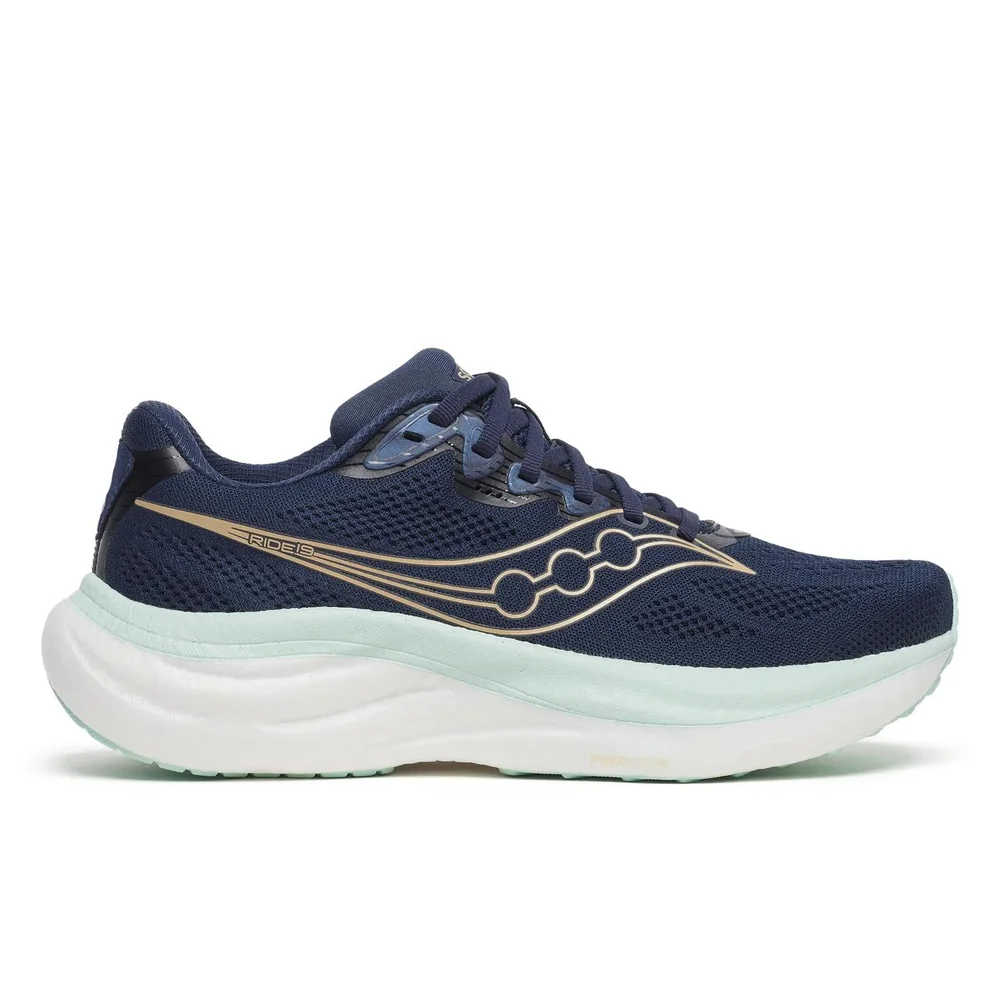
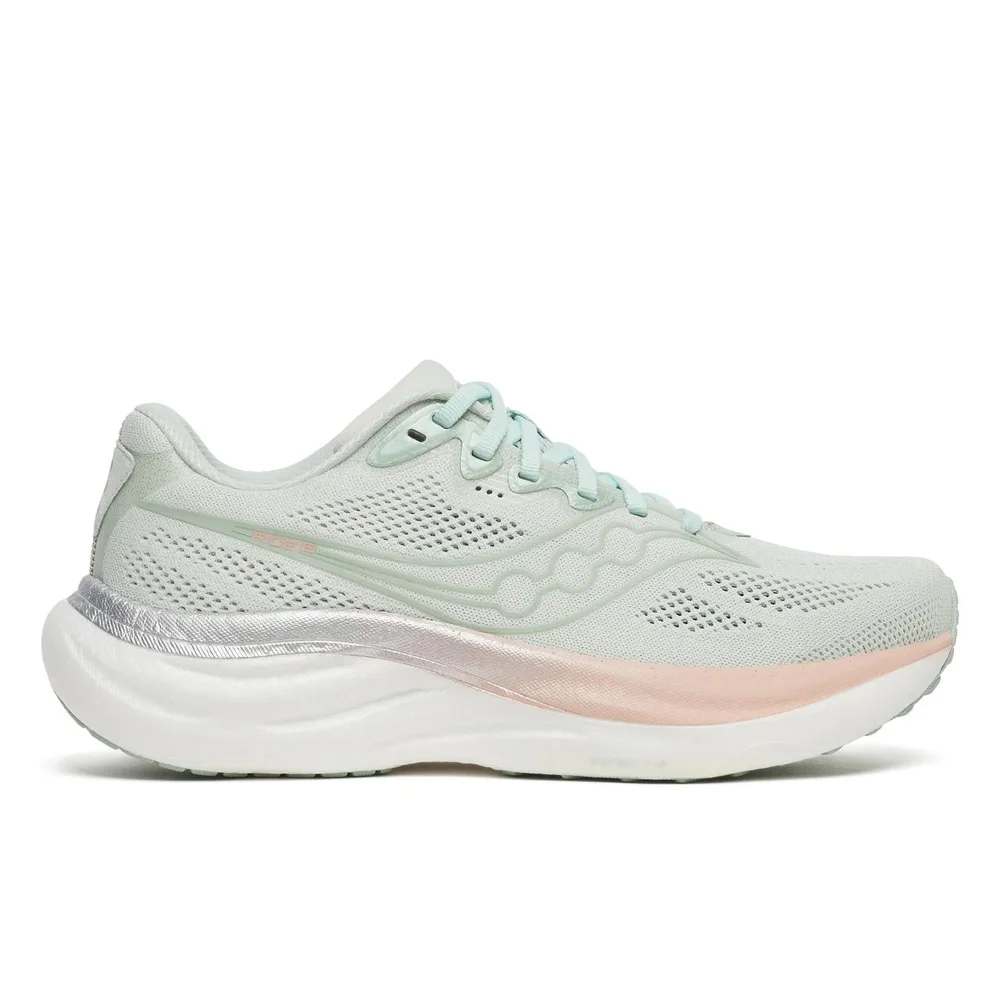
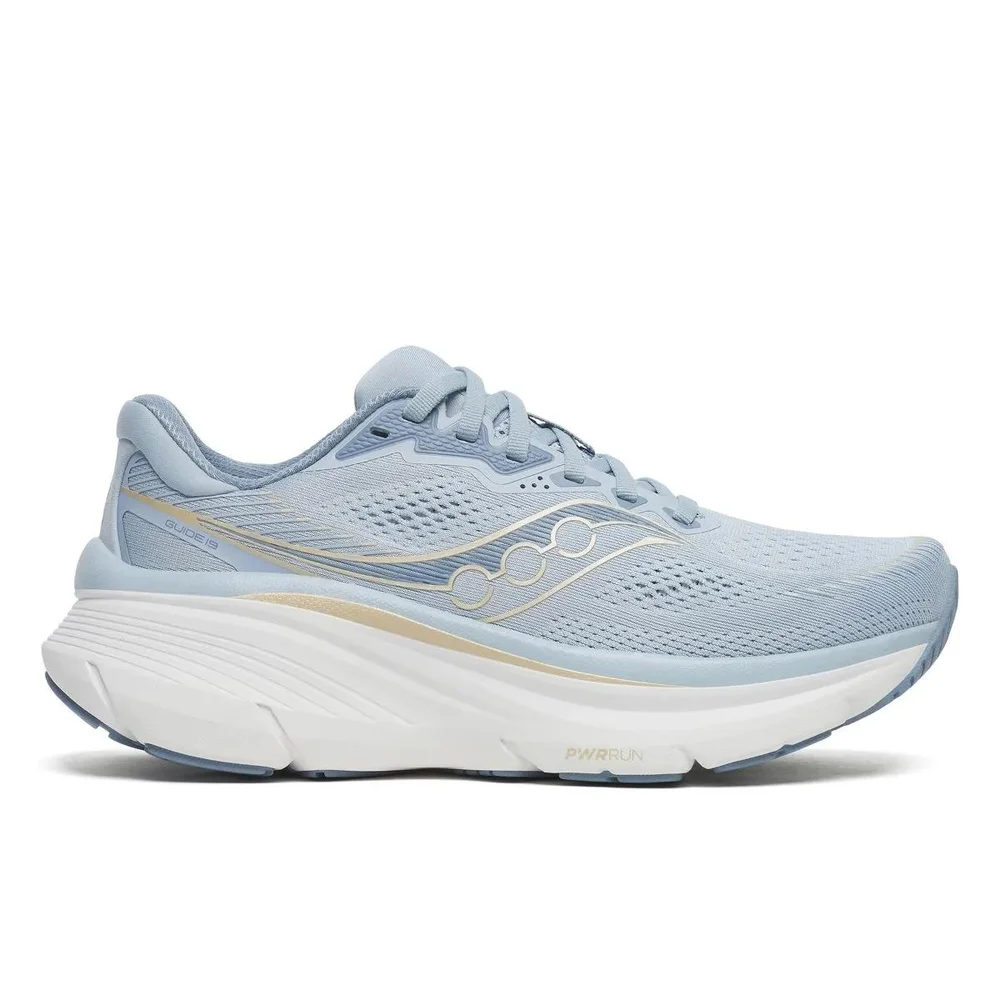
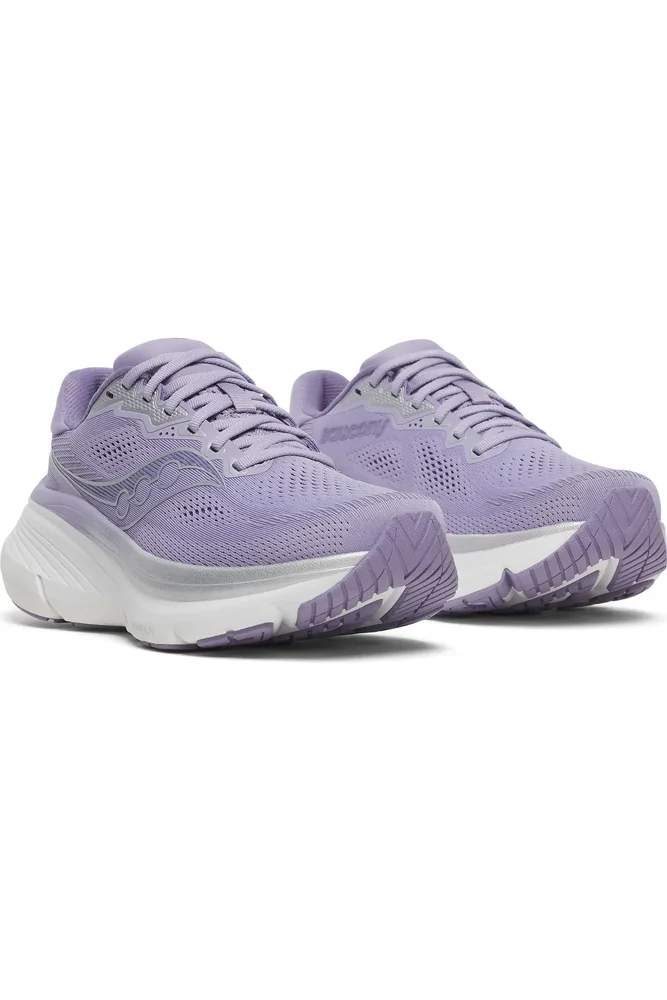
The Ride 19 is the cushioned neutral trainer, with an engineered-mesh upper and a rocker midsole that rolls you forward. The navy and aqua pair is the sporty one, and mist and cameo is the soft one I would wear with cream joggers. The Guide 19 is the stability version: max cushion, a broad base and a soft mesh upper. Celestial is a good blue for an all-gray October outfit, and haze white in lavender with silver overlays suits a trench coat.
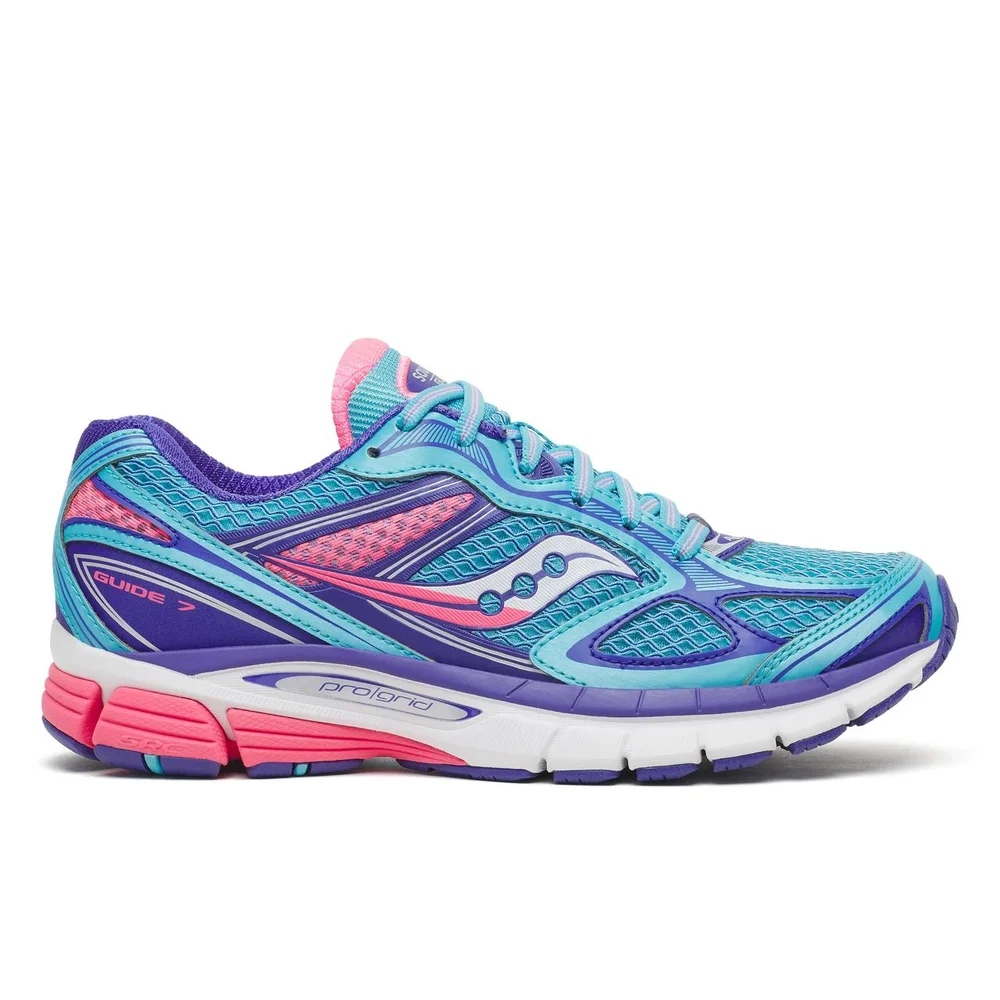
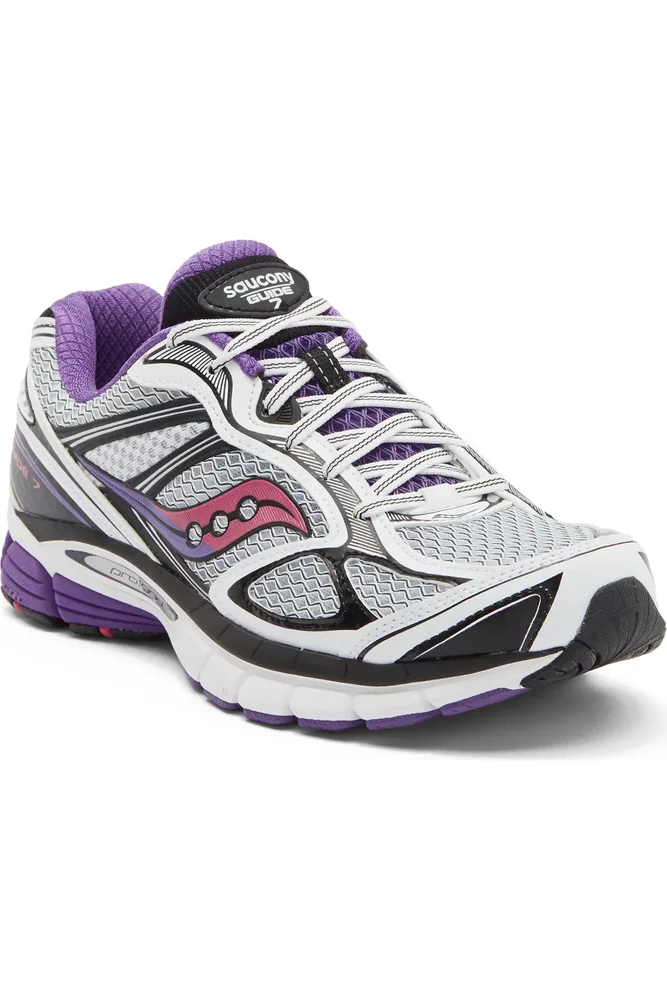
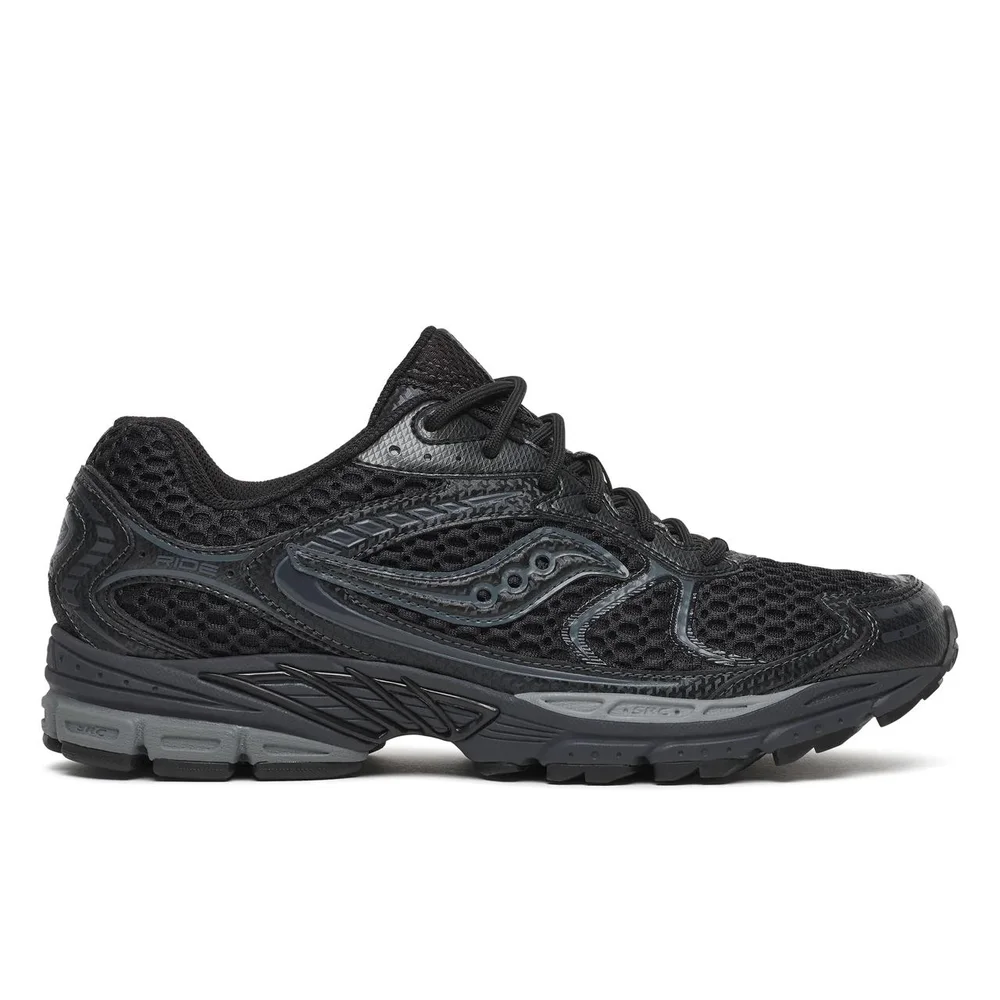
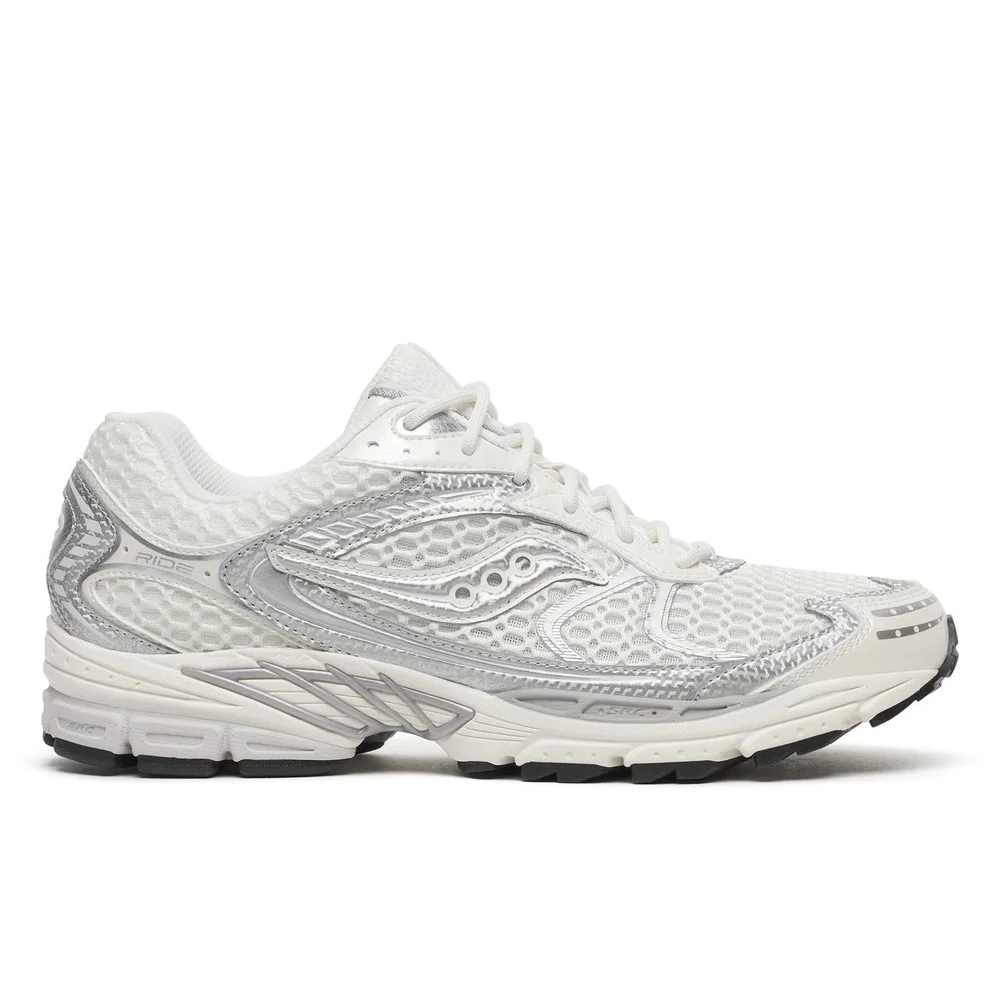
The retro ones are more fun. The Guide 7 in button and royal has reflective details and a chunky sole, and the white drupe has purple and pink accents. The Ride 1, originally launched in 2008, has an open-hole hexagonal mesh upper, and I would take the ivory and silver pair with straight jeans.
Fitting test: stand with your heel against the back wall of a shop or your own hallway and check there is a thumb's width in front of your longest toe. What I would skip: the Guide if you only want a neutral shoe, since the broad base is built for support you may not need.
Endorphin and Triumph, the fast and the plush
Since 2012 the brand has belonged to Wolverine Worldwide, the same company behind Merrell, and the Endorphin and Triumph families show what a big parent lets a running brand do: fast shoes and soft shoes, both made properly. One is for the clock. The other is for the long Sunday.
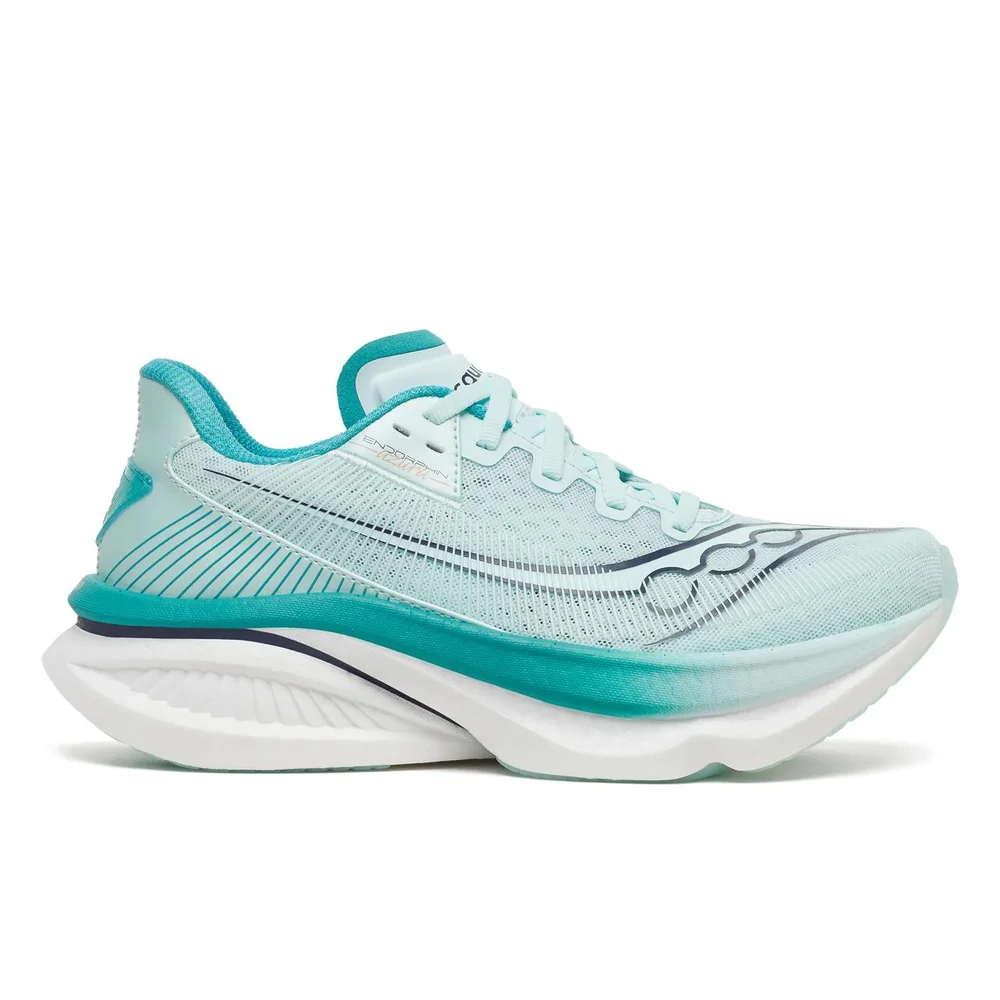
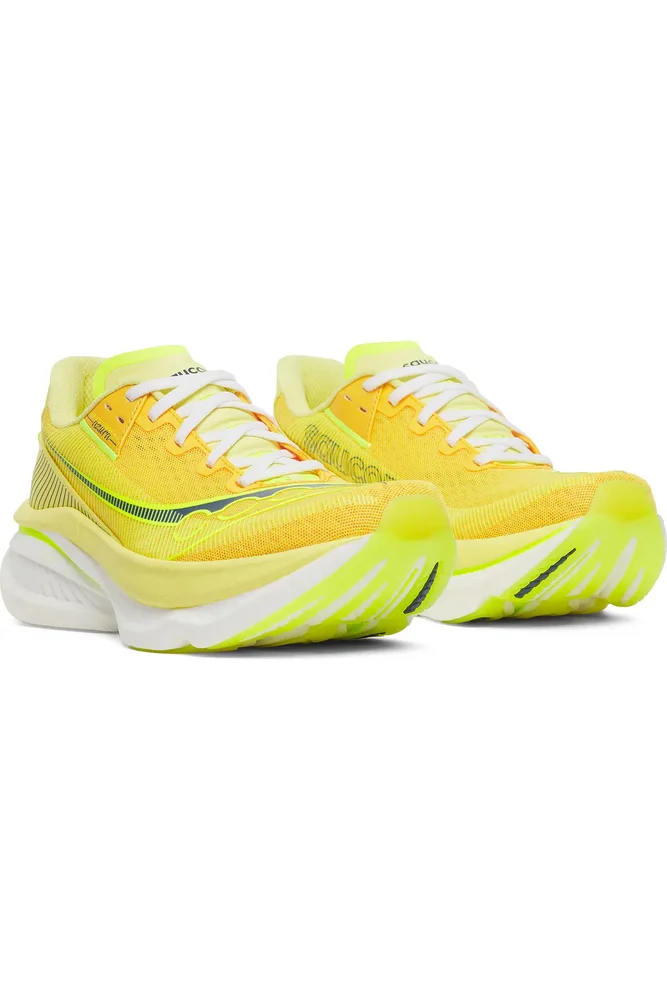
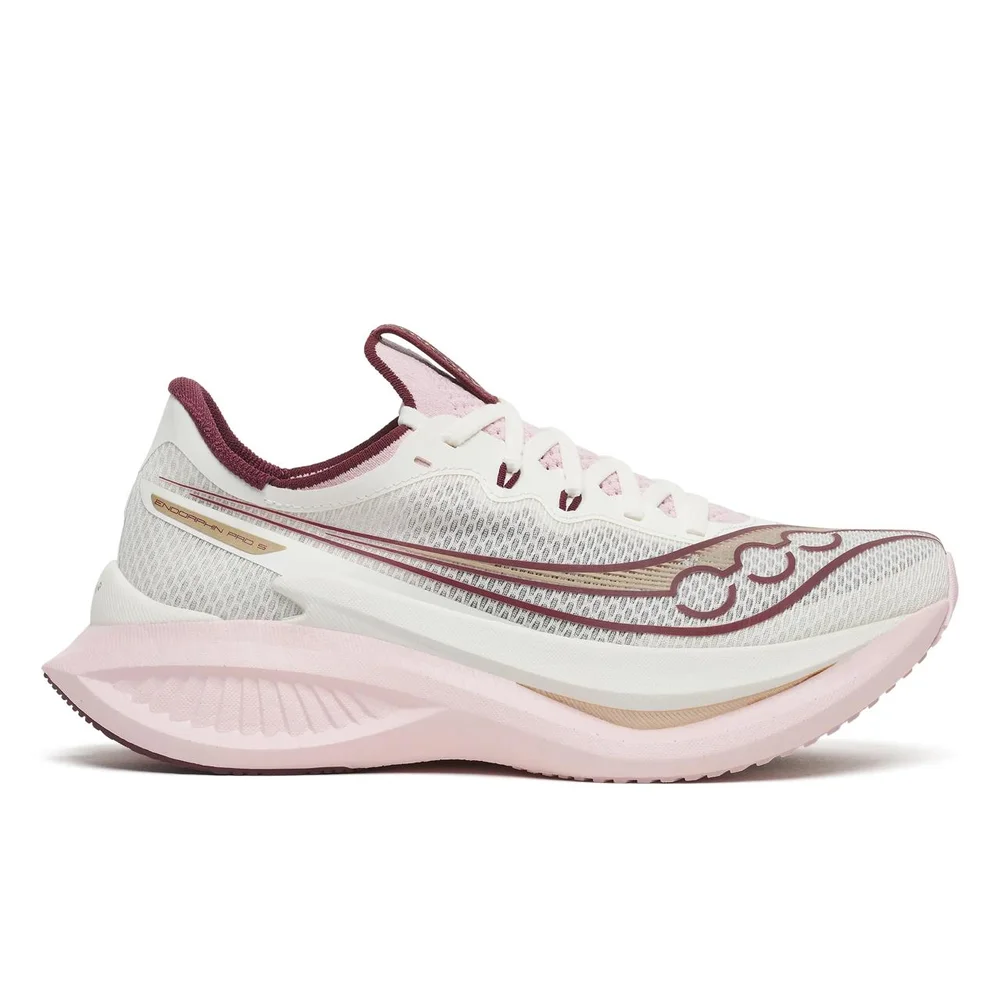
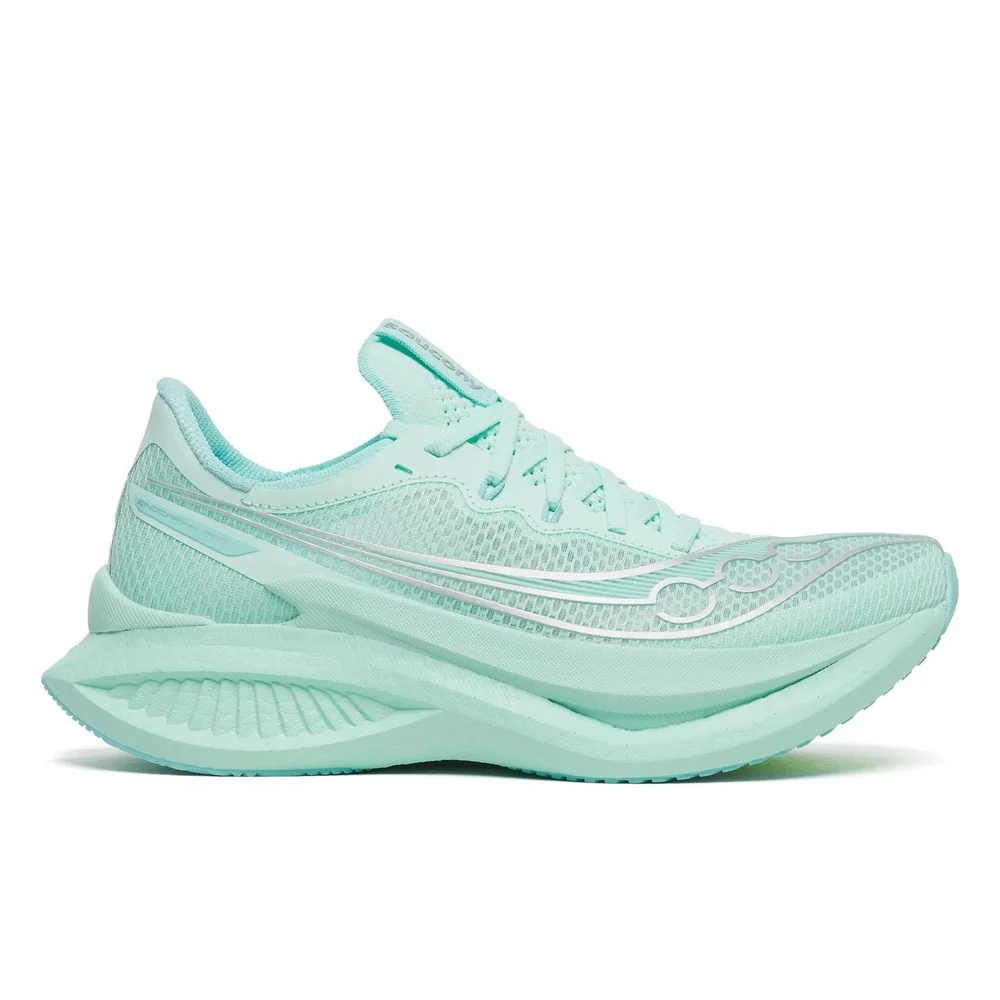
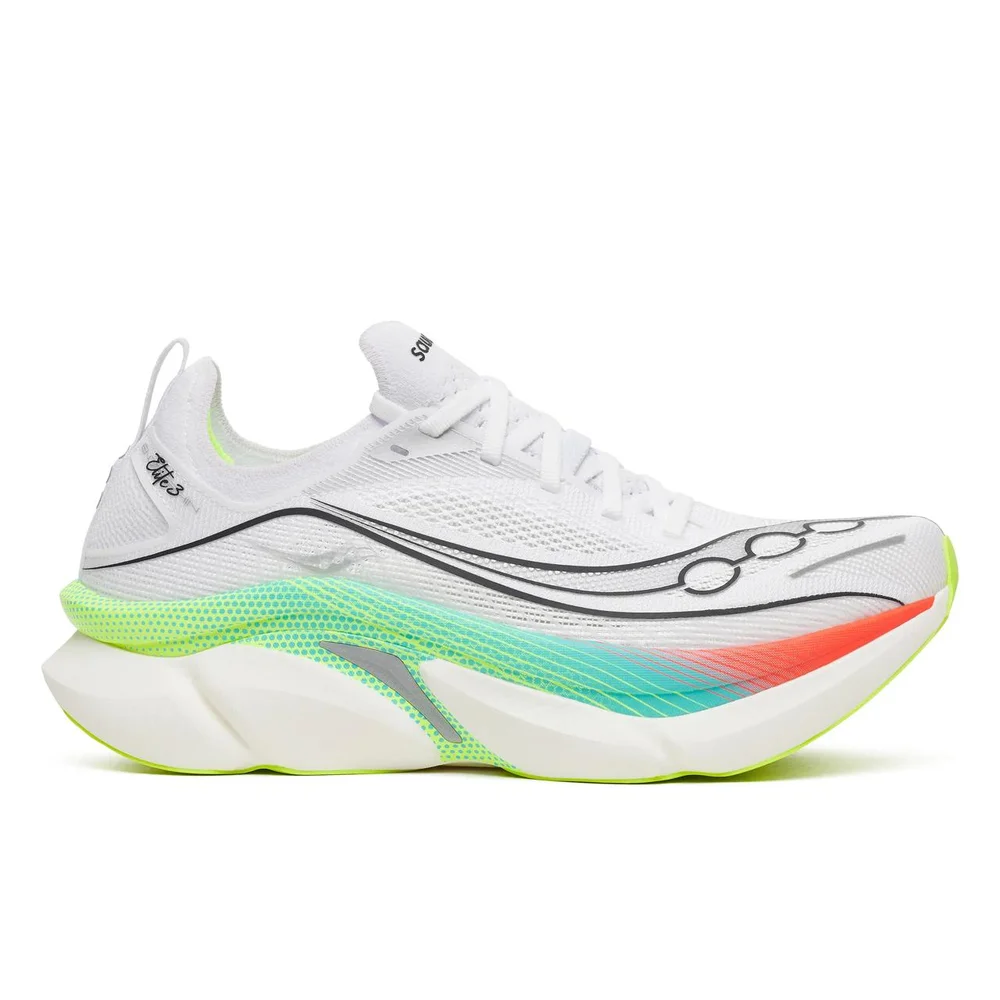
The Endorphin Azura is the lightweight speed trainer without a plate, with a sculpted foam midsole and a mesh upper. Spa and tranquil is a pale, calm pair, and sunrise is a loud yellow with a neon lime midsole that I would wear with navy track pants and nothing else loud. The Endorphin Pro 5 in ivory and silk or aqua is the carbon-plated racer, with a tall dual-density midsole. The Endorphin Elite 3 is the race-day one. Honestly, these are for running, so style them like a runner: leggings, a fleece, a quarter-zip.
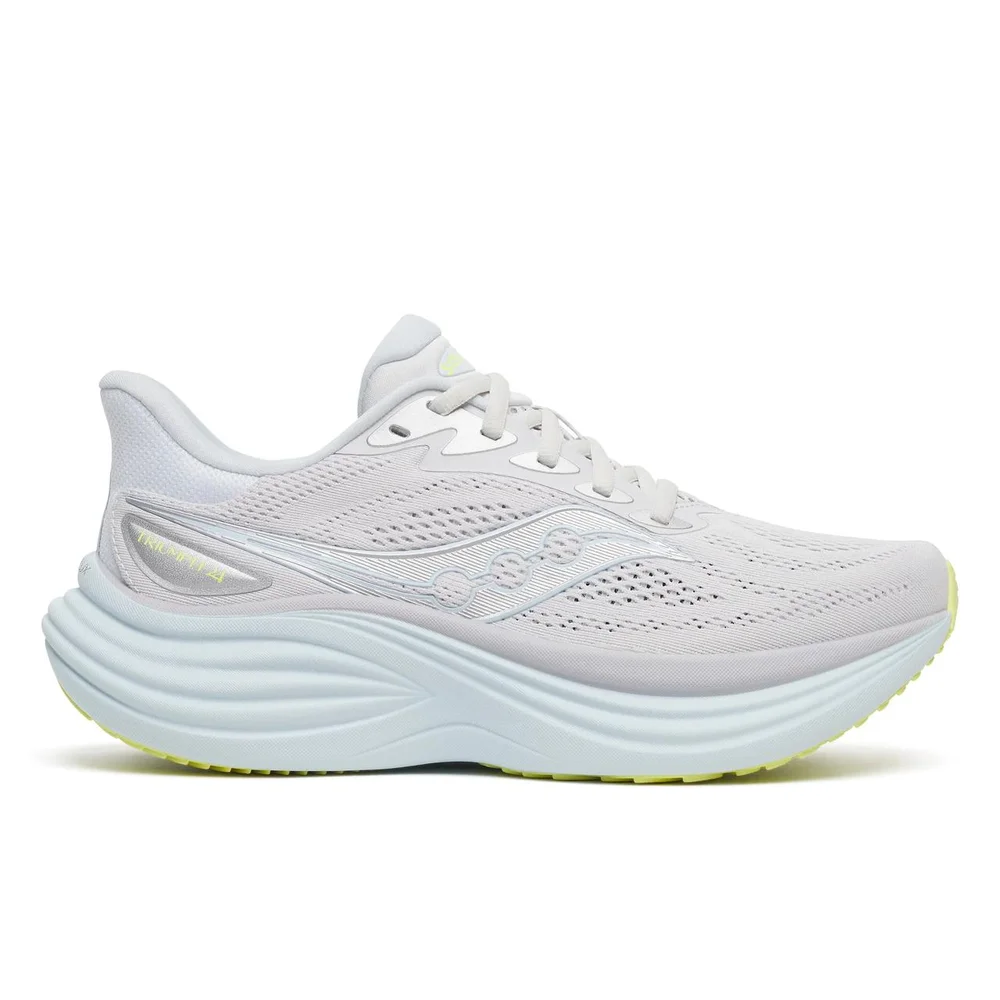
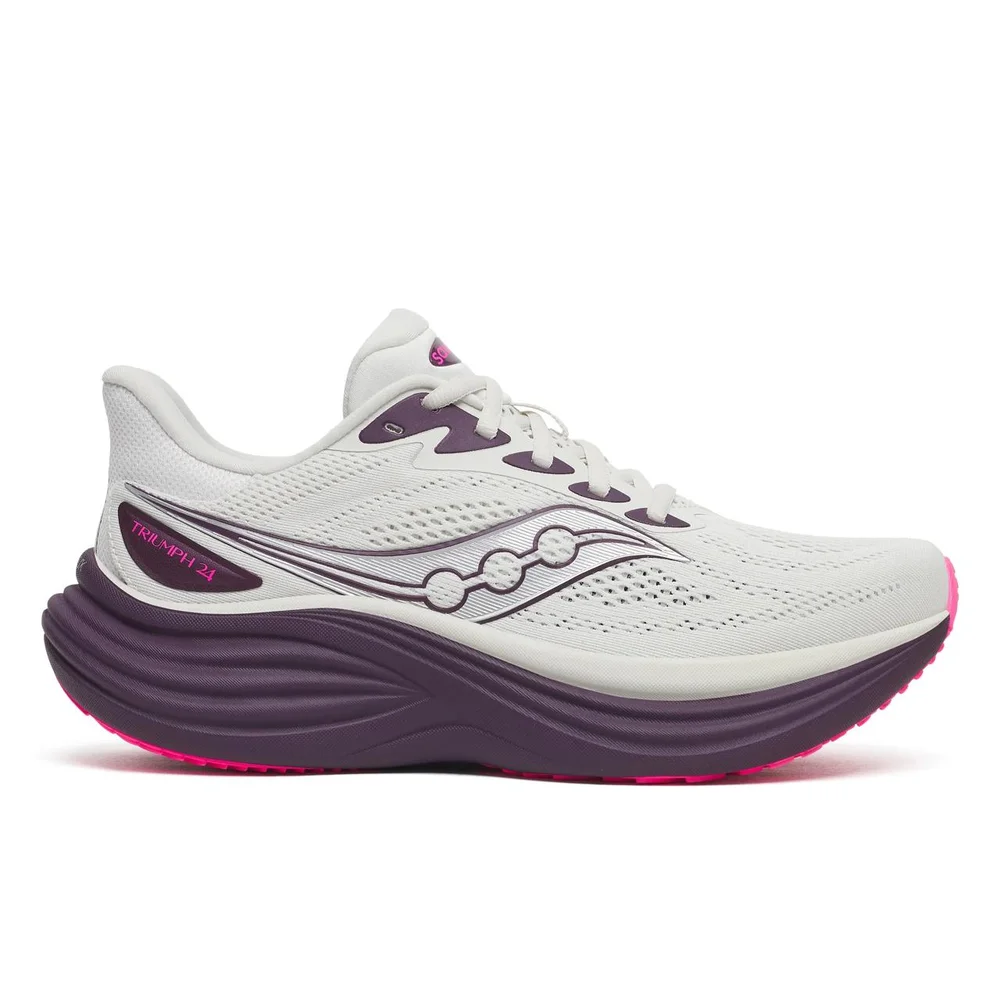
The Triumph 24 is the plush one, with a thick foam midsole and a breathable mesh upper. Fog and ice melt is easy with jeans, and quartz and eggplant is the one for a dark wool coat. The Triumph 4 in egret and black is the retro, high-mileage cousin, with a segmented midsole.
Test: bend the shoe at the ball of the foot. A race shoe should resist; a Triumph should fold easily. What I would skip: the Endorphin Pro 5 as an everyday sneaker, since it is built for race day and wears out its point on errands.
Peregrine, Xodus and the road-to-trail shoes
The creek that gave the brand its name is a real place, a 17-mile run into Maiden Creek, so it feels right that the trail shoes are where the brand sounds most itself. Wet leaves, mud and cold mornings are a good reason to buy a lugged outsole, and October is when these start to make sense.
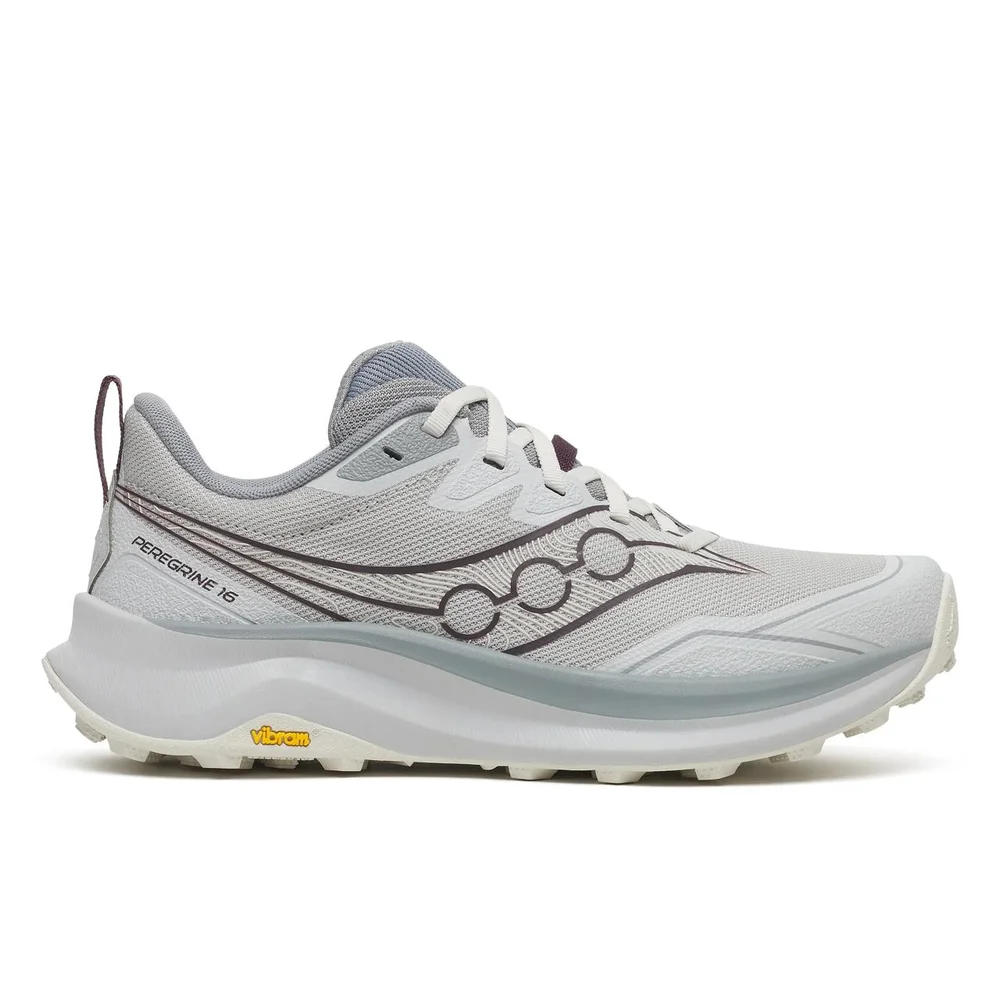
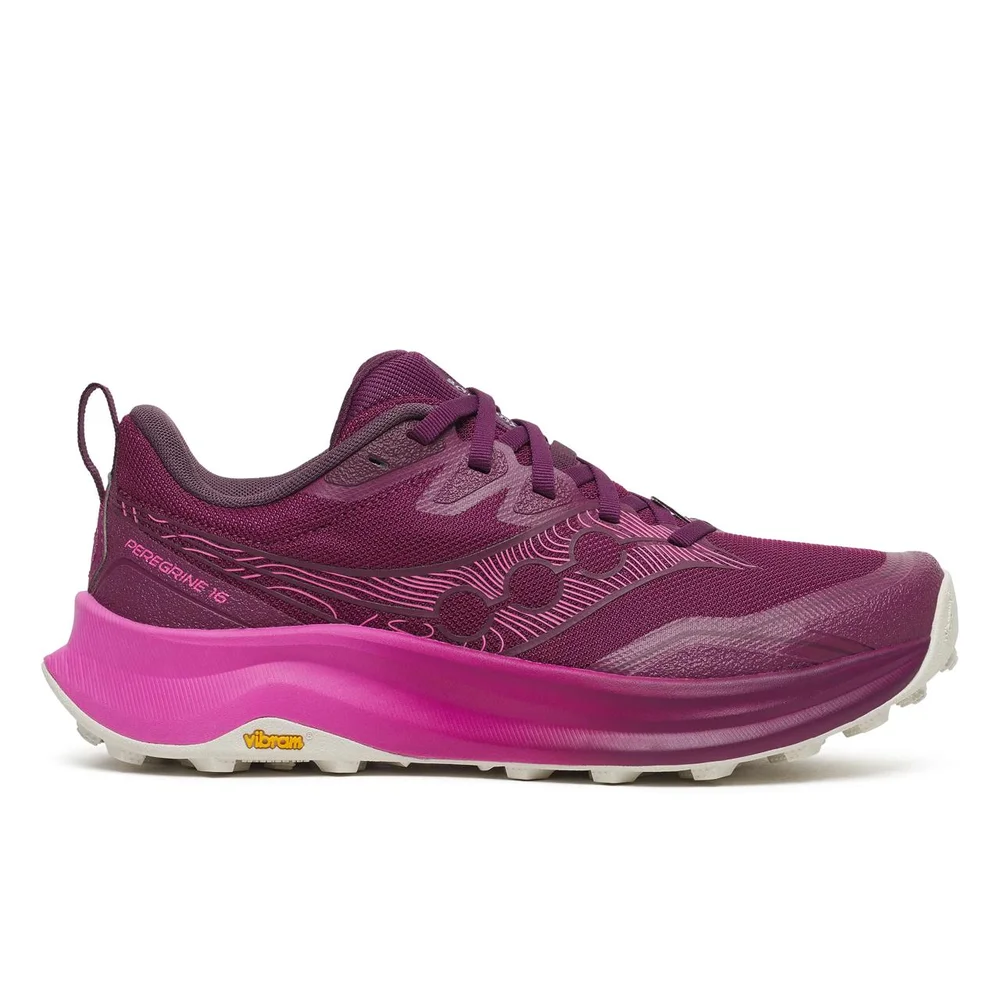
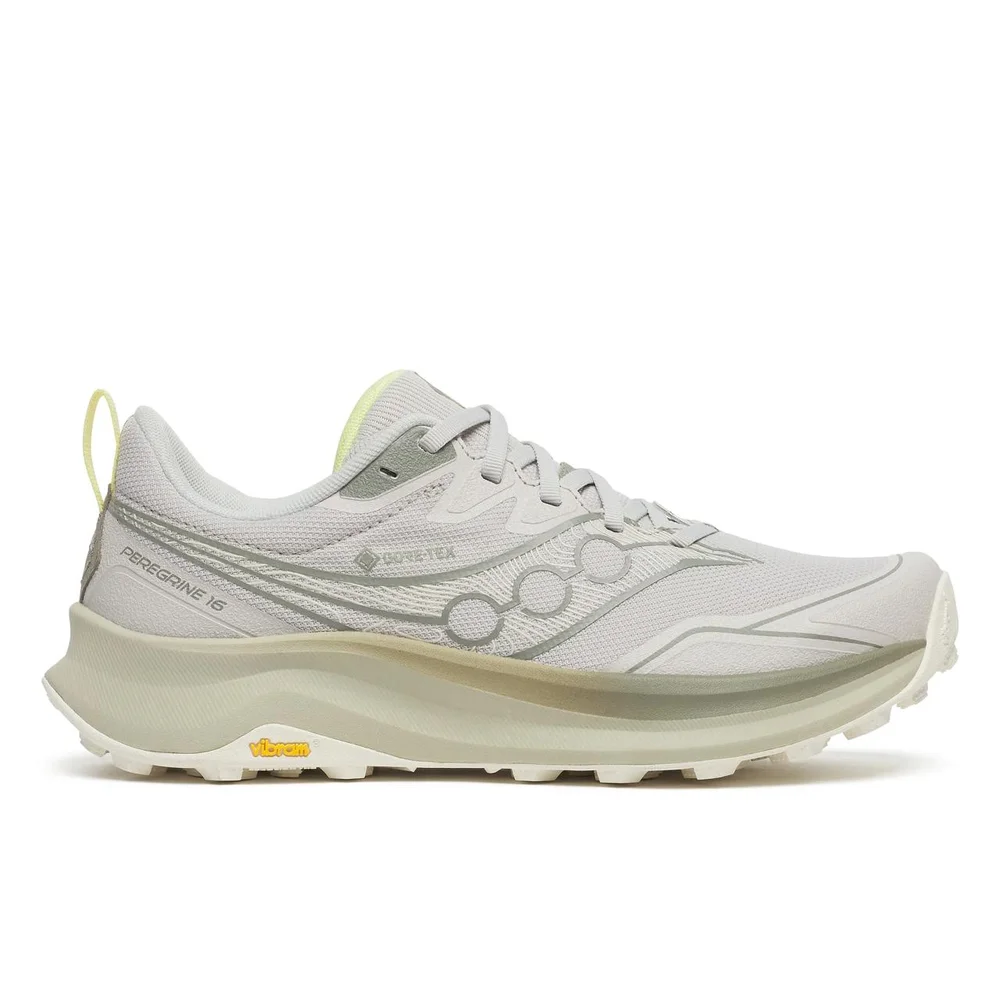
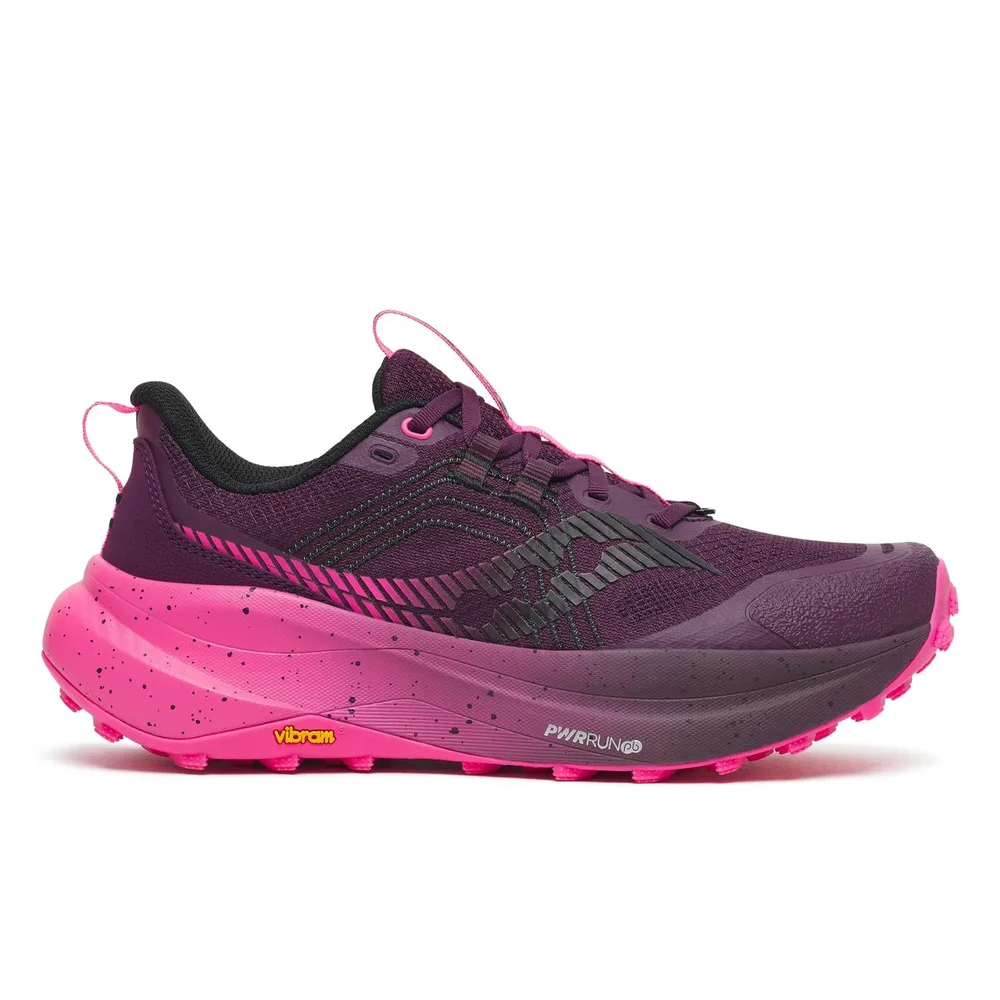
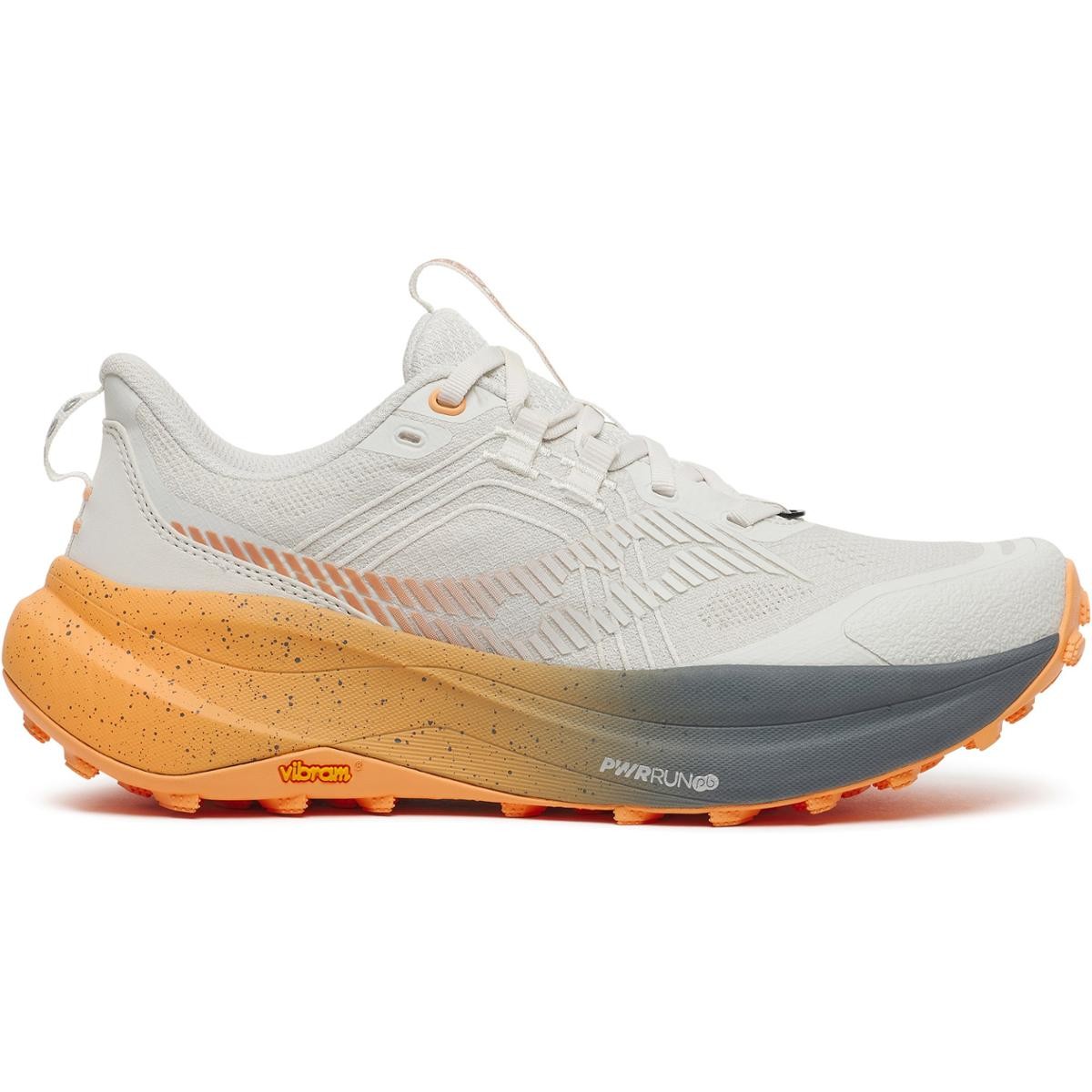
The Peregrine 16 is the classic: a lugged sole, breathable mesh and Vibram Megagrip traction. Cadet and demure is a muted blue, and plum and mulberry is the one I would pair with a black puffer. The Peregrine 16 GTX in arctic and tender is the waterproof version, the one for rain. The Xodus Ultra 4 goes bigger, with max cushioning, PWRRUN PB foam, a full-coverage outsole and a rock plate. The eggplant and shock pair is loud, and the quartz and persian one, cream with an orange speckled midsole, is the easiest to wear around town.
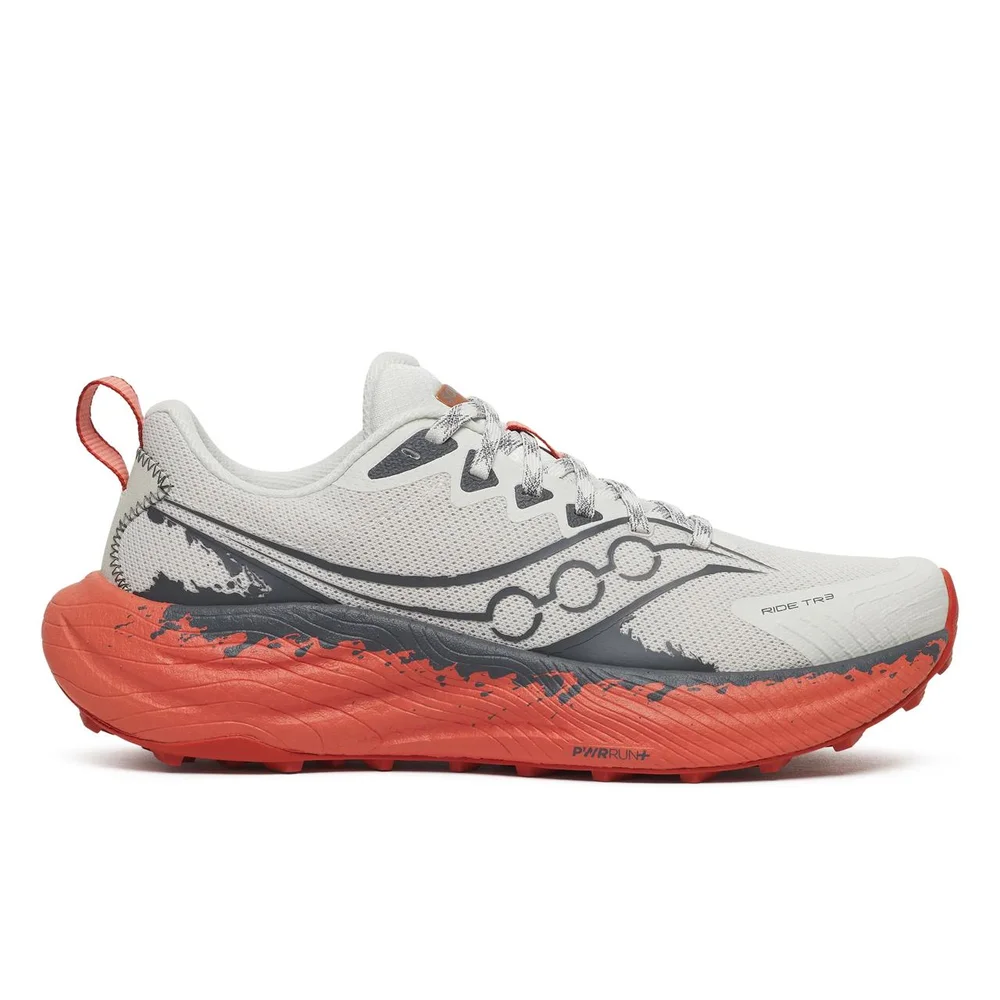
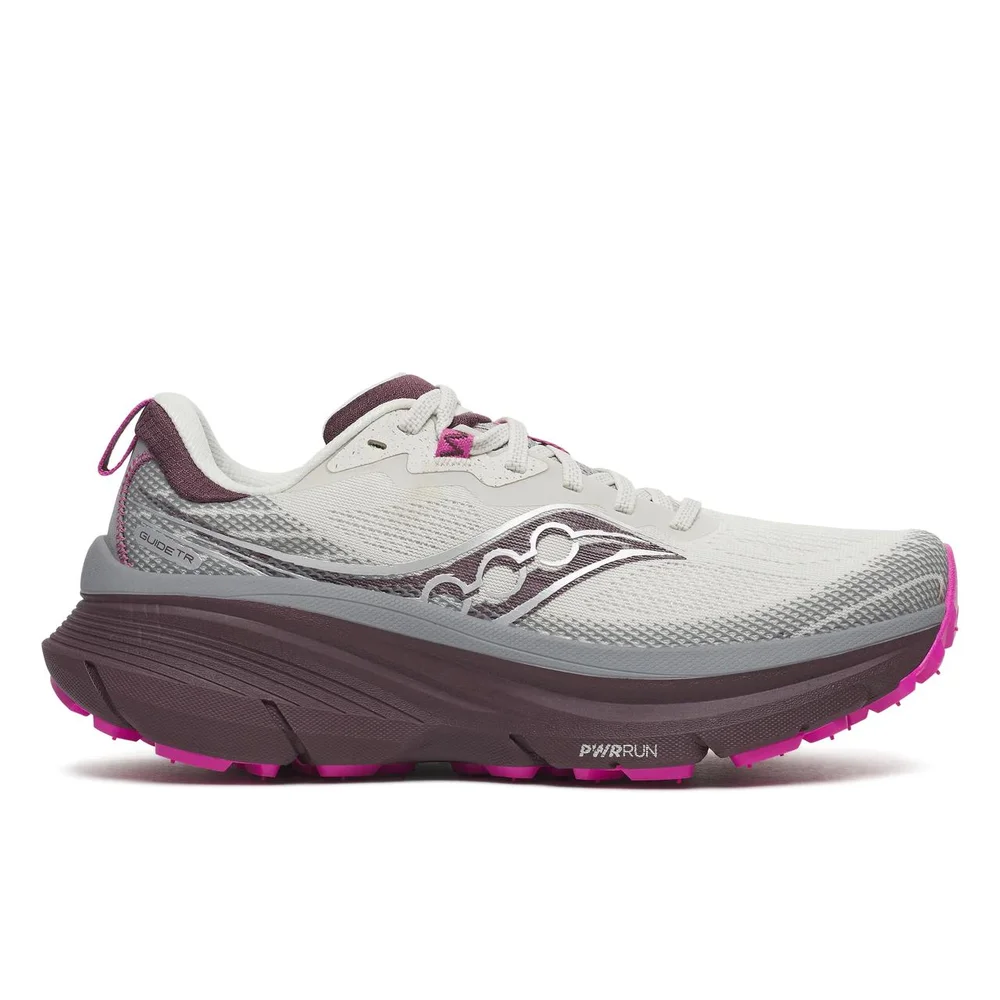
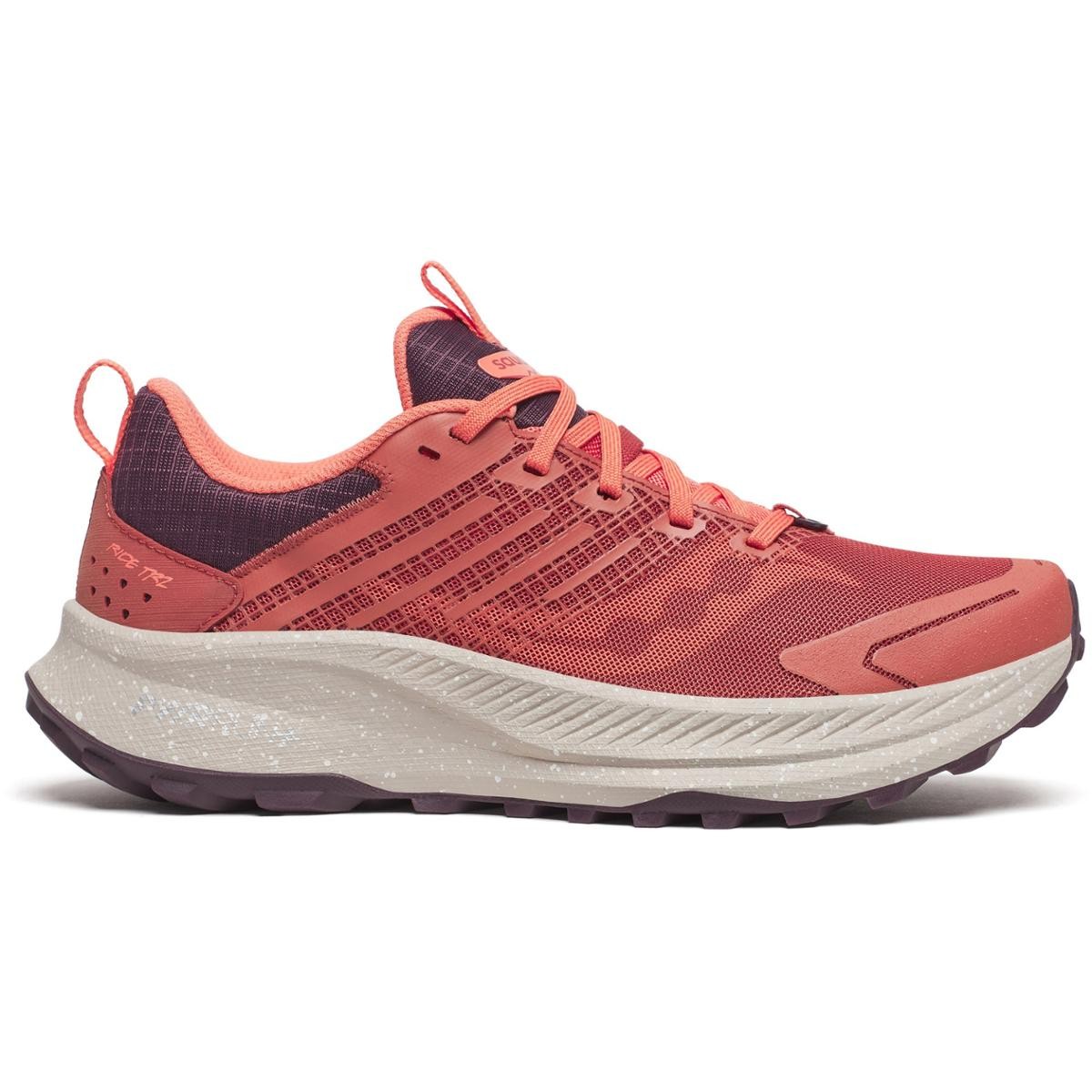
The Ride TR3 in quartz and canyon, the Guide TR in quartz and demure and the Ride TR2 in brick and wine are the road-to-trail shoes, built for pavement and dirt in the same walk.
Check the outsole first: deep lugs, an even spread and no rubber lifting at the edges. What I would skip: the GTX in a dry, warm spell, since waterproof builds run warmer than plain mesh.
How I would choose a pair
I would decide by where the shoe will live. A Jazz Original, black and white or navy, if it is mostly for jeans and weekends. A Shadow 6000 or Omni 9 if you want a bit more sole and a bit more attitude.
If you actually run, I would pick the Ride 19 or the Guide 19 and keep the Endorphin for a race day. For mud, the Peregrine 16 is the plain answer. Try them with the socks you really wear, and walk around for ten minutes before you cut the tags.
It started with a creek and a brick building in Kutztown, and the best of these shoes still feel that unfussy.