Our edit of shoes for wide feet covers flats, sneakers, ankle boots, block heels and slip-ons offered in wide widths. I explain what the width letters mean and how I would fit each pair.
Shoes for Wide Feet: The Shop Gadget Behind the Letters on the Box
Why the letters on a shoe box matter
In the early 1920s, Charles Brannock was a Syracuse University student who also worked in his father's shoe store, and he kept noticing the same problem. The store measured feet with a crude block of wood that read length and ignored width, so people with wide feet often went home in the wrong size. He sketched a better tool at night, built the first prototype from his childhood Erector Set, and the Smithsonian dates the Brannock Device to 1925. It measured heel to toe length, arch length and foot width in one go. That little steel gadget is why a shoe box can say a letter at all.
The letters are the part nobody explains. For women, B is the standard width, D is wide, and 2E (also written EE) or larger is extra wide. Not every brand offers every step, so shoes for wide feet are partly about knowing what the box means and partly about knowing which labels actually make the width you need. Length stays the same, the room across the ball of the foot changes.
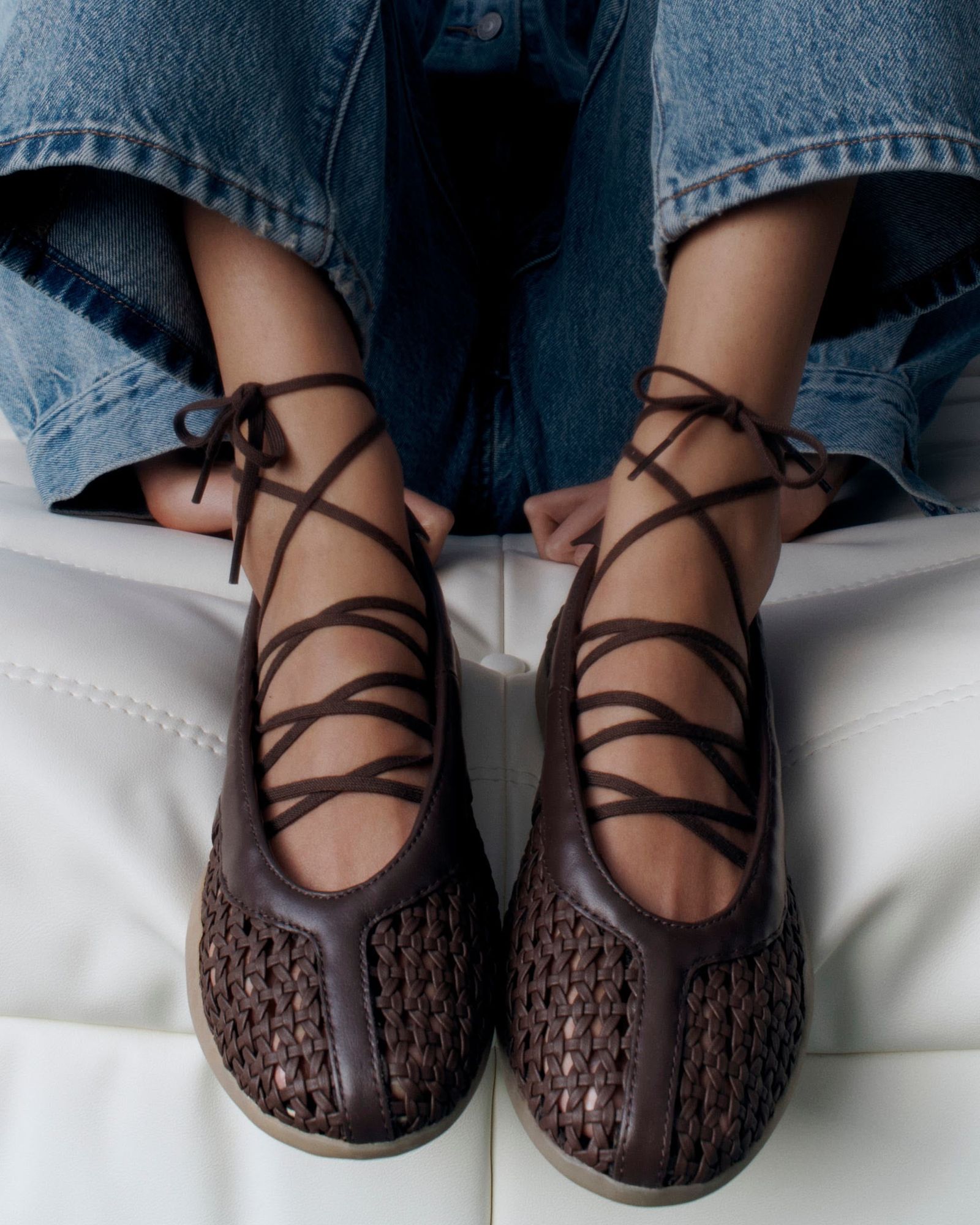
So I would start with flats and loafers, because they are the pieces most of us wear on repeat. The Vionic Sadie in black leather is a penny loafer with a perforated strap and a square toe, offered in Medium and Wide, sizes 5 to 12. The Vionic Alameda in mocha mousse suede is a soft mary jane with a slim buckle, and the Naturalizer Lumos is a black slip-on loafer with an almond toe. For a little color, the Clarks Westlynn Bella in burgundy suede has a stitched apron toe, and the Keds Center III in champagne suede is the light one for weekends.
My tip for October: bring the socks or tights you will really wear when you try anything on, and fit them late in the day, when feet are at their biggest.


Wide-width sneakers that fit from the first wear
Podiatry advice is blunt about timing: shop for shoes later in the day, because feet tend to swell during the day and it is best to be fitted in that state. Sneakers are where that matters most, since you wear them for the longest stretches. The American Podiatric Medical Association says to measure both feet late in the day and buy for the larger one.
The New Balance 574 Core in cloud white is the retro runner with a chunky midsole, offered in D wide, sizes 5 to 12. The Coco Delray is the cleaner choice, a white leather court low-top that reads smart with a pleated skirt. The Vionic Winny in white leather is a lace-up with a rubber cupsole, and the Cole Haan Grandpro Topspin is all-white leather and low profile, good with tailored trousers. I would also look at the Clarks Bryianne Dazz in dark tan, because the side zip means you can step in and out without untying anything.
Check the widest part of your foot against the widest part of the shoe. Press a thumb on the upper over the ball of your foot: you want a little give, not a bulge.
What I would skip: a sneaker that needs breaking in. APMA says shoes should feel comfortable right away, and breaking them in will not improve things.


Ankle boots with room at the ball
Ankle boots are the October question. You want a boot that works with tights and a skirt, and also with the first cold, wet mornings, and a boot shaft can squeeze exactly where wide feet need room. The brands here make real width, not just a longer size, and that matters, because going up a full length adds heel slip without fixing the pinch across the ball.
The Naturalizer Verney in chocolate waterproof leather is a low block heel with a side zip, the one I would pick for commuting in the rain. The Naturalizer Kalina in cider spice suede has a stacked heel and a rounded toe. Cole Haan has two: the Blanche snip-toe boot in black leather, which is the sharper one for jeans, and the Grand Raelyn Chelsea in light sesame suede with a waterproof finish. The Clarks Maye Beth in black leather has an almond toe and block heel, and the Dr. Scholl's Camden Chelsea in dark umber has elastic gore panels and a pull tab. The Aerosoles Baylor in black is a plain rounded-toe boot with a low stacked heel.
Test it with the socks you will wear in November, zip it up, and walk a flight of stairs. Elastic panels on a Chelsea give a little room across the instep, but the toe box still has to be wide enough on its own.
What I would skip: a pointed boot in suede when rain is in the forecast, unless it is the waterproof one.


Block heels and pumps you can stand in
A pump is the shoe where width shows up fastest, because a pointed toe narrows right where a wide foot is widest. The fix is a lower, steadier heel and a width label, not a smaller ambition. Keep the heel to about three inches and the weight sits back on the heel instead of sliding into the toes.
The Cole Haan Blanche pump in black suede has a pointed toe on a low block heel, and the Naturalizer Rumi in black leather has a low sculpted heel. The Naturalizer Ella in caramel leather is a slip-on bootie-style pump, which is a good pick for a holiday party with a dark dress. The Clarks Kacelyn Grace in beige leather is a stable mid-height pointed pump, and the Kepley Vine in black has a rounded toe and a 2 inch heel. For a taller shape, the Journee Tiabelle is a black block heel at 3 inches, and the J. Renee Hevina is a slingback with an adjustable buckle and spool heel, offered up to size 13.
Stand up when you try them on, and wiggle your toes. The widest part of your foot should land on the widest part of the shoe. Slingbacks give you a buckle to adjust, which is useful on days when your feet are bigger.
What I would skip: a heel that is already pinching in the first five minutes. It will not get better by the third dance.


Slip-ons and mules without the slide
The slip-on is the shoe I think about most, because it has to work for the person who does not want laces or straps. Brands tend to make a few styles in wide, and these are the ones with a width in stock. A slip-on is also the easiest to get wrong: it has no way of tightening, so if the width is off, it slides or squeezes.
The Clarks Kynnzie mule in British tan leather is a round-toe block heel, and the Kassanda in black combi leather has a light platform and open toe. The Cole Haan Piper is a black pointed mule loafer with a wrapped heel, the dressier pick for work. The Journee Lunelle in black faux leather is a closed-toe block heel mule. For the weekend, the Keds Center III slip-on in oatmeal sweatshirt jersey is a rounded low-top, and the Dr. Scholl's Madison in greystone has a zip closure and a cloud-soft footbed. The Naturalizer Marianne in warm silver leather is a slip-on sneaker with a 2 1/4 inch cushioned heel, and the LifeStride Balance clog in dark tan is the mule with a cushioned footbed.
Walk across a room and listen for a flap at the heel. A mule that clacks is too big in length, which means the width label is what you need, not a smaller size.
What I would skip: an open-toe mule on a cold evening with no tights.


How I would choose a pair
I would do it in this order. Measure both feet late in the day and buy for the larger one. Read the box: B is standard for women, D is wide, and 2E or EE is extra wide. Then pick the pair you will wear most, which for me is a loafer.
Start with the Vionic Sadie or the Clarks Westlynn Bella, add one sneaker, and choose one boot for rain. Everything else is a bonus.
Charles Brannock wanted a shoe store to stop guessing. Seems like good advice a hundred years later.






