Simple wedding dresses put cut and fabric ahead of embellishment, trading beading and volume for a bias slip or a clean column. Brides are increasingly choosing intimate ceremonies where a quieter dress fits the scale of the day. This edit sorts slips, columns and shorter dresses by how much tailoring each shape actually demands.

Simple Wedding Dresses, Nothing Extra
A Simple Dress Is a Decisive Choice
A simple wedding dress is not a lesser version of a grand gown. It asks for a sharper decision about line and fabric, since there is no beading or train to distract from a bad fit. The Mirror Palais cowl dress skims the body on a bias cut, while the ASTA RESORT column dress holds a straighter line that needs a clean shoulder and hem to work. I would test either shape by sitting, walking and lifting your arms, because a bias dress should move with you rather than require constant adjustment. Choose the version that still feels convincing once nobody is looking at a photograph.
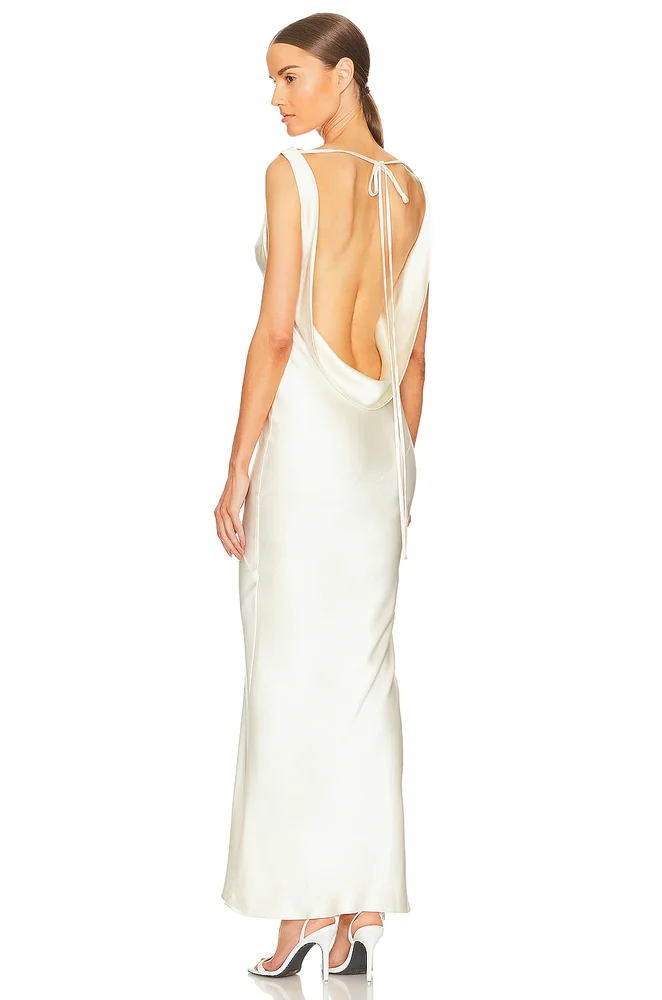
Plunging Back Cowl Dress
Mirror Palais
$1,495
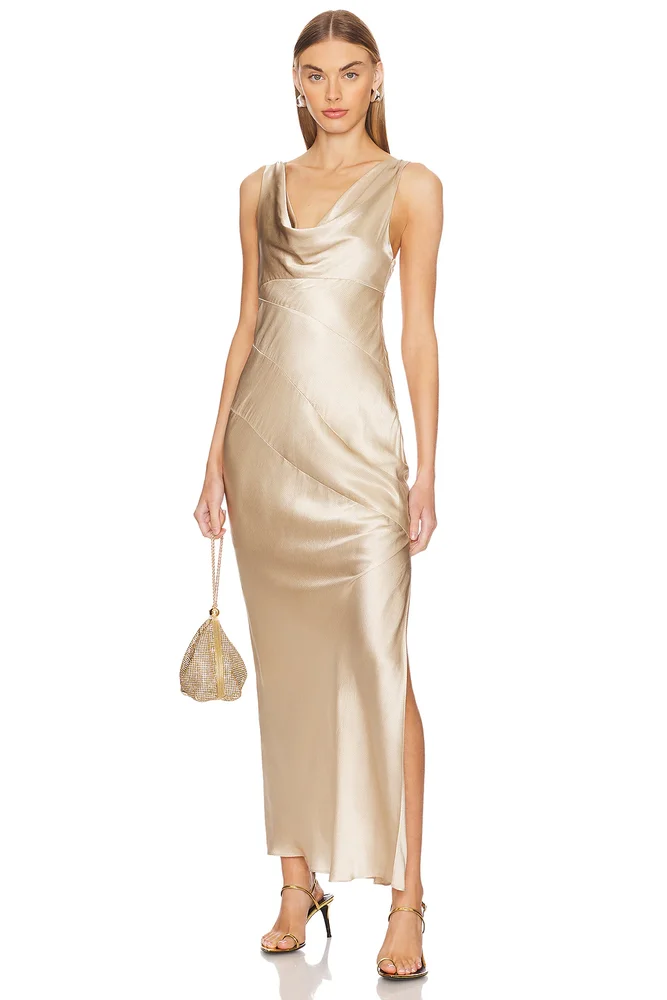
Sally Cowl Neck Maxi Dress
NICHOLAS
$695
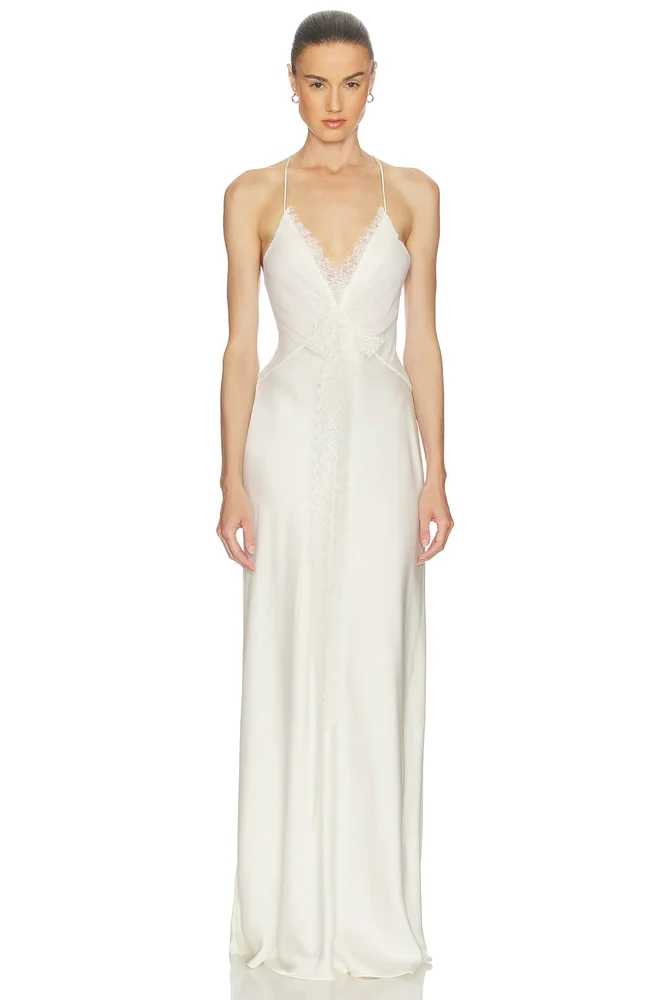
Mix Media Slip Dress
Helsa
$429
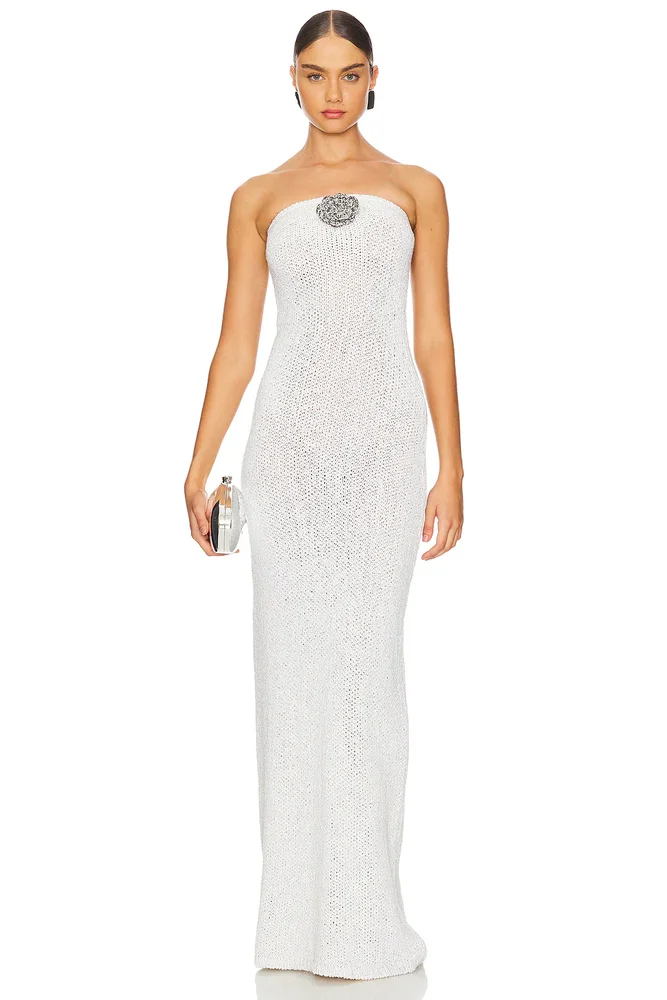
Chiara Column Dress
ASTA RESORT
$360
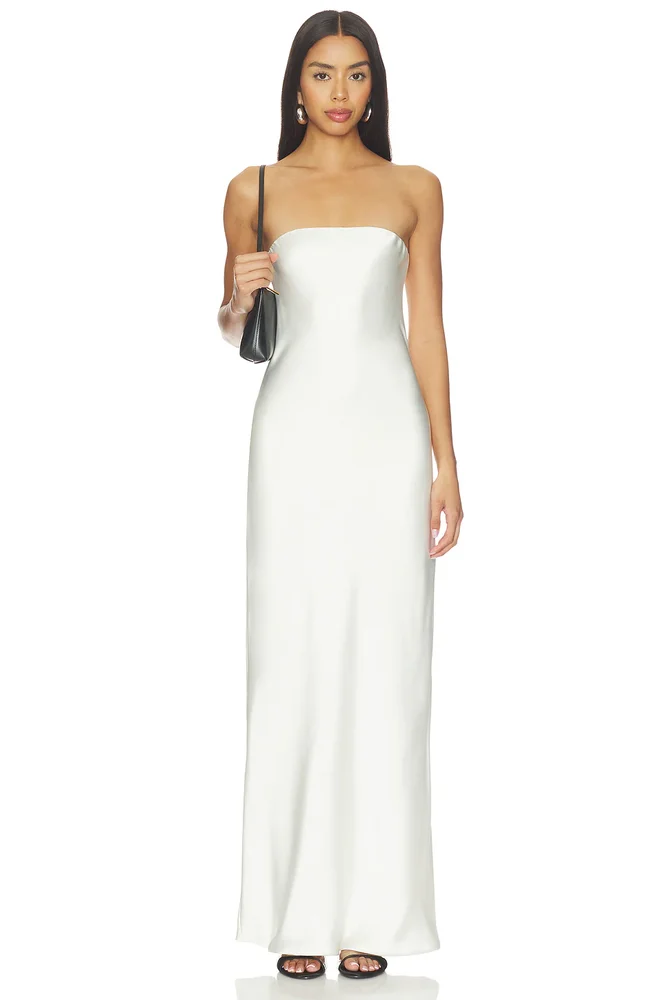
Bias Strapless Gown
Norma Kamali
$350
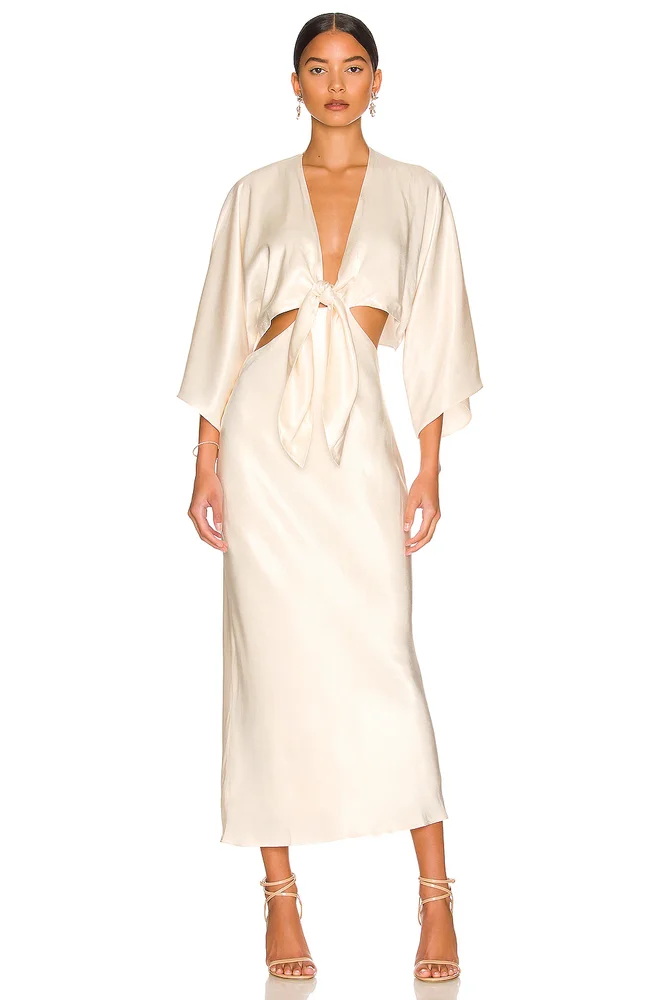
La Lune Tie Front Bias Midi Dress
Shona Joy
$340
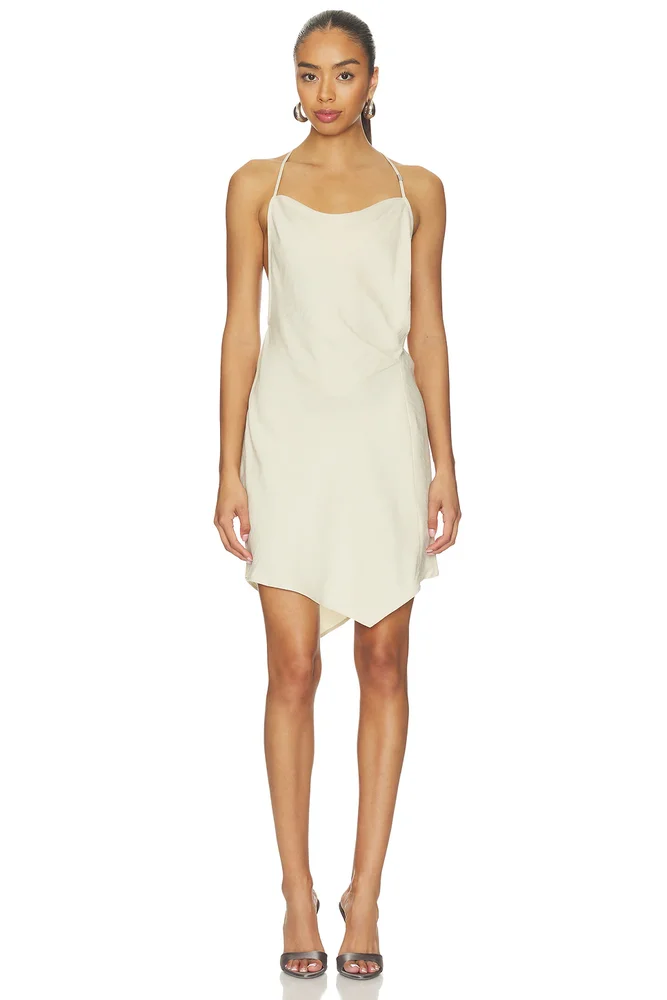
Knot Slip Dress
Helmut Lang
$298
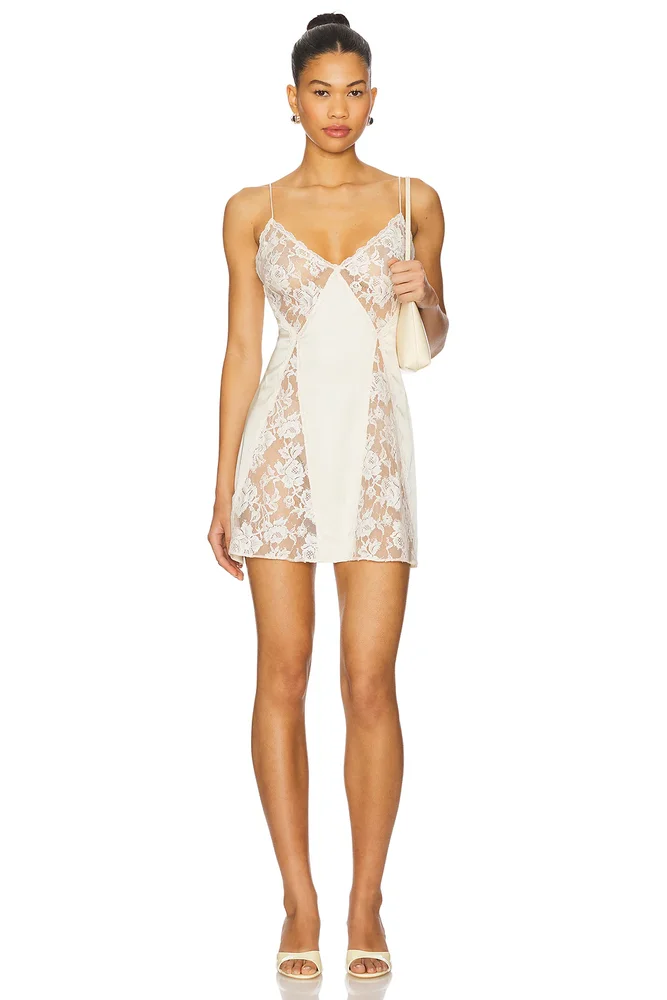
x REVOLVE Grace Mini Slip Dress
Stone Cold Fox
$248
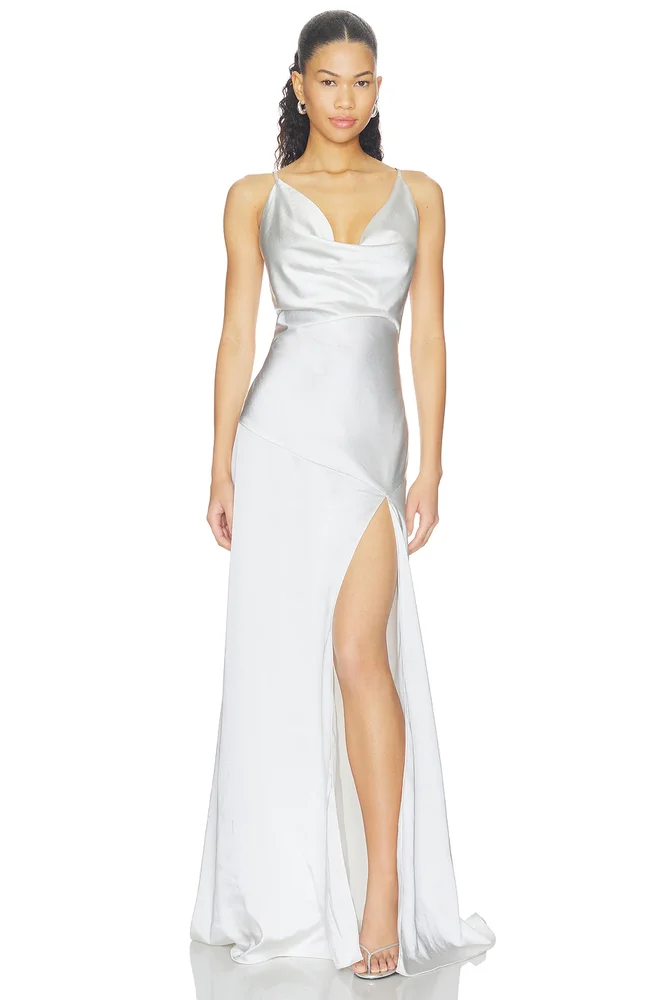
Erielle Cowl Neck Gown
ELLIATT
$211
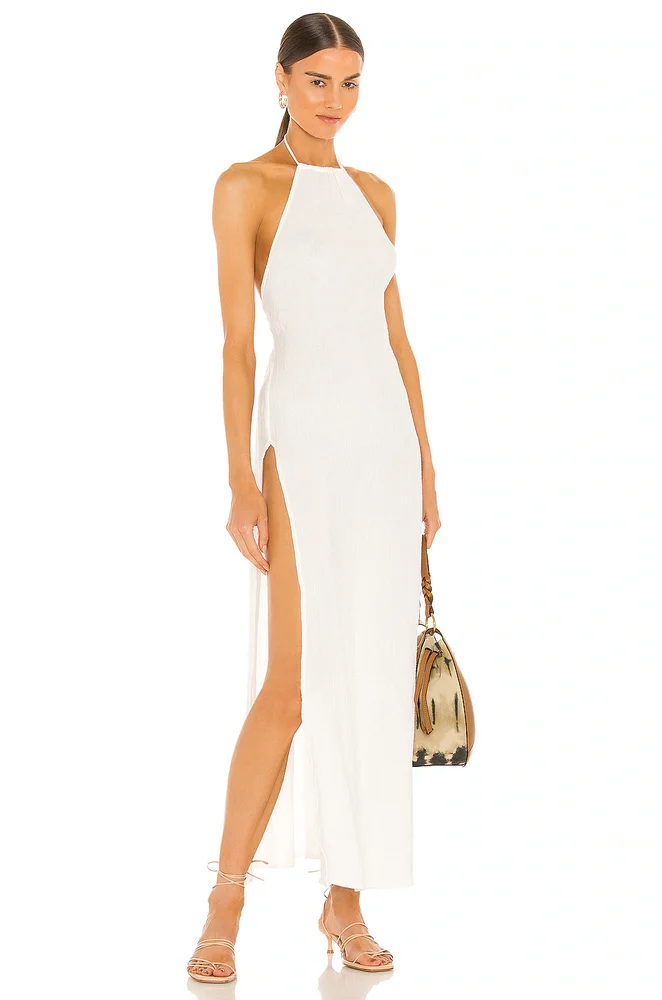
Celene Maxi Slip Dress
Camila Coelho
$188
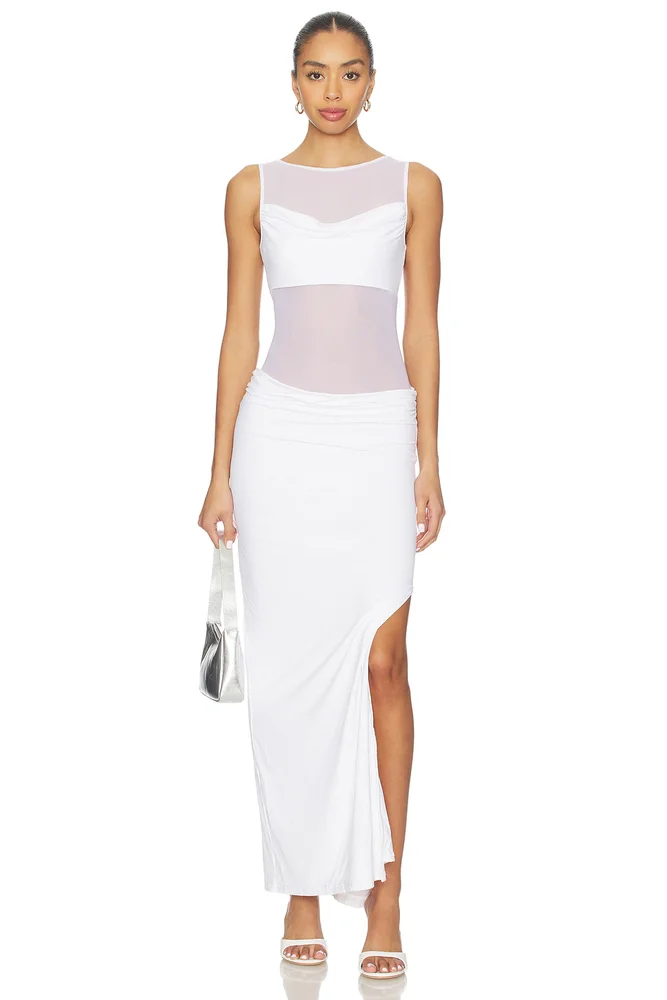
Wilona Cowl Maxi Dress
Runaway The Label
$139
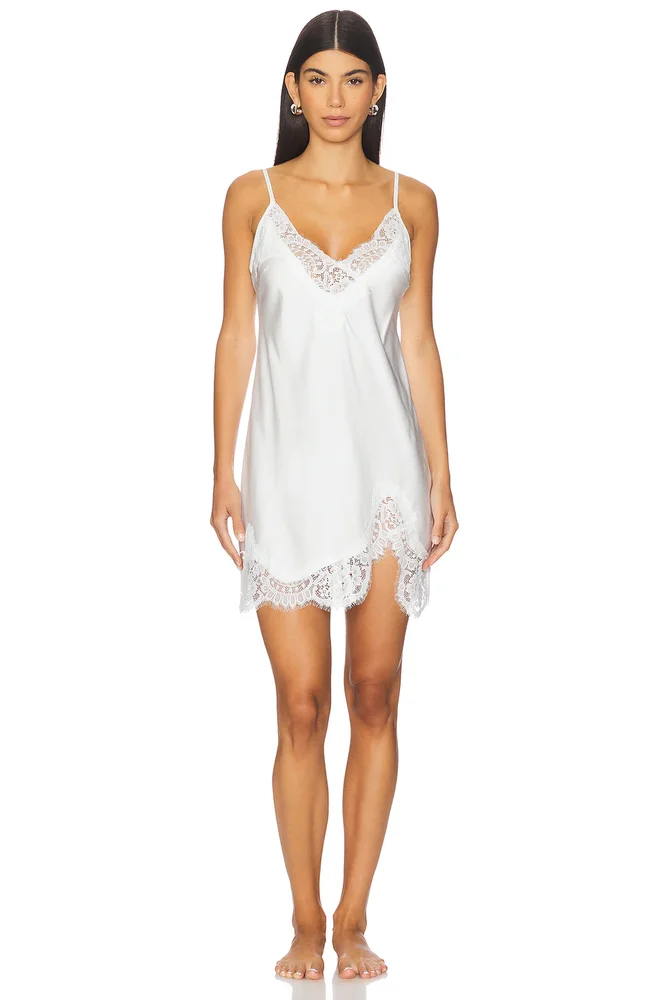
Sian Slip Dress
homebodii
$100
Fit Is the Final Decision
Once a dress is this plain, tailoring matters more than any accessory could. A shoulder that slips or a hem that catches becomes the whole story when there is no embellishment to distract from it. The Bronx Banco Anastasia gown and the LaPointe halter gown both rely on a clean drape rather than decoration, so the fit through the waist and shoulder has to be exact. I would rather see careful tailoring on a dress like this than an extra layer added because the occasion supposedly requires more. The styling can stay spare, but the fit cannot be an afterthought.
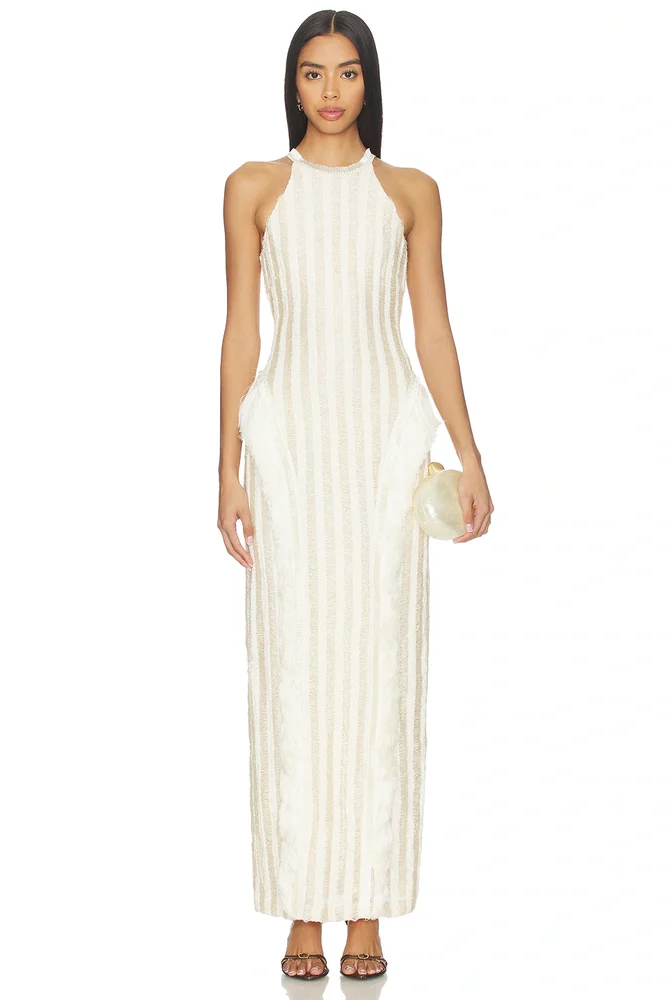
Celeste Knit Gown
PatBO
$1,400
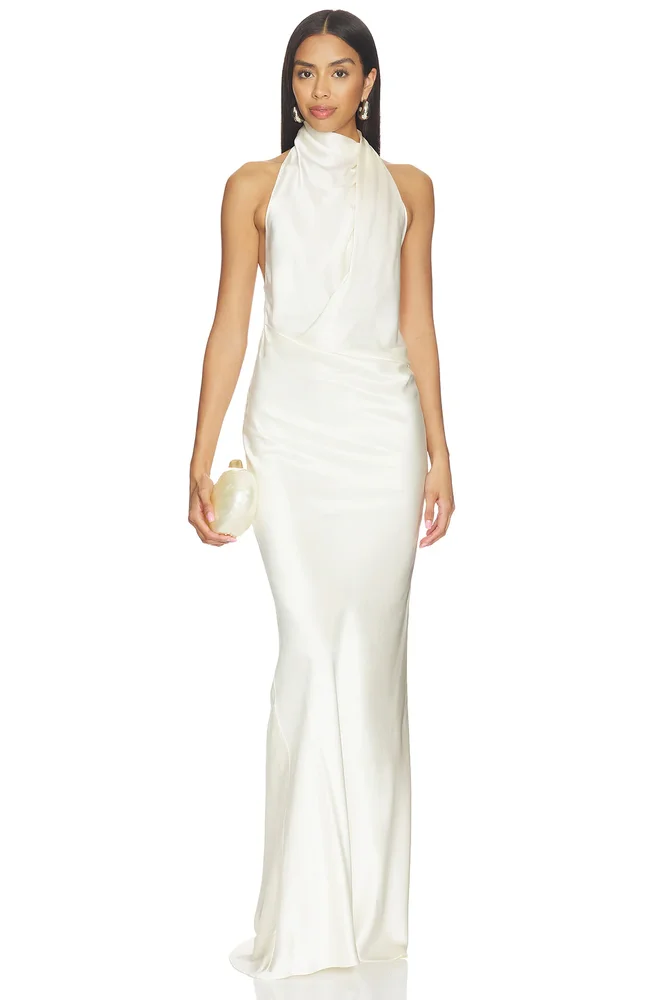
Halter Drape Gown
The Sei
$1,299
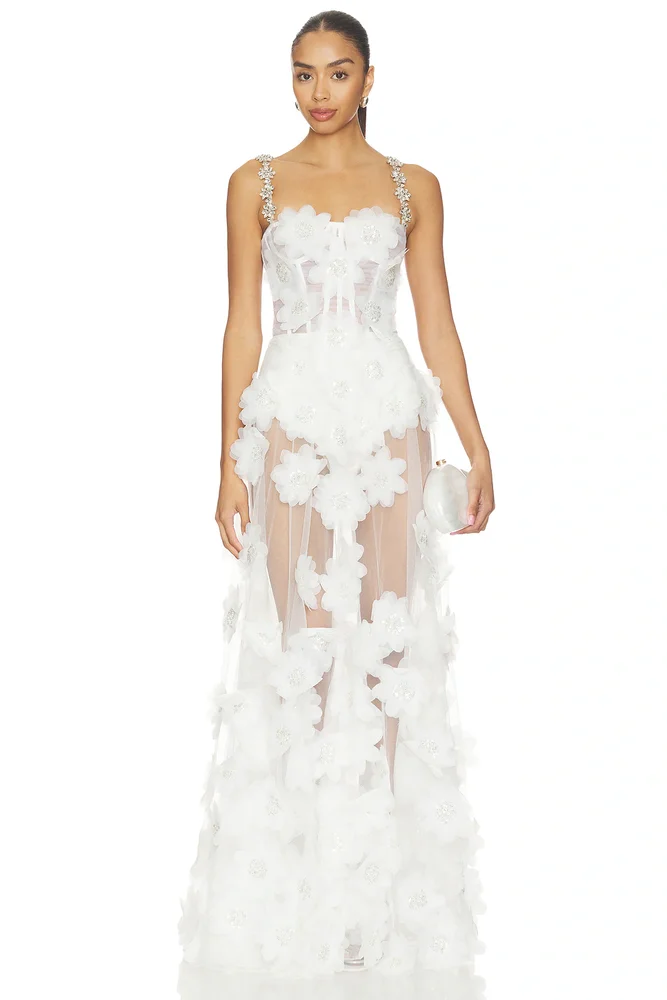
Anastasia Bridal Gown
Bronx Banco
$1,200
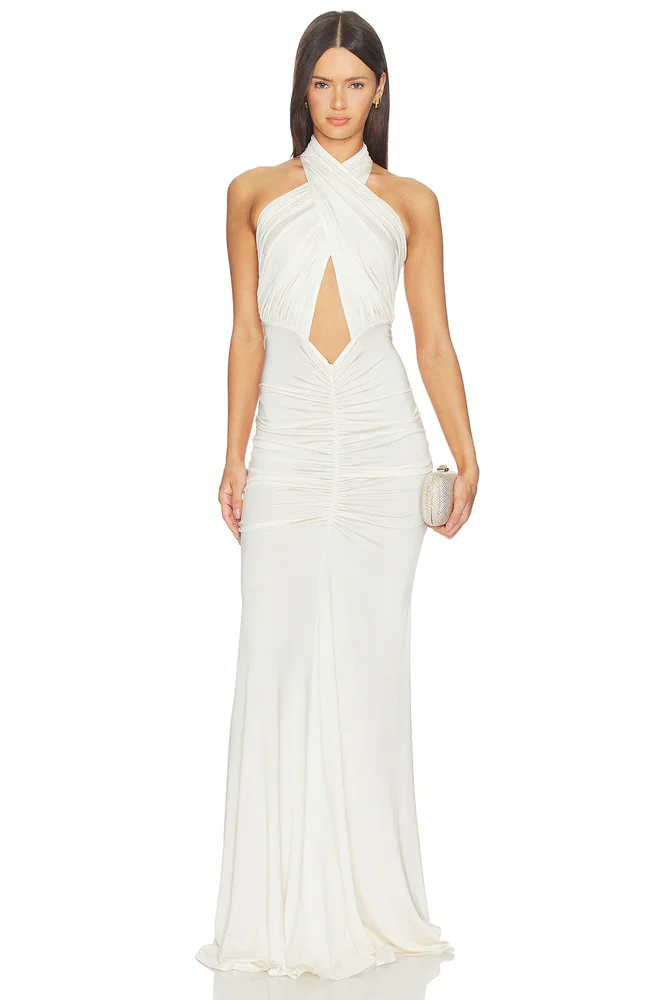
x REVOLVE Jersey Sleeveless Halter Ruched Gown
LaPointe
$1,150
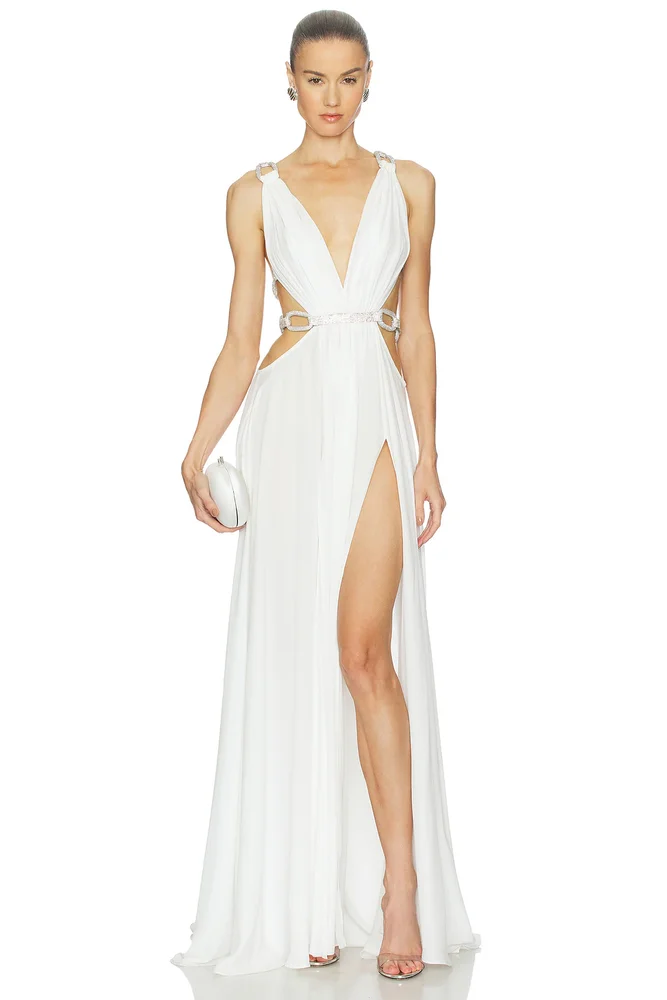
Brielle Diamond Gown
Bronx Banco
$1,100
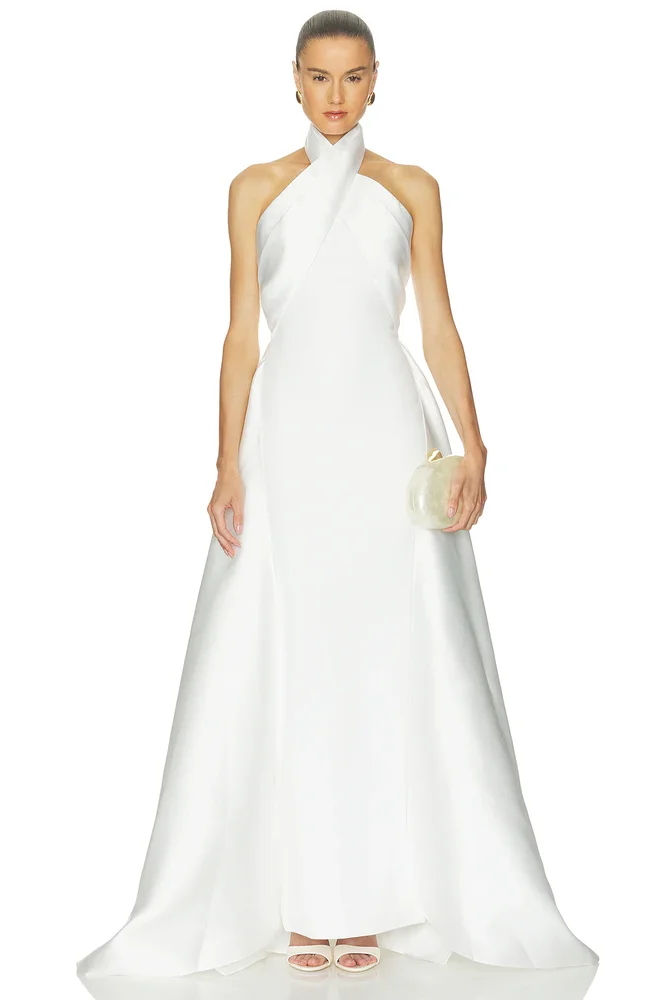
RUMI MAXI DRESS
SOLACE London
$1,075
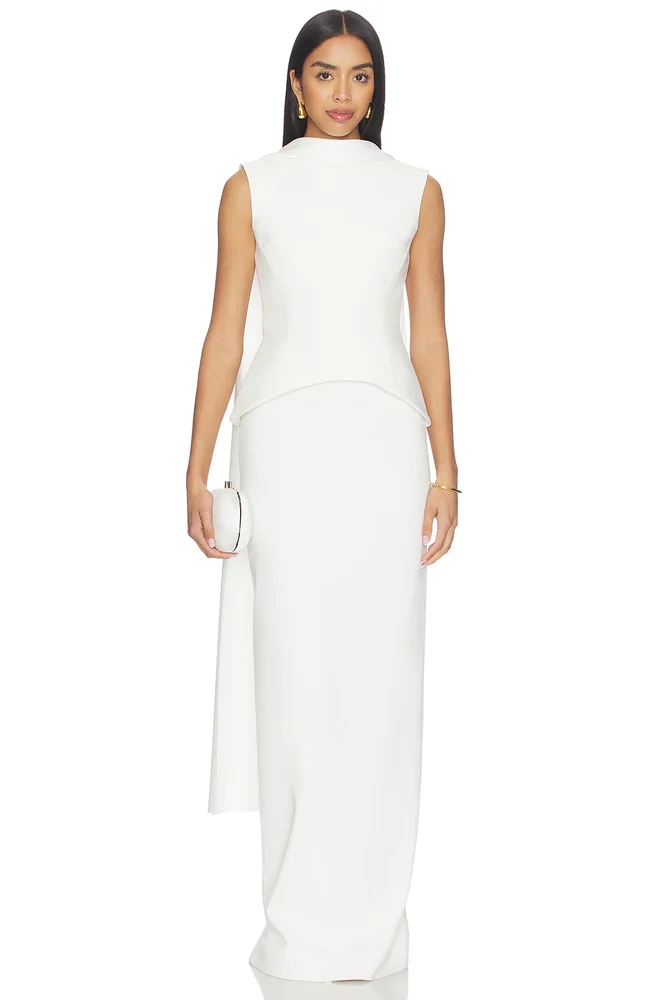
Annie Maxi Dress
SOLACE London
$1,015
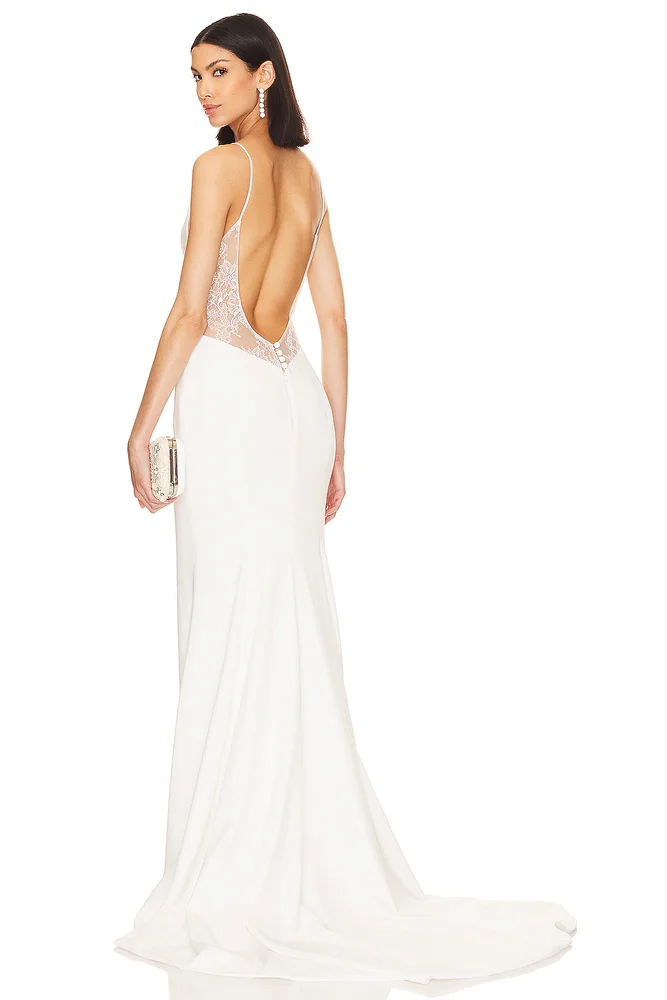
X Noel And Jean Sophia Gown
Katie May
$998
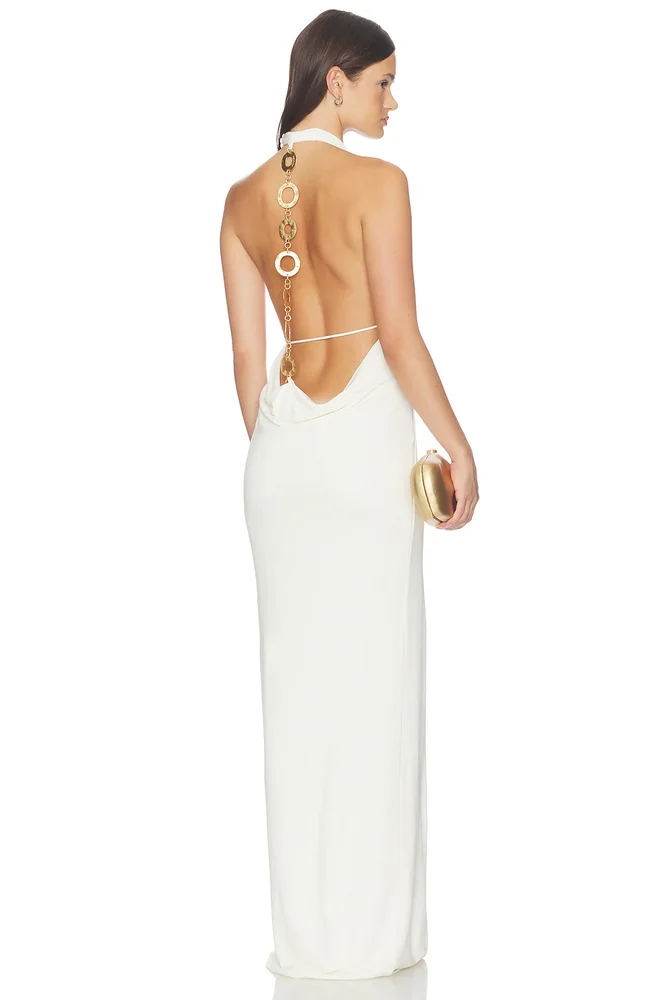
Siena Gown
Cult Gaia
$998
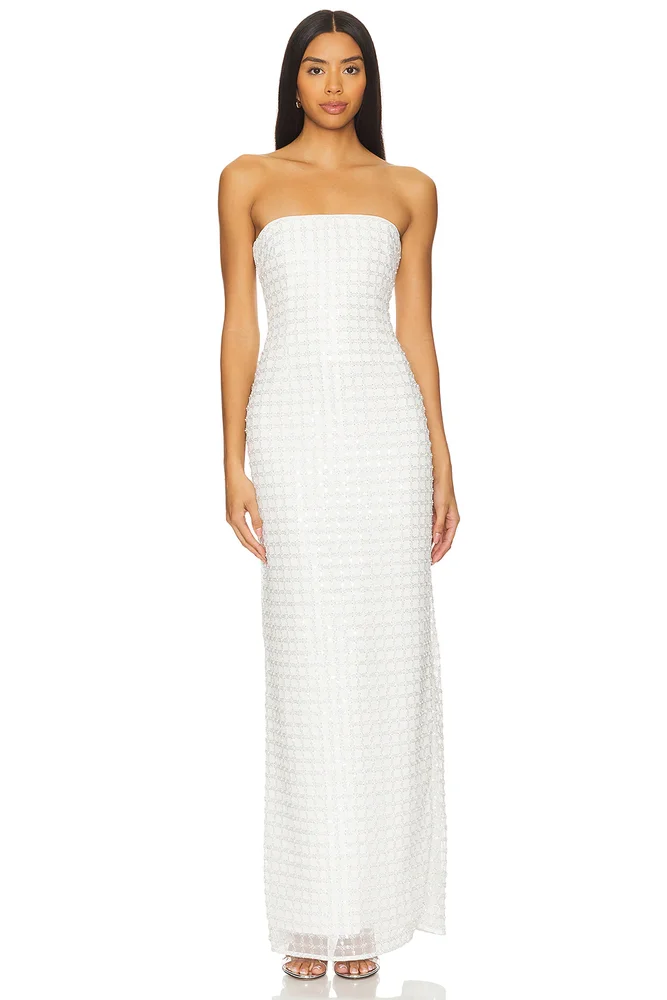
Reign Strapless Gown
SIMKHAI
$995
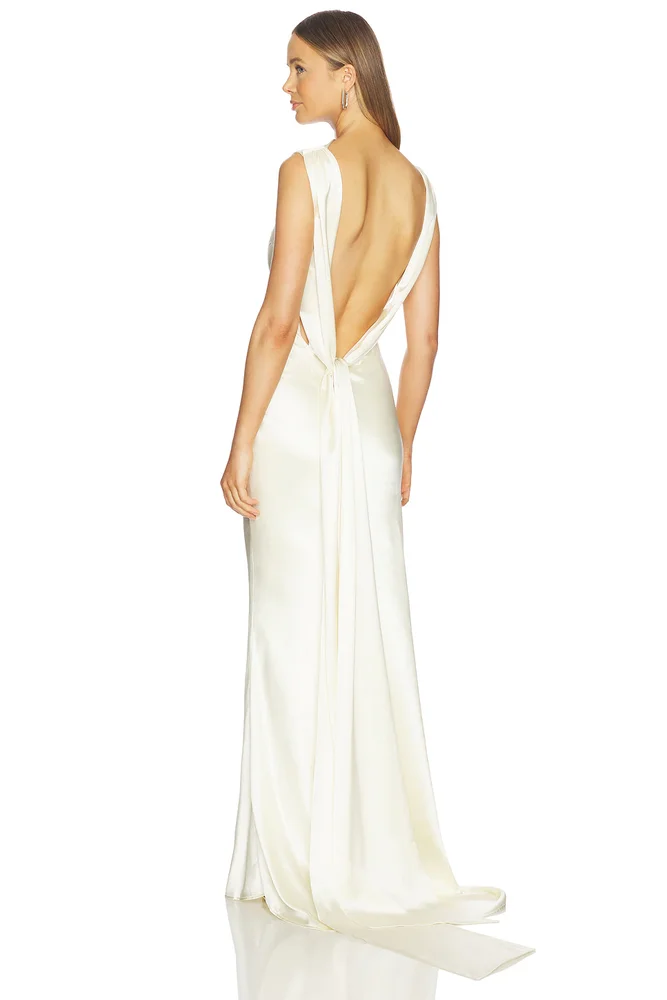
Cassandra Gown
SAU LEE
$990
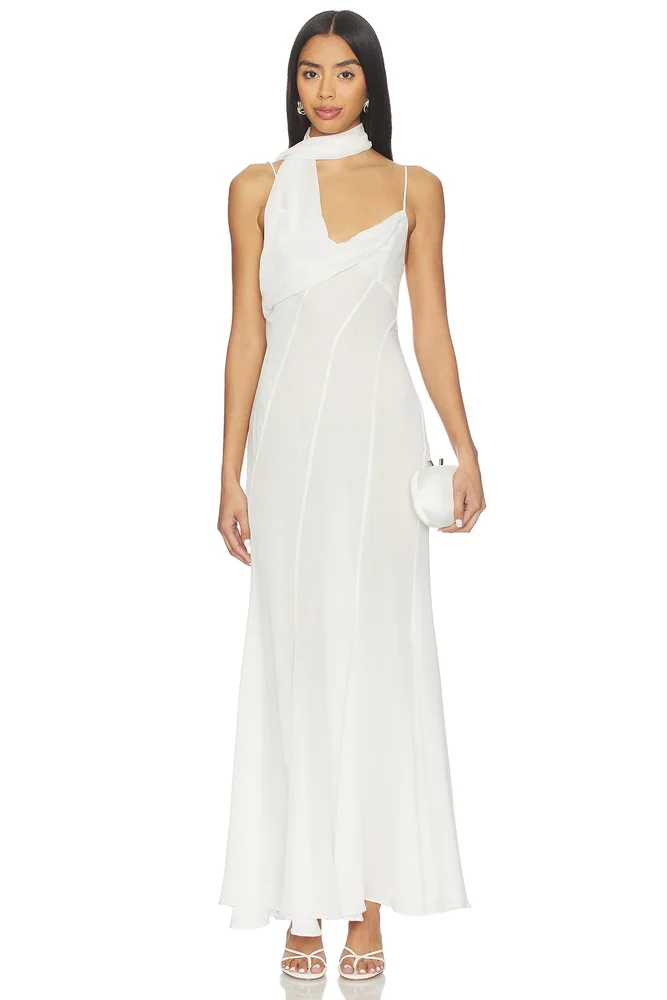
Scarf Panelled Silk Gown
Courtney Zheng
$980
A Shorter Dress for a Smaller Ceremony
Not every simple wedding dress needs to be floor length. A midi dress reads more casual by default, which suits a courthouse ceremony or a second event better than a full gown would. The SIMKHAI Charlotte midi dress keeps a clean, close line, while the self-portrait knit contrast midi dress adds just enough texture to feel a little more considered without adding volume. A mini dress like the Bronx Banco Colette goes further in that direction, useful for a bride who wants to dance rather than manage a train. I would pick the length by the room and the schedule, not by any rule about what a wedding dress is supposed to look like.
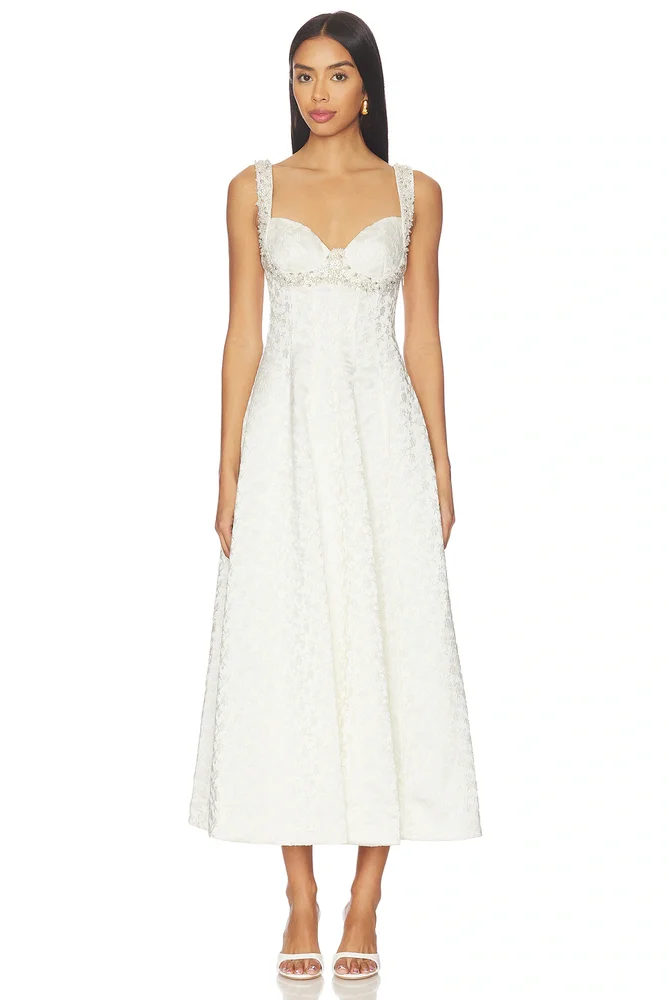
Charlotte Midi Dress
SIMKHAI
$1,295
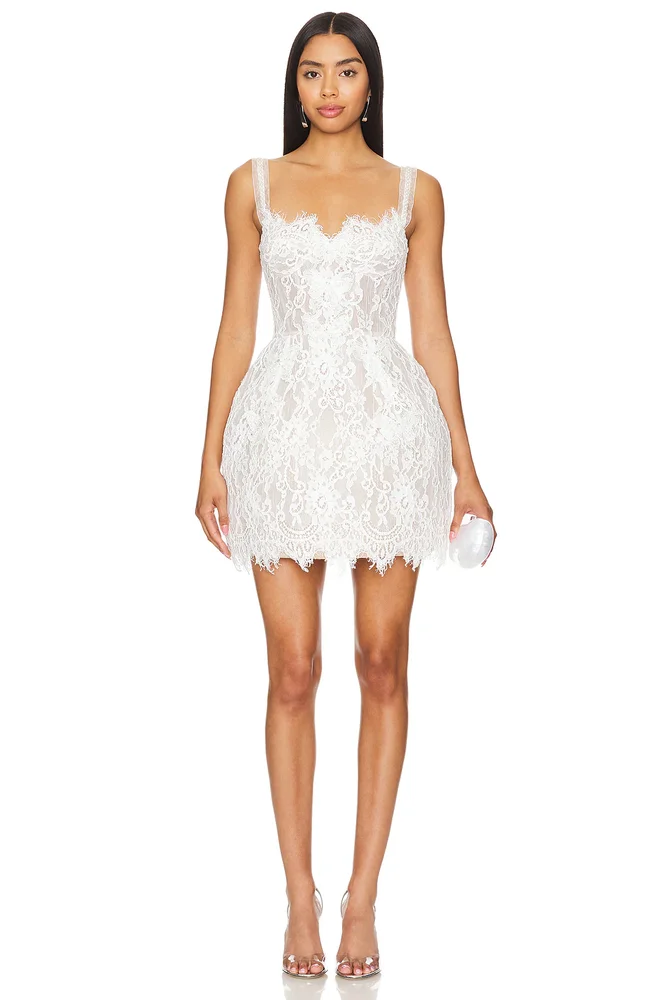
Colette Mini Dress
Bronx Banco
$950
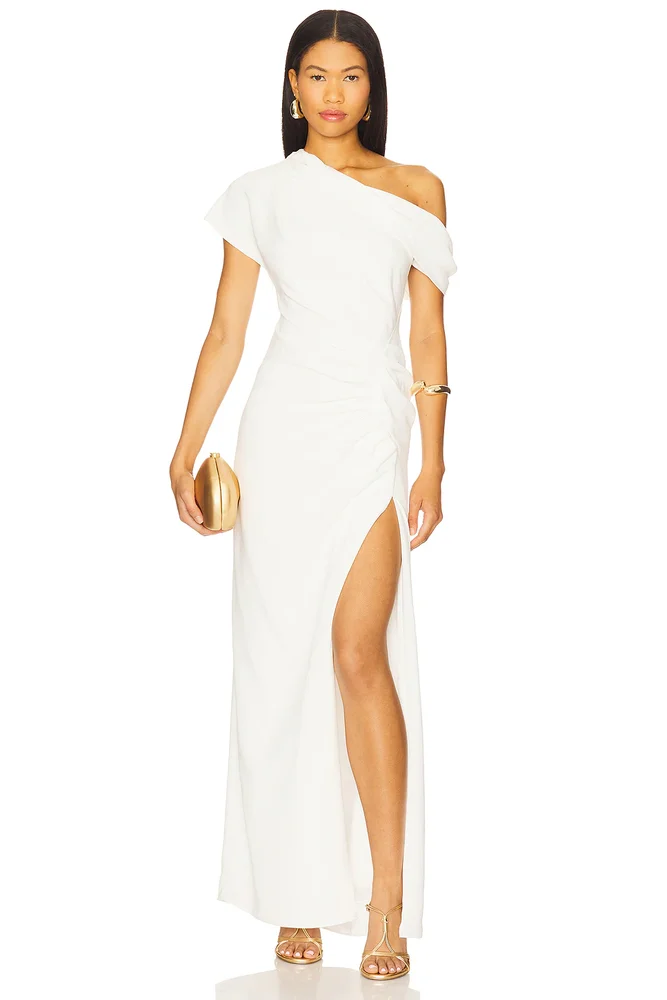
Kally Draped Midi Dress
SIMKHAI
$895
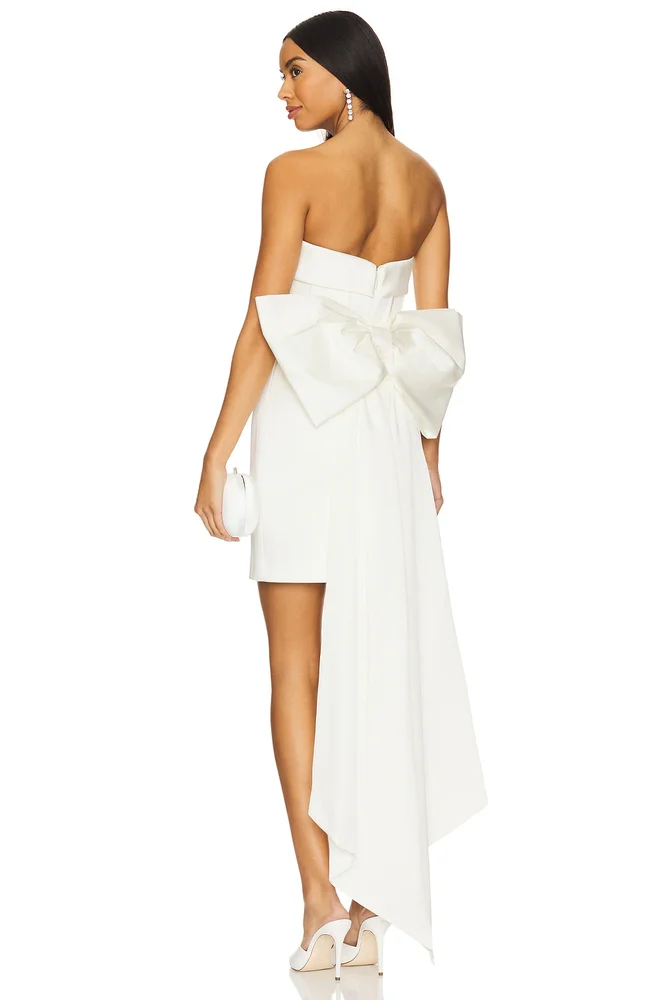
Lia Mini Dress
Rebecca Vallance
$890
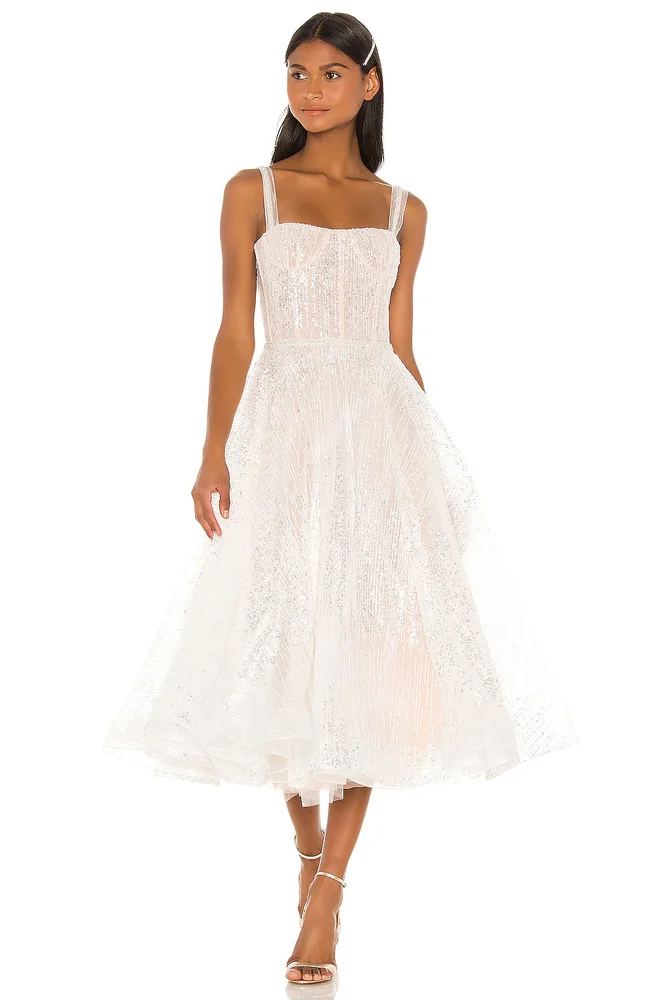
Mademoiselle Bridal Midi Dress
Bronx Banco
$880
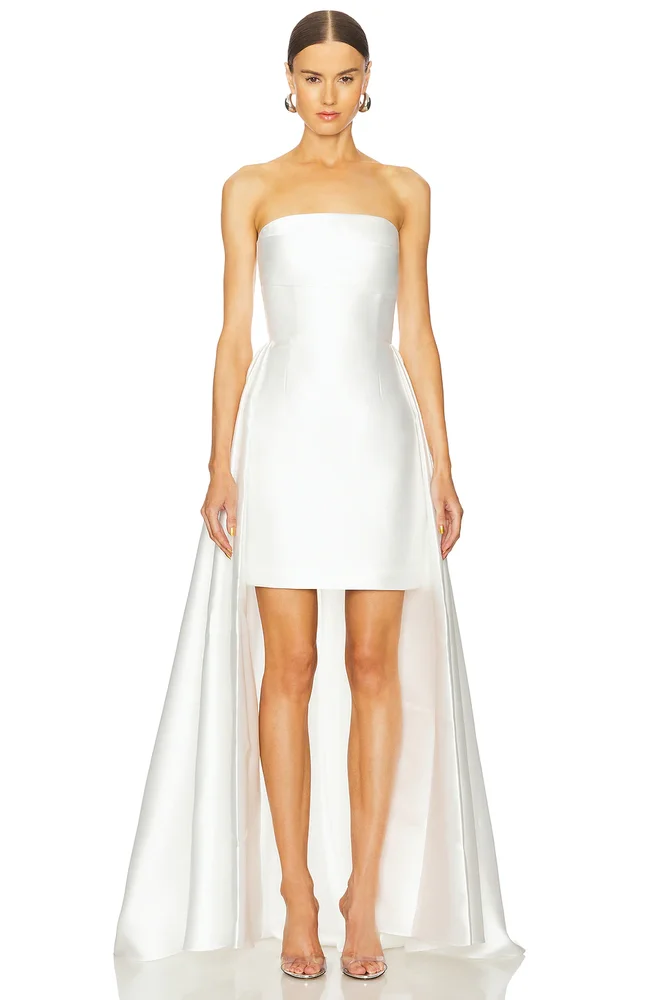
Trina Mini Dress
SOLACE London
$755
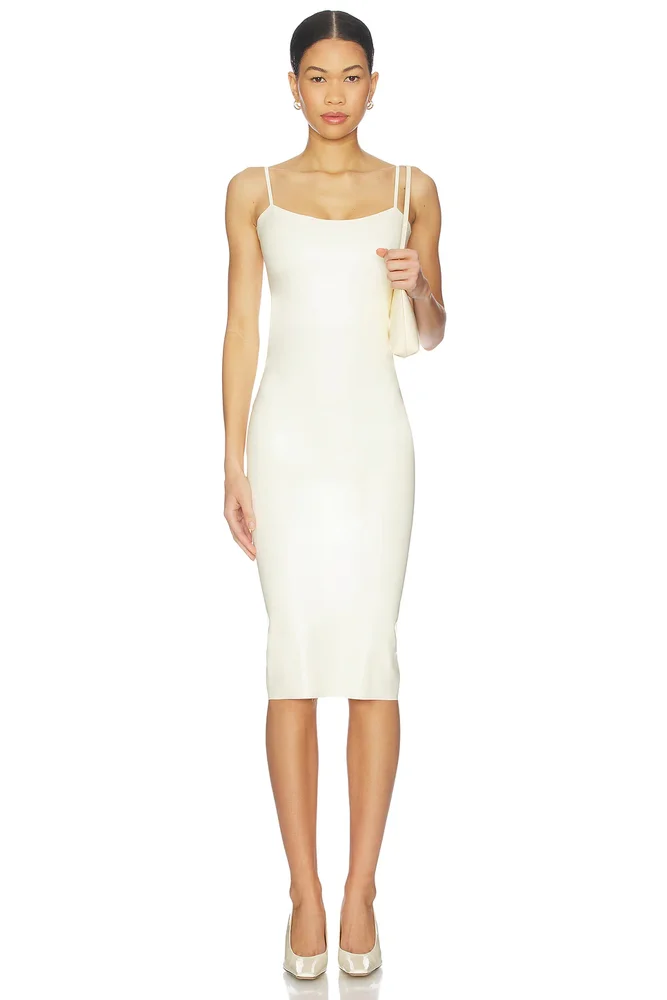
Whistle Midi Dress
POSTER GIRL
$728
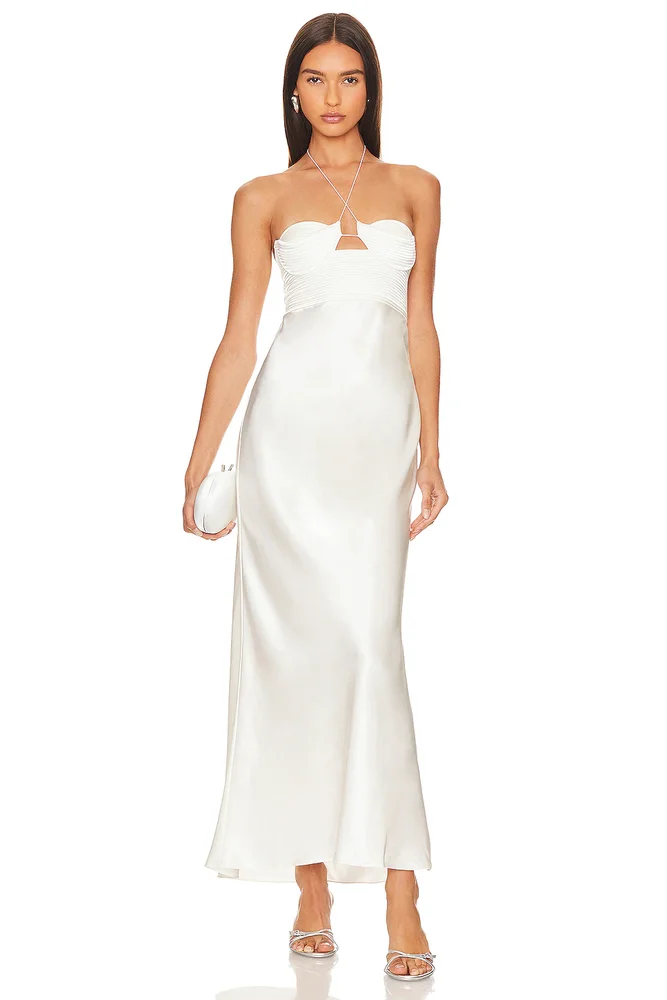
Sarah Midi Dress
Anna October
$715
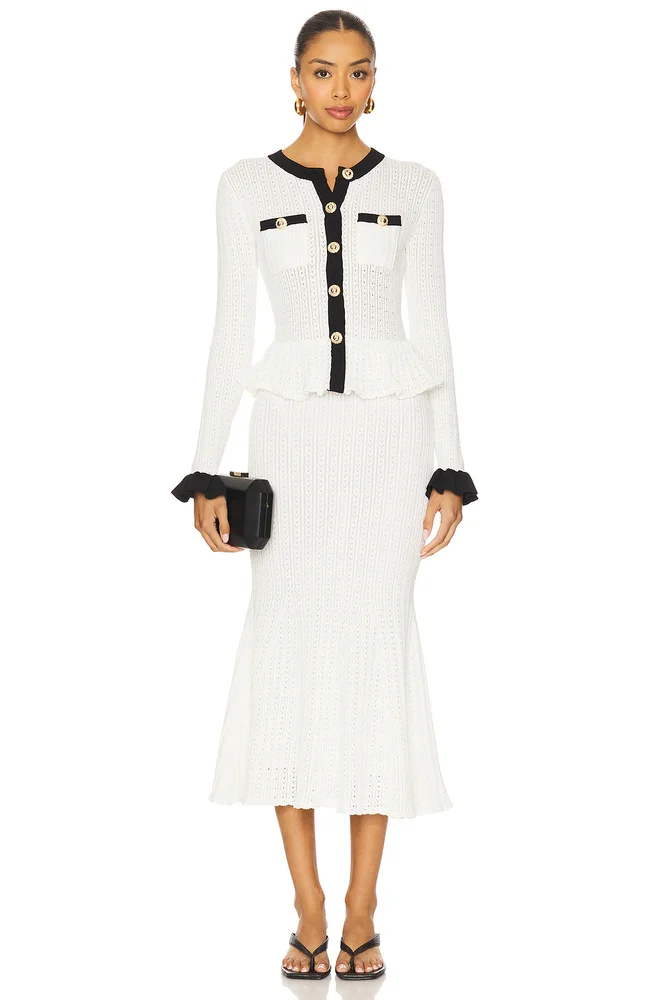
Knit Contrast Midi Dress
self-portrait
$700
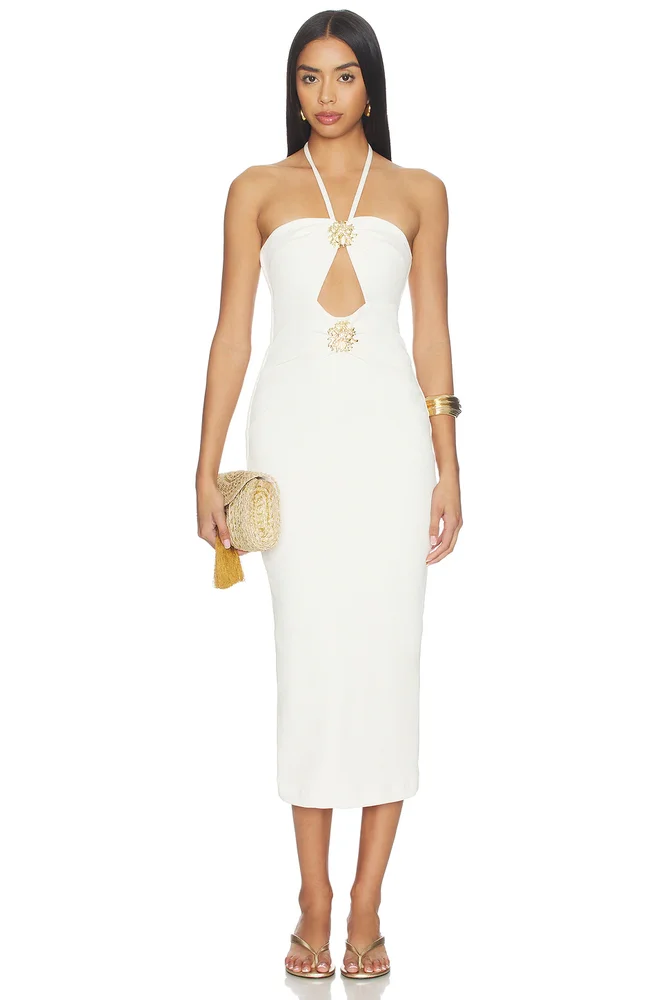
Luna Knit Midi Dress
PatBO
$695
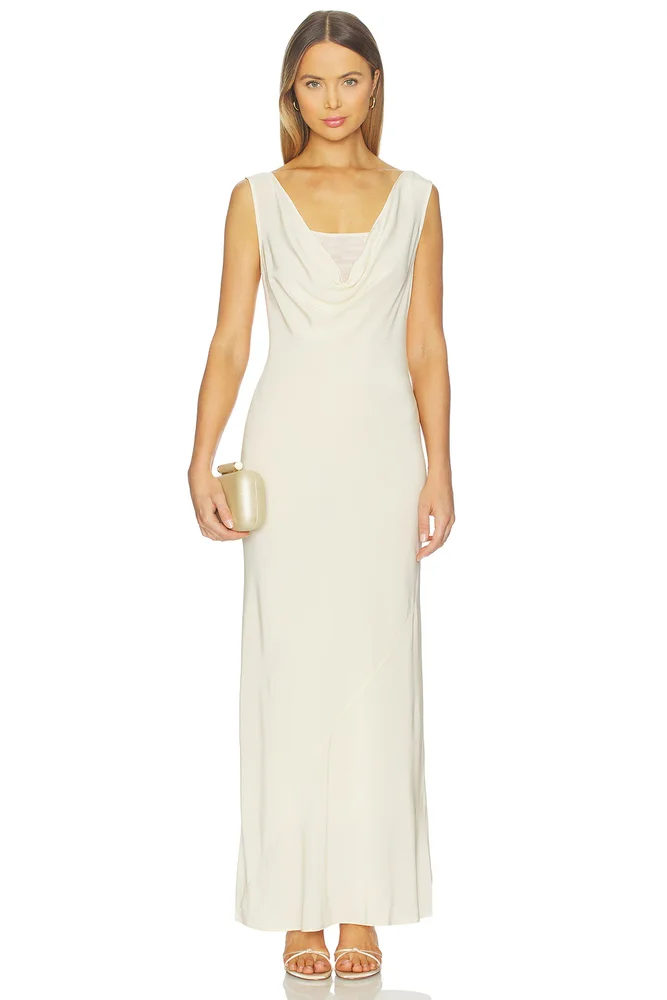
Piero Layered Midi Dress
SIR.
$690
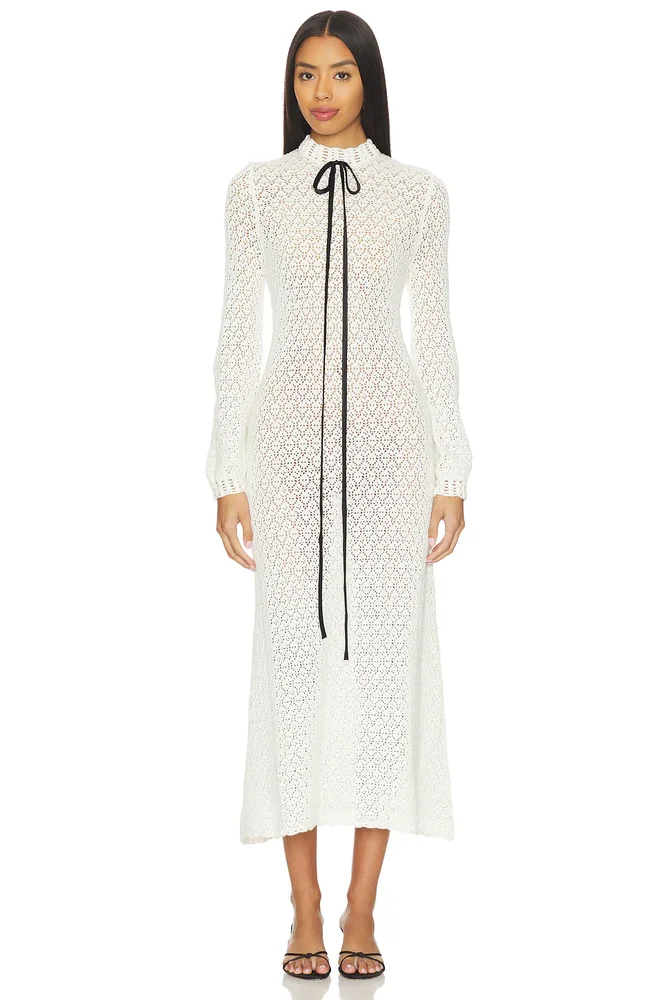
Patsy Pointelle Midi Dress
Tanner Fletcher
$690
Putting It All Together
A simple wedding dress works because it forces a real decision about cut and fabric instead of hiding behind decoration. The Mirror Palais cowl dress and the ASTA RESORT column dress both make that case in floor-length form, one skimming on the bias and one holding a straighter line. For a smaller or more casual ceremony, a midi or mini dress like the SIMKHAI Charlotte does the same job at a shorter length. Fit has to come first regardless of length, since there is no beading or train to cover for a shoulder that slips. I would rather see a bride in perfectly cut jersey than in a heavily embellished gown that does not actually move well. Let the fabric and the fit carry the day, and choose the dress that still feels like you once the photographs are over.