A skin tone color palette is built around the colors that sit next to your face, and the idea is older than the internet. The useful version separates undertone from depth and treats every result as something to test. Here is how to think about a skin tone color palette, where the history has a blind spot, and how to connect it to your closet in Phia.

Skin Tone Color Palette: Undertone, Depth and What Daylight Tells You
The palette that sits next to your face
In 1839 the French chemist Michel Eugene Chevreul, who ran the dye works at the Gobelins tapestry manufactory, worked out that complaints about dull dyes were really about the colors sitting beside them. A color changes depending on its neighbors. That idea, simultaneous contrast, is what sits underneath every draping video you have seen.
A skin tone color palette applies it to people. Put a color next to your face and it either makes your skin look rested and clear or flat and tired. The aim is to find the colors that do the first thing.
Confession #1: I used to think this was vanity. It is closer to lighting design.
Install Phia for free on iPhone, or add the Chrome extension.
Undertone is not skin tone
Skin tone is the surface, how light or deep your skin is. Undertone is the cool, warm or neutral cast underneath it. Two people with the same depth can have opposite undertones, which is why a palette cannot be guessed from a foundation shade.
The popular at-home checks are looking at the veins in your wrist, seeing whether gold or silver jewelry flatters you more, and holding a piece of plain white paper near your face. They are a starting point, not a measurement, and they work best in daylight by a window.
A practical test: hold a few solid-color tops under your chin, one at a time, and see which ones make your face look clearer.

The history has a blind spot
Carole Jackson's 1980 book Color Me Beautiful sorted people into four seasons and helped make color analysis mainstream. It has also drawn criticism, because the original book focused mostly on white women and tended to place people of color in Winter by default.
Modern twelve-season systems read undertone separately from depth, so any skin tone can land in any season. That is a real improvement, but the seasons themselves are still a convention. Treat any skin tone color palette as a guide to test, not a ruling.
What I would skip: any system that tells you a color is off limits. A palette is a set of strong choices, not a list of banned ones.

Install Phia for free on iPhone, or add the Chrome extension.
From your face to your closet
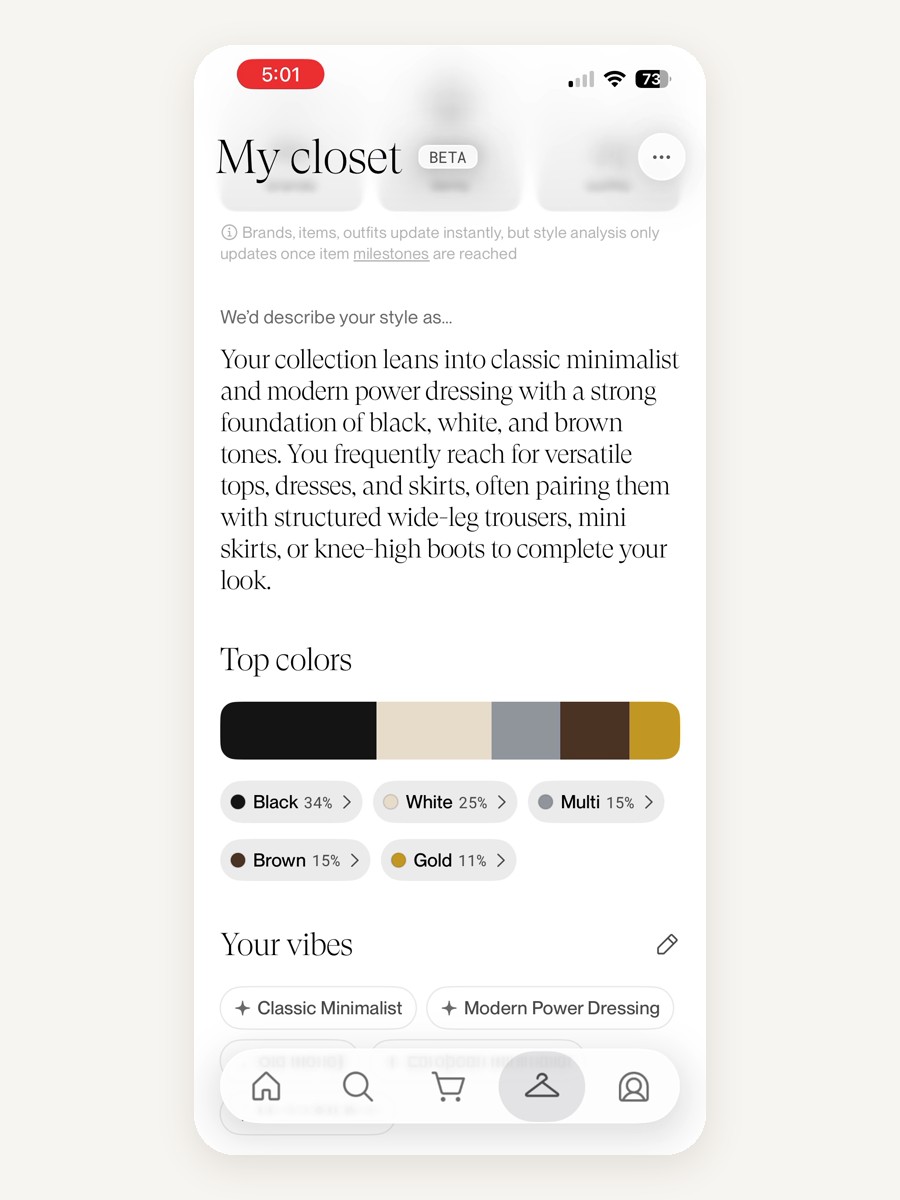
A skin tone color palette only helps if it changes what you wear. The first step is to see what you already own. In Phia, the closet fills from Gmail order confirmations, instant camera roll sync and checkouts through the extension, and Style analysis lists your top colors with a percentage beside each.
You can edit an item's tags for season, color and style, which matters when a retailer calls a color taupe and you know it is grey. Correct tags make the percentages more honest.
Then compare. If your palette says warm and your top closet colors are cool, you have found the gap.

Wear it without a rulebook
The simplest use of a skin tone color palette is to put your best colors nearest your face, in tops, scarves, earrings and collars, and let the rest of the outfit stay neutral. Colors that are harder for you work fine on the bottom half.
Phia can only measure the closet, so to be clear, it does not analyse your skin or tell you your season. What it does is show your colors, build outfits from your own pieces and keep your styling rules, up to ten of them, in mind. When something passes the daylight test, Phia compares prices across more than 220,000 sites, new and secondhand.
To see your closet in color, download the free Phia app, connect Gmail and open Style analysis. For the full closet-first take, How to Find Your Wardrobe Color Palette From Your Closet is the next read.