Slugging skincare means sealing your night routine under a thin layer of balm so skin wakes up soft. Here are the balms made for it, the barrier creams to use underneath and the sleeping masks for the nights in between.
Slugging Skincare: The Balms, Barrier Creams and Sleeping Masks That Seal It In
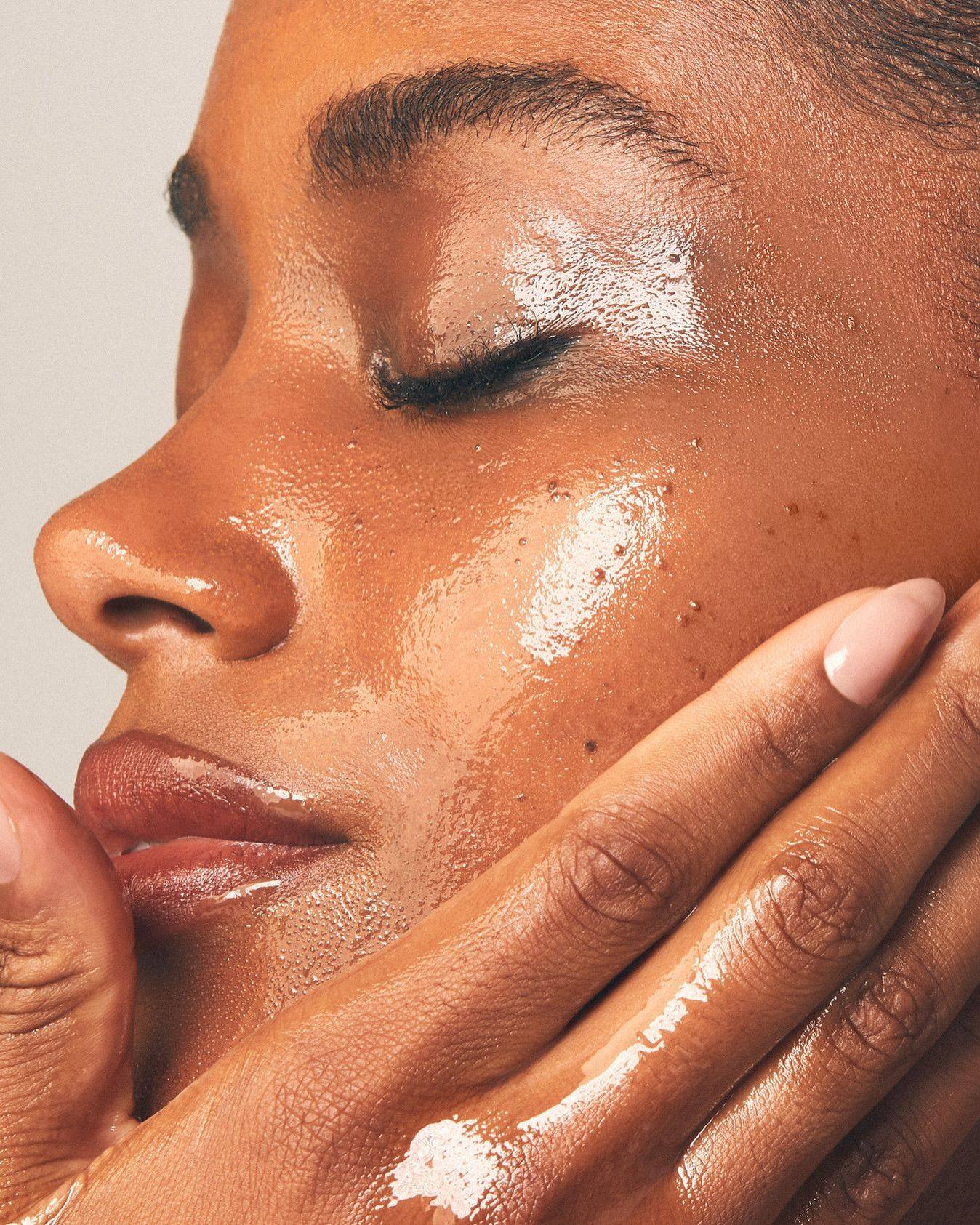
Slugging means slathering your face with petroleum jelly, or a balm like it, as the last step of your evening routine. The Philadelphia Inquirer traced the term's first appearance in the United States to a 2014 Reddit post. It went viral in September 2020, when Charlotte Palermino, a New York aesthetician and co-founder of Dieux, introduced it to her TikTok and Instagram followers and said it had made her dry skin "juicy." Dermatologist Joshua Zeichner told the paper that the layer forms a seal over the outer layer of skin to protect it from the environment while preventing water loss. Slugging skincare now goes well beyond petroleum jelly.
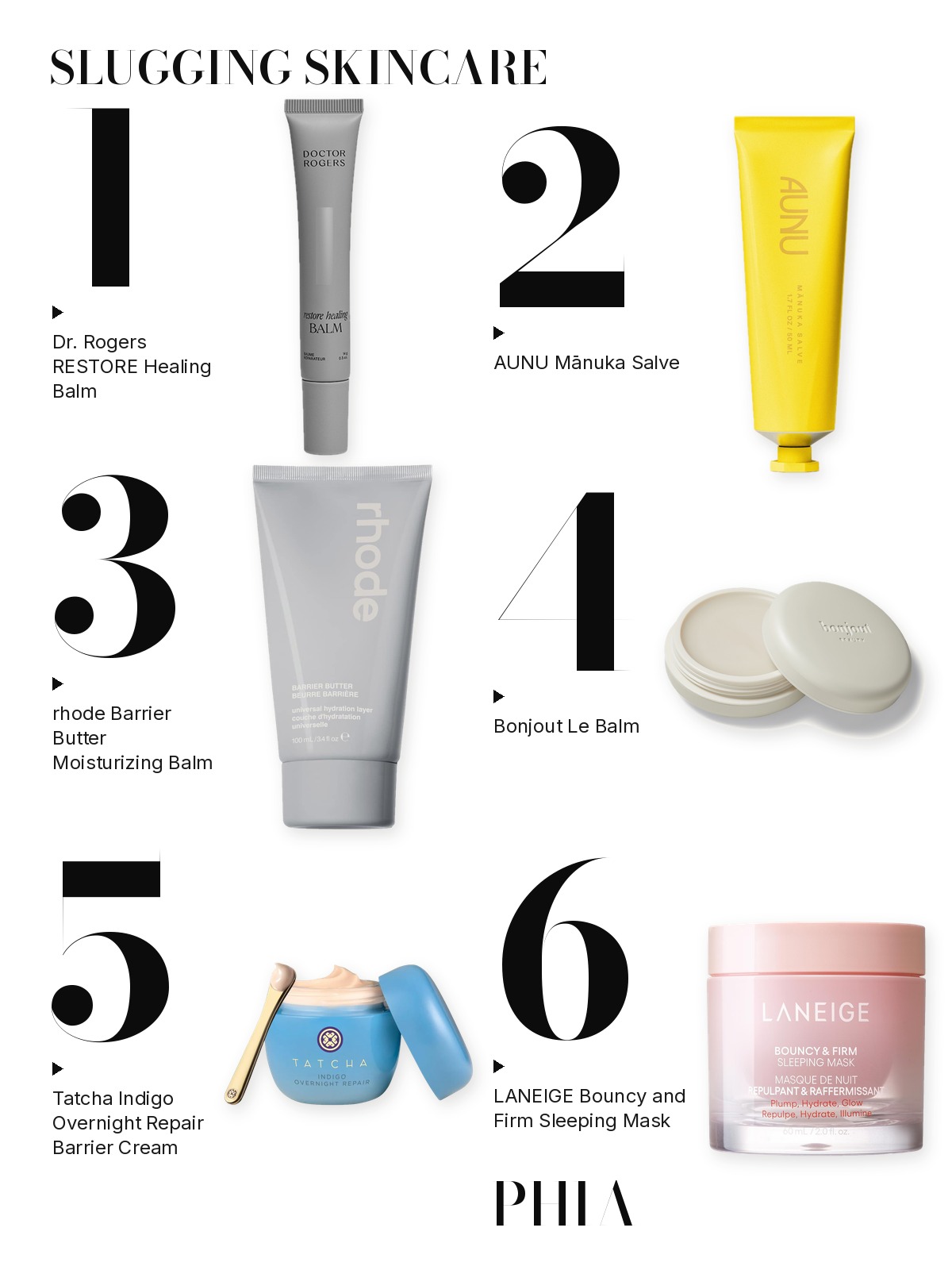
Dr. Rogers Restore Healing Balm is the one I would start with. Dr. Heather Rogers, a Columbia-educated dermatologist in Seattle, never expected to create a skincare line, and in 2015 she unveiled this multi-purpose balm. It is plant-based, with only three hypoallergenic ingredients and no petrolatum, lanolin or fragrance. AUNU Mānuka Salve comes from Jenn Krouse, who helped scale Tory Burch and Victoria Beckham Beauty before partnering with Comvita on mānuka honey, and it is a whipped balm with shea butter, squalane and oats.
rhode Barrier Butter Intensive Moisturizing Balm launched on October 28 as the last step of a nighttime routine, and ELLE called it the brand's take on slugging. bonjout Le Balm comes from pharmacist Natacha Bonjout, who sold only this one product for the brand's first three years, and it has 68 active ingredients. Eau Thermale Avène makes two balms here, the Tolerance Control Skin Recovery Balm for reactive skin and the silkier Moisturizing Melt-in Balm. Monastery Lab Edition 008 Universal Balm and Tammy Fender Intensive Repair Balm round it out.
Use a thin layer, about the size of a pea for the whole face.
Balms and salves for the slugging layer

Restore Healing Balm
Dr. Rogers Restore
$24

Tolerance Control Skin Recovery Balm
Eau Thermale Avène
$40

Moisturizing Melt-in Balm
Eau Thermale Avène
$40

Lab Edition 008 Universal Balm
Monastery
$48

Mānuka Salve
AUNU
$68

Intensive Repair Balm in No Size / No Color / No Option
Tammy Fender
$150

Le Balm in One Size
bonjout
$130

Barrier Butter Intensive Moisturizing Balm
rhode
$36
Barrier creams to apply first
Slugging works best over something, because the balm seals in whatever is underneath. That makes the cream you apply first the real treatment. Tatcha Indigo Overnight Repair is fragrance-free and endorsed by the National Eczema Association, with Japanese indigo extract to calm redness. Tower 28 SOS Daily Skin Barrier Redness Recovery Moisturizer is intentionally basic, with four types of hyaluronic acid and ceramides, and AESTURA ATOBARRIER365 Cream is a dermatologist-tested ceramide cream with niacinamide.
Alpyn Beauty Super Peptide & Ghostberry Barrier Repair Cream was designed for the harsh air of Jackson Hole, Wyoming, with 14 peptides and ceramides. The INKEY List Bio-Active Ceramide Repairing and Plumping Moisturizer is a velvety cream for fine lines, and Dr. Loretta Barrier Repair Gel Cream is the light choice, with bioidentical ceramides and peptides. Augustinus Bader The Overnight Restorative Cream packs vitamins, lipids and peptides, and Biossance Ectoin Overnight Rescue pairs ectoin with squalane for rough, dry patches.
Order matters: cleanse, apply any serum, smooth on one of these creams, then wait a few minutes before the balm so it does not slide around.
What I would skip: slugging over a retinol or an acid on the same night. Keep the balm for nights when only a plain moisturizer sits underneath, and if you break out easily, try it on dry patches before the whole face.
Barrier creams to go on first

Indigo Overnight Repair Redness Reducing Barrier Cream Moisturizer
Tatcha
$94

Super Peptide & Ghostberry Barrier Repair Cream in One Size
Alpyn Beauty
$62

SOS Daily Skin Barrier Redness Recovery Moisturizer
Tower 28 Beauty
$24

ATOBARRIER365 Cream Moisturizer with Ceramides & Niacinamide for Skin Moisture Barrier Repair
AESTURA
$32

Bio-Active Ceramide Repairing and Plumping Moisturizer + Barrier Strengthening
The INKEY List
$22

Barrier Repair Gel Cream
Dr. Loretta
$65

The Overnight Restorative Cream with Advanced TFC8
Augustinus Bader
$365

Ectoin Overnight Rescue Deep Repair Night Moisturizer + Squalane
Biossance
$70
Sleeping masks for the nights in between
Sleeping masks are the gentler cousin of slugging. They stay on overnight like a balm but feel lighter, which makes them easier on nights when a full seal feels like too much. LANEIGE Bouncy + Firm Radiance Boosting Sleeping Mask is a Korean sleeping mask with a peony and collagen complex, and belif Aqua Bomb Sleeping Mask has a jelly-pudding texture for dry, tired skin. Dr. Jart+ Cicapair Tiger Grass Sleepair Intensive Night Mask uses centella asiatica and allantoin to soothe.
For very dry skin, Origins Drink Up Intensive Overnight Hydrating Face Mask uses avocado butter and hyaluronic acid, and it keeps even hands soft. fresh Floral Recovery Overnight Mask uses passionflower and cornflower with squalane to calm redness. Sisley-Paris Velvet Sleeping Mask with Saffron Flowers is the richest here, with macadamia oil and kokum butter. Farmacy 10% Niacinamide Night Mask works on texture and pores, and Youth To The People Superberry Hydrate + Glow Dream Night Cream + Mask adds vitamin C.
A rotation I like: slug two or three nights a week and use a sleeping mask on the nights in between.
What I would skip: a sleeping mask and a balm on the same night. Pick one final layer, since stacking both mostly ends up on your pillowcase.
Sleeping masks for nights off the balm

Bouncy + Firm Radiance Boosting Sleeping Mask with Peony Collagen Complex
LANEIGE
$36

Aqua Bomb Sleeping Mask
belif
$38

Drink Up Intensive Overnight Hydrating Face Mask with Avocado & Hyaluronic Acid
Origins
$39

Floral Recovery Overnight Mask with Squalane
fresh
$72

Velvet Sleeping Mask with Saffron Flowers
Sisley-Paris
$180

Cicapair Tiger Grass Sleepair Intensive Night Mask
Dr. Jart+
$45

10% Niacinamide Night Mask
Farmacy
$45

Superberry Hydrate + Glow Dream Night Cream + Mask with Vitamin C
Youth To The People
$53
Making slugging part of the week
Slugging is simple, but a few habits make it more comfortable. Apply a thin layer only after everything else has sunk in, and keep heavy balms away from your eyes. Put an old pillowcase or a clean towel down for the first few nights, since some of it will transfer. In the morning, wash gently to remove any residue before sunscreen. If you are acne-prone or notice small bumps, stop and use the balm only on dry spots like the corners of your nose and around your mouth. Two or three nights a week is enough for most people, and cold months are when it helps most.