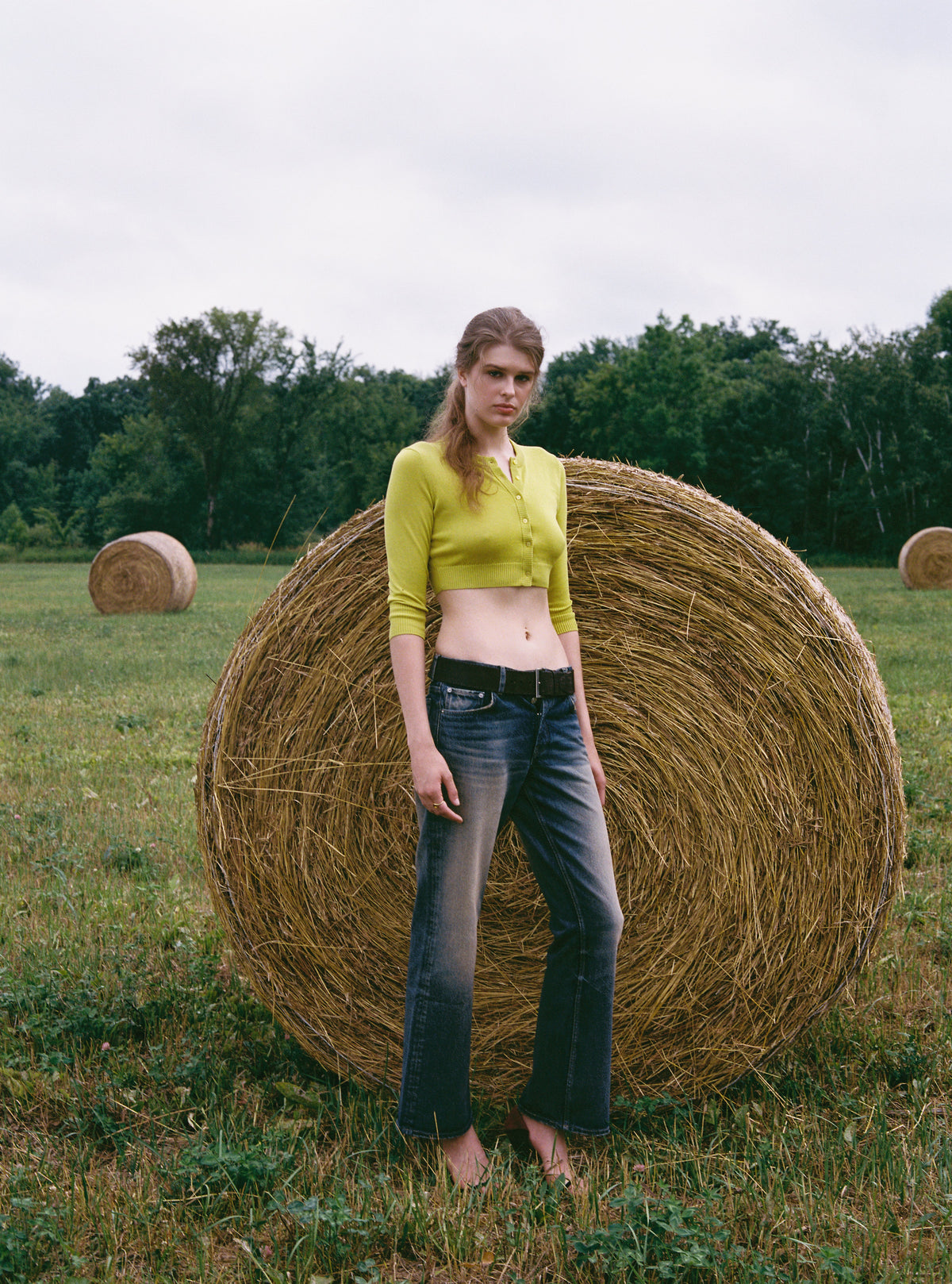
ssstein was founded in Tokyo in 2016 by the self-taught designer Kiichiro Asakawa, who built the label out of three trouser designs after years spent taking apart vintage clothing at his own shop, Carol. I focused on that trouser-first restraint in shirting and wide-leg pants.
ssstein

Restraint That Keeps Thinking
Kiichiro Asakawa founded ssstein in Tokyo in 2016 as a self-taught designer, building the label out of his own shop, Carol, where he spent years taking apart vintage clothing to understand how it was made. That close study shows up in the shirts. The Skipper cotton shirt keeps a straightforward collar and placket, but the weight of the cotton and the cut through the body are what make it read considered rather than basic. The Cotton and silk-blend shirt takes the same shape into a slightly dressier fabric, useful when you want one silhouette to do double duty. Neither needs a matching set to work.
They are built to sit under whatever a day actually requires. That is the label's real trick, precision that does not announce itself, carried through from three trousers to a full range of shirts and knits.

Cotton and silk-blend shirt
ssstein
$420

Skipper cotton shirt
ssstein
$440

Skipper cotton shirt
Ssstein
$480

Oversized linen shirt
ssstein
$440

Cotton tank
ssstein
$125

Cotton T-shirt
ssstein
$145

Cotton T-shirt
ssstein
$190

Ribbed wool T-shirt
ssstein
$275

Knitted sweater
ssstein
$405

Skipper silk-blend shirt
ssstein
$530

Suvin cotton-jersey T-shirt
ssstein
$145

Suvin cotton-poplin shirt
ssstein
$355
Where The Proportion Lives
ssstein started with trousers, and that is still where the label spends its real design energy. The High-rise wide-leg jeans give the leg width without losing a defined waist, so the volume reads as a choice rather than a fit accident. The Wool pleated wide-leg pants push the same idea into a dressier fabric, using pleats to add fullness at the top rather than the hem. Both need a fitted or cropped top to keep the proportion legible, since a loose shirt over a wide leg starts to look like two different outfits. The width is the point, so everything above the waist should confirm it rather than compete with it.

Cotton-corduroy wide-leg pants
Ssstein
$560

Mid-rise wide-leg jeans
ssstein
$560

High-rise wide-leg jeans
ssstein
$530

Deformation high-rise wide-leg jeans
ssstein
$530

Gathered linen jacket
ssstein
$805

Wool pleated wide-leg pants
ssstein
$690

Pleated twill wide-leg pants
ssstein
$485

Belted wool-gabardine vest
ssstein
$630

Distressed denim shorts
ssstein
$550

Twill shirt
ssstein
$405

Pleated silk-blend track pants
ssstein
$575

Checked lyocell-blend gauze shirt
ssstein
$485
Start With A Trouser
ssstein's whole case rests on treating comfort as a design problem rather than an excuse to stop trying, an instinct traceable to Asakawa cutting apart vintage denim at his own shop before he designed a single new piece. The wide-leg trousers and jeans here prove that width can still look intentional when the waist and hem are handled with care, and the shirts prove that a simple shape can carry real weight in the fabric instead of the cut. I would build from one trouser and one shirt before adding more, since the label rewards a considered pairing more than a full head-to-toe commitment. The restraint is quiet, but it is not passive, and it does not need decoration to register.