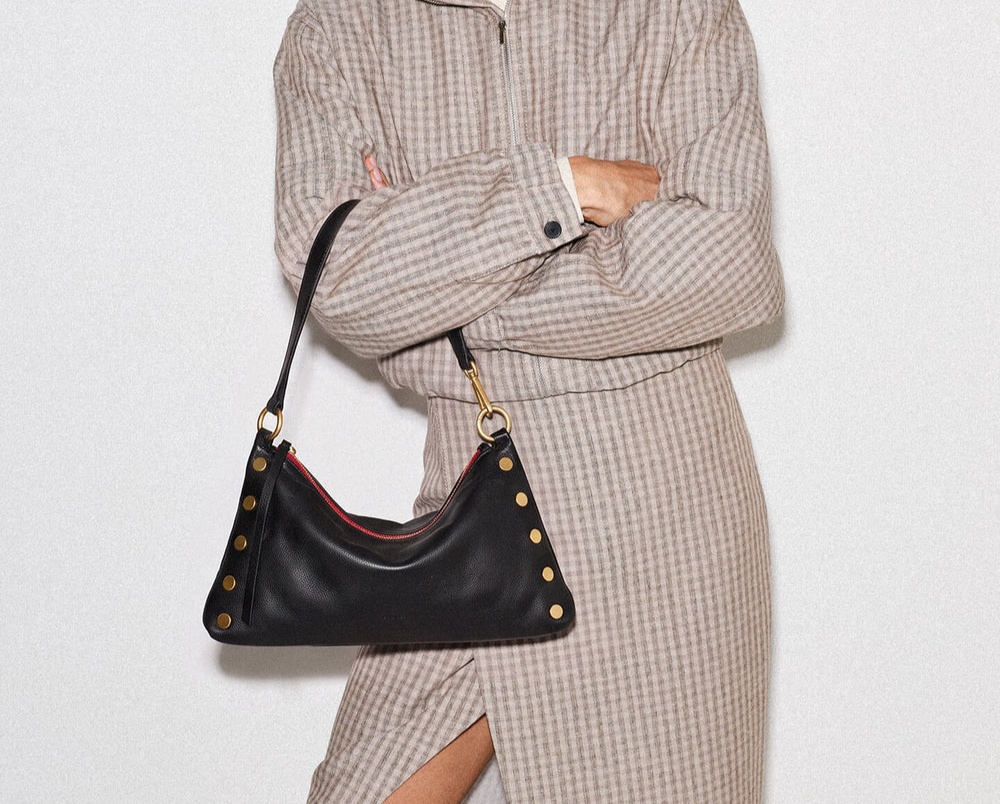
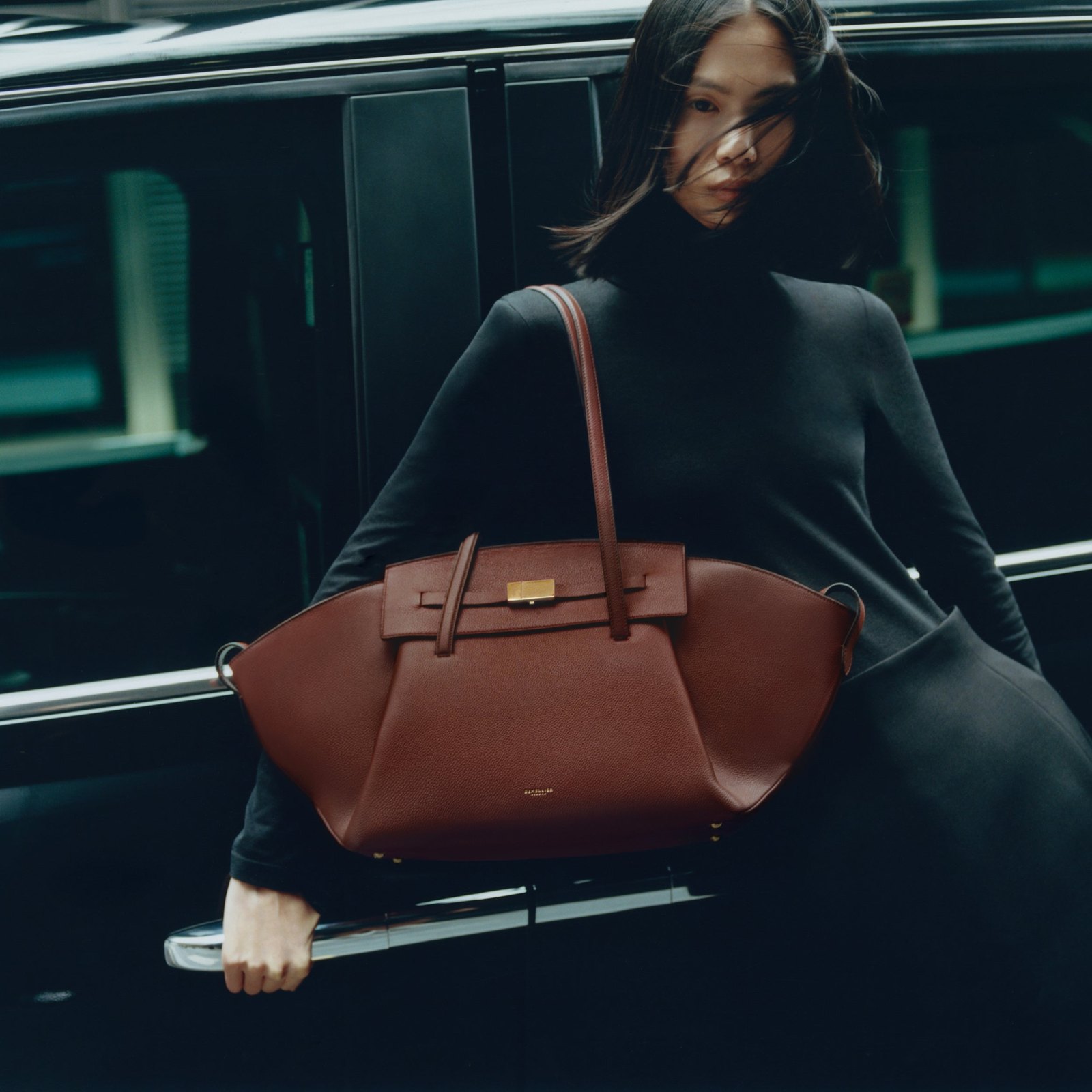
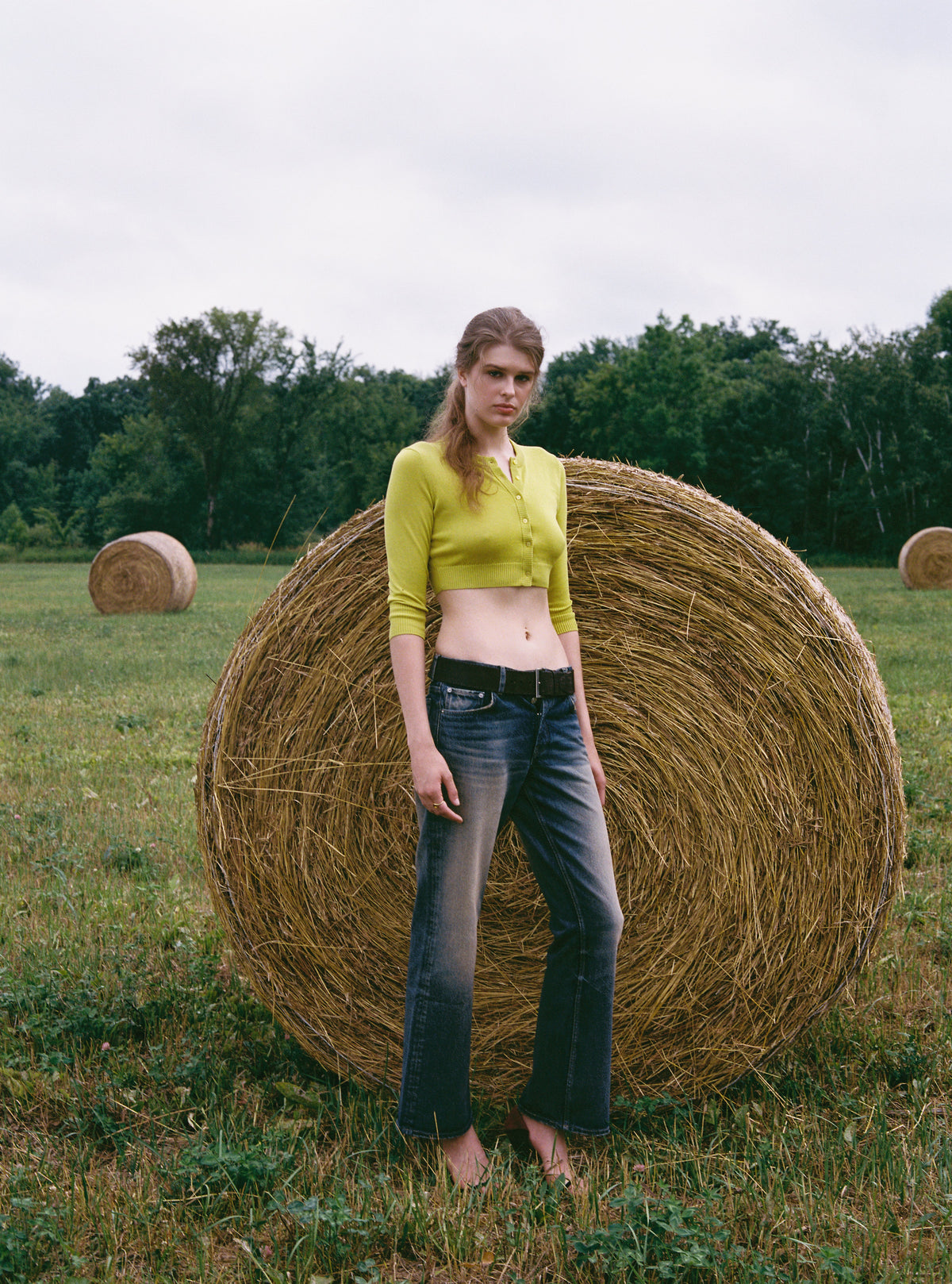
Lara and Matt Fells, a married couple with retail backgrounds rather than design degrees, started their label in Byron Bay, Australia, in 2014 with a maxed-out credit card and a handful of leather tote bags. The brand found its signature in woven mules introduced around its third year, pieces that reportedly sold out on repeat, before it grew into a full ready-to-wear range still designed and headquartered in that same coastal town.
St. Agni

Tops and shirting
St. Agni didn't start in apparel at all, it started with leather bags, so the tops and shirting are a later chapter of the brand's story rather than its foundation. What carries over is the same pared-back, coastal-minimal instinct that defined the earliest accessories.

Wool-Blend Layered Bustier Cami
St. Agni
$400

Nouveau Jacquard Silk-Blend Halter Top
St. Agni
$280

Flounce Silk Shirt
St. Agni
$460

Organic Cotton Long-Sleeve Top
St. Agni
$170

Superfine Merino Wool Button-Down
St. Agni
$450

Superfine Merino Wool Button-Down
St. Agni
$450

Flounce Silk Halter Top
St. Agni
$400

Flounce Silk Shirt
St. Agni
$460

Deco Fringe Cami
St. Agni
$300

Organic Cotton Ballerina Top
St. Agni
$150

Organic Cotton Ballerina Top
St. Agni
$150

Organic Cotton Ballerina Top
St. Agni
$150

Fine Jersey Twisted Top
St. Agni
$180

Superfine Merino Off-Shoulder Top
St. Agni
$300

Superfine Merino Off-Shoulder Top
St. Agni
$300

Silk Halter Rosette Top
St. Agni
$330

Silk Halter Rosette Top
St. Agni
$330

Silk Halter Rosette Top
St. Agni
$330

Structured Satin Cami
St. Agni
$350

Ornate Silk-Wool Cami
St. Agni
$400

Wool-Silk V-Neck Bodice
St. Agni
$450

Structured Satin Cami
St. Agni
$350

Structured Satin Cami
St. Agni
$350

Folded Bodice Wool-Blend Cami
St. Agni
$380
More Tops and shirting
The label's founders have described staying deliberately fluid about direction, following instinct rather than a rigid plan as the brand grew, and the range of shirting here reflects that same willingness to expand a simple idea in several directions. It stays consistent with the label's relaxed, East Coast Australian sensibility.

Herringbone Wool-Blend Rosette Cami
St. Agni
$360

Cotton-Blend Draped Bodice
St. Agni
$280

Cotton-Blend Draped Bodice
St. Agni
$280

Cotton-Blend Draped Bodice
St. Agni
$280

Merino Wool Ballerina Knit Top
St. Agni
$250

Merino Wool Ballerina Knit Top
St. Agni
$250

Button Drawstring Cotton Long-Sleeve Top
St. Agni
$180

Iris Jacquard Cotton-Blend Cami
St. Agni
$350

Silk-Blend Minimal Bodice
St. Agni
$330

Organic Cotton Ballerina Layered Long-Sleeve Top
St. Agni
$180

Organic Cotton Ballerina Layered Long-Sleeve Top
St. Agni
$180

Exclusive Suede Tie Top
St. Agni
$490

Taxi Beaded Top
St. Agni
$500

Savannah Silk-Blend Camisole Top
St. Agni
$390

Layered Cotton Top
St. Agni
$180

Studio Cotton-Blend Camisole Top
St. Agni
$270

Tie-Waist Wool Top
St. Agni
$370

Suede Low Back Tie Top
St. Agni
$490

Cotton Oxford Wrap Halter Top
St. Agni
$300

Slim Wool-Cashmere Tank Top
St. Agni
$240

Wool Top
St. Agni
$420

Merino Slim Tank
St. Agni
$240

Ballerina Cotton Top
St. Agni
$150

Strapless Striped Cotton-Blend Top
St. Agni
$249
Still more Tops and shirting
Named for Lara Fells's grandmother, an immigrant from Greece the designer has called a personal saint, St. Agni has always framed its clothing as personal rather than purely commercial. This last stretch of tops keeps that unfussy, wearable throughline going without adding embellishment for its own sake.

Ballerina Cotton Top
St. Agni
$150

Textured Knit Bodysuit
St. Agni
$320

Pinstripe Wool Tank Top
St. Agni
$220.5

Cotton Jersey Split Back Tee
St. Agni
$199

Organic Cotton V Neck Long Sleeve Top
St. Agni
$179

Silk Halter Wrap Top
St. Agni
$349

Cashmere Asymmetric Top
St. Agni
$429

Off-the-shoulder asymmetric tie-detailed TENCEL™ Lyocell blouse
St. Agni
$200
Trousers and shorts
The brand grew out of a linen cupboard and a small stack of savings, and its trousers and shorts still carry that scrappy, considered-over-flashy approach even now that St. Agni has five of its own stores. Clean lines and quality construction do the work here, not decoration.

Nouveau Jacquard Silk-Blend Shorts
St. Agni
$430

Cotton Utility Outside-Pocket Pants
St. Agni
$430

Iris Jacquard Cotton-Blend Minimal Pants
St. Agni
$600

Wool-Blend '90s Tie-Scarf Pants
St. Agni
$550

Wool-Blend '90s Tie-Scarf Pants
St. Agni
$550

Wool-Blend Side Button Carter Trousers
St. Agni
$680

Silk-Blend Ruffle Pants
St. Agni
$680

Deco Fringe Pants
St. Agni
$550

Silk Twill Cummerbund Pants
St. Agni
$630

90s Moto Leather Pants
St. Agni
$980

Structured Satin Cotton-Blend Balloon Pants
St. Agni
$530

Structured Satin Cotton-Blend Balloon Pants
St. Agni
$530

Structured Satin Cotton-Blend Balloon Pants
St. Agni
$530

Wool-Blend '90s Belt Detail Pants
St. Agni
$550

Wool Hybrid Mini Skirt Pants
St. Agni
$750

Wool-Blend Patchwork Everyday Pants
St. Agni
$480

Wool-Blend Everyday Cuffed Pants
St. Agni
$600

Cotton Velvet Denim '90s Pants
St. Agni
$500

Iris Jacquard Cotton-Blend Shorts
St. Agni
$300

Silk Twill Cummerbund Pants
St. Agni
$630

Wool-Blend Tab Pleat Pants
St. Agni
$580

Ornate Silk-Wool Minimal Pants
St. Agni
$700

Wool-Silk Minimal '90s Pants
St. Agni
$660

Wool-Blend Folded Waist Pleat Pants
St. Agni
$550
More Trousers and shorts
St. Agni's manufacturing has remained in Indonesia since the early days, built on relationships the Fells say they have maintained deliberately to limit their footprint. This continuation of trousers and shorts reflects the same restrained silhouette the label has leaned on since expanding out of accessories.

Relaxed Cotton-Blend Peplum Pleat Pants
St. Agni
$400

Relaxed Cotton-Blend Peplum Pleat Pants
St. Agni
$400

Relaxed Cotton-Blend Peplum Pleat Pants
St. Agni
$400

Relaxed Cotton-Blend Peplum Pleat Pants
St. Agni
$400

Silk-Blend Nouveau Jacquard Everyday Pants
St. Agni
$550

Silk Everyday Relaxed Shorts
St. Agni
$370

Cotton Hybrid Wide Leg Pants
St. Agni
$520

Wrap Rouleau Wool-Blend Wide-Leg Pants
St. Agni
$700

Adjustable Cotton-Blend Palazzo Pants
St. Agni
$500

Button Front Pleat Pants
St. Agni
$700

Rouleau Crop Pants
St. Agni
$360

Everyday Relaxed Striped Cotton-Blend Wide-Leg Pants
St. Agni
$400

Rouleau Crop Pants
St. Agni
$360

Wrap Rouleau Pant
St. Agni
$699

Cotton Hybrid Wide Leg Pant
St. Agni
$519

Organic cotton-poplin wide-leg pants
St. Agni
$520
Shoes
Woven mules were the product that actually built St. Agni's following, introduced in the label's third year and selling out with each restock, and shoes remain a category the brand treats with particular focus. This selection carries that weaving technique and coastal ease forward into newer silhouettes.

Plunge Kitten Heel 40
St. Agni
$400

Everyday Thong
St. Agni
$300

T-Bar Ballet Flat
St. Agni
$350

Fine Strap Slingback Heel 50
St. Agni
$350

Plunge Pump 80
St. Agni
$400

Bijou Beaded Slide
St. Agni
$450

Bijou Beaded Heel 50
St. Agni
$500

City Mule
St. Agni
$350

City Mule
St. Agni
$350

Jules Ruched Loafer
St. Agni
$380

Jules Ruched Loafer
St. Agni
$380

Belt Detail Ballet Flat
St. Agni
$330

Belt Detail Ballet Flat
St. Agni
$330

Plunge Pump 80
St. Agni
$400

Plunge Kitten Heel 40
St. Agni
$400

Fine Strap Slingback Heel 50
St. Agni
$350

Thong Wedge
St. Agni
$350

Thong Wedge
St. Agni
$350

Everyday Thong Flat
St. Agni
$300

Bijou Beaded Heel 50
St. Agni
$500

Everyday Thong Heel 50
St. Agni
$350

Printed Pony Hair Mules
St. Agni
$420

High Wedge
St. Agni
$430

Opanka Slide
St. Agni
$290
Dresses
Dresses came later still in the label's evolution from bags to footwear to full apparel, but the Byron Bay ethos, relaxed, minimal, sun-worn, stays consistent across the shift. These pieces read as easy rather than occasion-driven, in keeping with the brand's origins.

Knit Bodice Margot Midi Dress
St. Agni
$700

Flounce Handkerchief Silk Maxi Dress
St. Agni
$830

Folded Bodice Cotton-Blend Midi Dress
St. Agni
$590

Folded Bodice Cotton-Blend Midi Dress
St. Agni
$590

Flounce Handkerchief Silk Midi Dress
St. Agni
$830

Structured Satin Cotton-Blend Cocoon Midi Dress
St. Agni
$630

Silk Halter Rosette Midi Dress
St. Agni
$800

Silk Halter Rosette Midi Dress
St. Agni
$800

Fine Jersey Handkerchief Midi Dress
St. Agni
$330

Fine Jersey Slip Maxi Dress
St. Agni
$300

Fine Jersey Delphine Mini Dress
St. Agni
$270

Fine Jersey Delphine Mini Dress
St. Agni
$270

Spliced Cotton-Blend Everyday Midi Dress
St. Agni
$400

Herringbone Wool-Blend Asymmetric Midi Dress
St. Agni
$600

Technical Cotton-Blend Ruffle Halter Midi Dress
St. Agni
$530

Technical Cotton-Blend Ruffle Halter Midi Dress
St. Agni
$530

Deco Fringe Slip Dress
St. Agni
$530

Silk Halter Rosette Maxi Dress
St. Agni
$800

Folded Cotton-Blend Bodice Dress
St. Agni
$590

Everyday Pleated Striped Cotton-Blend Midi Dress
St. Agni
$580

Fluid Tank Dress
St. Agni
$550

Halter Wrap Backless Dress
St. Agni
$500

Strapless Cotton Oxford Midi Dress
St. Agni
$500

Fine Jersey Circle Hem Dress
St. Agni
$499
Bags
This is where St. Agni actually began, with a small run of minimal leather totes made because Lara Fells couldn't find simple, well-made bags in the market at the time. The bags here are the most direct throughline to the label's founding idea, more than a decade on.

Connolo Tote
St. Agni
$450

Slim Petit Origami Bag
St. Agni
$400

Bijou Beaded Pouch
St. Agni
$650

Bijou Beaded Pouch
St. Agni
$650

Petit Woven Tote
St. Agni
$330

Petit Woven Tote
St. Agni
$330

Petit Zip Pouch
St. Agni
$280

Petit Zip Pouch
St. Agni
$280

Petit Zip Pouch
St. Agni
$280

Carryall Tote
St. Agni
$740

Belt Detail Carryall Tote
St. Agni
$600

Belt Detail Shoulder Bag
St. Agni
$450

Belt Detail Shoulder Bag
St. Agni
$480

Mini Fortune Shoulder Bag
St. Agni
$400

Mini Fortune Shoulder Bag
St. Agni
$400

90s Ornate Bag
St. Agni
$350

Fawn Leather Bateau Tote Bag
St. Agni
$680

Woven Leather Shoulder Bag
St. Agni
$450

Suede Origami Tote
St. Agni
$430

Woven leather shoulder bag
St. Agni
$545
More from the collection
St. Agni's growth from a two-person side project into a brand with stores in Melbourne, Sydney, Byron Bay and Brisbane happened without outside design-school credentials or a big launch budget behind it. This part of the edit reflects that steady, organic expansion rather than any sudden reinvention.

Wool-Blend Balloon Jacket
St. Agni
$700

Tailored Wool-Blend Button Jacket
St. Agni
$630

Deco Fringe Jacket
St. Agni
$460

Panel Moto Leather Jacket
St. Agni
$1,100

Wool-Blend Flight Jacket
St. Agni
$700

Belted Balloon Leather Jacket
St. Agni
$1,400

Cotton Velvet Denim Bomber
St. Agni
$600

Iris Jacquard Cotton-Blend Jacket
St. Agni
$600

Contour Wool-Blend Flight Jacket
St. Agni
$730

Exclusive Suede Cocoon Jacket
St. Agni
$1,000

Zip Leather Jacket
St. Agni
$980

Cocoon leather jacket
St. Agni
$1,000

Organic stretch-cotton jacket
St. Agni
$700

Suede biker jacket
St. Agni
$1,000

Tang leather jacket
St. Agni
$1,030

90s Square Sunglasses
St. Agni
$390

90s Square Sunglasses
St. Agni
$390

90s Square Sunglasses
St. Agni
$390

Ovalo Sunglasses
St. Agni
$390

Ovalo Sunglasses
St. Agni
$390

Ovalo Sunglasses
St. Agni
$390

Duet Belt Detail Wedge
St. Agni
$380

Henri Wide Belt
St. Agni
$320

Bodice Belt
St. Agni
$350
More from the collection
The studio has stayed headquartered in Byron Bay throughout its growth, something the Fells have said keeps the brand's laid-back, small-town character intact even as the wholesale footprint has gone global. These pieces keep that same unhurried tone.

Duet Belt Detail Wedge
St. Agni
$380

Suede Tie Belt
St. Agni
$120

Linea Oversized Sunglasses
St. Agni
$400

Homme Belt
St. Agni
$199

Leather Wrap Midi Skirt
St. Agni
$800

Fine Jersey Tie Scarf Skirt
St. Agni
$280

Fine Jersey Tie Scarf Skirt
St. Agni
$280

Raw-Edge Wool-Blend Pencil Skirt
St. Agni
$400

Silk Wrap Ruffle Mini Skirt
St. Agni
$550

Technical Cotton-Blend Handkerchief Skirt
St. Agni
$350

Technical Cotton-Blend Handkerchief Skirt
St. Agni
$350

Ornate Silk-Wool Jacquard Midi Skirt
St. Agni
$650

Exclusive Suede Midi Circle Skirt
St. Agni
$1,000

Suede Circle Skirt
St. Agni
$1,000

Savannah Wrap Skirt
St. Agni
$400

Wool Asymmetric Skirt
St. Agni
$459

Wool Contour Jumper
St. Agni
$400

Fine Merino Wool V-Neck Sweater
St. Agni
$360

Fine Merino Wool V-Neck Sweater
St. Agni
$360

Cocoon Wool Jumper
St. Agni
$400

Layered Cashmere Jumper
St. Agni
$630

Cinched Cashmere Jumper
St. Agni
$630

Cinched Cashmere Jumper
St. Agni
$630

Cashmere Sweater
St. Agni
$600
More from the collection
Profitable from close to day one according to its founders, St. Agni has expanded gradually rather than chasing rapid scale, and this final stretch of the assortment is a product of that patience. It rounds out the edit without straying from the label's original, minimal point of view.

Cashmere Sweater
St. Agni
$600

Wool Crew Neck Sweater
St. Agni
$429

Wool Cardigan
St. Agni
$399

Cotton Utility Shell Parka
St. Agni
$560

Structured Satin Cotton-Blend Utility Parka
St. Agni
$890

Structured Cotton-Blend Satin Utility Parka
St. Agni
$890

Structured Cotton-Blend Satin Utility Parka
St. Agni
$890

Ornate Silk-Wool Coat
St. Agni
$1,200

Technical Cotton Cocoon Coat
St. Agni
$799

High-Rise Cotton Sculpt Jeans
St. Agni
$330

Low-Rise Cotton Relaxed Jeans
St. Agni
$330

Double-layered organic cotton-jersey T-shirt
St. Agni
$180

Double-layered organic cotton-jersey T-shirt
St. Agni
$180

Opanka Slide
St. Agni
$290

Soft Strap Slide
St. Agni
$290

Multi Strap Heel
St. Agni
$430
Our honest take
St. Agni's strength is that it has never really outgrown the instincts it started with, considered materials, a narrow color palette, one good weave technique applied across categories, even as the business has scaled well past a linen cupboard. The apparel is less distinctive than the footwear and bags that built the label's reputation, which is worth knowing before assuming every category here is equally essential.