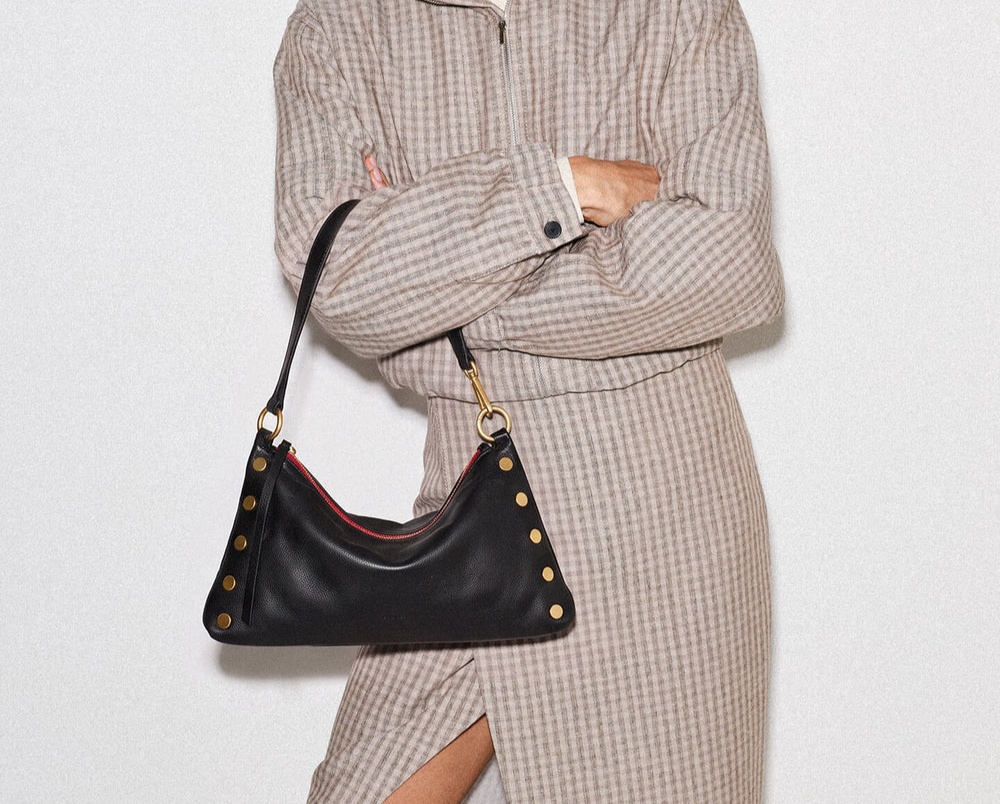
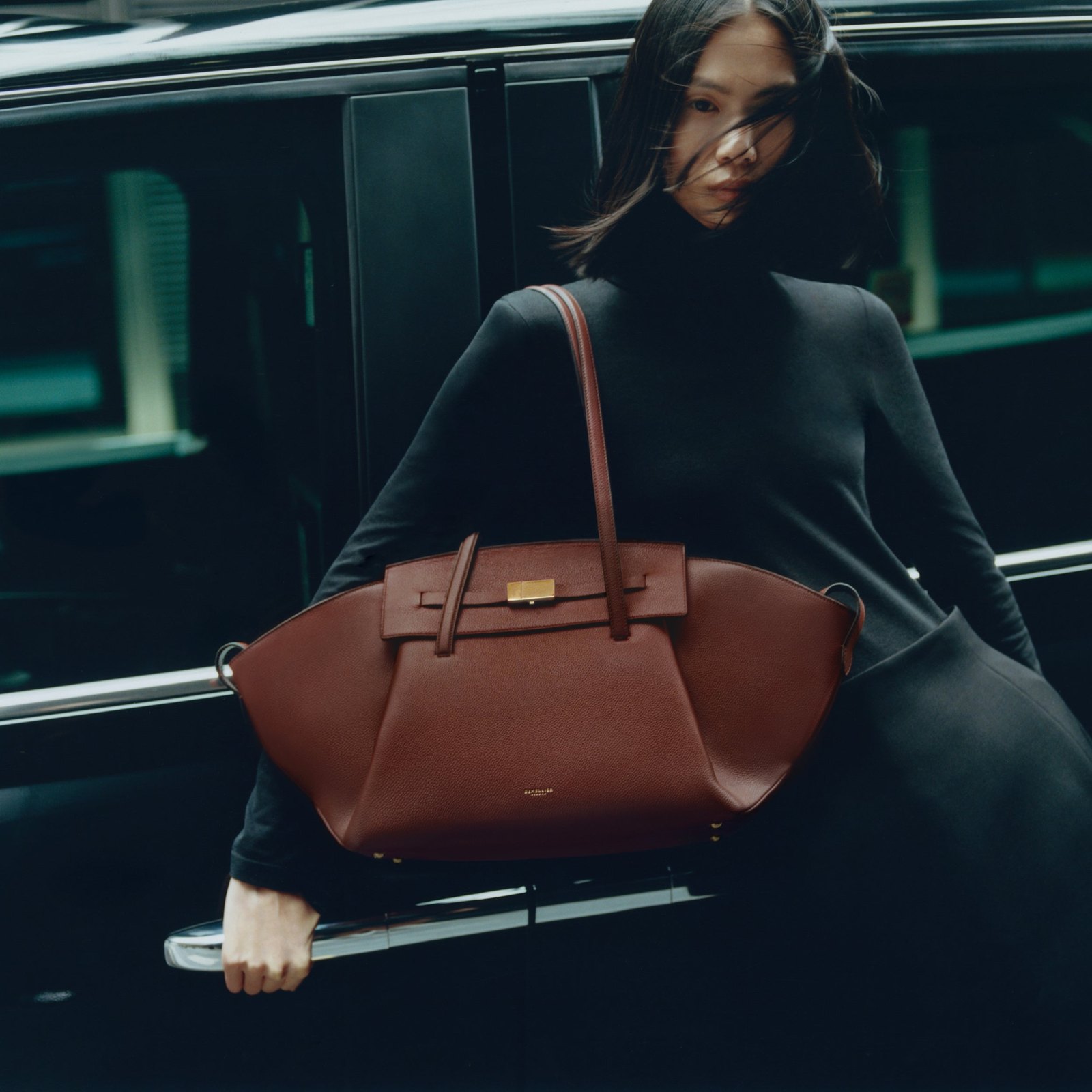
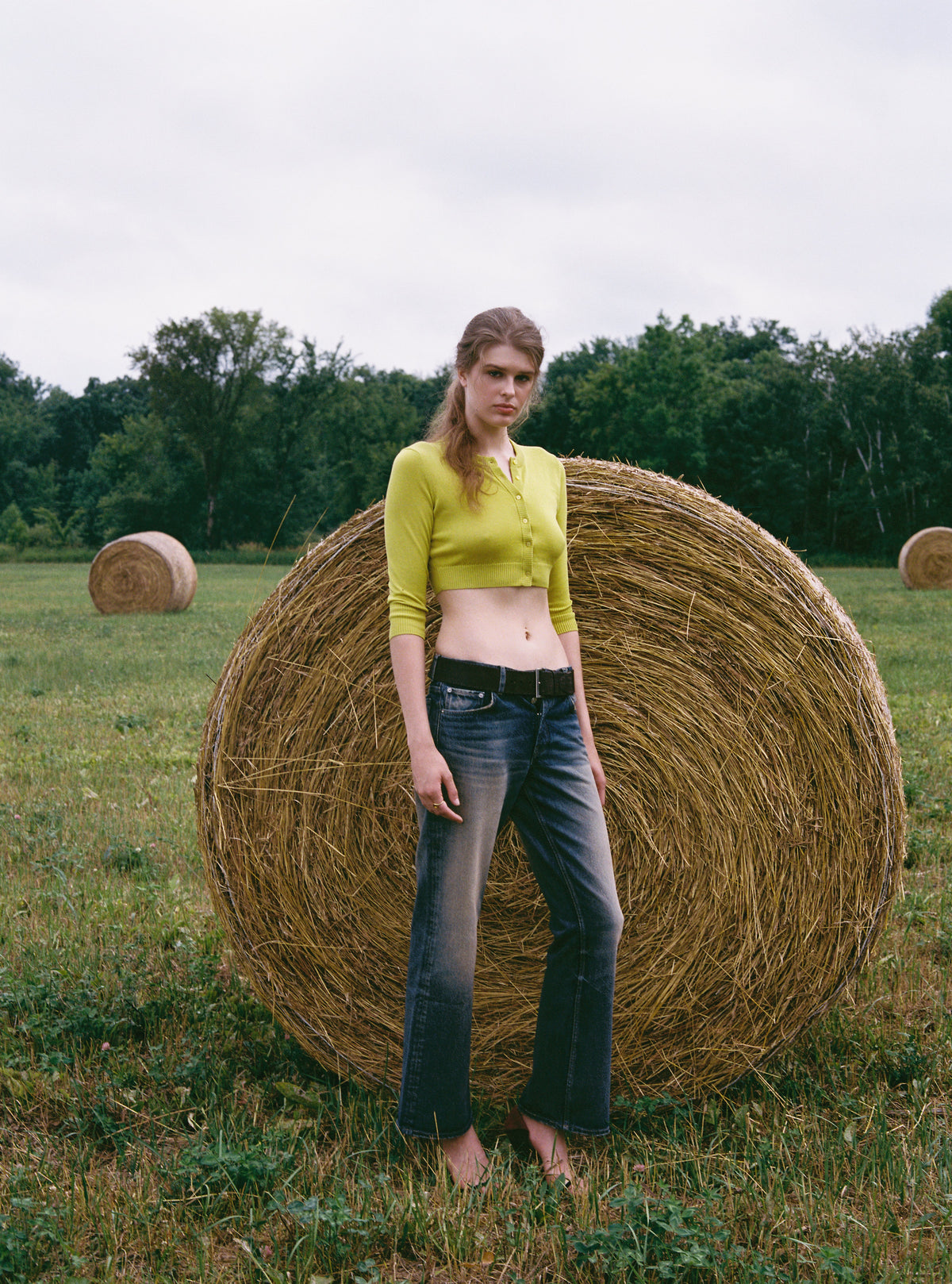
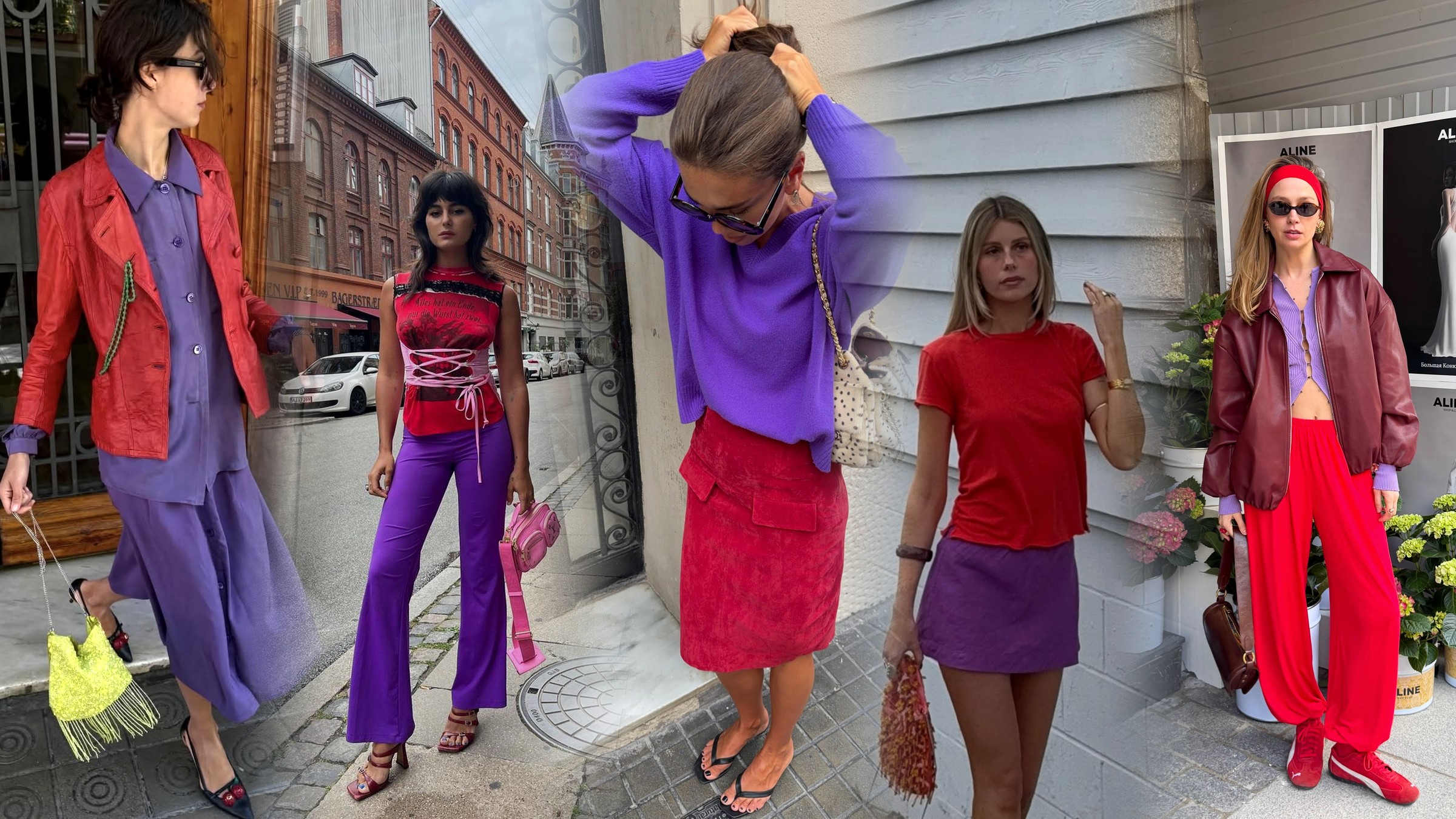
Sarah Staudinger, previously the fashion director at Reformation, launched Staud in Los Angeles in 2015 with business partner George Augusto, naming it after her own childhood nickname. The brand started as a made-to-order customization concept before pivoting to ready-to-wear once customers made clear they wanted the bags and dresses as designed, a shift that produced breakout accessories like the Bissett and Moreau bucket bags.
STAUD
Shoes
Staud's footwear arrived after the bags had already built the brand's reputation, and it carries the same instinct for a retro-leaning shape rendered in a very current color palette. Production runs out of Portugal, distinct from the mostly Los Angeles-based apparel.

Milo Leather Ballet Flats
STAUD
$350

Faye Leather Mules
STAUD
$425

Freja Feathered Leather Sandals
STAUD
$375

Faye Leather Mules
STAUD
$425

Brigitte Satin Sandals
STAUD
$375

Brigitte Satin Mules
STAUD
$295

Wally Leather Boots
STAUD
$695

Monty Leather Boots
STAUD
$550

Brooklyn Leather Boots
STAUD
$595

Monty Suede Boots
STAUD
$550

Louden Leather Sandals
STAUD
$295

Brigitte Leather Mules
STAUD
$295

Freja Sequined Leather Sandals
STAUD
$395

Wally Flat Leather Ankle Boots
STAUD
$495

Brigette Suede Wedge Mules
STAUD
$350

Wally Leather Knee Boots
STAUD
$495

Carrie Leather Sandals
STAUD
$295

Indie Slouched Leather Boots
STAUD
$550

Brooklyn Leather Ankle Boots
STAUD
$495

Wally Leopard-Print Leather Ankle Boots
STAUD
$595

Flynn Leather Kitten Heels
STAUD
$375

Carrie Leather Mules
STAUD
$375

Cleo Fish Leather Heels
STAUD
$495

Freja Suede Thong Sandals
STAUD
$250
More Shoes
Collaborations with Birkenstock and New Balance have pushed the shoe line in a more casual direction than the rest of the brand, which is worth knowing if you are used to Staud primarily as a clothing label. This group keeps that thread going, sneakers and slides sitting next to heels.

Carrie Leather Mules
STAUD
$375

Laurel Snake-Effect Leather Sandals
STAUD
$295

Brigitte Satin Mules
STAUD
$295

Wally Suede Knee Boots
STAUD
$495

Juno Thong Cotton-Leather Sandals
STAUD
$295

Wally Tall Leather Western Boots
STAUD
$495

Freja Embellished Leather Thong Sandals
STAUD
$275

Alba Satin Ballet Slingback Pumps
STAUD
$395

Freja Snake-Effect Leather Thong Sandals
STAUD
$250

Brigitte Satin Slingback Sandals
STAUD
$375

Nova Croc-Effect Leather Thong Sandals
STAUD
$295

Wally Leather Knee Boots
STAUD
$495

Remy Thong Wedge Sandals
STAUD
$350

Brooklyn Flat Leather Boots
STAUD
$595

Fish Flop Leather Slippers
STAUD
$295

Wally Slouched Leather Boots
STAUD
$595
Bags
The Bissett bucket bag, launched in 2016, was the first Staud object to go properly viral, and the Moreau followed as the brand's other defined hit. Both set a template of structured, geometric bag shapes this category is still working from.

Christos Large Suede Tote Bag
STAUD
$695

Winslow Fringed Leather Bag
STAUD
$395

Muse Satin Clutch
STAUD
$350

Muse Leather Clutch
STAUD
$350

Timmy Convertible Beaded Leather Bag
STAUD
$350

Porcupine Beaded Leather Clutch
STAUD
$495

Kelly Beaded Leather Bag
STAUD
$375

Cy Leather Clutch Bag
STAUD
$495

Levi Suede Shoulder Bag
STAUD
$350

Port Striped Tote Bag
STAUD
$325

Del Mar Beaded Bucket Bag
STAUD
$495

Cleo Fish Wicker-Leather Tote
STAUD
$450

Timmy Convertible Beaded Shoulder Bag
STAUD
$350

Kelly Beaded Bag
STAUD
$350

Large Palm Raffia Bag
STAUD
$495

Port Suede Tote Bag
STAUD
$425

Lila Embellished Mini Bag
STAUD
$395

Lila Embellished Mini Bag
STAUD
$395

Maude Convertible Snake-Effect Leather Clutch
STAUD
$395

Christos Mini PVC Tote Bag
STAUD
$295

Jewel Bucket Bag
STAUD
$395

Brooklyn Leather Shoulder Bag
STAUD
$450

Palm Raffia Bag
STAUD
$350

Coronado Beaded Bag
STAUD
$395
More Bags
Staud's bag strategy has stayed consistent since the Bissett: clean architecture over logo visibility, shapes distinctive enough to be recognized without a stamped monogram. This second group fills out that range across sizes and closures.


Dresses
Staudinger has said there was a real gap in the market for something that felt aesthetically considered without going over the top, which is the gap Staud's dresses were built to fill. Vintage-inspired cuts and covetable tailoring dominate here, closer to the label's original ready-to-wear instinct than anything trend-driven.

Fawn Stretch-Silk Maxi Dress
STAUD
$795

Veronica Knit Maxi Dress
STAUD
$425

Larissa Silk Maxi Dress
STAUD
$595

Cassie Embellished Chiffon Maxi Dress
STAUD
$795

Viviana Silk Maxi Dress
STAUD
$695

Amaris Chiffon Maxi Dress
STAUD
$375

Charli Silk Maxi Dress
STAUD
$750

Esther Chiffon Mini Dress
STAUD
$495

Freda Silk-Blend Maxi Dress
STAUD
$795

Exclusive Trinity Lace-Inset Silk Maxi Slip Dress
STAUD
$625

Cubism Crepe de Chine Maxi Dress
STAUD
$495

Mimi Jacquard Mini Dress
STAUD
$450

Delfina Printed Organza Maxi Dress
STAUD
$695

Alessandra Pleated Maxi Dress
STAUD
$450

Louise Striped Silk Midi Dress
STAUD
$550

Phare Silk-Blend Maxi Dress
STAUD
$795

Portia Silk-Blend Midi Dress
STAUD
$695

Margi Ruffled Cotton-Blend Maxi Dress
STAUD
$395

Margi Cotton Midi Dress
STAUD
$395

Grazia Linen Midi Halter Dress
STAUD
$450

Adriana Draped Silk-Blend Mini Dress
STAUD
$450

Willow Stretch-Cotton Midi Dress
STAUD
$345

Brio Printed Cotton Mini Dress
STAUD
$325

Nia Strapless Cotton Midi Dress
STAUD
$495
More Dresses
This second wave keeps the same vintage-adjacent silhouettes, useful if the first dress grid pointed you toward a cut you want in another print or colour. Staudinger's background as Reformation's fashion director shows in how these are cut for a real body rather than a runway one. The references are 1940s and 1970s, filtered through Los Angeles.


More from the collection
A further slice of that same expanded range, still built around Staudinger and Augusto's original instinct for a shape that reads as considered rather than fast. The label started as a made-to-order project, and that habit of designing one thing properly before adding another is still visible across the categories here.

Exclusive Olivia Silk Top
STAUD
$595

Fabianne Silk Top
STAUD
$695

Maeva Draped Satin Top
STAUD
$395

Phare Striped Cotton-Blend Top
STAUD
$225

Sade Silk Top
Staud
$245

Larissa Silk Top
STAUD
$345

Bellaria Off-the-Shoulder Cotton Top
STAUD
$195

Corinna Cotton Top
STAUD
$245

Gretta Top
Staud
$345

Kellcy Top
Staud
$295

Fabianne Silk Top
Staud
$695

Corinna Top
Staud
$245

Davina silk-blend top
STAUD
$395

Phare striped cotton-blend poplin blouse
STAUD
$225

Mateo Striped Silk-Blend Wide-Leg Pants
STAUD
$265

Renzo Cropped Cotton Pants
STAUD
$295

Stroll Silk Wide-Leg Pants
STAUD
$495

Stroll Silk Pants
STAUD
$395

Elias Cotton-Blend Wide-Leg Pants
STAUD
$345

Stroll crepe wide-leg pants
STAUD
$295

Sonya Cotton Scarf
STAUD
$195

Sonya Cotton Scarf
STAUD
$195

Inlet Embellished Sarong
STAUD
$195

Exclusive Odette Silk Midi Skirt
STAUD
$495
More from the collection
A further slice of that same expanded range, still built around Staudinger and Augusto's original instinct for a shape that reads as considered rather than fast. The label began as a made-to-order project, and that habit of finishing one idea before starting the next is still visible across these categories.

Lucia Skirt
Staud
$345

Bead-embellished midi skirt
STAUD
$495

Adrian Twill Jacket
STAUD
$495

Halton Jacquard Jacket
STAUD
$650

Wyatt Leather Coat
STAUD
$1,895

Wyatt leather coat
STAUD
$1,895

Brigette Satin Mules
STAUD
$395

Monty Boot
Staud
$550

Freja 60 paillette-embellished leather thong sandals
STAUD
$395

Muse animal-print calf hair clutch
STAUD
$350

Muse bead-embellished satin clutch
STAUD
$350

Freda gathered silk-blend satin mini dress
STAUD
$595
Our honest take
Staud's real trick was figuring out, fast, that its customers wanted finished objects rather than a customization tool, and pivoting before that mistake could compound. Ten years on, the label is most convincing in bags and dresses, the two categories where it built its reputation, and least essential wherever it is simply following a bigger brand's playbook.