Choosing the best hair straightener is really about plate material, heat control and what you put on your hair first. Here are the flat irons I would look at, the heated brushes and hot air stylers that smooth in a different way, and the serums and protectants that go on before any heat.
The Best Hair Straightener Is the One That Respects Your Hair: Irons, Brushes and Prep
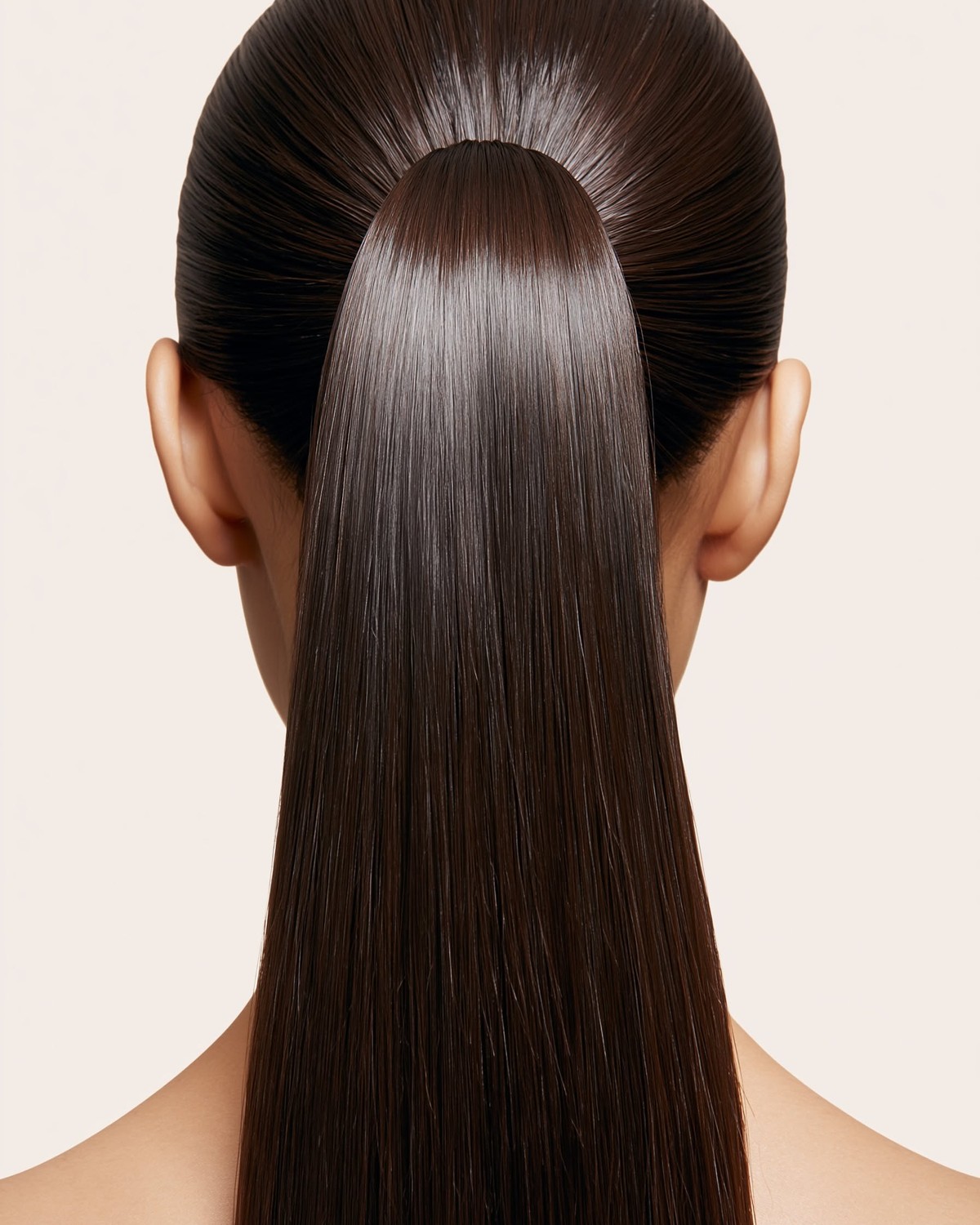
Anyone hunting for the best hair straightener should know it is an old idea with a surprisingly documented history. US Patent 943,321, titled Hair-Straightener, was filed on March 8, 1909 and granted on December 14, 1909 to Isaac K. Shero of Okemah, Oklahoma. His device used heated pressing irons on two arms to straighten hair. Ada Harris had filed a patent for a heated straightening tool as early as 1895, so Shero gets credit for the modern-style iron, not for the first heated device.
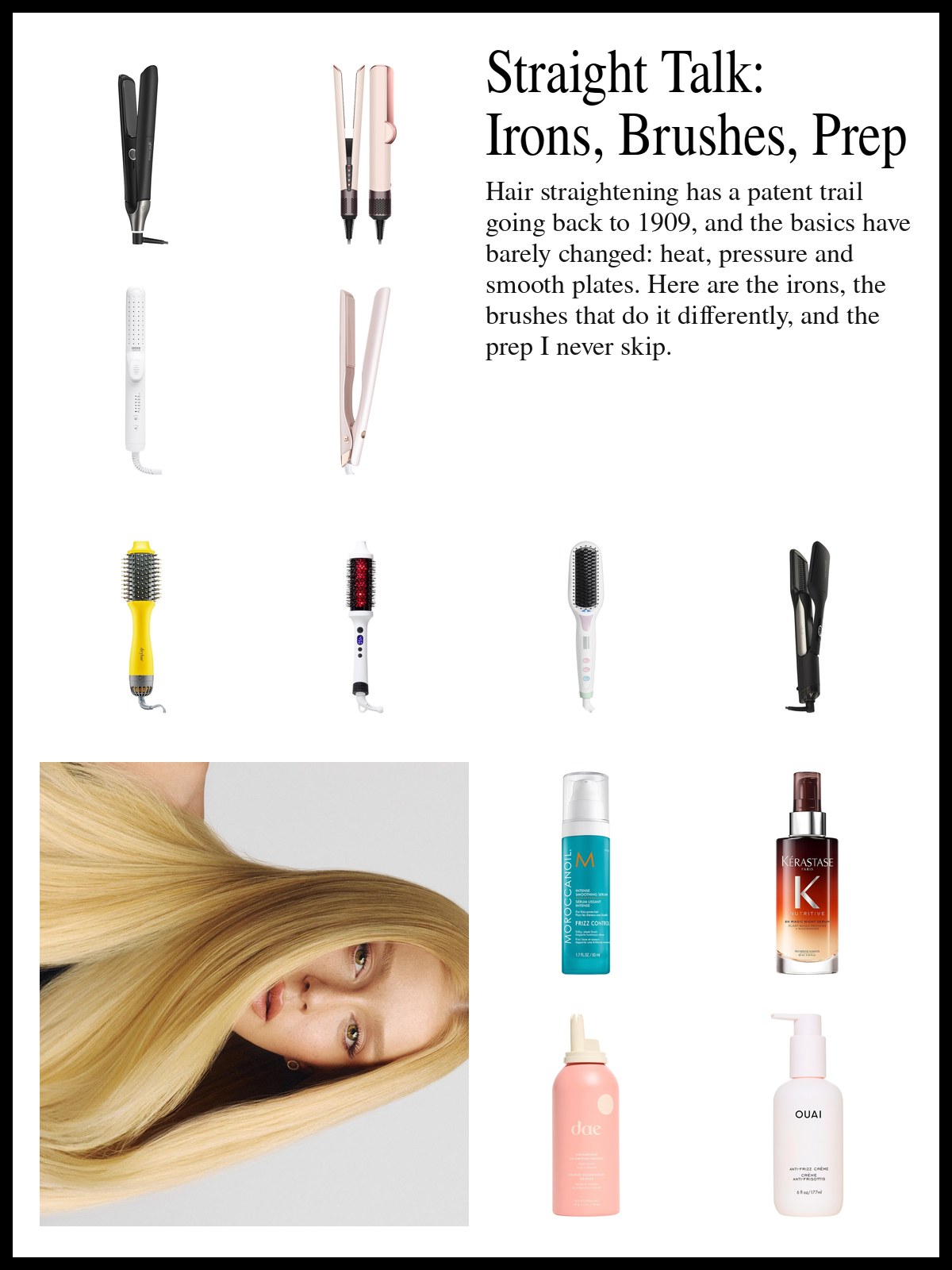
The principle survived a century, but the details improved. Plate material is where I would start, and the most common choices are ceramic, titanium and tourmaline. Check which one your iron uses before you buy. Dyson's Airstrait is different, since it is a wet-to-dry straightener that uses air, here in a ceramic pink. ghd's Chronos Styler is the classic one-inch iron with a salon feel. T3's SinglePass Smooth X has extra-long ceramic plates, which is handy for long hair.
BondiBoost's Airburst Styler is a two-in-one, curling and straightening in one tool. Mane's Three Way is multi-use, and Drybar's Straight Shot dries and smooths together. The advice from the American Academy of Dermatology is to use a flat iron on dry hair at low or medium heat, no more often than every other day. I take that seriously, and it is why I care more about temperature dials and a quick warm-up than about any headline feature. A tool you can set to a gentler heat is a tool you will keep using for years.
Flat irons and straighteners

Chronos Styler 1" Flat Iron
ghd
$251.3

Airstrait Wet-to-Dry Straightener in Ceramic Pink
Dyson
$499

Airburst Styler 2-in-1 Curling Iron & Flat Iron
BondiBoost
$95

SinglePass Smooth X Professional Flat Iron with Extra-Long Ceramic Plates
T3
$169.99

The Three Way Multi-Use Flat Iron
Mane
$118

The Straight Shot Blow Drying Flat Iron
Drybar
$179

Corrale Hair Straightener | Copper/Nickel
Dyson
$399.99

Lucea 1.5" Professional Flat Iron
T3
$199.99
Brushes and air stylers, the softer route
An iron is not the only way to get smooth hair. Heated brushes and hot air stylers work more gently, drying and smoothing at the same time, and for many people they are a better daily habit.
Drybar's Double Shot Blow-Dryer Brush is the one I reach for on a busy morning: it dries and shapes in a single pass, which means less time under heat overall. BondiBoost's Infrared Heated Thermal Hot Round Brush is a classic round brush with heat built in, good for giving ends a slight bend as you smooth. Mane's Get Ur Sleek On Heated Straightening Brush is the easiest tool in this grid for beginners, because it feels like combing your hair, and it is good for touching up a few sections rather than the whole head.
ghd's Duet Style is a two-in-one hot air styler, where warm airflow dries and smooths without pressing hair between plates. I would choose it if my hair is fine or prone to breaking.
The question I ask before choosing is how much time I have. Brushes are quick and forgiving, and a good fit for anyone who is new to heat tools and wants to learn how their own hair responds. Air stylers are gentle. Plates give the sharpest, glassiest finish, though they also ask more of your hair. Most of us do not need three tools on the counter. If your routine allows only one tool, pick the one that lets you keep the temperature low.
Heated brushes and hot air stylers

The Double Shot Blow-Dryer Brush
Drybar
$155

Infrared Heated Thermal Hot Round Brush
BondiBoost
$125

Get Ur Sleek On Heated Straightening Brush
Mane
$118

Duet Style 2-in-1 Hot Air Styler
ghd
$429

Glide Hot Brush
ghd
$239

Smooth Style Ceramic Heated Brush
Moroccanoil
$140

Airebrush One-Step Smoothing & Volumizing Hair Dryer Brush
T3
$150

Rise Volumizing Hot Brush
ghd
$239
What goes on before the heat
The step that decides whether a smooth finish lasts is not the tool at all. It is what goes on the hair first. Every heat session goes better with a protectant, and the smoothing formulas below double as a way to control frizz.
Moroccanoil's Intense Smoothing Frizz Control Hair Serum is the smoothing serum for frizz control. Kérastase's Nutritive 8H Magic Night Hair Serum is a night serum for dry hair, so think of it as care between heat sessions rather than the layer under the iron. dae's Dreamriser is a volumizing and hydrating mousse with heat protection, an unusual choice that adds body to straight styles. OUAI's Anti-Frizz Hair Styling Cream is a light, everyday layer. JVN's Complete Instant Recovery Heat Protectant Leave-In Serum is a serum with protection built in. Briogeo's Farewell Frizz Blow Dry Perfection Heat Protectant Cream is the one for blow dry days.
Many heat protectants are designed for temperatures up to 450F, and the sensible approach is to use the lowest heat setting that achieves the style. A protectant is a cushion, not a permission slip, and it works best when it is spread evenly with a comb through every section, including the layer underneath that most of us forget about.
What I would skip: using an iron on damp hair, and clamping the same section over and over. Let hair dry fully first, work in small sections and pass once or twice. Skip heavy oils just before the plates too, especially on fine hair, since they can sizzle and leave hair feeling coated.
Smoothing serums, creams and heat protectants

Intense Smoothing Frizz Control Hair Serum
Moroccanoil
$32

Nutritive 8H Magic Night Hair Serum for Dry Hair
Kérastase
$64

Dreamriser Volumizing + Hydrating Hair Mousse with Heat Protection
dae
$30

Anti-Frizz Hair Styling Cream
OUAI
$30

Complete Instant Recovery Heat Protectant Leave-In Serum
JVN
$32

Farewell Frizz Blow Dry Perfection Heat Protectant Cream
Briogeo
$26

Hot Toddy Heat Protectant Mist
Drybar
$31

Good Behavior Spirulina Protein Smoothing Blowout Balm
IGK
$35
Setting up a straightening routine
Here is my routine. Wash, leave-in or protectant, dry completely, then a single slow pass on small sections at the lowest heat that works. That is it. If you only straighten for special occasions, you can even skip the daily habit and let a smoothing serum do the quiet work between them.
Clean your tools now and then with a barely damp cloth once they have cooled, and store them cool. Give your hair heat-free days between sessions, and replace anything that has chipped plates or a frayed cord. If you notice breakage, thinning or a sore scalp, a stylist or doctor is the right person to ask.