The best nail polish depends on how you live, so this edit sorts the options by behavior. You get gel-look formulas that set in air, classic lacquers for color and mood, and the base and top coat habit that holds a manicure together.
The Best Nail Polish Is the One That Survives Your Week
In 1932, Charles and Joseph Revson teamed up with a chemist named Charles Lachman and sold a nail enamel that changed what a manicure looked like. Revlon's cream enamel used pigments instead of the thin, transparent dyes everyone else was using, so the color finally looked solid. The L in the name is for Lachman. I like starting there, because it reminds me that the best nail polish has always been about two things: pigment you can see and a finish that does not chip by Thursday.
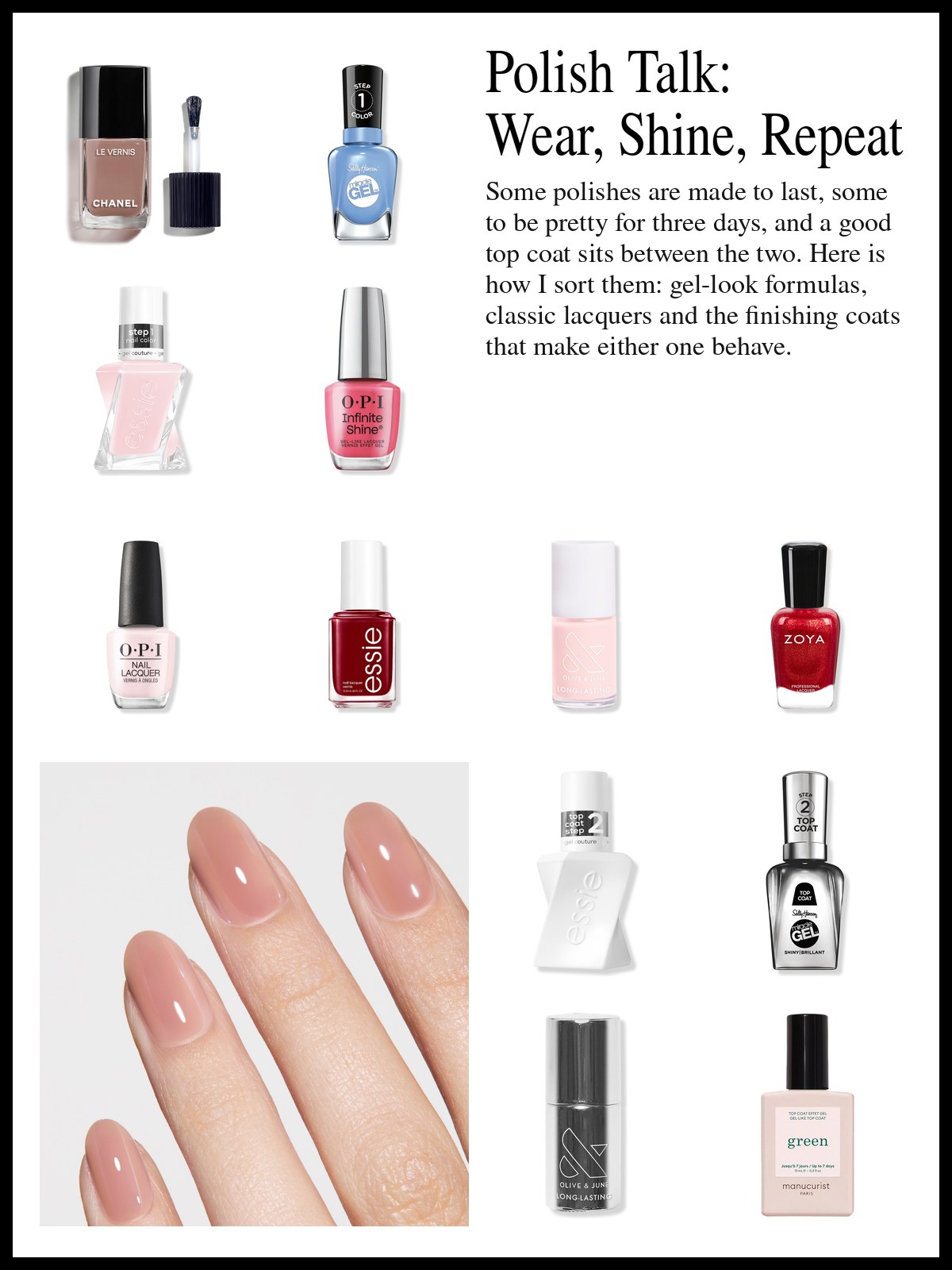
The first four on this page are the modern answer to the chip problem, and the order matters: two thin coats of color, then the top coat, and a full minute between layers. Chanel's Le Vernis Longwear Nail Color is the glossy, salon-looking one, and I reach for it when I want a single coat of color to look deliberate. Sally Hansen's Miracle Gel is a gel-look polish, which is the important phrase. None of these need a UV lamp. They set in air, and they pair with their own top coat to get that glassy finish. Essie's Gel Couture Longwear is the same two-step idea, introduced in 2016: color, then top coat. OPI's Infinite Shine is the long-wear option with the most shine per coat.
Because nothing here needs a lamp, you skip the UV question entirely. If you do get a real gel manicure at a salon, the American Academy of Dermatology suggests putting SPF 30 or higher on your hands first, because the lamp is ultraviolet light. That is one more reason I like a polish that simply dries on its own. They also say gel can be tough on nails, and recommend a polish holiday of one to two weeks or longer between sets.


Classic lacquers, for color first
Sometimes you want a color more than you want endurance. That is where lacquers come in: thinner, easier to fix, and far more forgiving if you smudge one nail on the way to the door.
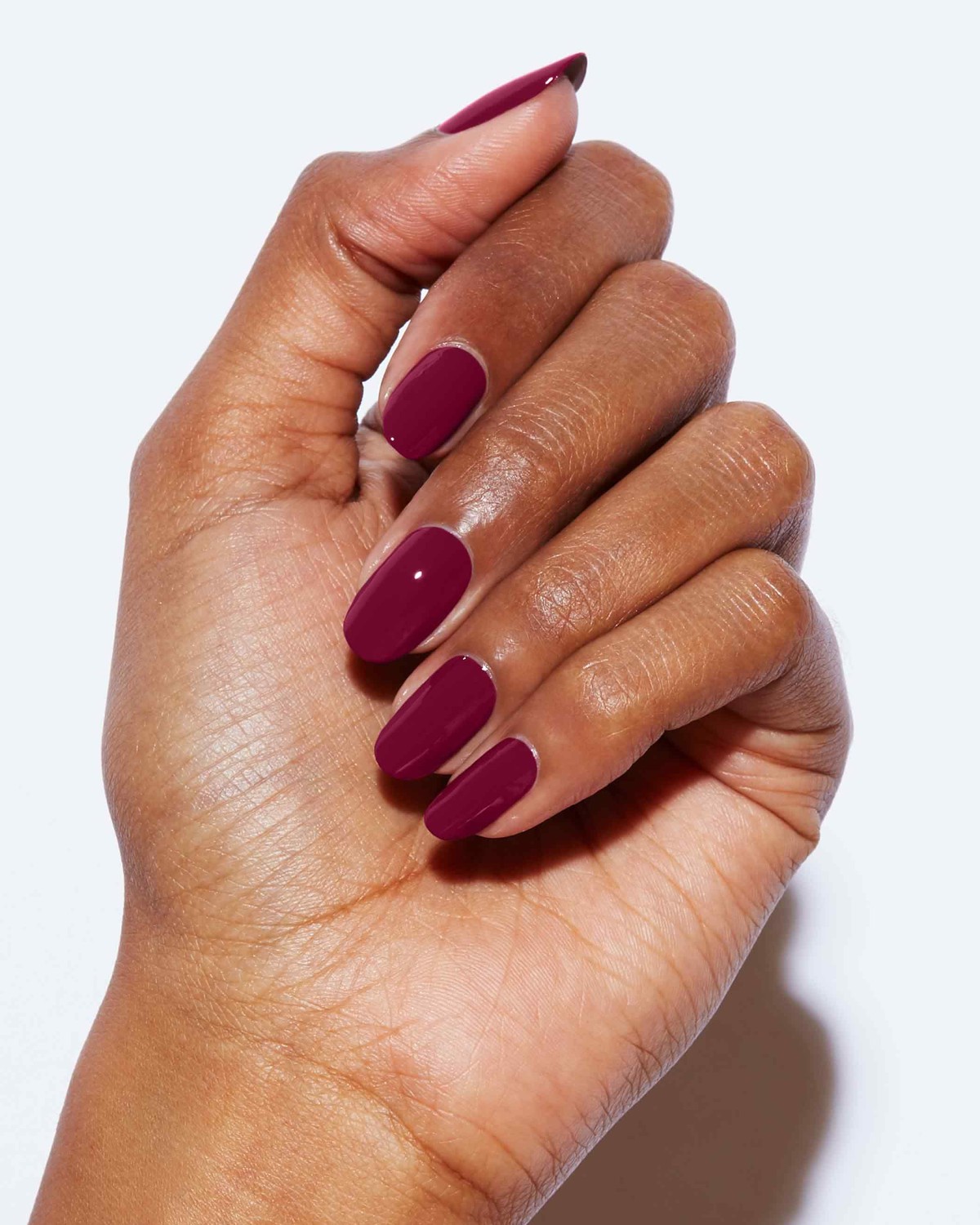
OPI has an unusual origin for a nail brand. It began in 1981 as a small dental supply company called Odontorium Products Inc., and the name is just those initials. The team noticed that dentures and acrylic nails share chemistry, and moved into nails from there. Its Nail Lacquer is the everyday reference, a wide range of shades with a reliable brush. Essie's Original Nail Polish, here in Bordeaux, goes back to the very first twelve colors Essie Weingarten launched, which also included Blanc and Baby's Breath. Bordeaux is still around, and a deep wine red like that looks right on short nails in autumn.
Olive & June's Long-Lasting Nail Polish is the easy one for beginners, and ZOYA's Nail Lacquer is the one I pick when I want an interesting finish, and the brush is wide enough to lay color down in three quick strokes: one down the middle, one on each side. China Glaze's Mega Pigment is about saturation, so one coat shows real color. Mineral Fusion's Nail Lacquer rounds out the set for anyone who likes a simpler, more minimal formula.
For any lacquer, thin coats are the trick. Two light layers dry faster and wear better than one thick, gloopy layer that stays tacky for an hour.


The coats on either side
This is the part people skip, and it is the part that decides how long a manicure lasts. A base coat gives color something to hold on to, and a top coat seals the surface and adds shine. I would rather use a mediocre color with a good top coat than the other way round. If a manicure chips within a day, the culprit is usually a skipped base coat or oily nails. Wipe each nail with remover before you start, and let each layer settle for a minute before the next.
Essie's Gel Couture Top Coat is the partner to its longwear color, and it gives an unmistakable glassy finish. Sally Hansen's Miracle Gel Top Coat does the same job for its own gel-look range. Olive & June's Long Lasting Top Coat is the one for anyone using that brand's colors. Manucurist's Green Flash Quick Dry Top Coat and L.A. Girl's Glossy in a Flash are quick-dry options, the ones I pick when I am painting at the last minute and need the surface to be touch-safe fast.
Apply a top coat to the very edge of the free tip, wrapping it around the end of the nail. That small step helps stop the chipping that starts at the tip.
What I would skip: picking polish off with a fingernail, which takes layers of the nail with it, and soaking whole hands in acetone. The AAD advises soaking only the fingertips and never picking at gel polish. Also skip a thick top coat over wet color. It drags and leaves dents.


A manicure routine that stays kind to nails
My own routine is simple. Base coat, two thin coats of color, top coat, and a fresh layer of top coat every three or four days to keep the shine. A drop of cuticle oil at night keeps the edges from looking ragged. I also keep one quick-dry top coat in my bag for emergencies, since a chip on a work morning is always the day it happens.
When it is time to take everything off, be patient. Soak a cotton pad in remover, press it on each fingertip, wait, and wipe. Then give your nails a week or two bare now and then, as the AAD suggests. Your nails will look flat and dull for a few days, and that is fine. Bare nails are not failing, they are resting.
If a nail turns painful, discolored or starts lifting away from the bed, stop painting it and ask a doctor. Good polish is a pleasure, not a reason to ignore a nail that looks wrong.