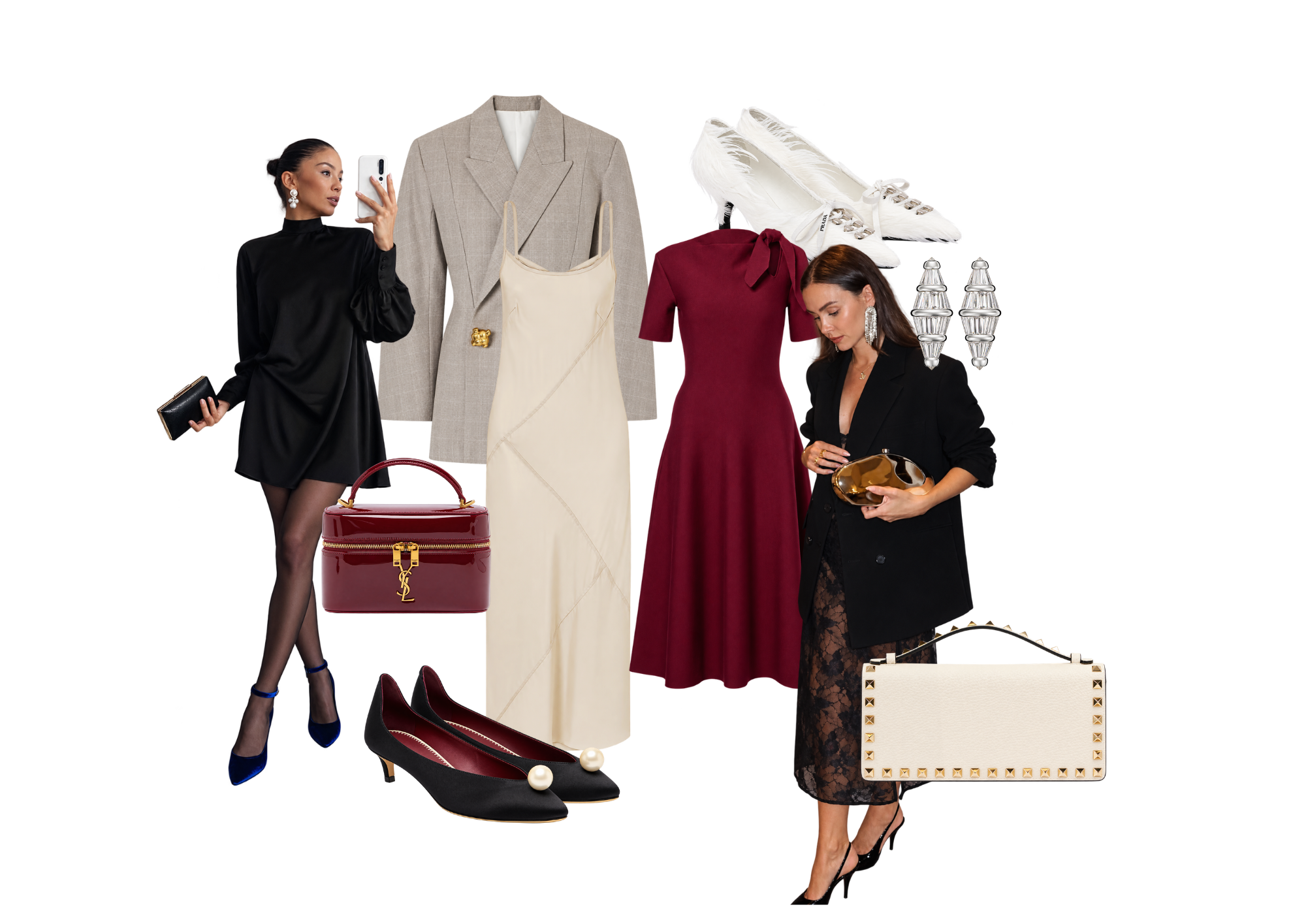
A formal attire edit in five lessons: gowns, black tie optional cocktail dresses, tuxedo suiting, evening shoes and tiny bags with big earrings. I used to read the dress code before the date, and I still do.
The Formal Attire Edit: Five Lessons in Black Tie, White Tie and the Rooms Between
Confessions of a person who reads the dress code first
I read the dress code on an invitation before I read the date, the address or the name of whoever is getting married. Within approximately four seconds I have decided whether it is a floor-length night, a velvet night or a night for borrowed earrings (at least for me, it is rarely the last one). I have no shame about this.
But somewhere between black tie, black tie optional and the vague little word "formal," formal attire has gotten a little exhausting. We are told a gown is the only correct answer and also that nobody dresses up anymore. We are told to be ourselves and also to match a rulebook written for men in tailcoats. Somebody, somewhere, is typing what is formal attire into a phone this very minute, and the reply they get is a shrug in a bow tie. I also put together Black Formal Dresses: The Chanel ‘Ford’ in Vogue’s 1926 Winter Mode.
Which brings me to October 1886, at the Autumn Ball in Tuxedo Park, New York. According to the village's own history, young Griswold Lorillard and a few friends emerged in tailless dress coats and scarlet satin vests, and the leading society magazine of the day compared them to royal footmen and said they ought to have been put in strait-jackets long ago. A jacket with no tails, at a ball, was a scandal. Today that same idea sits at the heart of black tie attire, which tells me the rules were always meant to be pushed gently.
Some of what I read about dress codes made me feel calm. Some of it made me want to lie down on the floor in a velvet gown. And some of it made me realize the rules are friendlier than they look. So, here are five lessons, from gowns to tiny bags, for anyone staring at an invitation with a pen in hand. If you want to keep going, The Cocktail Attire Edit: Five Lessons for the Invitation That Says Six O'Clock is the one I would read next.
1. The invitation is the boss, and a gown is the safe answer.
Start from the words on the card, because the card outranks your mood board. Debrett's calls white tie the most formal of dress codes and says it is not common today, and for women it means a full-length evening dress, with shorter dresses or trousers, no matter how smart, not acceptable. Debrett's also says long evening gloves are traditional at white tie but no longer compulsory at many events. The black tie dress code is the roomier one, and a floor-length dress is the easiest way to be right in either room.
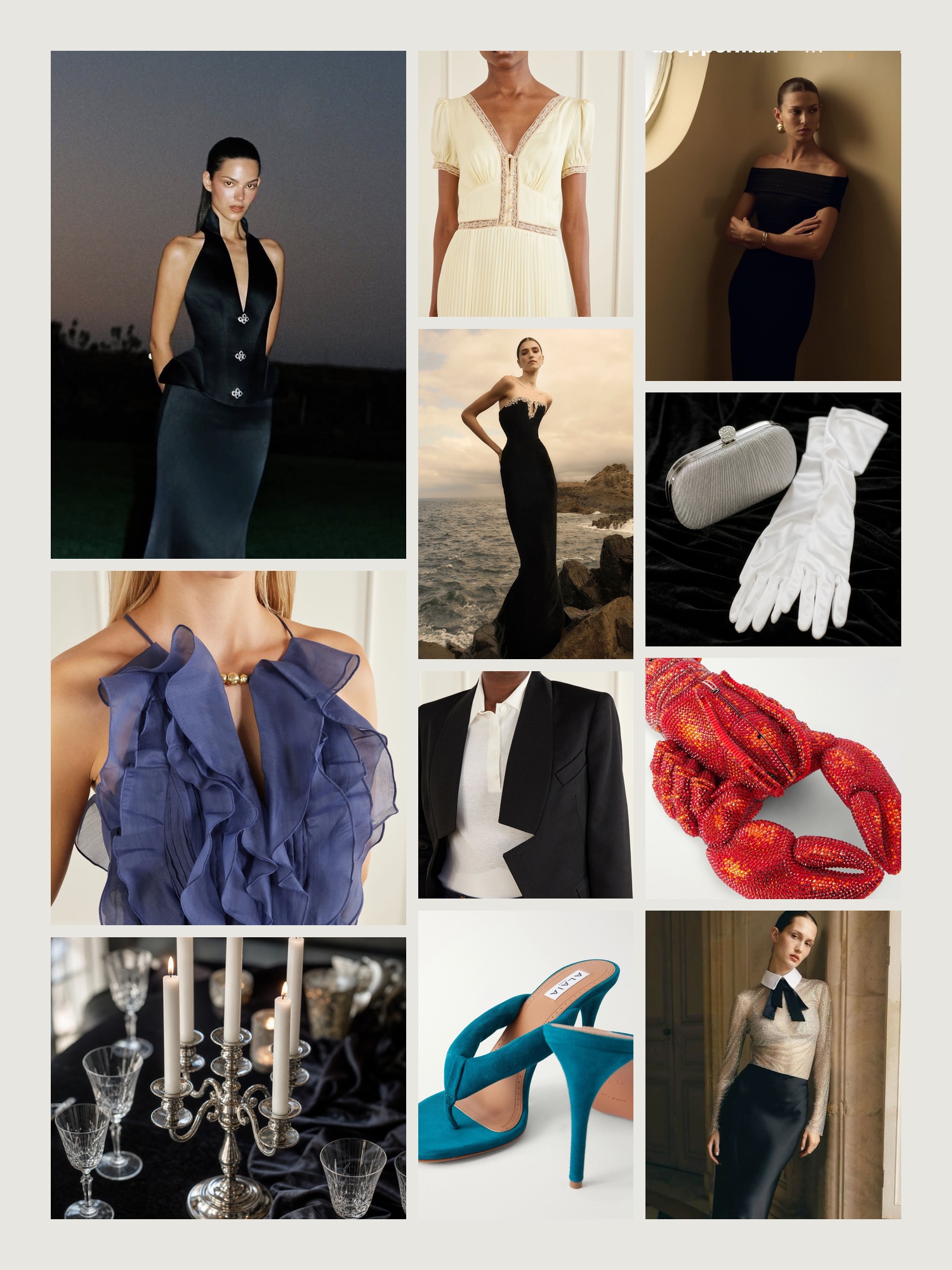
That is why I would begin with gowns. The Aje Cleo ruffled tiered organza gown in navy and the Aje Allairie strapless shirred faille gown in green are the romantic pair. The Victoria Beckham satin draped gown in chartreuse and the Isabella gathered crepe-satin gown in army green are for people who want color without frills. The SIR Elin paneled crepe de chine gown in sky blue is the quiet one, and the Erdem embellished satin gown and Zimmermann Clash lace gown talk more. The Givenchy velvet gown in black suits a theater-like room.
Here is the test: sit and climb one flight of stairs in the dress before you commit. Debrett's notes that dresses need not be black for black tie, which is permission to be lilac. Picture her stepping out of a car, hem lifted in one hand. For black tie attire for women, that picture is plenty.
What I would skip: any gown you cannot sit down in, because the dinner is longer than the arrival. Although if the invitation says white tie attire, I would let the hem touch the floor.
Floor-length gowns

Cleo ruffled tiered organza gown
Aje
$770

Allairie strapless ruffled shirred faille gown
Aje
$760

Satin draped gown
Victoria Beckham
$2,090

Isabella gathered crepe-satin gown
Victoria Beckham
$1,590

Elin paneled crepe de chine gown
SIR
$615

Embellished draped satin gown
Erdem
$4,595

Clash draped lace gown
Zimmermann
$3,225

Asymmetric velvet gown
Givenchy
$7,500
2. Black tie optional is permission, not a dare.
The word optional makes people relax a little too much. Emily Post says black tie optional gives guests a couple of formal options, and that women can choose a formal evening gown, a shorter cocktail dress or dressy separates. Read that again: every option on the list is still formal attire. Optional means the host is being kind about the gown, not about the occasion.
This is where the cocktail dress earns its place. The Self-Portrait lace-trimmed pleated crepe midi dress in yellow is the sunniest answer, and the Dries Van Noten belted crepe-satin maxi in black is the one that nearly passes for a gown. The Rodarte lace-trimmed gathered satin midi in purple and the Rodarte off-the-shoulder velvet midi in black both feel like winter weddings. The Bernadette Inez midi in red velvet and taffeta has a bow and a rustle, and the Rixo Anabella mini in ruffled velvet and satin is the one with a party in its pocket. The Khaite Scarla asymmetric pleated satin mini is the sharp one.
Here is the test: if the dress would look right at a Tuesday dinner, it is probably too casual, and if it would look right at a ball, you are safe. Picture her arriving in the Self-Portrait bow-detailed bead-embellished mini, with the room full of long hems. It still works, because the beading does the dressing up.
What I would skip: anything short and plain for the more traditional rooms, where the midi lengths are the calmer choice.
Cocktail dresses for black tie optional

Lace-trimmed pleated crepe midi dress
Self-Portrait
$690

Belted crepe-satin maxi dress
Dries Van Noten
$2,490

Bow-detailed bead-embellished crepe mini dress
Self-Portrait
$620

Lace-trimmed gathered satin midi dress
Rodarte
$1,350

Off-the-shoulder lace-trimmed velvet midi dress
Rodarte
$2,995

Scarla asymmetric pleated satin mini dress
Khaite
$2,800

Inez bow-detailed gathered velvet and taffeta midi dress
Bernadette
$1,160

Anabella ruffled velvet and satin mini dress
Rixo
$445
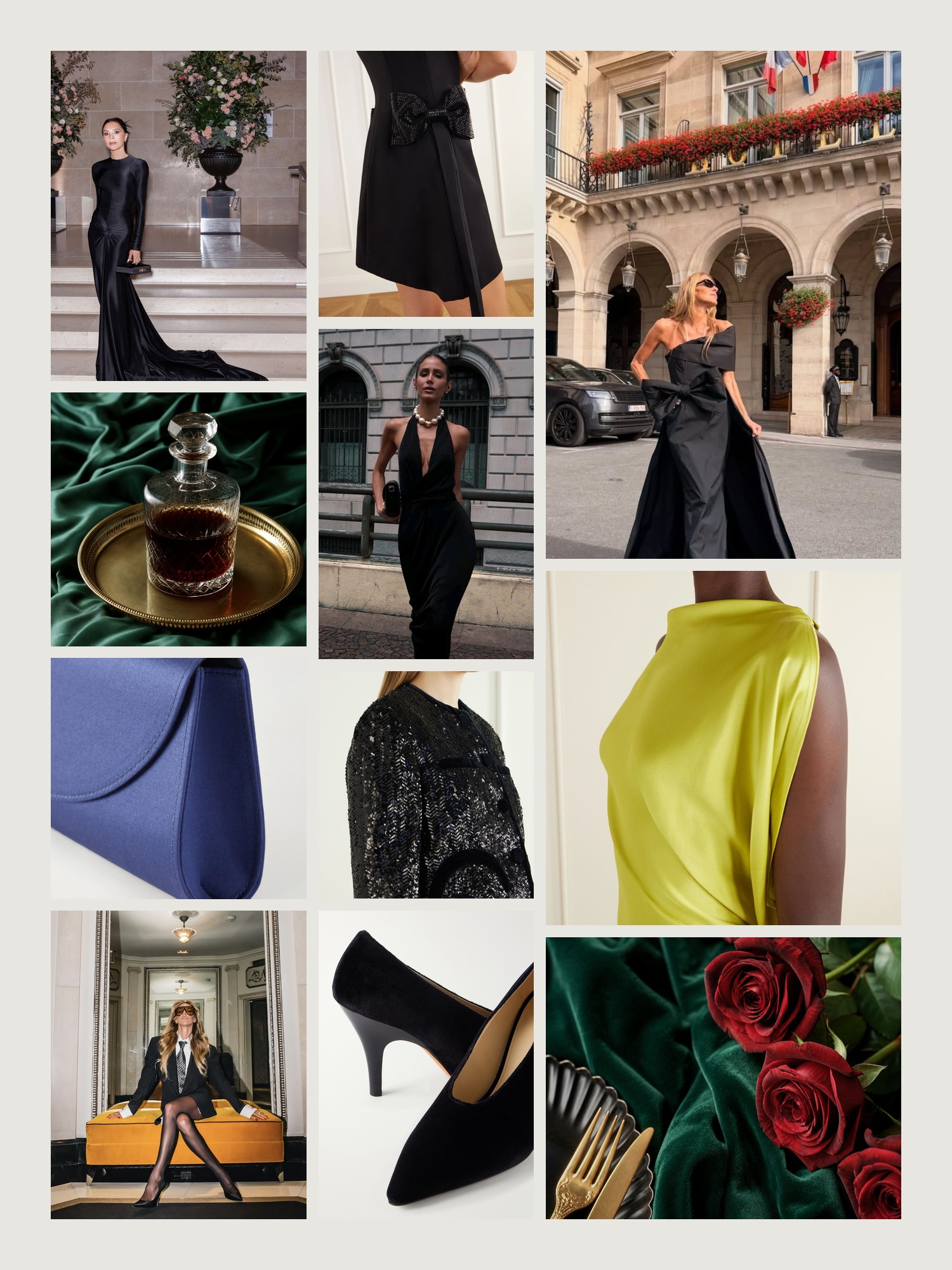
3. Let a jacket do the work of a gown.
In 1966 Yves Saint Laurent proposed the smoking, French for tuxedo, for women in his fall couture collection, and Vogue reported that it took to it right away. That is the whole case for suiting at a formal event. Debrett's agrees in its own way, listing evening trousers as an option for black tie as long as they are cut palazzo rather than tight-fitting. So when someone asks what is black tie attire, I tell them a tuxedo for a woman is allowed to be the answer.
Start with the jackets. The Givenchy reverse lapel wool grain de poudre jacket and the Saint Laurent double-breasted satin-trimmed wool-crepe blazer are the classic evening pair. The Blazé Milano Shamo velvet-trimmed sequined jacket is the party version. The Destree ruby satin blazer in light green and the Etro velvet blazer in green are for anyone who would like a little color near her face. Then the trousers: The Róhe silk-satin wide-leg pants in taupe and the Stella McCartney pleated velvet wide-leg pants in black move the way Debrett's describes, and the Gucci low-rise satin slim-fit pants in chocolate are the leaner option.
Here is the test: sit down in the trousers and look at the knees. Picture her in black satin lapels, a bare shoulder blade and a very straight back.
What I would skip: the slim satin pants at anything close to white tie, where trousers are not acceptable at all. Although for black tie optional, they are a good argument.
Tuxedo and velvet suiting

Reverse lapel wool grain de poudre jacket
Givenchy
$3,950

Double-breasted satin-trimmed wool-crepe blazer
Saint Laurent
$4,600

Shamo velvet-trimmed sequined jacket
Blazé Milano
$1,800

Ruby satin blazer
Destree
$840

Velvet blazer
Etro
$2,300

Silk-satin wide-leg pants
Róhe
$780

Low-rise satin slim-fit pants
Gucci
$1,300

Pleated velvet wide-leg pants
Stella McCartney
$1,190
4. Formal shoes should look small and last all night.
Debrett's says tights should be worn for black tie, black or sheer, which means the shoe is the last visible decision and the one that gets tired first. I like a shoe that looks small on the foot and holds on until the last dance. Velvet and satin pumps do that well, and a sandal with a crystal strap can do it too.
The Le Monde Beryl Petra velvet pumps in black are the quiet ones, and the Gianvito Rossi Gianvito 105 satin pumps in burgundy are the ones that belong with a velvet jacket. The Amina Muaddi Holli 70 satin-trimmed lace pumps bring a little pattern to a black dress. The Gucci Savoy horsebit-embellished pumps in beige canvas jacquard are the pale, patterned option. For sandals, the Jimmy Choo Skye 70 in gold and Sacora 85 in red are the sparkly pair, and the Alaïa 90 suede thong sandals in teal are the minimalist one. The Ferragamo Jasir 95 metallic patent-leather mules in gold are the loose, easy end of the room.
Here is the test: put them on in the afternoon and do two laps of the apartment while you answer a few emails. If you are already counting the minutes, the night will be long.
What I would skip: a thong sandal with sheer tights, which Debrett's does not mention but my eyes do. Although a bare foot in warm weather is a different invitation.
Evening shoes

90 suede thong sandals
Alaïa
$1,500

Savoy horsebit-embellished leather-trimmed canvas-jacquard pumps
Gucci
$1,250

Petra velvet pumps
Le Monde Beryl
$750

Gianvito 105 satin pumps
Gianvito Rossi
$850

Skye 70 crystal-embellished leather-trimmed mesh sandals
Jimmy Choo
$1,195

Sacora 85 crystal-embellished satin-trimmed mesh sandals
Jimmy Choo
$1,450

Holli 70 satin-trimmed lace pumps
Amina Muaddi
$750

Jasir 95 metallic patent-leather mules
Ferragamo
$1,450
5. A small bag and one big earring are enough.
Debrett's says evening bags should be small and elegant, and the tiniest bag in the history of formal dressing has a good origin story. Christie's says Van Cleef & Arpels invented the minaudière in 1930, reportedly inspired by Florence Jay Gould, who had arrived with her belongings in a Lucky Strike cigarette case. The house then made a case for the comb, lipstick and mirror. In other words, the evening clutch began as a woman refusing to carry a handbag.
For the bag, the Judith Leiber Couture Claudia crystal-embellished silver-tone clutch in coral and the Farm Fresh crystal-embellished clutch are the playful pair, if you like your accessories to be the joke. The Hunting Season Opera satin clutch in navy is the one for a quiet dress. The Anya Hindmarch Neeson metallic woven leather top-handle bag in anthracite is the roomier choice, for a phone and a spare shoe lining.
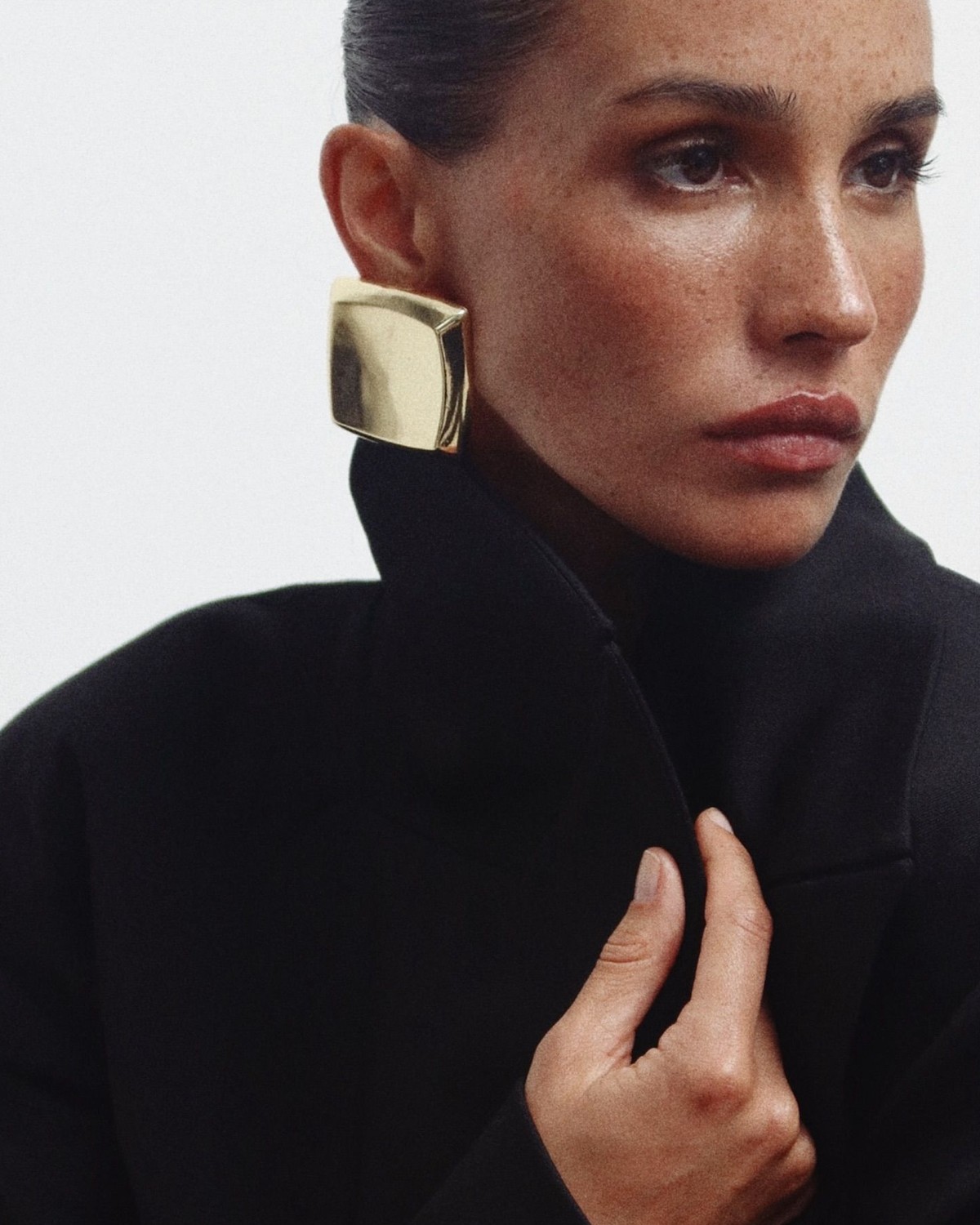
Then the earrings, because one pair can replace a necklace. The Le Sundial Vera sterling silver, mother-of-pearl, spinel and enamel earrings are the most fanciful. The Lié Studio Lola mookaite and sterling silver earrings in burgundy suit velvet, the Julietta Vale rhodium-plated tiger's eye earrings are the shiniest, and the Loren Stewart Nymph 14-karat gold and black pearl earrings are the ones for a plain gown.
Here is the test: if the bag will not hold lipstick, a phone and a card, it is a sculpture. What I would skip: a long chain strap on a dance floor.
Minaudieres and statement earrings

Claudia crystal-embellished silver-tone clutch
Judith Leiber Couture
$8,995

Farm Fresh crystal-embellished clutch
Judith Leiber Couture
$5,995

The Opera satin clutch
Hunting Season
$795

The Neeson New metallic woven leather top-handle bag
Anya Hindmarch
$750

Vera sterling silver, mother-of-pearl, spinel and enamel earrings
Le Sundial
$1,495

The Lola mookaite and sterling silver earrings
Lié Studio
$380

Vale rhodium-plated tiger's eye earrings
Julietta
$245

Nymph 14-karat gold and black pearls earrings
Loren Stewart
$700
Dress for the room you want to be invited back to
Every one of these lessons comes down to reading the card and then being a little braver than the card. Black tie is not asking for a costume, and formal attire is not asking you to disappear. A gown, a good jacket, a small bag and one earring that does the talking will carry you through most invitations. I went deeper on a related idea in The Semi-Formal Attire Edit: Five Lessons in Dressing Up Exactly Halfway.
I will still be tempted to over-think it, of course. I will still stand in front of the mirror with two pairs of shoes and a glove, asking a stranger in the elevator which one looks more like a ball. Although if Griswold Lorillard could walk into a ballroom in 1886 without any tails and survive the gossip, I can survive a slightly short hem.