The Ordinary vitamin C range is a lineup of separate formulas, from a 23 percent suspension to gentler derivatives and an oil. Here is how I read it, plus other vitamin C serums and the sunscreens that go on top.
The Ordinary Vitamin C, Its Antioxidant Formulas and the Sunscreens to Wear Over Them
The Ordinary vitamin C story starts at the launch. Cosmetics Business reported on August 31, 2016 that DECIEM had announced The Ordinary with the tagline "clinical formulations with integrity", and the ten-product launch range included Vitamin C Suspension 23% + HA Spheres. Nicola Kilner told British Vogue that the brand was born to stop commodity from being disguised as ingenuity. Until then, Vogue wrote, skincare had been chosen on the results it promised, not the ingredients it contained, and The Ordinary centered its formulas on one ingredient each.
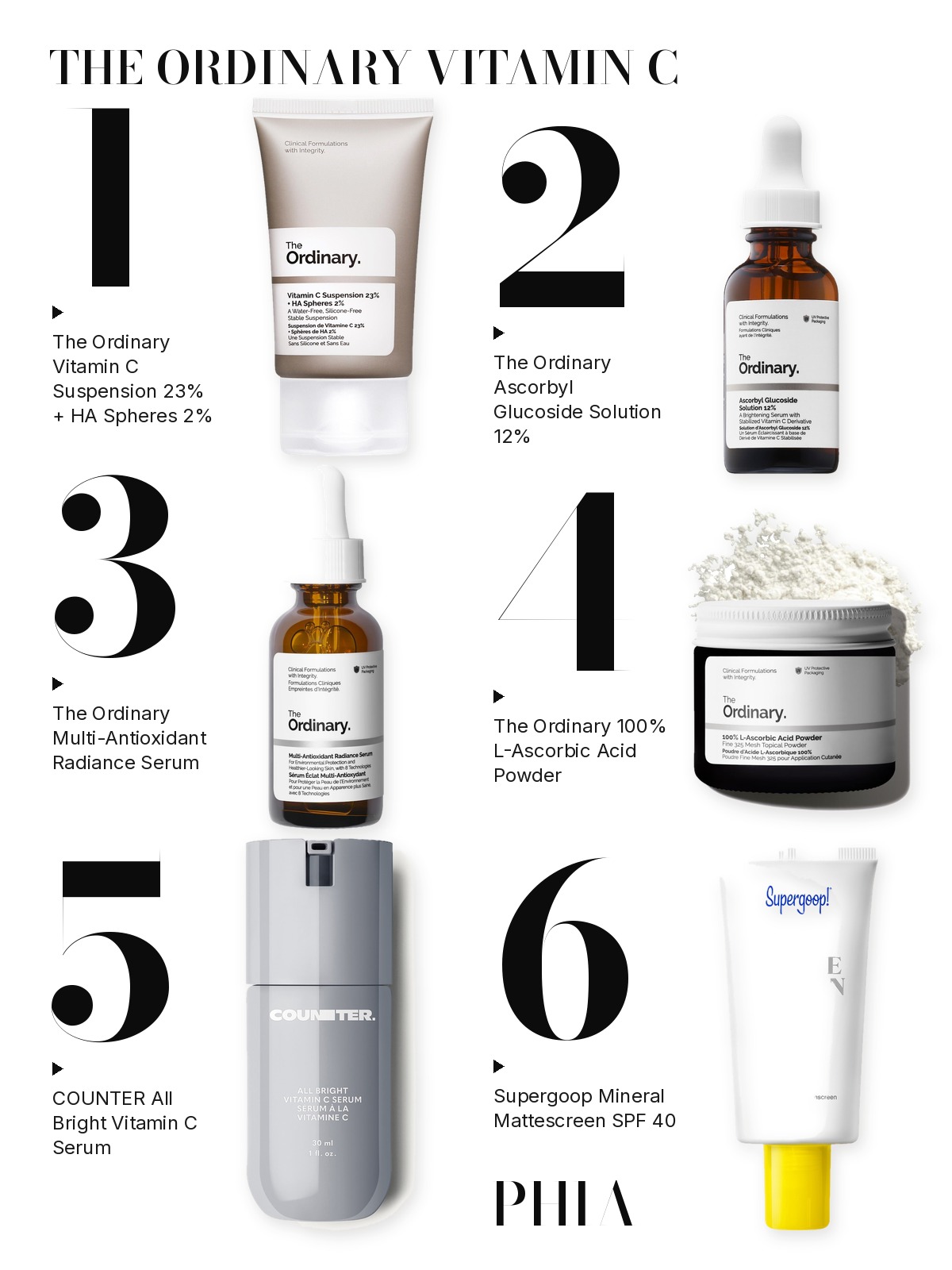
That is why the vitamin C here is a menu, not a single product. Vitamin C Suspension 23% + HA Spheres 2% is a water- and silicone-free suspension of pure L-ascorbic acid, and the brand says to expect a strong but non-irritating tingle. The 100% L-Ascorbic Acid Powder lets you mix your own. Ascorbyl Glucoside Solution 12% is a water-soluble derivative, and Ascorbyl Tetraisopalmitate Solution 20% in Vitamin F is an oil with omega 3 and 6.
The rest of the row is antioxidant company. Multi-Antioxidant Radiance Serum has vitamin C and ginseng, Resveratrol 3% + Ferulic Acid 3% is water-free, and Pycnogenol 5% is a pine bark extract. Alpha Arbutin 2% + Hyaluronic Acid is for more even-looking skin.
My test: start with one formula, use it at night, and wait two weeks before adding another.
The Ordinary vitamin C, antioxidant and brightening formulas

Vitamin C Suspension 23% + HA Spheres 2% Serum with Pure L-Ascorbic Acid
The Ordinary
$8.1

Ascorbyl Glucoside Solution 12%, Vitamin C Serum
The Ordinary
$14.8

Multi-Antioxidant Radiance Serum with Vitamin C and Ginseng
The Ordinary
$14

Resveratrol 3% + Ferulic Acid 3% Antioxidant Serum for Brightening
The Ordinary
$10.4

Pycnogenol 5% Antioxidant for Environmental Protection
The Ordinary
$11.5

Alpha Arbutin 2% + Hyaluronic Acid for Hyperpigmentation
The Ordinary
$11.5

100% L-Ascorbic Acid Powder
The Ordinary
$5.94

Ascorbyl Tetraisopalmitate Solution 20% in Vitamin F
The Ordinary
$18.45
Vitamin C serums from other brands
Other brands make vitamin C serums that read as a daily habit, not a lab experiment. Westman Atelier Suprême C Vitamin C Concentrate is a gel-oil made with a single ingredient, 100% THD ascorbate. goop Beauty 20% Vitamin C+ goes the other way, with 20 percent L-ascorbic acid, ferulic acid, hyaluronic acid and ectoin.
COUNTER All Bright uses two stable forms of vitamin C with turmeric and camu camu, and it smells faintly of orange peel oil. Augustinus Bader The Vitamin C Serum pairs a stable vitamin C with ergothioneine and niacinamide. MUTHA No. 1 Serum uses THD vitamin C in a milky texture, and Dr. Nigma Vitamin C Serum No. 1 is an overnight serum with a 20 percent stabilized vitamin C derivative. Susanne Kaufmann Vitamin C Complex Serum adds a trio of mushroom extracts. Alpyn Beauty Instant Glow Serum is an all-in-one serum and primer with vitamin C and gentle acids.
The pairing tip: put vitamin C after cleansing and before moisturizer, and follow it with sunscreen in the morning.
What I would skip: layering Alpyn Instant Glow, which already has exfoliating acids, with a high strength ascorbic acid in the same routine.
Vitamin C serums

Suprême C Vitamin C Concentrate
Westman Atelier
$325

All Bright Vitamin C Serum
COUNTER
$89

The Vitamin C Serum
Augustinus Bader
$380

20% Vitamin C+ Advanced Brightening Serum
goop Beauty
$125

Instant Glow Serum
Alpyn Beauty
$21.6

Vitamin C Serum No. 1
Dr. Nigma
$100

Vitamin C Complex Serum
Susanne Kaufmann
$160

No. 1 Serum Vitamin C
MUTHA
$130
Sunscreens to wear over vitamin C
Vitamin C and sunscreen belong together in the morning, so this row is the top layer. Dr. Dennis Gross All-Physical Ultimate Defense SPF 50 is an oil-free zinc oxide cream, and the brand says to reapply every two hours. Augustinus Bader The Mineral Sunscreen SPF 50 is a nonnano mineral formula with an airy, whipped texture and a satiny finish. Utu SPF30 Daily Moisturizing Face Sunscreen uses 20.8 percent non-nano zinc oxide with squalane and hyaluronate.
For wearing under makeup, Supergoop Mineral Mattescreen SPF 40 is oil-free and doubles as a primer. Kosas DreamBeam SPF 40 is a mineral sunscreen with a ceramide and peptide blend, and DUNE The Mineral Melt SPF 30 is a sheer mineral formula. Isdin Eryfotona Actinica SPF 50 contains zinc oxide and photolyase enzymes, and La Mer The Broad Spectrum SPF 50 UV Protecting Fluid is an untinted, creamy fluid.
How I apply it: wait a minute after the serum, then use the sunscreen generously.
What I would skip: rubbing a zinc oxide sunscreen over a serum that has not settled. Give it a minute first.
Sunscreens to wear over vitamin C

All-Physical Ultimate Defense Sunscreen SPF 50
Dr. Dennis Gross Skincare
$45

The Mineral Melt SPF 30
DUNE
$29.95

The Mineral Sunscreen SPF 50
Augustinus Bader
$145

Mineral Mattescreen SPF 40 in Golden Hour
Supergoop
$40

DreamBeam Comfy Smooth Sunscreen SPF 40
Kosas
$40

SPF30 Daily Moisturizing Face Sunscreen
Utu
$48

Eryfotona Actinica SPF 50
Isdin
$73

The Broad Spectrum SPF 50 UV Protecting Fluid
La Mer
$140
Building a vitamin C routine that lasts
Good vitamin C habits are plain ones. Use it on clean skin, and pick the formula that matches how you like to work. The Ordinary suspension and powder are pure L-ascorbic acid and the brand warns of a tingle, the glucoside is water-soluble, and the tetraisopalmitate oil is the brand's choice for dry skin. Sunscreen goes on top every morning. If anything stings and keeps stinging, stop using it and go back to what you know. Give one product a few weeks before you judge it, and change only one thing at a time so you can tell what is working.
The dark spot serums and acids I reach for next
If The Ordinary vitamin C is your morning step, this last shelf is where I would go for dark spots and texture, and I would start with the acids. The Ordinary has a Glycolic Acid 7% toner with a Tasmanian pepperberry derivative, plus a fragrance-free Azelaic Acid 10% cream. Paula's Choice pairs 6% mandelic acid with 2% lactic acid, Sunday Riley Good Genes is a lactic acid gel serum, and Shani Darden uses 9% lactic acid in a nightly serum. Sofie Pavitt Face keeps it gentle with mandelic acid.
For spots themselves, the formulas get more specific. EADEM The Mark is a cream-patch concentrate with 5% tranexamic acid, Murad combines glycolic and tranexamic acid, and Farmacy Brighten Up is a 3% TXA toner with azelaic acid. Dr. Idriss Major Fade leans on alpha arbutin, kojic acid and niacinamide, while Caudalie Vinoperfect uses vine sap viniferine as a vitamin C alternative. Dr. Barbara Sturm uses cress sprout extract, and iS Clinical combines arbutin with mushroom extracts.
To finish, Shani Darden has a weightless oil-free moisturizer with hyaluronic acid, and iS Clinical Reparative Moisture Emulsion layers under makeup.
What I would skip: starting two acids on the same night. Add one, and keep sunscreen on top.
Dark spot serums, exfoliants and brighteners

Faded Serum for Dark Spots & Discoloration
Topicals
$38

The Mark Advanced Targeted Dark Spot Concentrate
EADEM
$38

Glycolic Acid 7% Exfoliating and Brightening Daily Toner
The Ordinary
$13.5

Azelaic Acid Suspension 10% Cream for Redness and Blemish-Prone Skin
The Ordinary
$12.2

Niacinamide 10% + Zinc 1% Serum for Oily Skin
The Ordinary
$6

6% Mandelic Acid + 2% Lactic Acid AHA Liquid Exfoliant
Paula's Choice
$37

Good Genes All-In-One Lactic Acid Serum For Dark Spots And Uneven Texture
Sunday Riley
$122

Rapid Dark Spot Correcting Serum with Glycolic and Tranexamic Acid
Murad
$88

Major Fade Hyper Serum with Alpha Arbutin and Niacinamide
Dr. Idriss
$68

Brighten Up 3% TXA Dark Spot Toner with Azelaic Acid
Farmacy
$34

Vinoperfect Brightening Dark Spot Serum Vitamin C Alternative
Caudalie
$82

Vinoperfect Brightening Refillable Moisturizer with Niacinamide
Caudalie
$65

Azelaic & Kojic Advanced Clarifying Serum
Allies of Skin
$99

Pigment Processor
Reframe
$115

Lactic Acid Exfoliating Serum
Shani Darden
$75

Mandelic Clearing Serum
Sofie Pavitt Face
$54

Brightening Serum
Dr. Barbara Sturm
$320

Brightening Serum
iS Clinical
$152

Weightless Oil-Free Moisturizer
Shani Darden
$50

Reparative Moisture Emulsion
iS Clinical
$116