A rat tail comb is the tool behind every clean part, neat section and tidy ponytail. This edit covers tail, cutting and fine-tooth combs, the wide-tooth combs for wash day, and the edge brushes for slicking things into place.
The Rat Tail Comb Is the Smallest Tool on My Shelf and the Sharpest
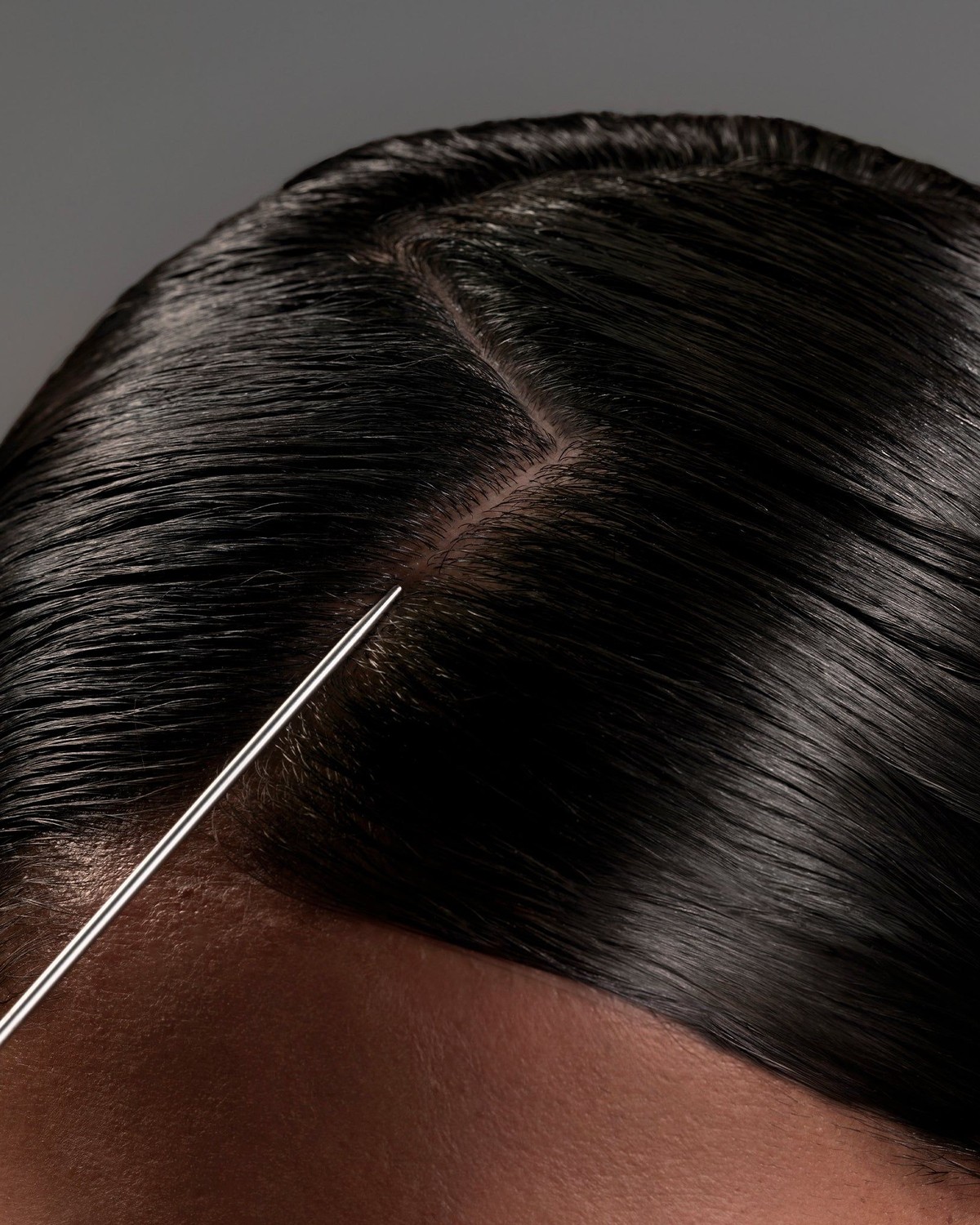
Let me defend the humble rat tail comb. Its pointed tail is designed for precise parting and sectioning, and its fine teeth are suited to teasing at the roots when you want volume. That is two jobs in one slim comb, and I reach for it more than any brush I own.
The way I was taught to use it is simple. For a straight centre part, start by drawing the pointed end down the middle of the head, then let the teeth follow to tidy either side. Clip one half out of the way and you are already sectioning, which is the real secret behind anything that looks neat from the back.
The first grid holds the serious end of the category. Mason Pearson's Tail Comb comes from a British family business that dates its story to 1885, and is made in London, which is the sort of detail I enjoy in a tool I will hold every day. Its Cutting Comb sits beside it for trims and close work. T3's Detail Set pairs a pintail comb with an edge brush and a teasing brush, so it is the one to choose if you want to be set for parting, smoothing and lift. Forte Series' Fine Hair Comb is named for fine strands, and I would look at it if your hair is easily flattened.
Hold the comb like a pencil, and let the tail do the drawing. For teasing, take a thin section, hold it up and push the comb gently down toward the root a couple of times, then smooth the top layer back over. Less is more, and a soft brush over the top hides any trace of it.
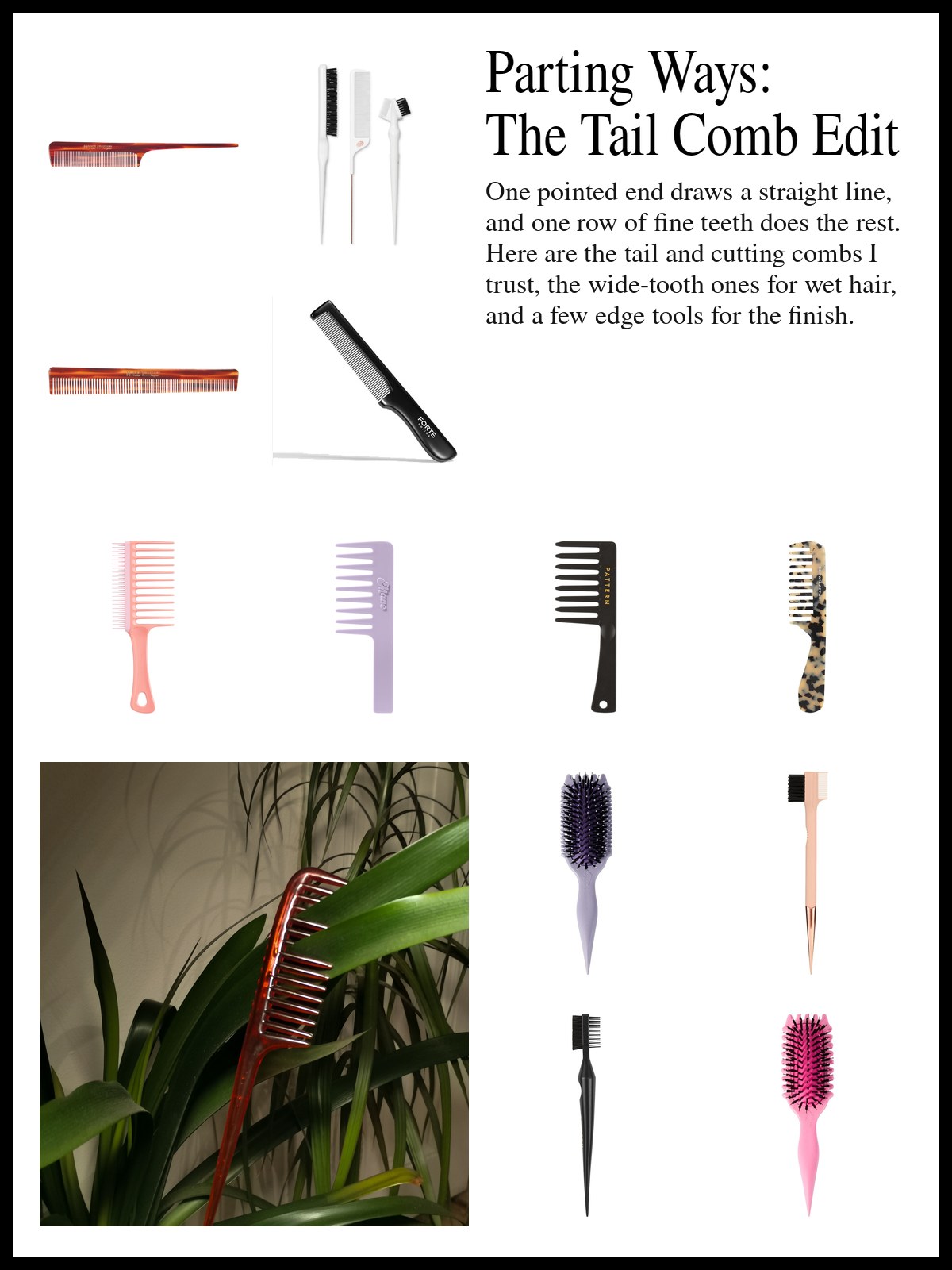
Tail, cutting and fine-tooth combs


Wide teeth for wet hair and knots
Nothing about a fine tail helps you when your hair is wet and knotted. For that, you want wide teeth, and a little patience. I start at the ends, work my way up, and only then move to the roots, which keeps the tugging low.
Tangle Teezer's Wide Tooth Dual Sided Comb is the most familiar of the four, and the brand describes it as a dual-sided comb made for curly, textured hair. Mane's Knot Ur Avg is a wide-tooth comb with a name that made me smile, and it does what the name says. Pattern Beauty's Wide Tooth Comb is the one I would pick for curly and coily hair, since the brand designed it to detangle and section curls, coils and tight textures, and it is where I would start on wash day with conditioner still in.
Crown Affair's The Comb No. 002 is the one I would leave by the sink, so it gets used before I get dressed.
One test helps: if you hear or feel resistance, stop, hold the hair above the knot with your other hand, and work the knot out slowly. That small habit does more for your hair than any product. If your hair is very fine, hold the comb a little looser still, and finish by sliding it through once more from the mid-lengths down.
Wide-tooth and detangling combs

Wide Tooth Dual Sided Comb
Tangle Teezer
$13.99

Knot Ur Avg Wide-Tooth Hair Comb
Mane
$15

Wide Tooth Comb
Pattern Beauty
$16

The Comb No. 002
Crown Affair
$52

Detangling Comb
Leonor Greyl
$19

Hand-painted Vintage Daisy Detangling Wide Tooth Hair Comb
Solar Eclipse
$32

G55 Wide Tooth Comb for Wet Hair Detangling
Giorgio
$14

10T Large Detangler Comb, Wide Tooth Comb in Graphite
Kent
$14
Edges, slicks and finishing touches
Some days the finish is the point. A smooth edge, a slicked-back pony, a lifted crown: these are small details, and they are the ones people notice. This is where the brush and the tool do more than a comb can.
Bounce Curl's Volume EdgeLift Brush is made for curl definition, lift and styling control, and its Define EdgeLift Brush is the sibling focused on definition. I would keep one of each if you wear your curls in different ways through the week. Fenty Beauty's Sidestick is a 3-in-1 edge styling tool, which is a lot to ask of one handle, so it is the one I would check the label for. Pattern Beauty's Edge Tool is the simplest name of the group, and a good one to learn on. Practice in front of a mirror on a calm morning, not in the five minutes before you leave, and keep a clean cotton pad nearby to wipe the tool between strokes.
What I would skip: pressing hard. Edges are fragile, and a firm hand with any tool is how you end up with a sore hairline. Use light strokes, and use them only where you need them. I would also skip doing a tight style every day, because constant tension on the same spot is not kind to hair. Give it a rest on the weekend.


How I would build a comb drawer
Here is the comb drawer I would build. One tail comb for parting, one wide-tooth for wet hair, and one edge tool for the finish. That covers almost everything I do in a normal week.
Clean them. A comb that has been in a bag for a month picks up product, lint and loose hairs, and a quick wash with mild soap and warm water fixes that. Let them dry flat. Store the pointed ones with the tail covered or upright in a cup, so the tip stays straight and nobody gets poked when they reach into the drawer.
When you choose, think about your hair before you think about the look of the tool. Fine hair wants fine teeth, thick or curly hair wants width, and anything with a sharp point should be handled with care near the scalp. If a scalp feels sore, scraped or itchy after combing, ease up, and see a doctor if it does not settle.