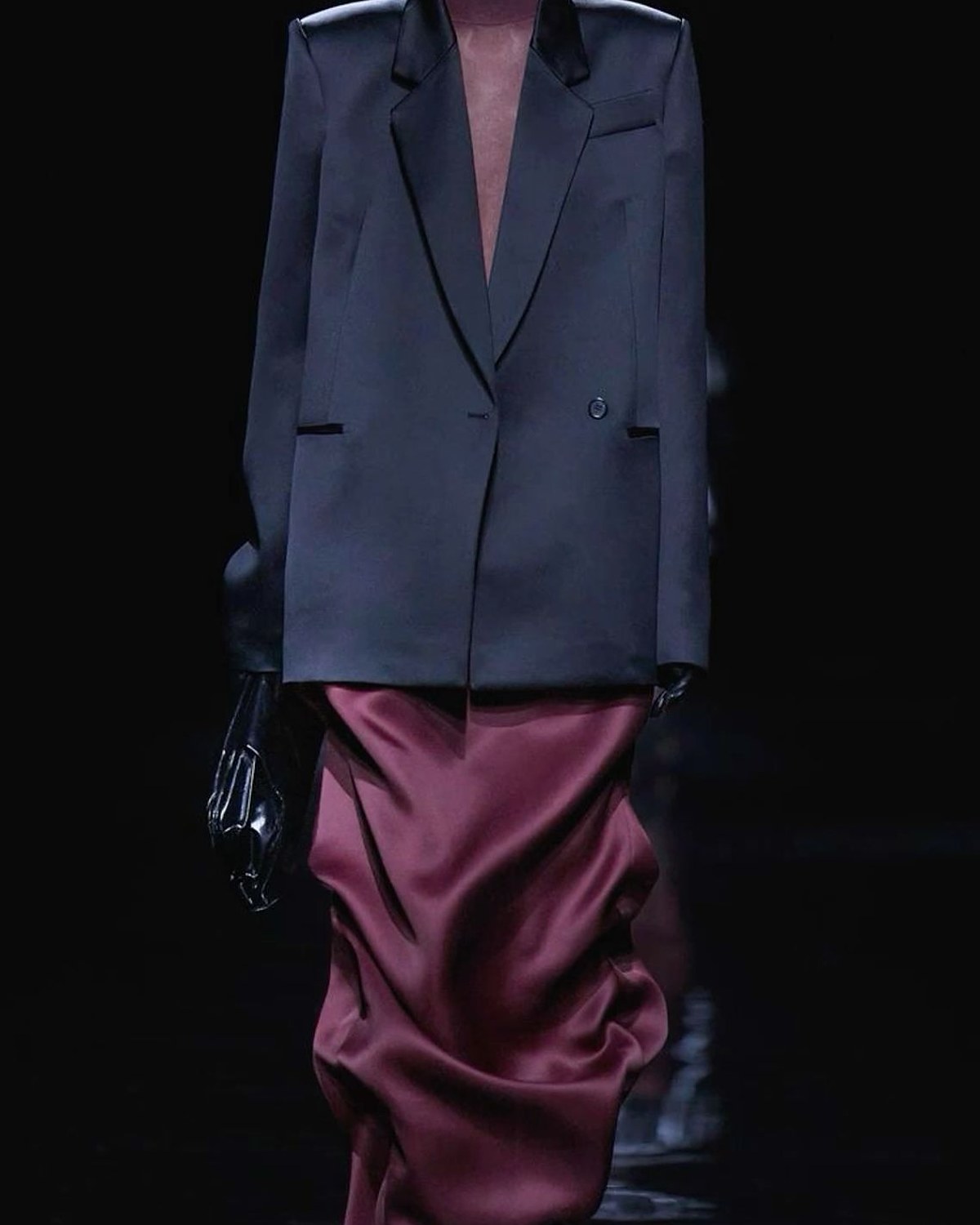
Tom Ford trained as an architect at Parsons School of Design before joining Gucci in 1990, a house then weighed down by family disputes and near insolvency, and rose to Creative Director by 1994, driving sales up roughly ninety percent within two years. He left Gucci Group in 2004 after a contract dispute and launched his own label in 2005, opening a Madison Avenue flagship in 2007 built around the same architectural rigor and unapologetic glamour he brought to Gucci.
Tom Ford
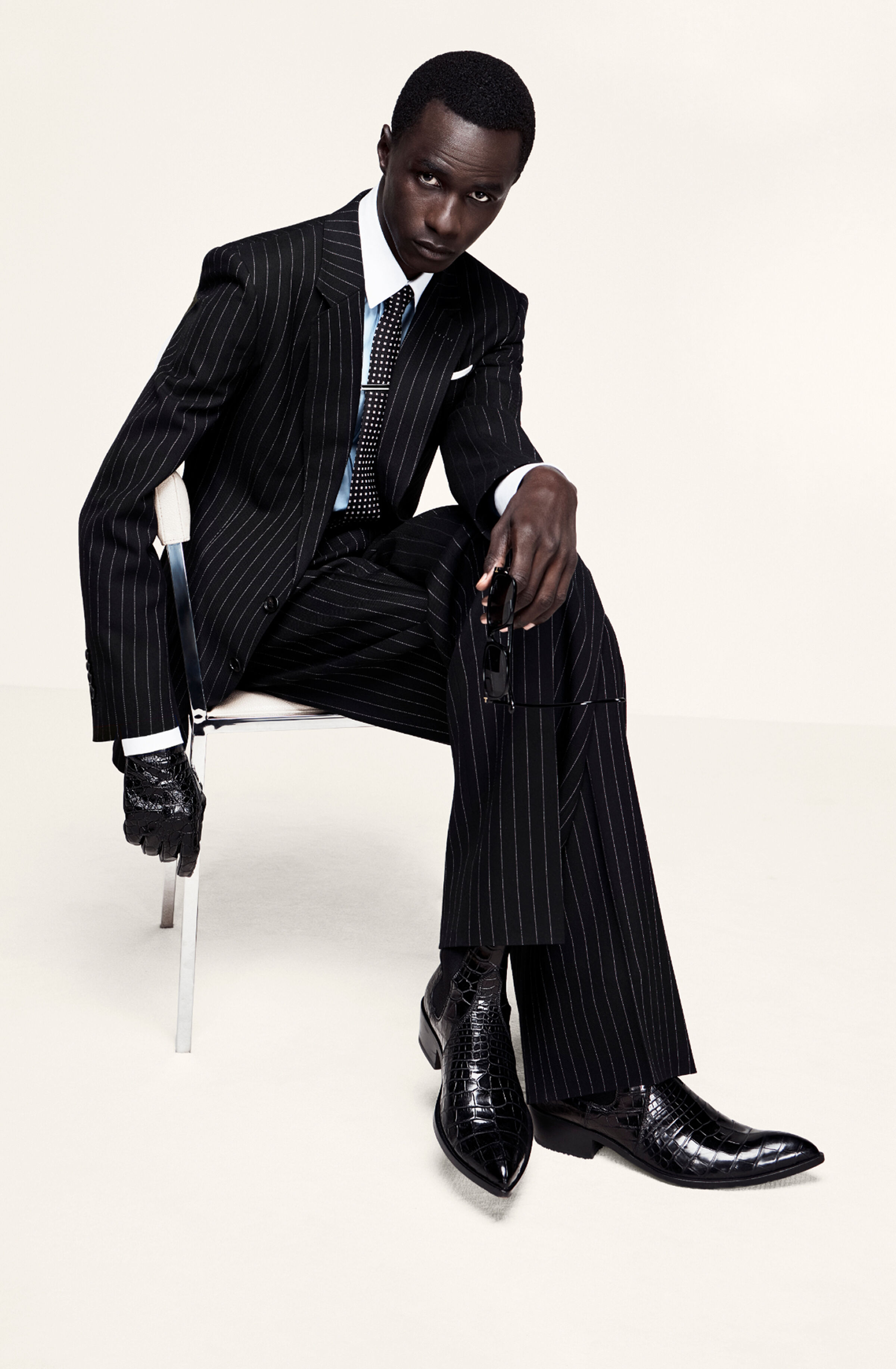
Accessories
Accessories carry a straight line back to the Gucci years, when Ford was overseeing everything from handbags to advertising and rebuilding a house that had lost its identity. The instinct for a sharp, recognizable object rather than a logo heavy one traces directly to that period. It remains one of the most consistent categories in his own label's output.

Bronson Acetate Sunglasses
Tom Ford
$595

Bronson Acetate Sunglasses
Tom Ford
$595

Bronson Acetate Sunglasses
Tom Ford
$595

Parker Aviator-Frame Metal Sunglasses
Tom Ford
$620

Brady Mask-Frame Metal Sunglasses
Tom Ford
$620

Addison Wrap-Frame Acetate Sunglasses
Tom Ford
$530

Addison Wrap-Frame Acetate Sunglasses
Tom Ford
$530

Addison Wrap-Frame Acetate Sunglasses
Tom Ford
$530

Anthony Aviator-Frame Metal Sunglasses
Tom Ford
$620

Brady Mask-Frame Metal Sunglasses
Tom Ford
$620

Brady Mask-Frame Metal Sunglasses
Tom Ford
$620

Chloe Cat-Eye Acetate Sunglasses
Tom Ford
$325

Quincy Acetate Sunglasses
Tom Ford
$565

Rhonda Acetate Sunglasses
Tom Ford
$620

Rhonda Acetate Sunglasses
Tom Ford
$620

Leon Metal Sunglasses
Tom Ford
$585

Achilles Acetate Sunglasses
Tom Ford
$530

Achilles Acetate Sunglasses
Tom Ford
$530

Anders Acetate Sunglasses
Tom Ford
$530

Chloe Cat-Eye Acetate Sunglasses
Tom Ford
$325

Chloe Cat-Eye Acetate Sunglasses
Tom Ford
$325

Leona Acetate Sunglasses
Tom Ford
$530

Penn Acetate Sunglasses
Tom Ford
$490

Penn Acetate Sunglasses
Tom Ford
$490
More Accessories
This grouping extends the same design discipline, precise, architectural pieces that reward close attention rather than shouting from across a room. Ford has said he kept his interior architecture training a secret early in his career, worried it would work against him in fashion interviews. It clearly did not disappear, and it still shows up in how these pieces are constructed.

Mackenzie Aviator Metal Sunglasses
Tom Ford
$550

Mackenzie Aviator Metal Sunglasses
Tom Ford
$585

Ethan Rectangle-Frame Metal Sunglasses
Tom Ford
$585

Iggy Acetate Sunglasses
Tom Ford
$370

Kemp Square-Frame Acetate Sunglasses
Tom Ford
$370

Fausto Square-Frame Acetate Sunglasses
Tom Ford
$560

Fausto Square-Frame Acetate Sunglasses
Tom Ford
$525

Silk Faille Scarf
TOM FORD
$610
Tops and shirting
Shirting is where Ford's Gucci era reputation for sharp, sexed up tailoring translates most directly into his own house. The silhouettes favor precision over softness, in keeping with a designer who once ran eighteen hour days overseeing eleven product lines at once. It is a category built for people who want structure to do the work.


Dresses
Dresses carry forward the sophisticated sex appeal that American Vogue once used to describe Ford's transformation of Gucci from a logo driven house into something more controlled and adult. That same restraint defines his own label's eveningwear. It is glamour built on cut rather than embellishment.


Shoes
Shoes are a fitting category for a designer who, within six months of joining Gucci in 1990, was already redesigning the house's footwear, replacing stiff loafers with softer suede moccasins. That early instinct for reworking a category from the ground up carried through to his own label. It remains a strong through line in the current collection.


More from the collection
The rest of the edit reflects a house that has expanded well beyond ready to wear since its 2005 launch, into eyewear, fragrance and the wider accessories business that eventually drew Estee Lauder's 2.8 billion dollar acquisition of the beauty side in 2023. Domenico De Sole, Ford's former partner at Gucci, chaired the label from the start. This section shows how far that original single category idea has grown.

Shiny Supple Grain Leather Belt
TOM FORD
$820

Silk Crepe Structured Graphic Bodysuit
TOM FORD
$2,590

Lynx Jacquard Velvet Crewneck T-Shirt
TOM FORD
$1,690

Crepe De Chine Sunray Plisse Lavalliere Shirt
TOM FORD
$1,980

Stretch Georgette Cocktail Slip Dress
TOM FORD
$990

Lock Metallic Stiletto Sandals
Tom Ford
$1,490

Tara Small Hobo Crossbody in Grained Leather
Tom Ford
$2,590

Aura Snake-Effect Leather Clutch
Tom Ford
$2,550

Tumbled Soft Printed Croc Small Shoulder Bag
TOM FORD
$2,590

Impossible Crepe Jersey Maxi Skirt
Tom Ford
$4,390

Silk Twill Double-Breasted Blazer
Tom Ford
$5,650

Backless Cape Straight-Leg Jumpsuit
Tom Ford
$8,980
Our honest take
Ford's reputation rests on a genuinely rare feat, rescuing one nearly bankrupt house and then building a second successful one from scratch, and the current collection still carries the architectural precision that made both work. The label has changed hands since Ford stepped back as creative director in 2023, which makes this an interesting moment to watch whether that specific discipline holds. So far the tailoring and accessories still read as recognizably his.