Different piercings want different earrings, and the mismatch is why pieces sit unworn. Which style belongs in which hole.
Which Earring for Which Piercing
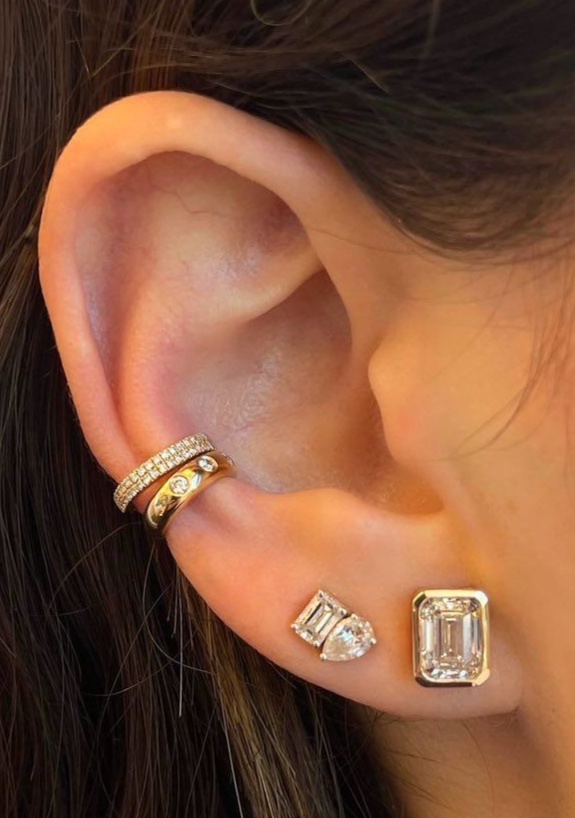
Match the fitting to the piercing
The most common cause of an unworn earring is a style that does not suit the hole it was bought for. First lobe takes essentially anything, which is why it is the place for a statement piece, a drop or a heavier hoop. Second and third lobe want small studs and thin huggies, because the space between piercings is limited and anything with volume collides with its neighbour. Helix, on the upper outer edge, suits a small hoop that follows the curve of the ear or a flat back stud, and it does not suit a butterfly back, which sits proud and catches on everything. Flat, in the wide plateau below the helix, is a stud position almost exclusively. Conch, in the shell of the ear, takes either a large hoop that encircles the whole ear or a single stud, and very little in between. Tragus and lobe both take small hoops but at different diameters, so a piece bought for one rarely reads correctly in the other.
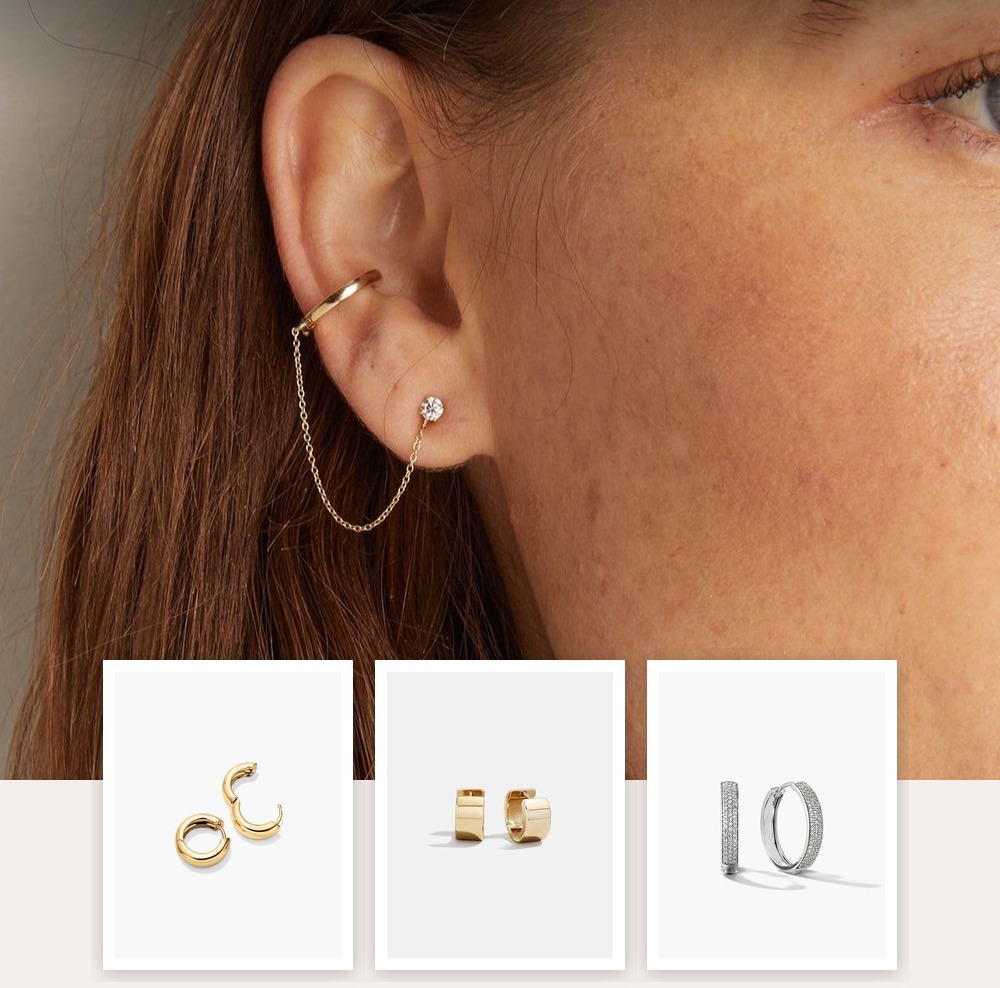
Earring by piercing

Bold Pavé Diamond Large Hoops
Mejuri
$2,200

Round Lab Grown Diamond Huggie Earrings
Aurate New York
$2,145

Large Diamond Studs
Mejuri
$2,100

Lab Grown Diamond Round Studs 1 TCW
Mejuri
$1,500

1ct Round Lab Grown Diamond Stud Earrings
Aurate New York
$923

0.25ct Round Lab Grown Diamond Stud Earrings
Aurate New York
$752

14K Pear Cut Diamond Huggie Earrings
Jenny Bird
$595

14K Princess Cut Diamond Huggie Earrings
Jenny Bird
$595
Diameter, gauge and the things nobody tells you
Hoop diameter is measured internally and small changes are very visible. Six to eight millimetres is a snug huggie for a lobe or helix. Eight to ten sits slightly away from the ear. Anything above twelve reads as a hoop rather than as part of the ear. For a conch hoop you need a considerably larger diameter, typically twelve to sixteen, because it has to clear the whole outer ear. Gauge is the thickness of the post and it matters more than people expect, because a piercing stretches to the gauge it was made with. Most lobes are eighteen or twenty gauge and most cartilage piercings are sixteen, and putting a sixteen gauge post through an eighteen gauge lobe is uncomfortable and slow. Ask your piercer what gauge you have. For anything in cartilage, a flat back is the difference between sleeping normally and not. And for a healing piercing, use only what the piercer fitted until they say otherwise.


Our honest take
Buy for the hole rather than for the picture. The single most common mistake is buying a beautiful hoop at a diameter that suits a lobe and trying to wear it in a helix, where it will neither sit flat nor stay put. Ask your piercer for the gauge and diameter of every hole you have, write it down, and shop against that list, which sounds joyless and is the reason some people wear everything they own. Spend on flat back pieces for cartilage even though they cost more, because the comfort difference is not marginal. Skip butterfly backs above the lobe entirely. And keep the statement pieces in the first lobe, where there is room for them. If you take one thing away, learn the diameter and gauge of each of your piercings, because that is the information that turns a good earring into a worn one.