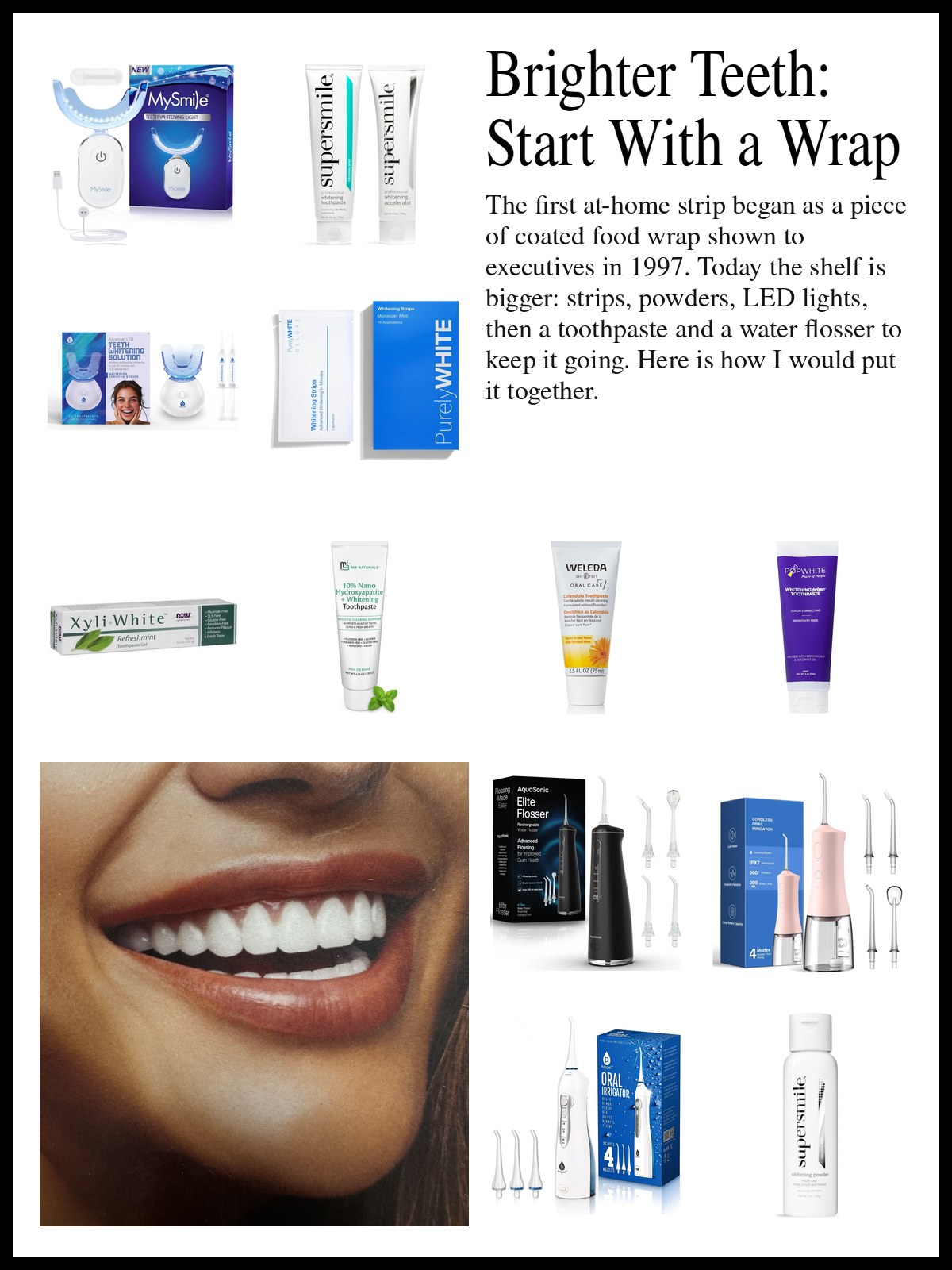
The idea behind whitening strips started with a scrap of food wrap in 1997, and the at-home category has grown into strips, powders and LED kits. Here are the whitening options I would line up, the toothpastes for daily upkeep, and the water flossers that keep the rest of the routine honest.
Whitening Strips, Powders and Lights: The Bathroom Shelf Behind a Brighter Smile
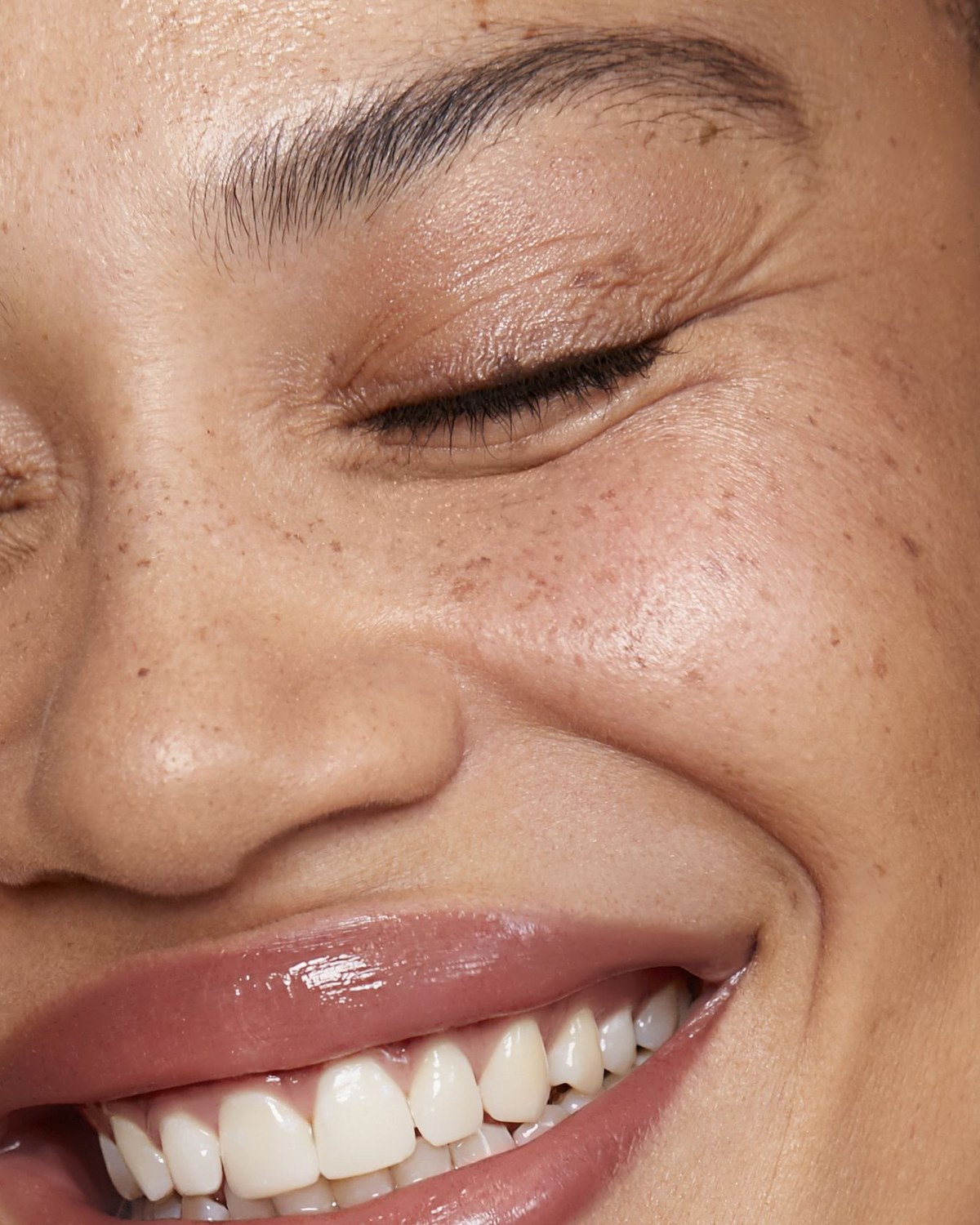
The story of whitening strips is oddly humble. In February 1997 an engineer named Paul Sagel showed executives a strip of food wrap coated with peroxide, and that scrap became the seed of a whole category. The original strips were made from a plastic wrap called Impress, which his employer had been developing for food packaging. They reached shelves in 2001, and they were sold online in January of that year, months before the May retail launch, to build some talk first. I like knowing that the thing in my bathroom drawer began life next to the leftovers.
Today the choices are wider. PurelyWhite's Deluxe Whitening Strips come in a 15 pack, and they are the simple, flat, no-equipment format: apply, wait, peel. If you like a system, Supersmile's Professional Whitening System is a fuller kit, and Supersmile's Superpowder is a whitening powder for the days between.
Then there are the lights. MySmile's 28 LED Teeth Whitening Accelerator Light and its 5 LED Whitening Light with Trays are the light-based options, one a light on its own and one with trays, while Pursonic's Advanced LED Teeth Whitening Solution follows the same LED idea. I would pick one format and stay with it for a full cycle, rather than stacking three. Follow the timing on the box, stop if your teeth or gums feel sensitive, and see your dentist first if you have fillings, crowns or any doubt.
Whitening strips, kits and pens

28 LED Teeth Whitening Accelerator Light
MySmile
$27.95

Professional Whitening System
Supersmile
$90

Advanced LED Teeth Whitening Solution
Pursonic
$29.74

Deluxe Whitening Strips, 15 Pack
PurelyWhite
$29

Superpowder 3-1- Whitening Powder
Supersmile
$50

5 LED Whitening Light with Trays
MySmile
$22.49

Diamond Dissolving Whitening Strips
Snow
$39

Professional Whitening Bolt Pen
Supersmile
$50
Toothpastes for the daily part
Whitening is the loud part of the routine. Toothpaste is the quiet part, and it is the part you do twice a day, so it decides more than people admit. I think of the kits as a project and the paste as upkeep.
NOW Foods' XyliWhite Refreshmint Toothpaste Gel is the clean, minty one, a gel that feels light and a little cooling and does not come with a lot of drama. M3 Naturals' Nano Hydroxyapatite Whitening Toothpaste is the one to look at if you like the idea of a mineral-based paste, and it is built around that ingredient right in the name. PopWhite's Toothpaste is the plain everyday tube, easy to keep next to a kit and easy to pack.
Weleda's Calendula Toothpaste is the gentle outlier here. It is the one I would hand to someone who finds mint sharp or whose mouth feels touchy after a brightening week, since it is a mint-free, fennel-flavored formula and nothing about it is trying to be strong. It is not a whitening paste, and it does not pretend to be.
A small test: brush for the full two minutes, spit and do not rinse right away, and notice which paste you look forward to. The one you enjoy is the one you will actually use, and that habit does more than any single product on this page.
I also keep the tube for travel and the tube for home separate, so I never end up without a paste on a trip. It sounds fussy, but a second small tube by the sink takes no effort and saves the panic on a rushed morning.
Whitening toothpastes and gels

XyliWhite Refreshmint Toothpaste Gel
NOW Foods
$11.65

Nano Hydroxyapatite Whitening Toothpaste
M3 Naturals
$5.99

Calendula Toothpaste
Weleda
$7.64

Toothpaste
PopWhite
$20

Diamond Series Whitening Toothpaste
Snow
$12

Marine Bio-Active Whitening Toothpaste
Olas
$18

Fluoride Free Professional Whitening Toothpaste
Supersmile
$30

Professional Whitening Toothpaste, Original Mint
Supersmile
$30
Water flossers and the rest of the mouth
Whatever you do for color, the mouth underneath still needs cleaning between the teeth, and that is where a water flosser earns its counter space. I use mine after brushing, with warm water, while leaning over the sink and keeping my lips just loose enough to catch the spray.
Aquasonic's Elite Rechargeable Water Flosser is the rechargeable pick, so there is no fussing with batteries. Heatdaz's Cordless Water Flosser is the one for a shelf that is already full, since it can sit in a drawer or go into a bag for a trip. Pursonic's Oral Irrigator Water Flosser is a straightforward irrigator and the format I would suggest if you like no frills.
Start on the lowest pressure and work up. Aim the tip at the gumline at a slight angle and move slowly from tooth to tooth, front to back. It feels odd for the first week and then feels normal.
What I would skip: stacking every whitening product in the same week, and reaching for a strong flosser setting on the first night. Gums that bleed or ache, or teeth that zing, are a reason to pause and book a dental visit rather than push through. Brightening should never be a test of stubbornness.
Floss and mouth care

Elite Rechargeable Water Flosser
Aquasonic
$49.95

Cordless Water Flosser
Heatdaz
$26.99

Oral Irrigator Water Flosser
Pursonic
$34.84

Floss
Köppen
$20

Mint Mouthwash
Köppen
$35

Usb Rechargeable Oral Irrigator
Pursonic
$39.99

Extra White Whitening Pre-Rinse in Triple Mint
Supersmile
$35

Usb Rechargeable Electric Toothbrush, Advanced Cleaning for a Healthier Smile
Pursonic
$24.99
How I would run the week
My week is boring on purpose. Brush twice a day with a paste I like, use the water flosser at night, and run one brightening product on a fixed schedule for the time the box suggests. Then I stop and look at the results in daylight, not under the bathroom lamp, which flatters everything.
Coffee, tea and red wine will keep tinting teeth, so rinse with plain water afterward and wait a bit before brushing. Keep a small note of what you used and when, so that if your teeth get sensitive you know what to drop first. And book the dental cleaning, because a professional polish takes off what no home kit can. Home care is a top-up for a routine, not a replacement for a dentist. If a shade change matters for an event, start a few weeks ahead so nothing is rushed.