This Women's Rolex edit covers pre-owned Lady-Datejust 26 and 28, Datejust 31, two-tone Rolesor, gold President models and colorful Oyster Perpetuals. I started with the 1927 Channel swim and ended up choosing by size, bracelet and dial.
Women's Rolex: The Oyster That Swam the Channel and Stayed Small
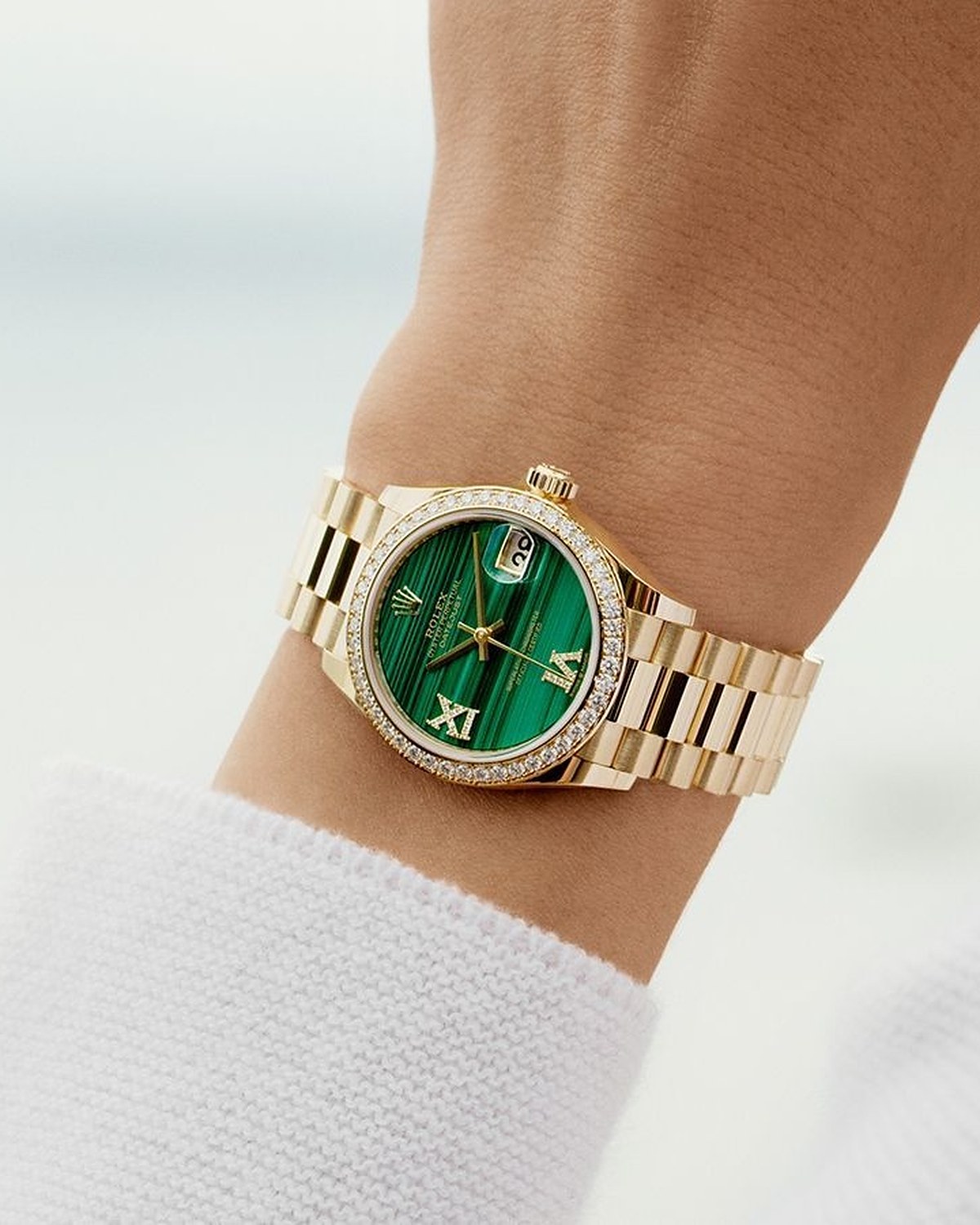
The Oyster That Swam the Channel
In October 1927, Hans Wilsdorf equipped a young Englishwoman named Mercedes Gleitze with a Rolex Oyster when she swam the English Channel. After more than 10 hours in the bitterly cold water, the watch emerged in perfect working order. The case behind it was the 1926 Oyster, the first waterproof and dustproof wristwatch, and Rolex made sure everyone heard about it with a full-page Daily Mail ad. So the story of the Women's Rolex starts with a woman in cold water, not a man in a boardroom.
I like that origin, because the watch that grew out of it is so practical. The Datejust arrived in 1945 as the first self-winding wrist chronometer to show the date in a window, with a Jubilee bracelet made for it. The smaller Lady Datejust followed in 1957, nearly identical to the men's 36mm but cut to 26mm, in an era when women mostly wore watches under 30mm. It grew to 28mm in 2015. Same Oyster case, same date window, just sized for a narrower wrist.
Everything in this first group is pre-owned and sits in that Lady-Datejust range. The 26 in silver with Roman numerals on a Jubilee bracelet is the one I would hand to anyone who wants the classic look: white gold fluted bezel, quiet dial, goes under a cuff. The pink diamond dial 26 is the same watch with a little more color, which I would want against a camel coat this month. The blue Roman dial on an Oyster bracelet reads sportier, and the all-steel 179160 with its smooth bezel is the plainest of the lot. For the newer 28mm size, look at the silver Jubilee 279174.
A practical test: slide a sleeve over each one in your head. A 26mm case clears a knit cuff easily, a 28mm sits a touch more visibly. Decide which you want to see before you decide on the dial.
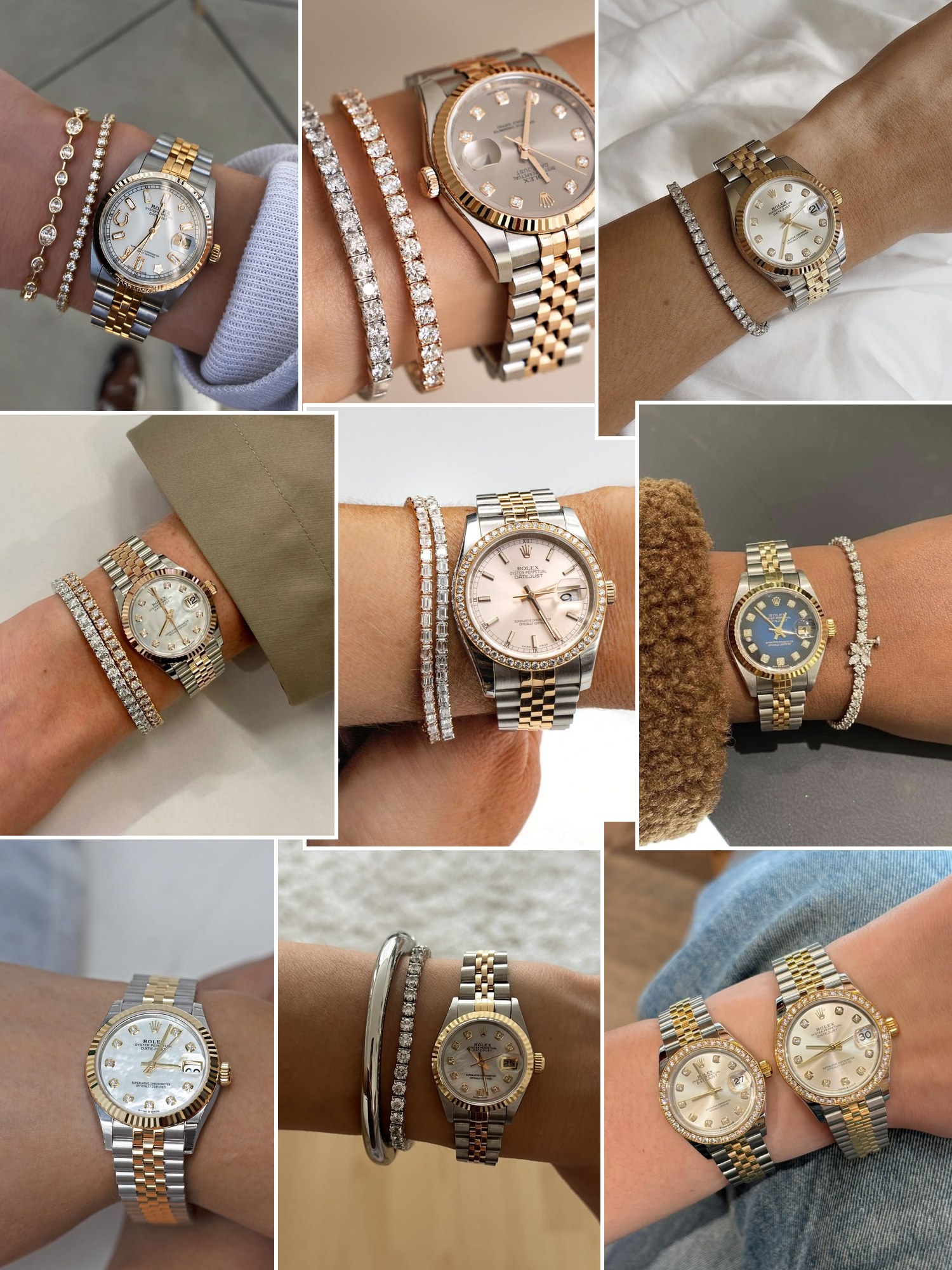
Lady-Datejust 26 and 28

Pre-Owned Rolex Lady-Datejust 26 179174 Silver Roman Dial Stainless Steel
Rolex
$8,295

Pre-Owned Rolex Lady-Datejust 26 179174 Pink Diamond Dial Stainless Steel
Rolex
$9,795

Pre-Owned Rolex Lady-Datejust 26 179174 Blue Dial Stainless Steel
Rolex
$8,795

Pre-Owned Rolex Lady-Datejust 26 79174 Silver Roman Dial Stainless Steel
Rolex
$6,995

Pre-Owned Rolex Lady-Datejust 26 179160 Silver Dial Stainless Steel
Rolex
$7,195

Pre-Owned Rolex Lady-Datejust 28 279174 Silver Dial Stainless Steel
Rolex
$12,995

Pre-Owned Rolex Lady-Datejust 28 279174 Slate Diamond Dial Stainless Steel
Rolex
$13,995

Pre-Owned Rolex Lady-Datejust 26 69174 Blue Dial Stainless Steel
Rolex
$5,995
Datejust 31, the in-between size
The 31mm Datejust arrived in the 1960s as a small men's model and a larger women's one, which is exactly why it suits a wrist that finds 26mm too dainty and 36mm too much. It is the size I would send a friend to if she wears a lot of jewelry on the same arm.
Two bezels split this group. The smooth steel ones, like the pink Roman dial 278240 and the silver index 178240, are quiet and almost tool-like. The white gold fluted bezel, as on the blue index 178274 and the slate diamond 278274, adds light at the edge. Then there are the diamond-set bezels: the azzurro blue floral motif dial is a discontinued piece, the white mother-of-pearl on a Jubilee is the dressy one, and the bronze-brown Roman dial is the one I would pair with olive and chocolate knits.
Look at the clasp and the lugs when you hold any of these in person. Because every piece here is pre-owned, the bracelet stretch tells you more than the dial does: a bracelet that rattles has done a lot of years. Press the bezel, check the date window snaps cleanly, and ask for the last service date in writing.
What I would skip: a diamond-set bezel on a watch you plan to wear to the gym or the garden. Those stones are meant for dinners.

Pre-Owned Rolex Datejust 31 178274 Blue Dial Stainless Steel
Rolex
$11,495

Pre-Owned Rolex Datejust 31 278274 Slate Diamond Dial Stainless Steel
Rolex
$13,995

Pre-Owned Rolex Datejust 31 278240 Pink Dial Stainless Steel
Rolex
$10,495

Pre-Owned Rolex Datejust 31 178240 Silver Dial Stainless Steel
Rolex
$8,995

Pre-Owned Rolex Datejust 31 278384 Azzurro Blue Floral Motif Dial Stainless Steel
Rolex
$24,995

Pre-Owned Rolex Datejust 31 178384 White Mother of Pearl Dial Diamond Bezel Stainless Steel
Rolex
$18,495

Pre-Owned Rolex Datejust 31 178384 Brown Diamond Dial Diamond Bezel Stainless Steel
Rolex
$16,495

Pre-Owned Rolex Datejust 31 178344 Blue Roman Dial Diamond Bezel Stainless Steel
Rolex
$12,995
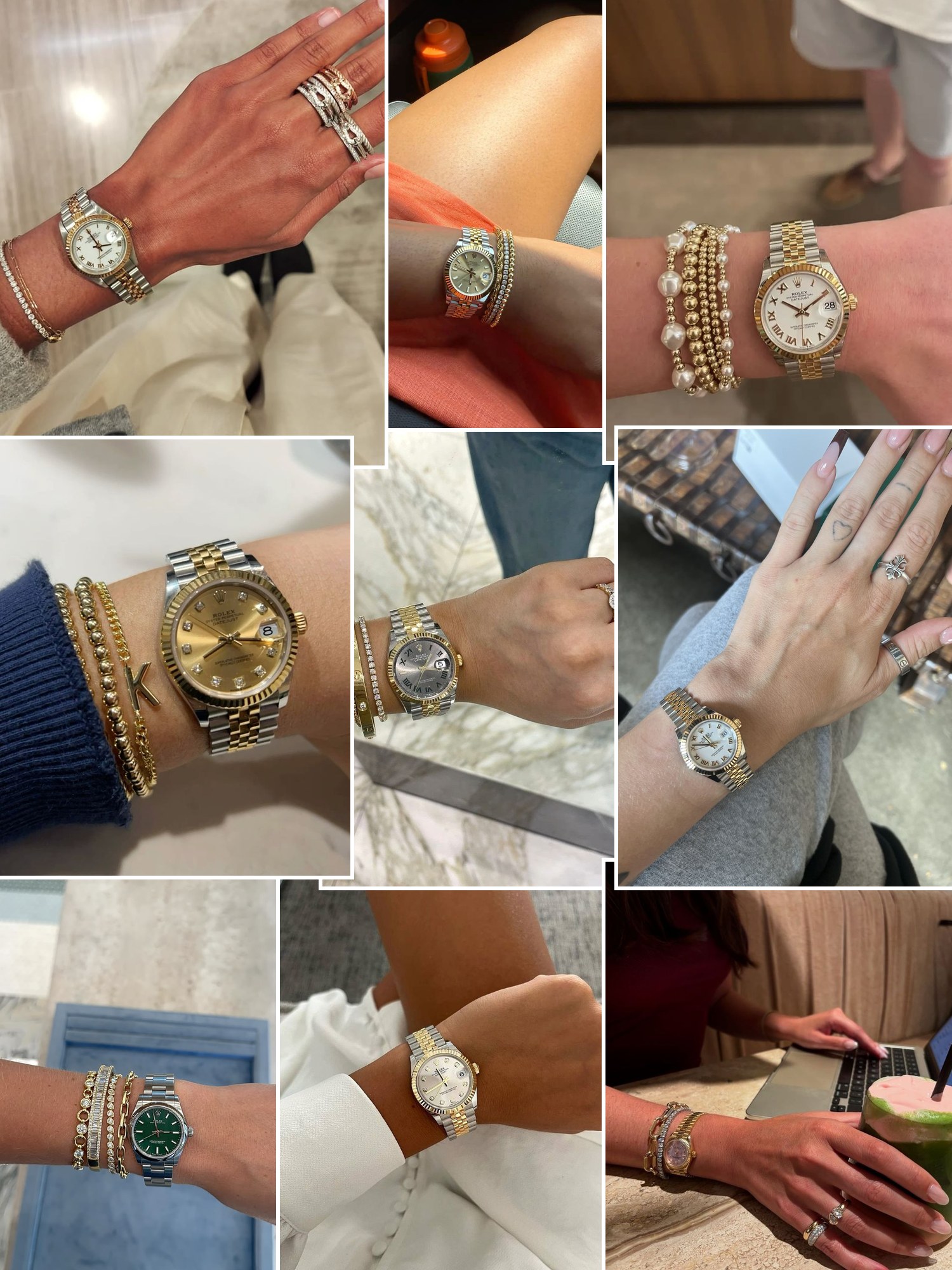
Two-tone Rolesor Datejusts in gold and steel
Rolesor, the steel-and-gold mix, has been on Rolex watches since the early 1930s and was trademarked as a name in 1933. It is a clever bit of engineering as much as styling: steel where the watch takes knocks, gold where it catches light.
Yellow gold is the warm option. The champagne index 31 on an Oyster bracelet is the easiest, the silver Roman 28 on a Jubilee dresses up, the champagne diamond 26 is the glam one, and the ivory pyramid 26 looks like a thrift-store find from a great aunt, in the best way. Then there are the Everose pieces, which are the ones I would reach for in October: the pink dial 26 with Roman numerals, the silver diamond 31 and the two pink diamond 31s, one with a fluted bezel and one with a smooth one. Rose gold against a gray wool coat is hard to beat.
Rolex offers Rolesor in all three 18k golds, yellow, white and pink, so check which one the case and bezel actually are. Match the bezel color to your other jewelry, and check the Jubilee's gold links for wear, because many links mean many polished surfaces that rub away over the years.
What I would skip: yellow gold if you only wear silver chains. Two metals look intentional only if one of them is already in your drawer.

Pre-Owned Rolex Datejust 31 278273 Champagne Dial Two-Tone
Rolex
$18,495

Pre-Owned Rolex Lady-Datejust 28 279173 Silver Roman Dial Two-Tone
Rolex
$16,495

Pre-Owned Rolex Lady-Datejust 26 179171 Pink Dial Two-Tone Everose Rolesor
Rolex
$11,995

Pre-Owned Rolex Lady-Datejust 26 179173 Champagne Diamond Dial Two-Tone
Rolex
$12,338

Pre-Owned Rolex Datejust 31 178271 Silver Diamond Dial Two-Tone Everose Rolesor
Rolex
$14,595

Pre-Owned Rolex Lady-Datejust 26 179173 Ivory Pyramid Dial Two-Tone
Rolex
$10,495

Pre-Owned Rolex Datejust 31 278271 Pink Diamond Dial Two-Tone Everose Rolesor
Rolex
$18,995

Pre-Owned Rolex Datejust 31 178241 Pink Diamond Dial Two-Tone Everose Rolesor
Rolex
$12,995
Lady-Datejust President and Day-Date in gold
The President bracelet was created for the Day-Date in 1956, the year that model became the first wristwatch to spell out the day of the week in full alongside the date. It came in 18 ct gold or platinum only, which tells you who it was for.
The Lady-Datejust versions borrow that look in a smaller case. The 26 President in yellow gold comes with a lapis dial, a champagne index, a silver index and, with a diamond-set bezel, an ivory pyramid dial. The 28 in Everose gold with a sundust index dial is my pick of the group: warm, modern and the current size. The three Day-Date 36 pieces, in white Roman yellow gold, pink Everose and silver diamond yellow gold, are what you buy if you like a bigger, serious watch and want it on your wrist like a man's one.
The President's links are semi-circular and the clasp is hidden, so look for a clean, flat fit on the underside and no gaps at the end links. Solid gold also means scratches show, so ask what the bracelet looks like in daylight, not just under studio lights.
What I would skip: a gold President as an everyday knock-about watch. It is happiest on a cashmere cuff.

Pre-Owned Rolex Lady-Datejust President 26 69178 Blue Lapis Dial Yellow Gold
Rolex
$18,495

Pre-Owned Rolex Lady-Datejust President 26 69178 Champagne Index Dial Yellow Gold
Rolex
$11,995

Pre-Owned Rolex Lady-Datejust President 26 69258 Ivory Pyramid Dial Yellow Gold
Rolex
$18,495

Pre-Owned Rolex Lady-Datejust President 28 279175 Sundust Dial Everose Gold
Rolex
$29,495

Pre-Owned Rolex Lady-Datejust President 26 69178 Silver Index Dial Yellow Gold
Rolex
$11,995

Pre-Owned Rolex Day-Date 36 President 18238 White Roman Dial Yellow Gold
Rolex
$22,395

Pre-Owned Rolex Day-Date 36 President 118235 Pink Dial Everose Gold
Rolex
$32,995

Pre-Owned Rolex Day-Date 36 President 118238 Silver Diamond Dial Yellow Gold
Rolex
$28,995
Oyster Perpetual dials in candy colors
These are the simplest watches of the lot: an Oyster Perpetual has no date window, no fluted bezel, just a smooth steel case and a dial that does the talking. The Oyster case behind it is the same one that went into the Channel in 1927.
Color is the whole idea. The 31 comes in candy pink, lavender, pistachio and black, all on an Oyster bracelet with a smooth bezel, and I would choose lavender for a gray fall wardrobe and pistachio for a camel one. The 31 with an azzurro blue Roman dial feels older, in the best way. In the bigger cases, the 34 in blue and beige and the 36 in turquoise blue are what I would give a friend who thinks 28mm is too small.
The three-link Oyster is more rigid and more substantial than the Jubilee and pulls the whole watch toward sport, so these suit jeans, a trench and sneakers well. Check the dial for color evenness and make sure the printing looks crisp, since a bright dial shows a refinish quickly.
What I would skip: the loudest color if you wear mostly neutrals. A pale pink or beige dial fits a wardrobe more easily than a loud one.

Pre-Owned Rolex Oyster Perpetual 31 277200 Candy Pink Dial Stainless Steel
Rolex
$11,995

Pre-Owned Rolex Oyster Perpetual 31 277200 Lavender Dial Stainless Steel
Rolex
$10,795

Pre-Owned Rolex Oyster Perpetual 31 277200 Pistachio Dial Stainless Steel
Rolex
$10,795

Pre-Owned Rolex Oyster Perpetual 31 177200 Azzurro Blue Roman Dial Stainless Steel
Rolex
$6,795

Pre-Owned Rolex Oyster Perpetual 34 124200 Blue Dial Stainless Steel
Rolex
$10,495

Pre-Owned Rolex Oyster Perpetual 36 126000 Turquoise Blue Dial Stainless Steel
Rolex
$16,495

Pre-Owned Rolex Oyster Perpetual 34 124200 Beige Dial Stainless Steel
Rolex
$10,995

Pre-Owned Rolex Oyster Perpetual 31 277200 Black Dial Stainless Steel
Rolex
$7,995
How I would choose one
I would start by deciding on a size, 26, 28 or 31, then pick a bracelet: Jubilee if I want it dressy and comfortable, Oyster if I want it sportier. Metal comes third. Steel and white gold is the quiet choice, Rolesor is the warm one. And if a round case is not your shape at all, I would look at the Cartier watch for women, from small Tanks to Ballon Bleus.
Because these are pre-owned, I would then look at the dial first. Ask whether it is original, ask for the service history, and look at the case for heavy polishing. Box and papers help with provenance, but a Rolex without papers is not automatically fake, so judge the watch in front of you.
Mercedes Gleitze came out of cold water with a watch that was still ticking. I would pick the one I would be happy to put on in any weather.






