This wool midi skirt edit compares clean wool-blend shapes, asymmetric cuts, and more detailed hems to help you choose a proportion that feels like you. I would begin with the shoes and coat you plan to wear, then decide where the hem should land between them.
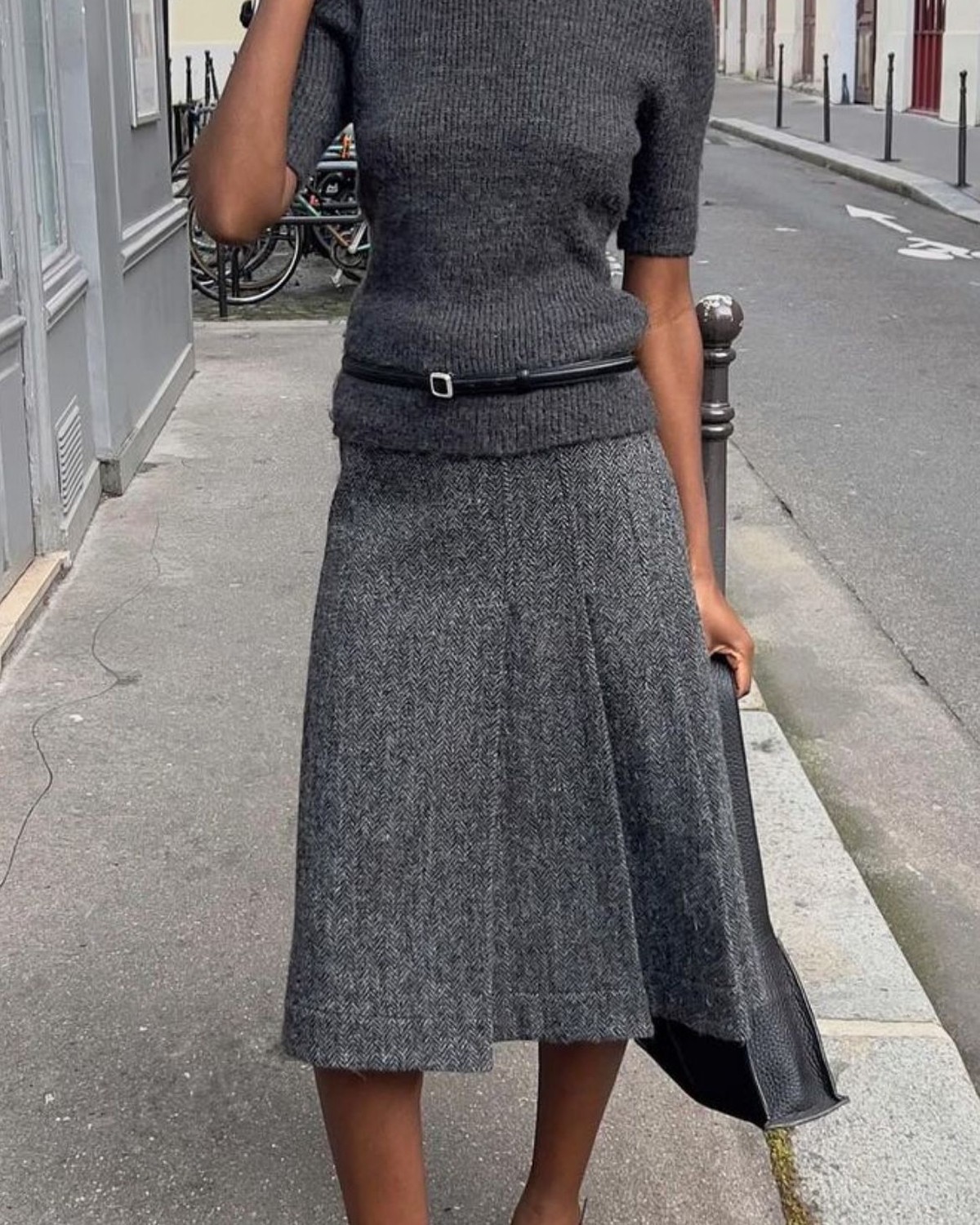
Wool midi skirt: A 1947 Silhouette in Three Moods
This wool midi skirt edit compares clean wool-blend shapes, asymmetric cuts, and more detailed hems to help you choose a proportion that feels like you.
The Long Line Returns
In 1947, Christian Dior presented the “Bar” suit in Paris, a fitted jacket with a long pleated black wool skirt. The Victoria and Albert Museum places the suit within Dior’s New Look, a silhouette that pushed back against wartime clothes with a longer, fuller line. I like that the skirt carried so much of the idea. It was not just what the jacket sat above, it was the movement and proportion that made the look read as a whole.
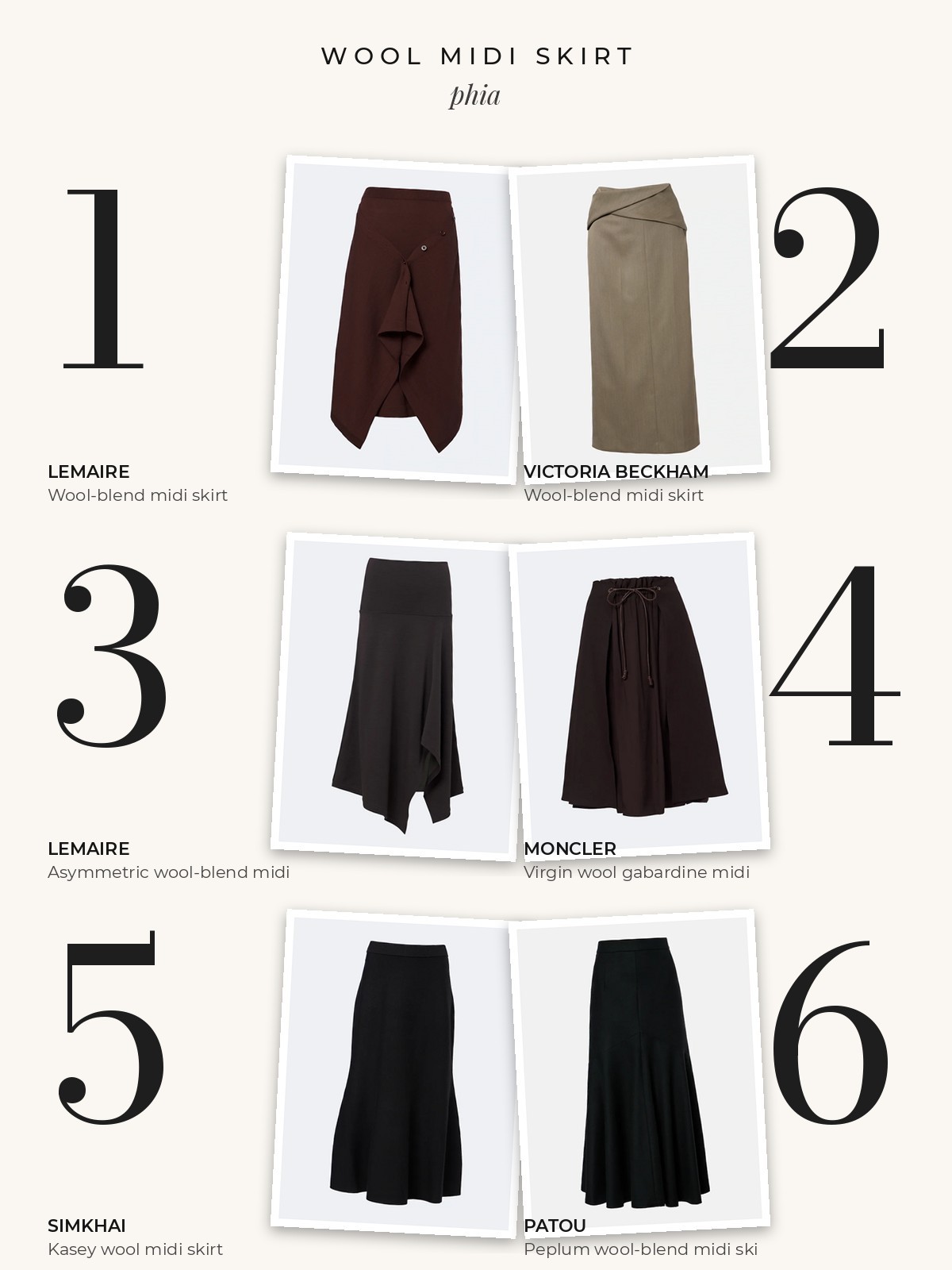
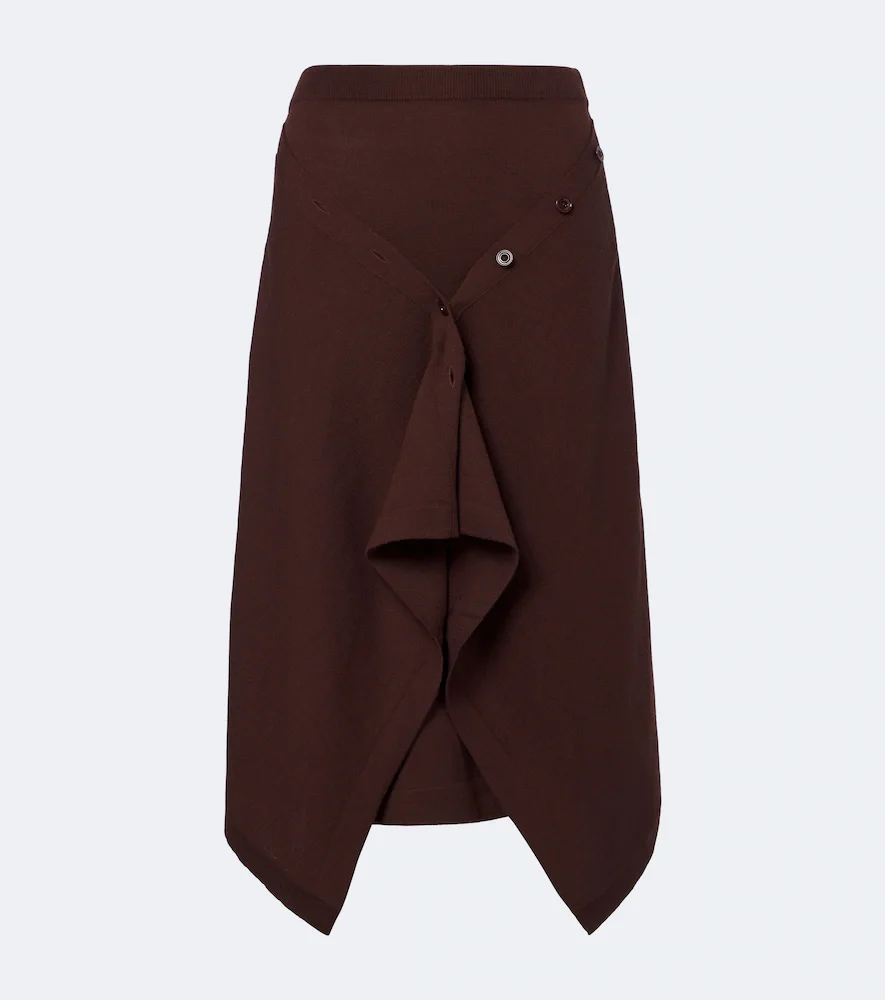
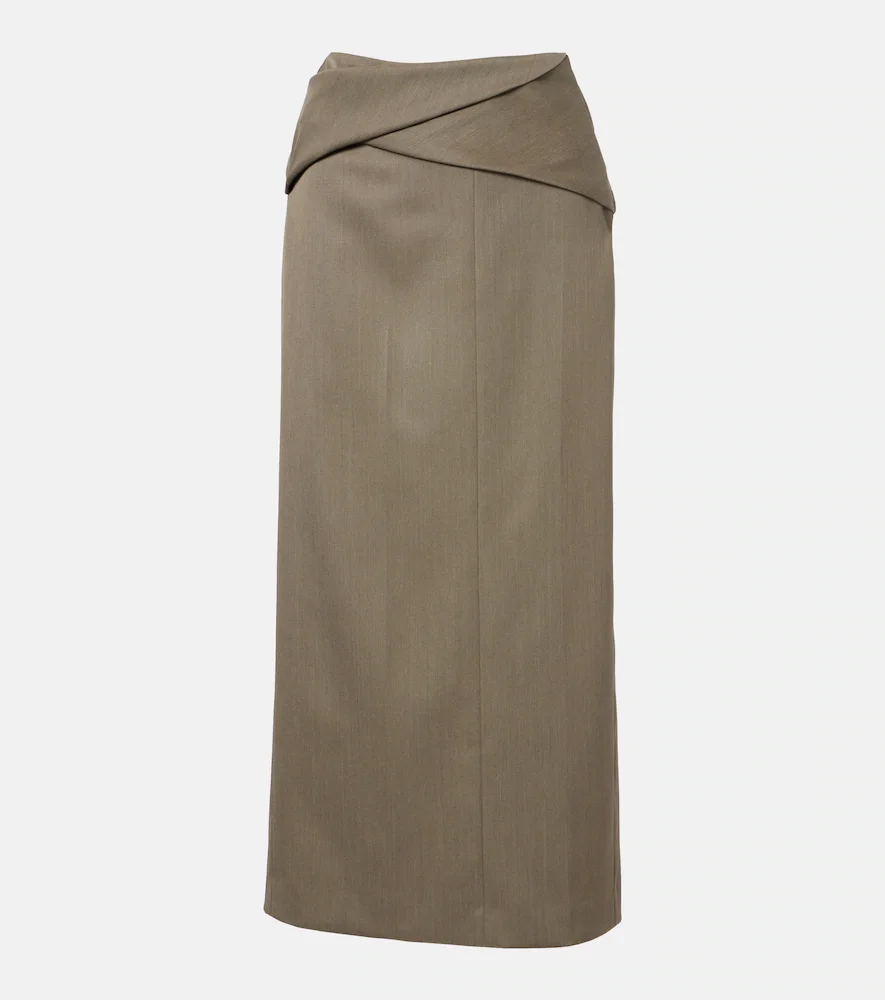
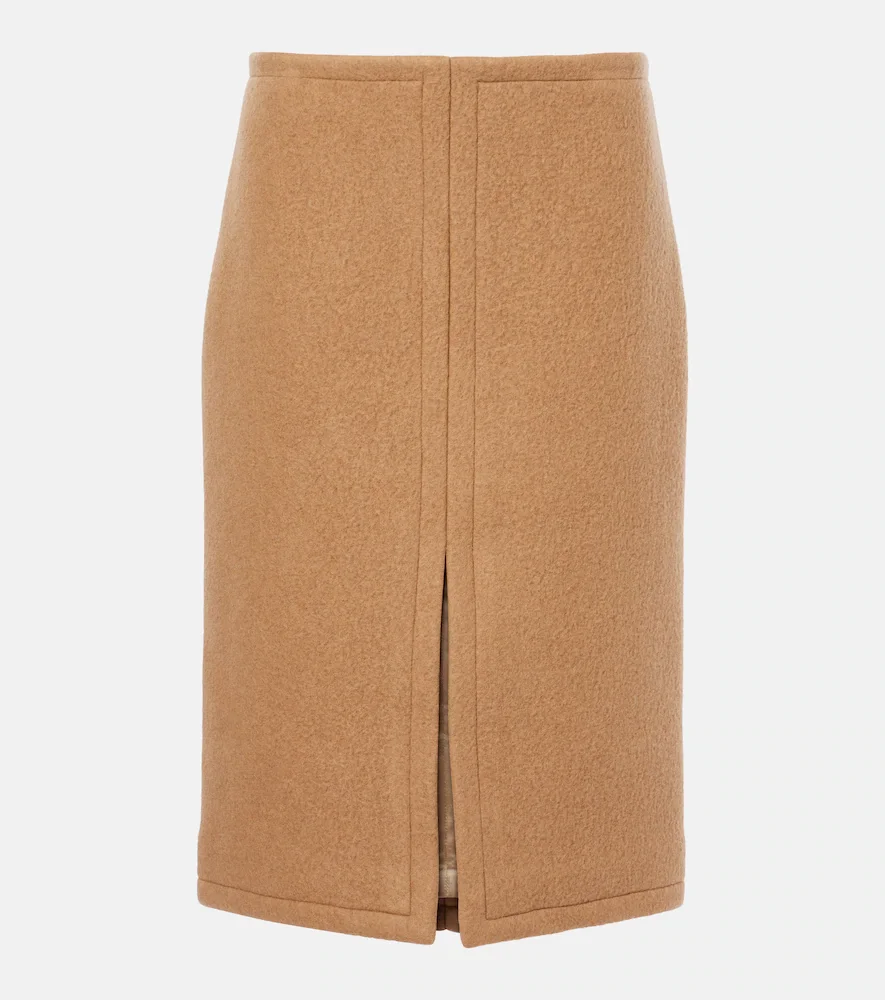
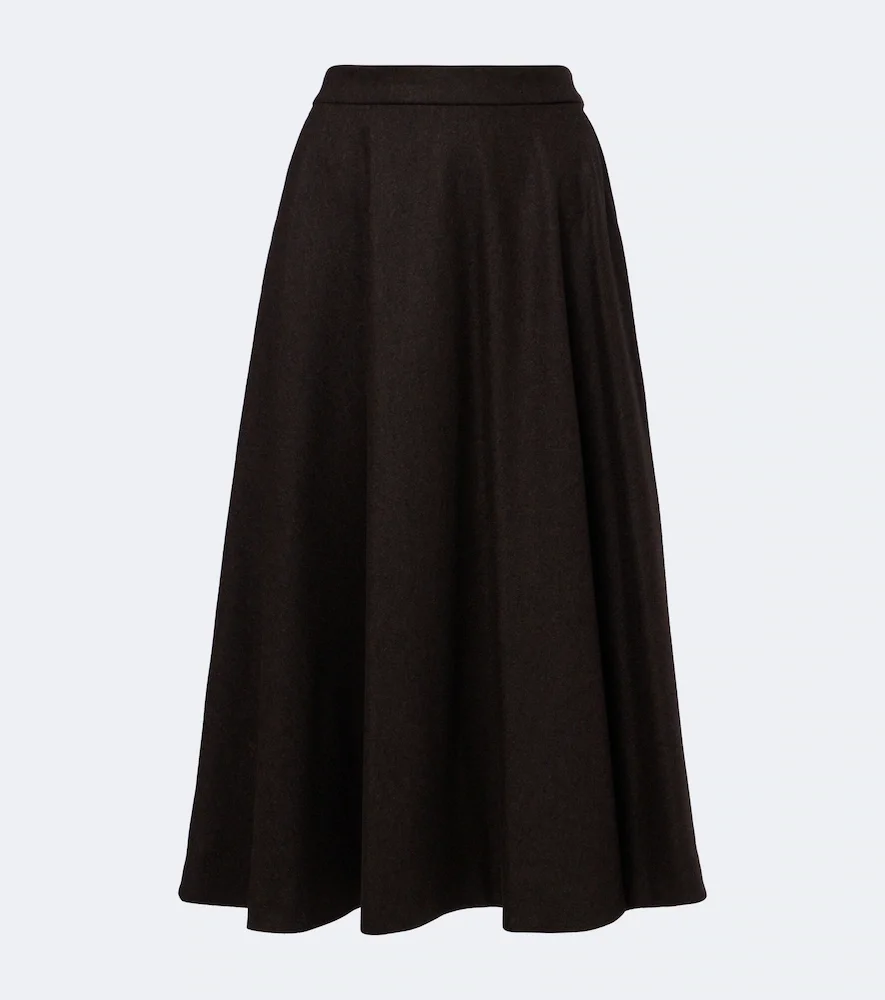
A wool midi skirt can make a similar kind of decision in an everyday wardrobe, but it does not need the drama of a full couture silhouette. This first group gives four ways in: Lemaire and Victoria Beckham both offer wool-blend midis, Dries Van Noten goes to wool, and ’S Max Mara keeps the shape in the same material family. I would start with Lemaire if I wanted the quietest line, then compare Victoria Beckham for another wool-blend option. Dries Van Noten and ’S Max Mara make sense when the fabric itself is the part I want to notice.
For a tucked shirt, I would keep the top close enough that the skirt remains the main shape. A fine knit or a short jacket can meet the length without adding another long layer. Before choosing, check the waist placement and hem against the shoes you already reach for. A midi can feel different with a flat shoe than with a boot, and the useful question is whether the whole line feels balanced from shoulder to hem.
Asymmetry and Straight Lines
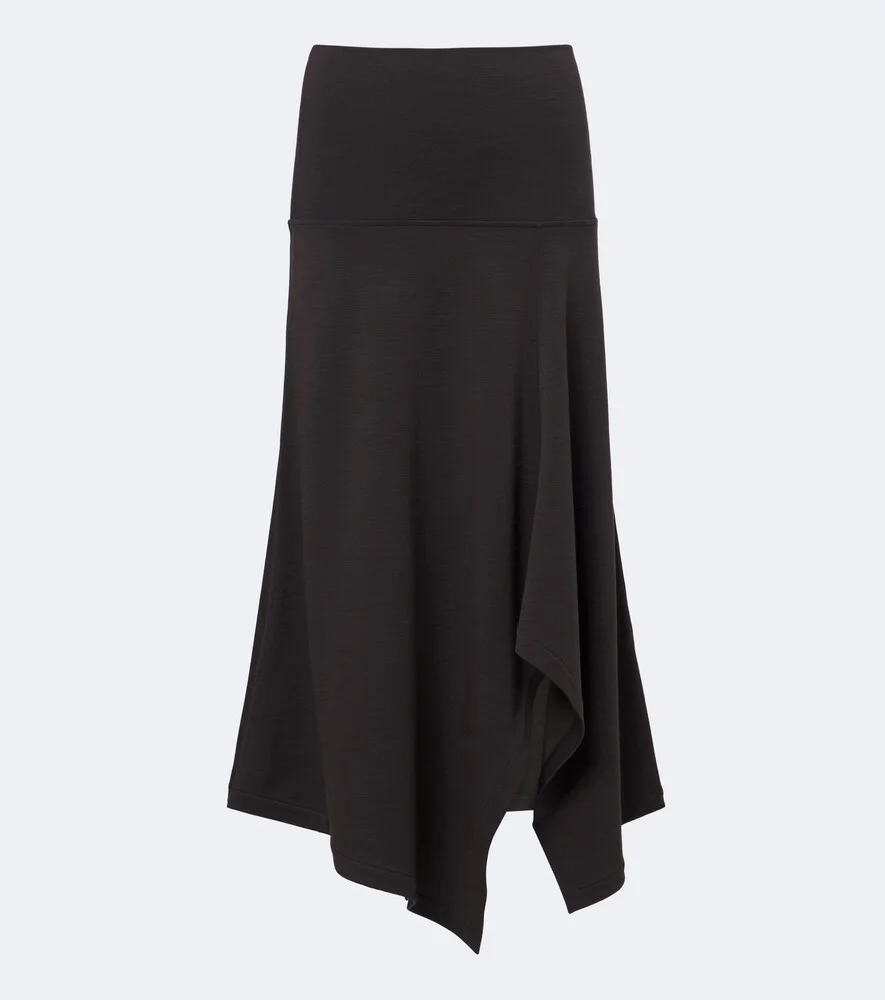
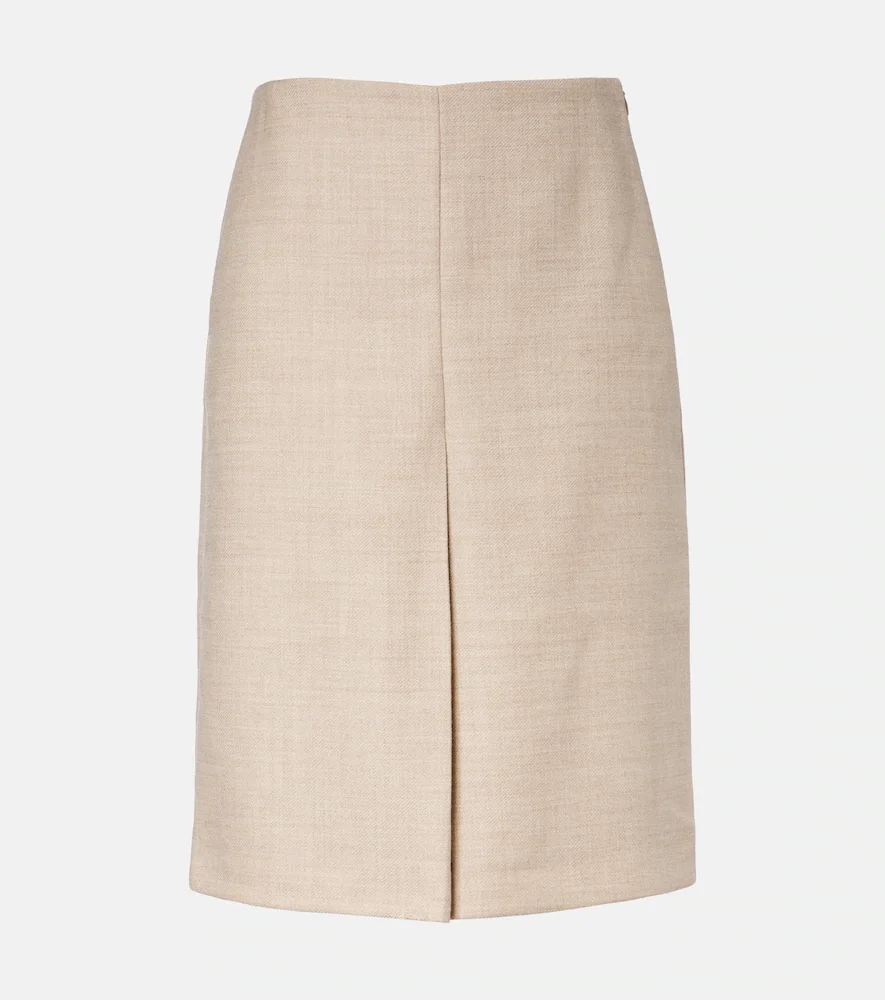
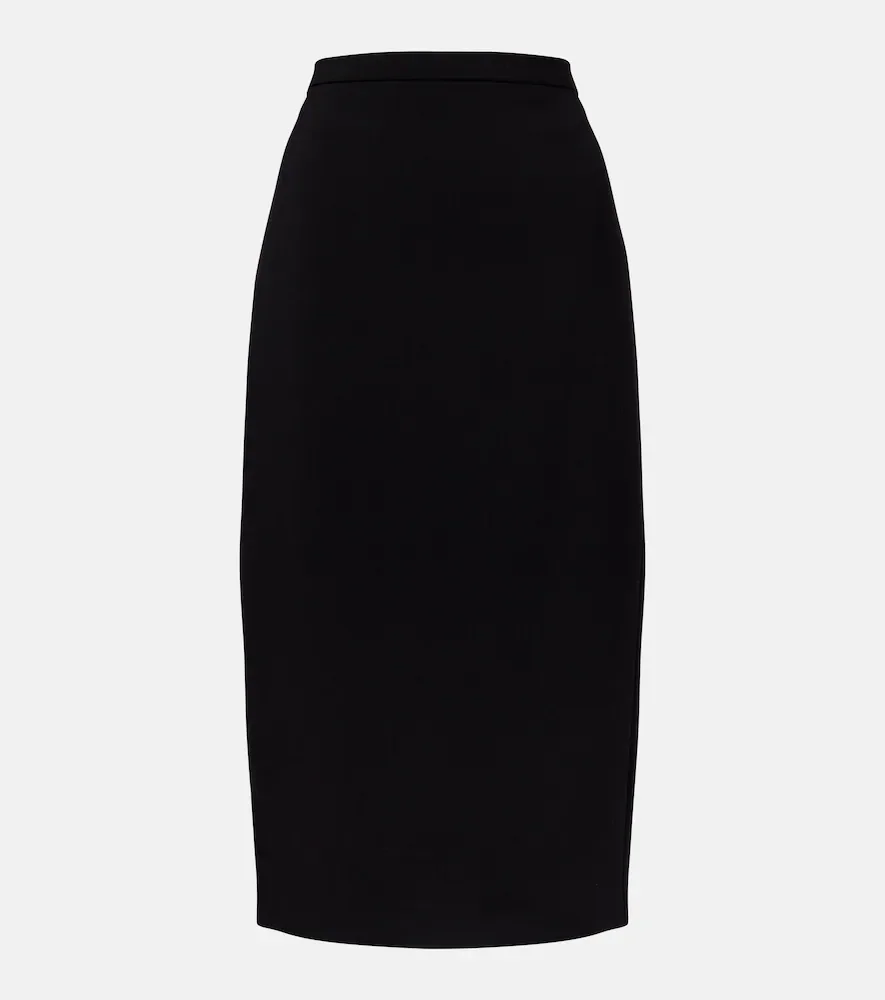
A small shift in the hem can change the whole reading of a wool midi skirt, so I would compare the Lemaire Asymmetric wool-blend midi skirt against the straight-line options before choosing. Moncler’s virgin wool gabardine midi gives the group a more uniform fabric name, while Joseph’s Duggan virgin wool midi and Max Mara’s Otre wool midi keep the focus on the classic length. These are useful names to compare, not just labels: asymmetric, gabardine, virgin wool, and Otre each tell you what detail to inspect on the product page.
I would wear the Lemaire shape with a simple tucked tee or a compact sweater, letting the angled hem do the visual work. The Moncler version could sit under a neat jacket, while the Joseph and Max Mara skirts give a straighter route for a button-down or a soft blouse. Keep the top hem or waistband clean so the skirt does not have to compete with a second focal point.
Before deciding, check the waist closure and the exact length, then imagine the hem with your most-used shoe. What I would skip is choosing an asymmetric cut only because it looks unusual in a product image. If the angle lands awkwardly against your coat or boots, the cleaner straight skirt may be the more useful choice.
Pinstripes, Peplums, and Shape
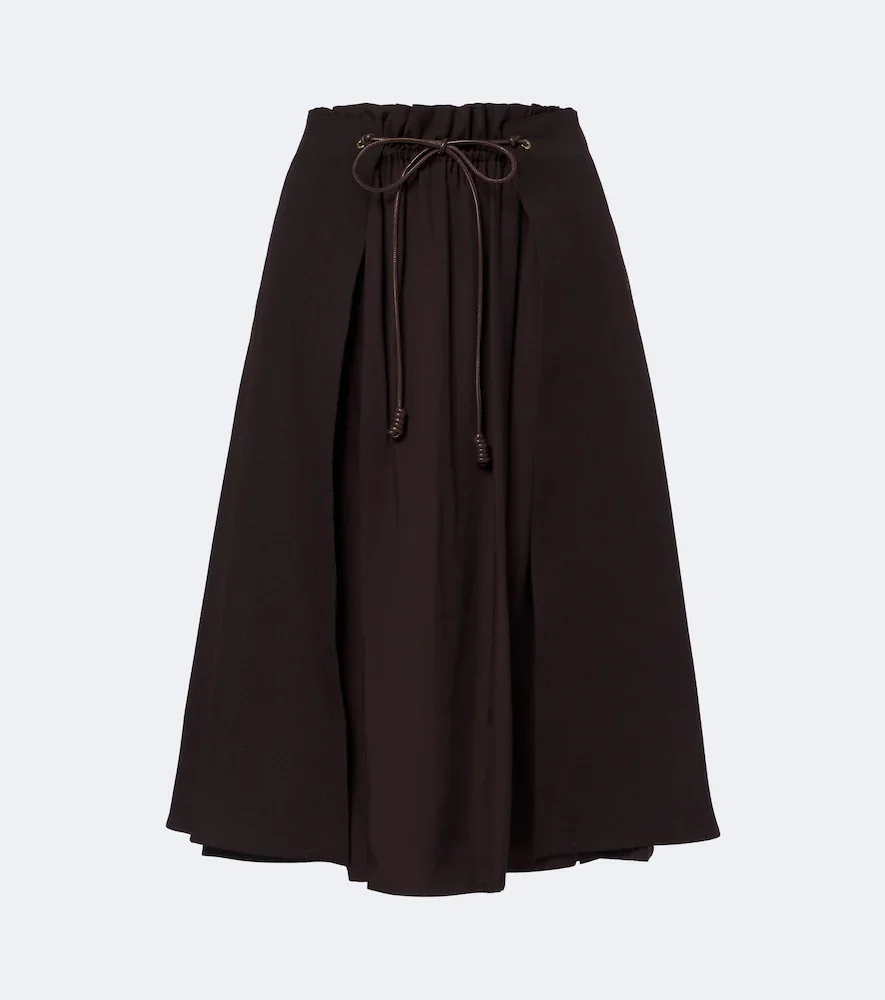
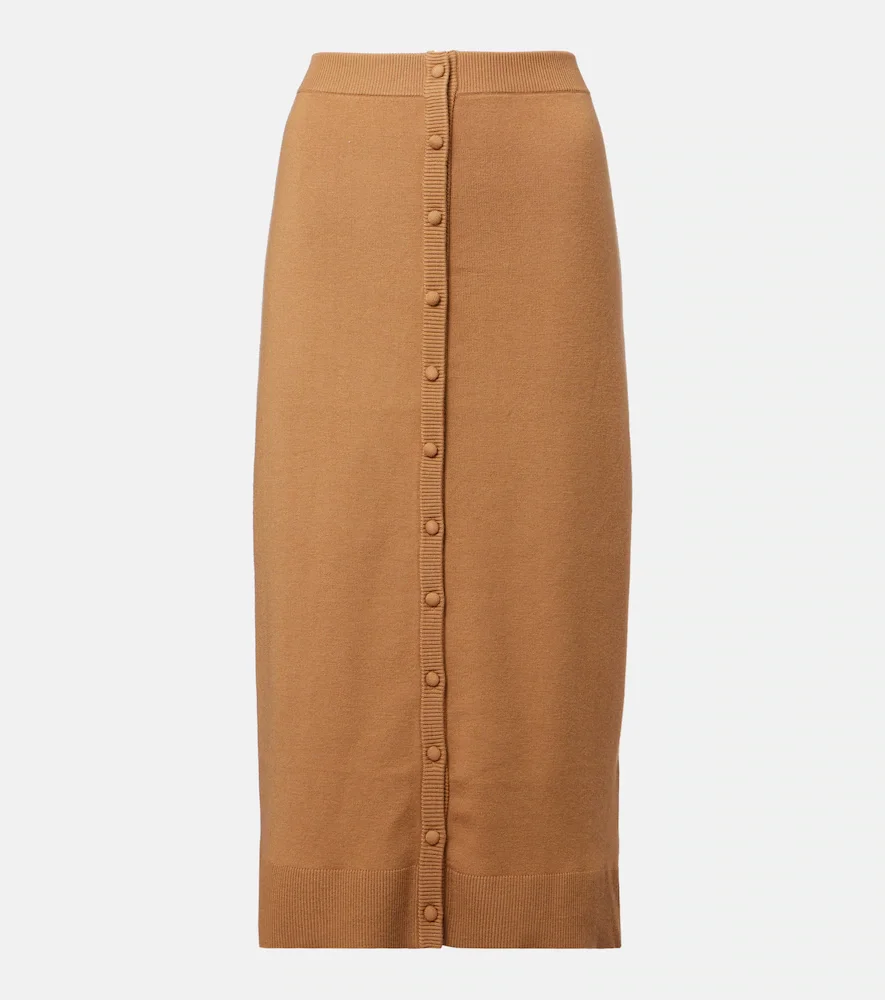
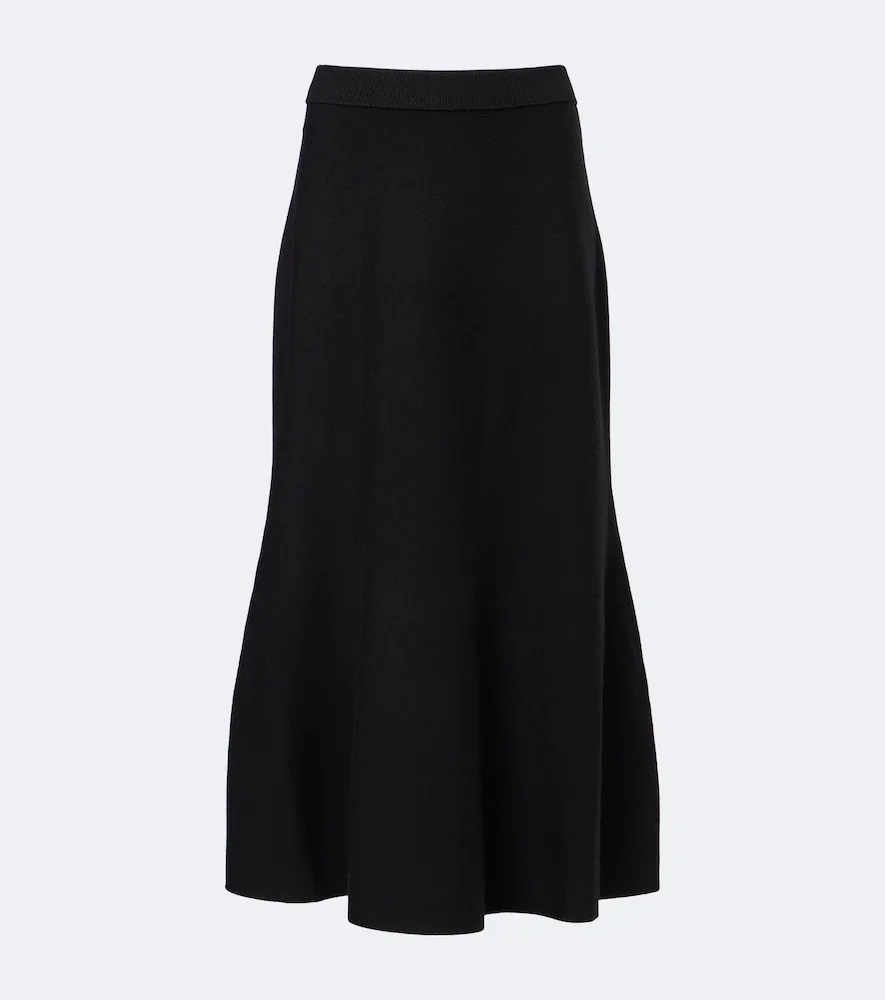
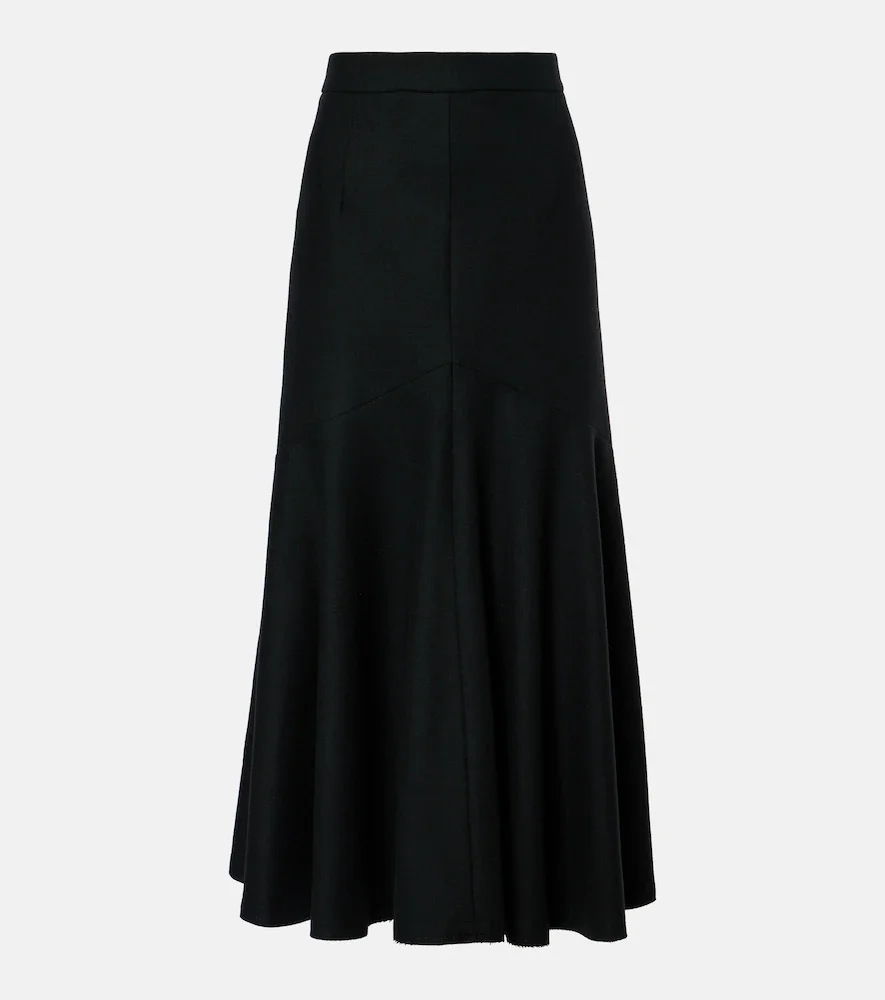
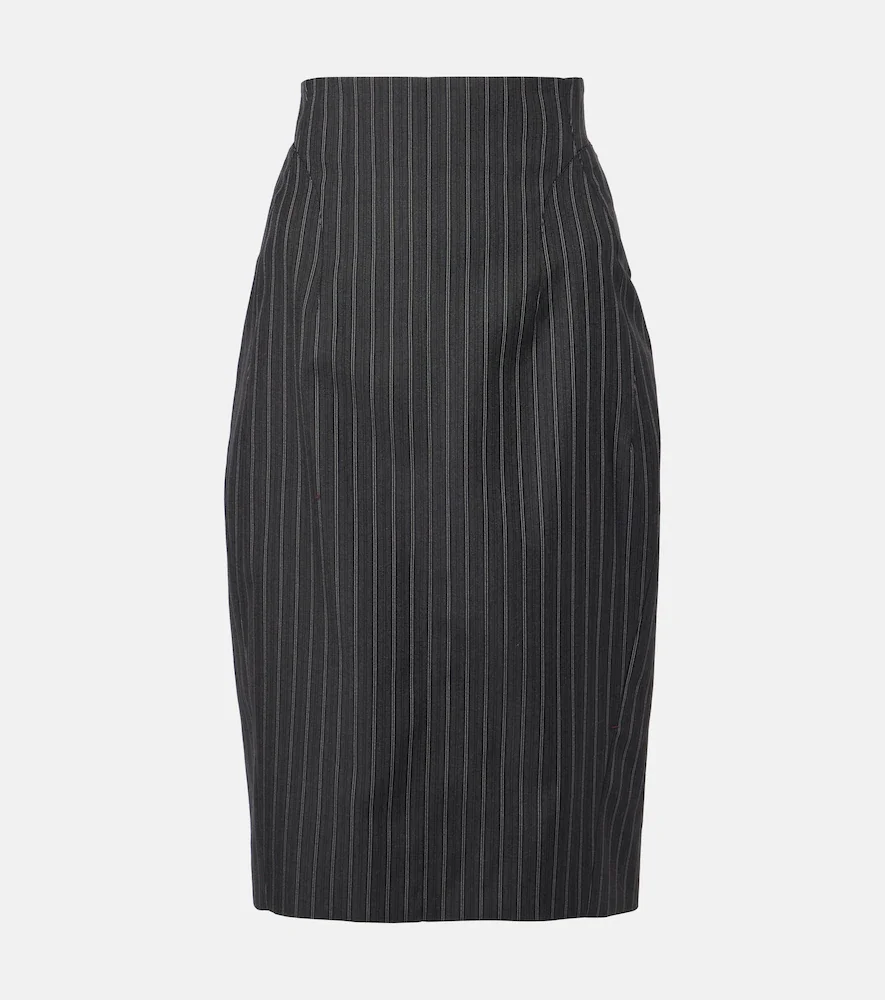
The details in this last group are easier to judge in motion than by name alone. Victoria Beckham returns with a wool-blend midi, Simkhai’s Kasey wool midi gives the section another named silhouette, and Patou’s Peplum wool-blend skirt brings a hem detail into the conversation. Mugler’s Pinstripe wool-blend midi adds a pattern, so the eye has one more line to follow. Together, these make the wool midi skirt feel less like one fixed uniform and more like a choice between texture, shape, and pattern.
I would keep a pinstripe with a quiet top, while a peplum hem could be balanced by a plain knit tucked in lightly. The Victoria Beckham and Simkhai options can take a softer blouse if the rest of the outfit stays uncomplicated. Check the product measurements against a skirt you already like, especially the waist and length, and note where any peplum or asymmetric detail begins.
What I would skip is adding a long untucked top over a skirt whose cut already changes at the hem. It can hide the detail and shorten the line at once. A simple top gives the fabric and silhouette room to speak.
Make the Hem Your Starting Point
I would choose the shoe first, then decide whether I want the skirt to stay straight, tilt at the hem, or bring in a stronger detail. That gives this wool midi skirt edit a practical order: proportion, fabric name, then the extra flourish.
Dior’s 1947 “Bar” suit is a useful historical echo, not a rule to copy. I would take the long line and adapt it with one clear shape and enough room for the hem to move. I would also check whether the skirt works with both a low shoe and a boot, rather than styling it for only one occasion.