The modern flat iron traces back to a 1909 patent, and the good ones still come down to plate quality and a little restraint. Here are the straighteners I would look at, the heat protectants that go on first, and the smoothing serums that finish the job.
A Flat Iron Has a Longer Past Than Your Morning Routine
Hot metal and hair have been together a long time. Marcel Grateau, the French hairdresser, introduced heated implements like hot combs in the 1870s, and in 1909 Isaac K. Shero patented what is usually called the first straightener, two irons heated and pressed together. Madam C. J. Walker, who began her own line in Denver in 1905 and is recorded by Guinness as the first woman to become a self-made millionaire in America, made straightening part of a wider scalp-care system. So when I pick up a flat iron, I am holding a very old idea in a much smarter shell.
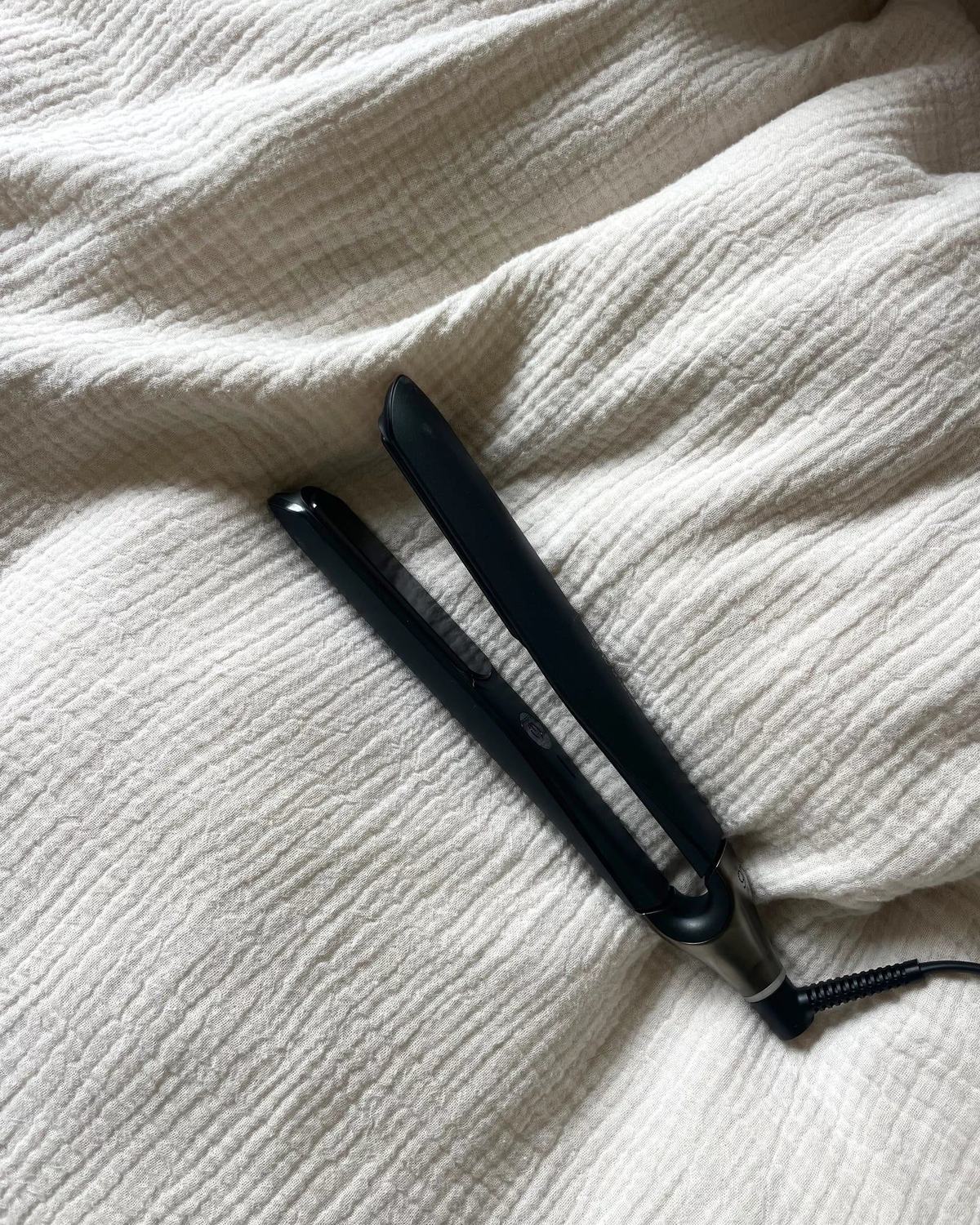
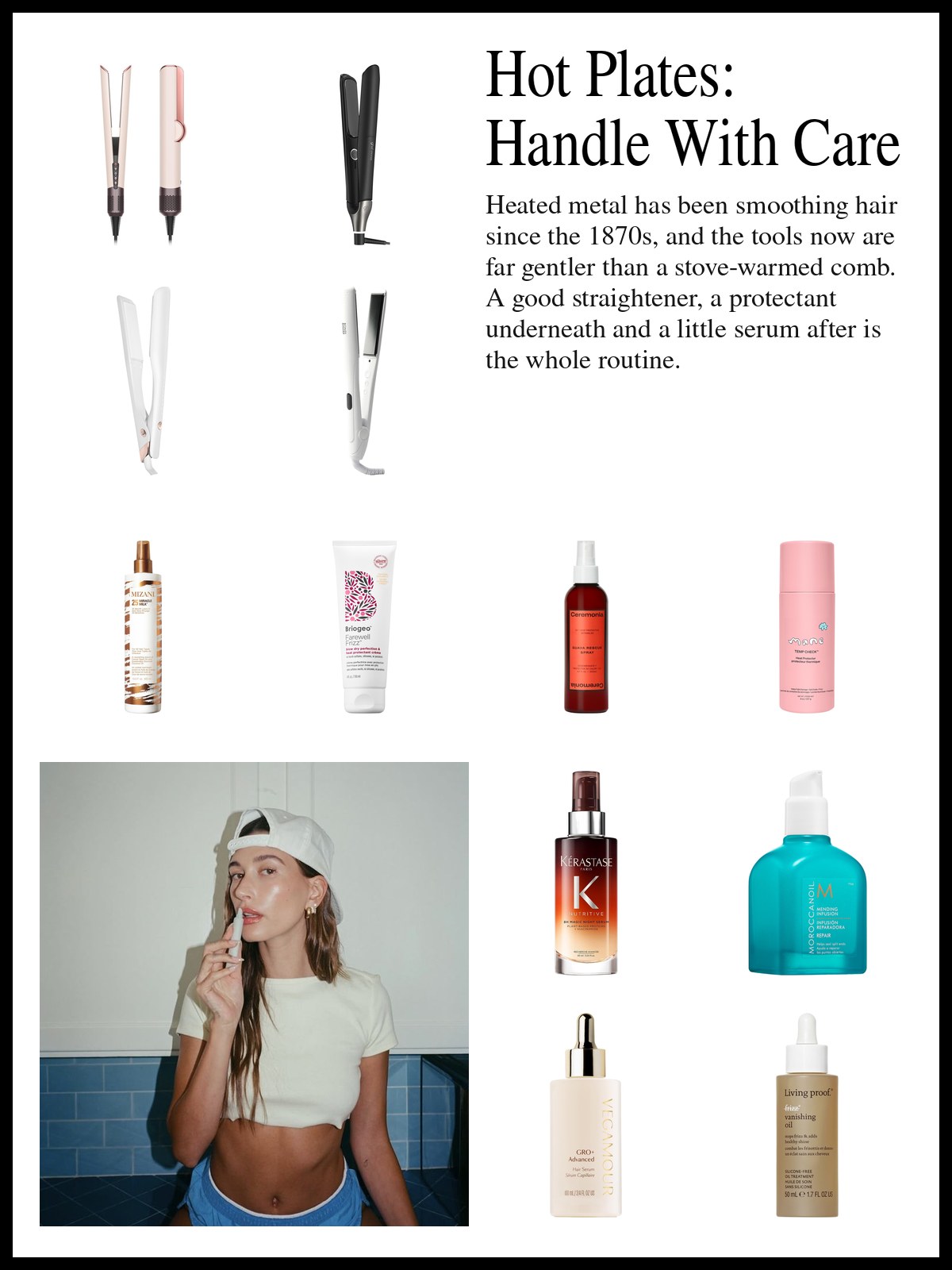
What separates the good ones is mostly plate quality and control. Dyson's Airstrait is the odd one out, since it dries and straightens with air rather than hot plates, and it is made for use on wet hair. ghd's Chronos Styler in the one-inch size is the classic all-rounder for most lengths. T3's Lucea is wider, at an inch and a half, so it suits long, thick hair where a narrow plate means endless passes.
BondiBoost has aloe-infused ceramic plates, Sutra Beauty's Infrared iron is a one-inch model, and Mane's Three Way is a multi-use iron for when you want one tool to do more than one job.
Pick the plate width to match your hair length, not your mood. Wide plates glide down long hair in one go, while a slimmer one gets closer to the roots and makes flipping ends and small curls easier. If you only want one tool, choose the size you will honestly use every week.
Flat irons

Airstrait Straightener
Dyson
$499.99

Chronos Styler 1" Flat Iron
ghd
$251.3

Lucea 1 ½” Professional Straightening and Styling Iron
T3
$199.99

Flat Iron Hair Straightener with Aloe-Infused Ceramic Plates
BondiBoost
$139

The Three Way Multi-Use Flat Iron
Mane
$118

Infrared Flat Iron, 1 inch
Sutra Beauty
$148.75

SinglePass StyleMax Professional 1" Flat Iron
T3
$179.99

Platinum + White 1" Styler
ghd
$319
The layer that goes on before the heat
Every hot tool I own gets a layer of protectant underneath, and I have learned to be a little fussy about it. The wrong texture leaves hair either stiff or greasy, and both make you reach for more heat than you need.
Mizani's 25 Miracle Milk is a leave-in conditioner with a heat-protecting job, and I like it on thick or curly hair that needs slip before any tool goes near it. Briogeo's Farewell Frizz is a heat protectant cream made for blow-dries. Ceremonia's Guava Rescue is a spray, easy to mist on damp lengths and comb through.
Mane's Temp Check is an anti-frizz heat protectant. Kérastase's Nutritive styling cream is for dry hair that drinks up whatever you give it, and Bounce Curl's Thermal Guard is a weightless spray that suits fine strands and waves.
The test is simple. Work your protectant through with a comb, let the hair dry fully, and only then bring in the heat. Damp hair meeting hot plates is where most of the sizzle, and most of the damage, happens. A dry section should glide, with no steam and no hiss. I also section hair into four parts before I start, so nothing is ironed twice and the protectant has had a chance to settle in.
Heat protectants

25 Miracle Milk Heat Protectant Leave-In Conditioner
Mizani
$34.4

Farewell Frizz Blow Dry Perfection Heat Protectant Cream
Briogeo
$26

Guava Rescue Hair Heat Protectant Spray
Ceremonia
$30

Temp Check Anti Frizz Heat Protectant
Mane
$26

Nutritive Heat Protecting Styling Cream for Dry Hair
Kérastase
$52

Thermal Guard Weightless Leave-In Conditioner Spray with Heat Protectant
Bounce Curl
$28

Balm D'Or Nourishing Heat Protectant Hair Cream
Oribe
$48

Hot Toddy Heat Protectant Mist
Drybar
$31
Serums for the smooth part
Once the heat is done, I want shine and softness without a greasy finish. Serum does that job, and a little goes a very long way, about a drop or two warmed between the palms and smoothed over the ends first.
Kérastase's Nutritive 8H Magic Night serum is the one for dry hair that needs something richer overnight. Moroccanoil's Mending Infusion is a styling serum for the ends, and it earns its place after a long week of styling. Living Proof's No Frizz Vanishing Oil is a light finisher that disappears into hair, which makes it a friend to fine textures that a heavier product would flatten.
Virtue's Damage Reverse is a serum for hair that feels rough or worn, and Pureology's Dream Healer is a serum made for damaged lengths. Vegamour's GRO+ is a different animal, a serum made for thinning hair, so it is a scalp product and not one for your ends.
What I would skip: oiling the hair before you press it. Oil on the surface can fry under hot plates, so keep serums for after the last pass, and keep them off the roots unless the product is made for the scalp. If hair still looks flat after a press, a rinse of clarifying shampoo the next wash usually beats adding more product on top.
Smoothing serums for after

Nutritive 8H Magic Night Hair Serum for Dry Hair
Kérastase
$64

Mending Infusion Styling Hair Serum
Moroccanoil
$32

GRO+ Advanced Hair Serum for Severe Signs of Thinning
Vegamour
$198

No Frizz Vanishing Oil
Living Proof
$36

Damage Reverse Hair Serum
Virtue
$38

Strength Cure Dream Healer Serum for Damaged Hair
Pureology
$49

No. 6 Bond Smoother
Olaplex
$32

Rapid Repair Bond Builder+ Finishing Oil
Bondi Boost
$32
Keeping the routine gentle
If the routine feels like a lot, shrink it to three steps: protect, press, finish. Let hair dry completely, keep sections small, and make one slow pass rather than five quick ones.
Turn the temperature down a notch from what you think you need, then raise it only if the hair refuses. Finer hair usually smooths at a lower setting than thick hair, and you will know you have gone too far when the ends feel rough after the tool cools. Give strands a break between styling days, with a loose braid or a clip instead of heat on the off days, and let a good conditioner do the quiet work in between. A silk pillowcase and a loose braid at night keep a smooth style going a day longer, which means fewer trips back to the hot plates and more mornings you can skip the tool entirely. And if you notice breakage or sudden thinning, that is a conversation for a doctor or a good stylist, not a shopping list.