The first thing I do with any ai stylist is hand it my most awkward piece and see what comes back. Phia works as an ai stylist in two places, inside ChatGPT with the Phia plugin and inside the app where your closet lives. Here is what each half does well and where taste still has to be yours.

AI Stylist: What It Does Well and Where You Still Need a Human
The test I give every ai stylist
Confession #1: I do not judge an ai stylist by how pretty its demo is. I give it the piece I never know how to wear, a printed skirt or the boots that only seem to work with one pair of jeans, and see what comes back.
A good answer is specific. It names things that go with the piece, it explains the pairing in a sentence, and the clothes are real. A bad answer is a paragraph of adjectives about effortless layers.
That test is why I think there are really two halves to an ai stylist, and why they are better apart than blended.
Install Phia for free on iPhone, or add the Chrome extension.
The half that lives in ChatGPT
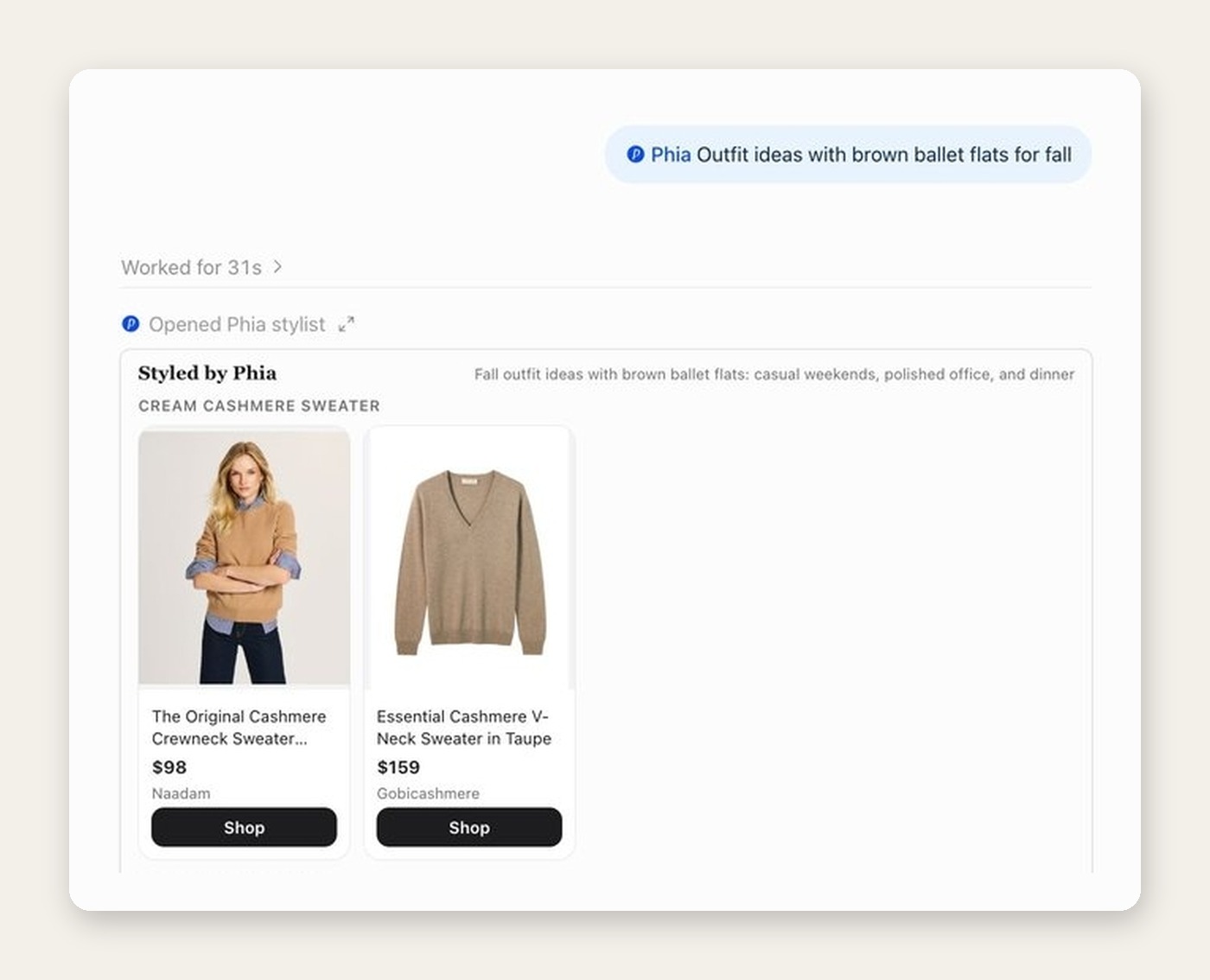
Add the Phia plugin in ChatGPT, start a message with @Phia, and you can ask how to style a piece. When I asked for outfit ideas with brown ballet flats for fall, I got a card titled Styled by Phia, grouped by pairing, with real products and the stores they come from, plus links to Phia's own edits so the advice comes from somewhere you can read.
Tap Shop and the product opens on the retailer's own site, where you buy it. Phia does not take payment or place orders in chat, and it does not need an account or personal information to answer. Prices come from the stores and can change, so read anything you see as a snapshot.
The chat is quick, public-facing and good at what goes with this. It does not know your closet, which is the other half.
The half that knows what you own
In the Phia app, the closet fills itself from Gmail order emails, your camera roll and checkouts through the extension. Then Style analysis reads it and describes your style back in a short paragraph, with your top colors, vibes and top brands, plus a running count of brands, items and outfits.
That is the briefing a human stylist would ask for on day one. It also means the suggestions can be about you. Styling rules, up to ten of them, let you add things like never wearing blue with black, and Phia keeps them in mind.
For the full setup, How the Phia Digital Closet Works is the long version.
Install Phia for free on iPhone, or add the Chrome extension.
Outfits on demand
In the Outfits tab, Generate outfit builds complete looks from your own closet, and Style from one item builds a full outfit around a single piece. Suggested outfits for you sit at the top, ready to save with a tap, and in the For you tab Styled by Phia sends a new idea every day once you have five tops and five bottoms.
Add your city and the outfit of the day can factor in your local weather, which spares you the linen shirt on the first cold morning of October.
What I would skip: asking it to buy something for you. In chat it finds, compares and styles, and you decide.

Where the human part still matters
An ai stylist will not replace taste. It replaces the morning scramble, the forgotten pieces and the duplicate purchases, which is most of what wears us down about getting dressed. A human stylist is still better at occasions with stakes, like a wedding or a photo shoot, and at telling you something you did not want to hear.
When it does point to a gap, Phia is a shopping assistant first. It compares prices across more than 220,000 sites, new and secondhand, and you can try a piece on virtually as a vibe check rather than a size guide.
To try both halves, add the Phia plugin in ChatGPT and download the free Phia app. I wrote about the closet-first version in AI Stylist App: Outfit Ideas From Your Own Closet.