How to read a bra size properly, when a bralette is enough, and the soft layers worth owning for the end of the day.
Bras, Bralettes and What You Sleep In
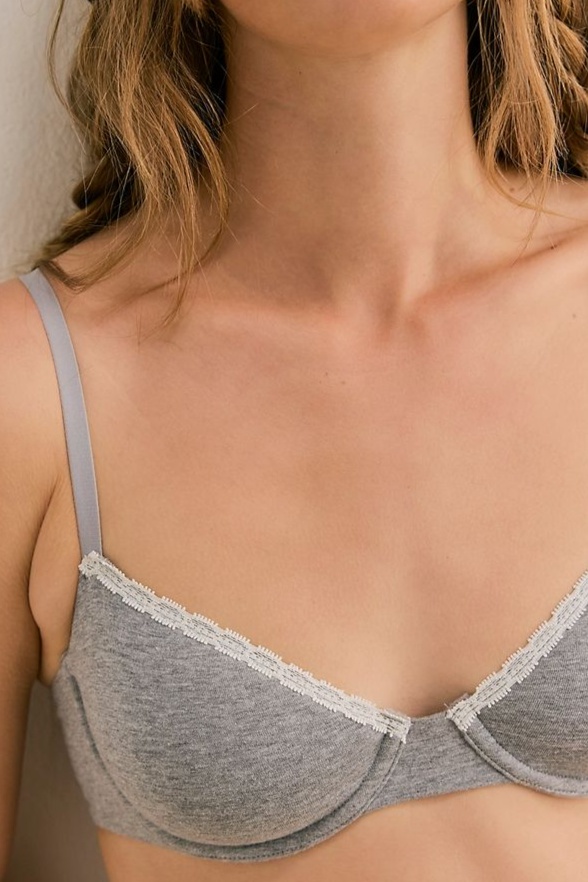
Band first, cup second
Most badly fitting bras are the right cup letter on the wrong band. The band does around eighty per cent of the support, so if it rides up your back, it is too big, no matter how the cups feel. Measure snugly under the bust for the band and around the fullest part for the cup, then take the difference. A band should be firm enough that you can just fit two fingers underneath on the loosest hook, which leaves room to tighten as it stretches over the following months.
Structured bras and everyday support

EVERYDAY COTTON ULTIMATE TEARDROP PUSH-UP BRA | BUBBLE GUM
SKIMS
$64

24/7® Classic T-Shirt Bra
ThirdLove
$74

Glacé Triangle Bra in Buff
Negative Underwear
$75

FITS EVERYBODY LACE UNLINED SCOOP BRA | SLATE TONAL
SKIMS
$54

24/7® Classic Unlined Minimizer Bra
ThirdLove
$78

Sieve Racerback Bra in Buff
Negative Underwear
$70
Sister sizing, and why it matters
Cup volume is relative to band size, so a 34C and a 32D hold roughly the same amount. That pair is called a sister size, and knowing it doubles your options when a style runs small or a size is out of stock. Going down a band means going up a cup to keep the same volume, and vice versa. If a bra fits in the cup but the band is loose, do not size the cup down; drop the band and raise the cup, and the whole thing will sit correctly.
Bralettes and unlined shapes


What to wear at the end of the day
Sleep and lounge layers get chosen carelessly and then worn more hours than anything else in a wardrobe. The things that matter are fibre and seam placement. Washable silk and modal move with you and stay cool; heavy cotton jersey traps heat if you run warm. Look at where the seams fall, since a seam across the shoulder or under the arm is what wakes people up. A short set suits warm sleepers, a long set suits cold rooms, and a sarong or robe covers the bit in between.
Silk, modal and sleep layers


Our honest take
If you take one thing away, fit the band before the cup and buy it on the loosest hook. Every bra stretches, and starting on the tightest hook means the band is already at the end of its useful life. Beyond that, most people need fewer bras and better ones: two well fitting everyday styles outlast six that nearly fit. For sleep, spend on fibre rather than detail, because seam placement and breathability are what you will actually notice at three in the morning. Replace the two you wear most every year or so, and treat that as maintenance rather than shopping.