How to use CeraVe Acne Foaming Cream Cleanser: a dime-size amount on damp skin, rinse well, start once a day, sunscreen after. Plus the shower question.
CeraVe Acne Foaming Cream Cleanser: How to Use It
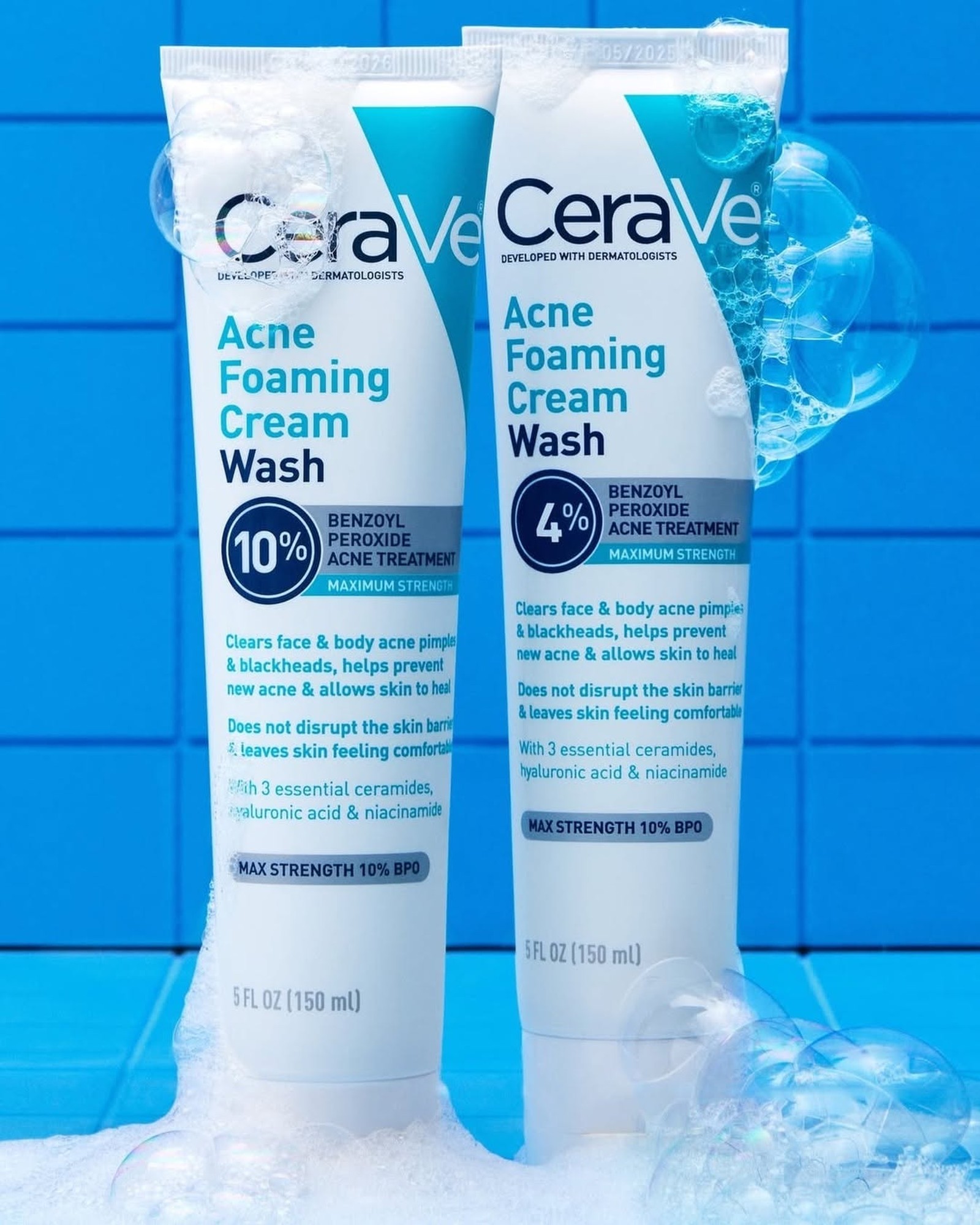
CeraVe Acne Foaming Cream Cleanser, and the benzoyl peroxide behind it
CeraVe Acne Foaming Cream Cleanser has 4% benzoyl peroxide as its active. You massage a dime-size amount onto damp skin, avoid the eye area, rinse well, and start with one wash a day. It is a wash, so contact is brief. The ingredient itself has a longer story, and it starts in Toronto in 1962.
In June 1962, in Toronto, a dermatologist named William E. Pace stood up in front of the Canadian Dermatology Association and presented benzoyl peroxide as an acne treatment. He had spotted it as the active ingredient in an antiseptic ointment, and the paper came out in 1965. A doctor reading a label and wondering what was doing the work. More than sixty years later, it is still the ingredient on the front of the tube.
CeraVe started in 2005 with a group of dermatologists who wanted skin care that restores the skin barrier, launching with the Moisturizing Cream, Moisturizing Lotion and Hydrating Facial Cleanser. CeraVe cleansers are the quiet start of a barrier-minded routine. The brand builds everything around three essential ceramides, and L'Oréal bought it in 2017 and put it alongside La Roche-Posay and Vichy. CeraVe Acne Foaming Cream Cleanser is that philosophy applied to a hard active. The active is 4% benzoyl peroxide, the formula also contains ceramides, niacinamide and hyaluronic acid, and the brand says it is non-comedogenic and fragrance-free. It is a wash, so the contact is brief, which is the point.
The trick is to choose the job, then the format. Start with the Acne Foaming Cream Face Cleanser if benzoyl peroxide is the thing your skin responds to. The Acne Control Cleanser uses salicylic acid instead, and the Salicylic Acid Acne Treatment Control Gel stays on the skin after you wash. Acne Clay-to-Foam is the one with a clay texture, Renewing SA Cleanser is another salicylic option, and the BHA Exfoliating Toner with Salicylic Acid sits at the next step. The Resurfacing Retinol Face Serum is the evening partner for some skin, and Blemish Barrier Patches cover single spots.
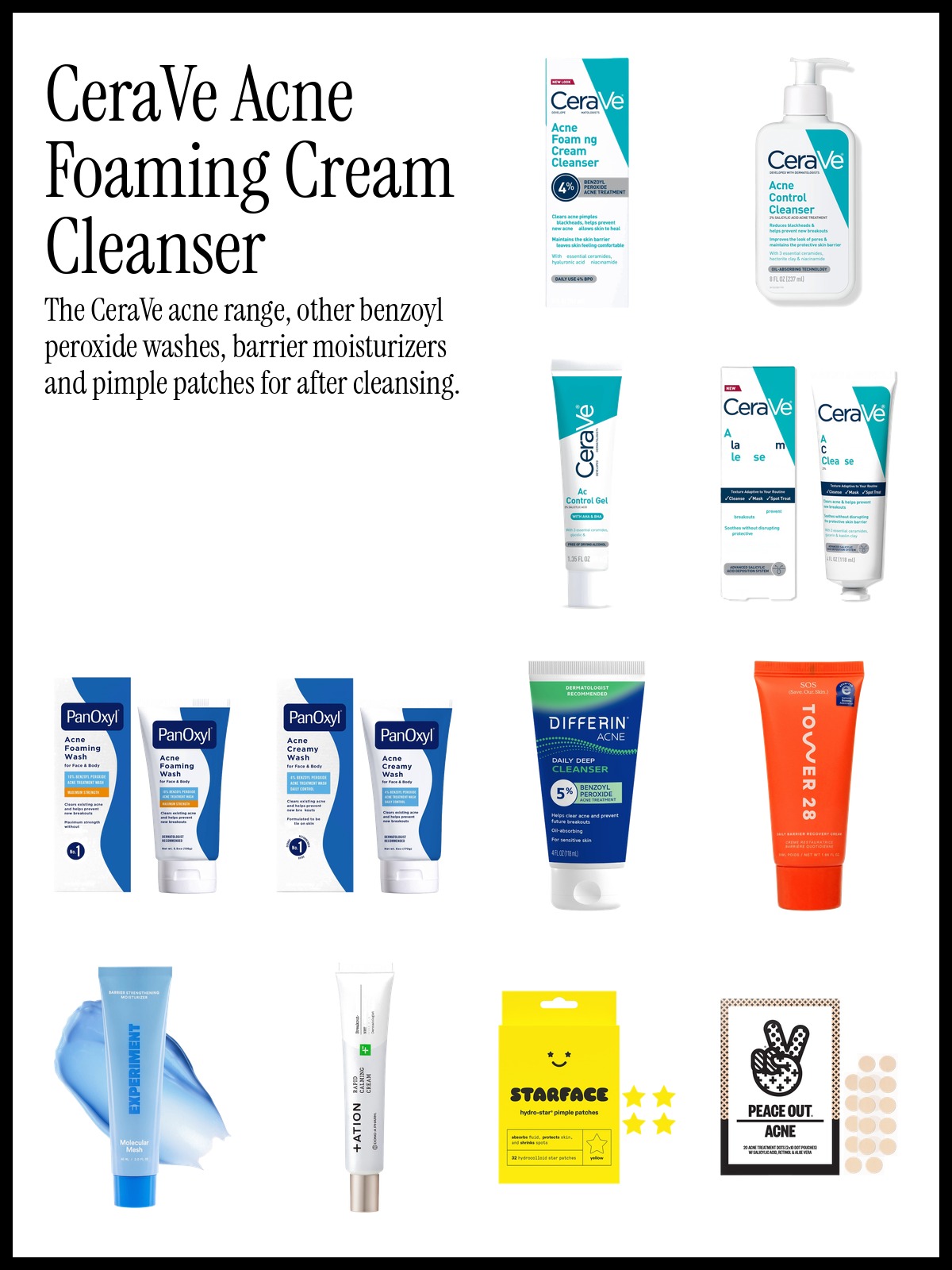
The CeraVe acne, blemish and resurfacing formulas

Acne Foaming Cream Face Cleanser, Acne Treatment Face Wash
CeraVe
$17.99

Acne Control Cleanser
CeraVe
$17.99

Salicylic Acid Acne Treatment Control Gel
CeraVe
$15.79

Acne Clay-to-Foam Facial Cleanser
CeraVe
$17.99

Blemish Barrier Patches
CeraVe
$9.99

Resurfacing Retinol Face Serum
CeraVe
$16.49

Renewing SA Cleanser
CeraVe
$15.99

BHA Exfoliating Toner with Salicylic Acid
CeraVe
$19.99
How to use CeraVe Acne Foaming Cream Cleanser, step by step
These are the directions on CeraVe's own US page for the cleanser, with the reason for each.
Step 1, amount. Squeeze out a dime-size amount. That is the amount CeraVe states for the face.
Step 2, skin. Put it on damp skin and massage gently. CeraVe's directions say damp skin, not dry.
Step 3, eyes. Keep it away from the eye area, as the label says.
Step 4, how often. Start with one wash a day, then build to two if your skin copes. CeraVe warns that excessive drying may occur, and says to cut back to once a day or every other day if dryness or peeling bothers you.
Step 5, rinse. Rinse well. It is a wash, so it comes off.
Step 6, sunscreen. If you are going outside, put sunscreen on after. CeraVe says to apply it after using this cleanser.
Step 7, fabric. Use a white towel and keep it off hair and dyed fabric. The label says benzoyl peroxide may bleach them.
CeraVe Acne Foaming Cream Cleanser, Answered
Can you use CeraVe Acne Foaming Cream Wash in the shower? CeraVe's Acne Foaming Cream Wash (10%) is the one sold for face and body, so the shower is its intended place. The 4% Acne Foaming Cream Cleanser page only gives face directions and does not mention the shower. If you use either one there, keep your face out of the direct stream and rinse well.
Does CeraVe Foaming Facial Cleanser have benzoyl peroxide? No. CeraVe's Foaming Facial Cleanser for normal to oily skin lists ceramides, hyaluronic acid and niacinamide, and no benzoyl peroxide in its ingredients. The Acne Foaming Cream Cleanser is a different product and lists Benzoyl Peroxide 4% as its active. I compared it with other foams in this Foaming Facial Cleanser edit.
Is there a CeraVe pimple cream? The Acne Foaming Cream Cleanser is cream-textured, but it is a wash you rinse off, not a leave-on cream. For a single spot, CeraVe's own wash page points to its Acne Control Gel, Acne Clay to Foam Cleanser or Blemish Barrier Patches.
Does this cleanser have ceramides as well as benzoyl peroxide? Yes. CeraVe lists Benzoyl Peroxide 4% as the active and Ceramide NP, AP and EOP among the inactive ingredients, with niacinamide and sodium hyaluronate. CeraVe also says to use one acne active at a time unless a dermatologist directs otherwise.
If benzoyl peroxide is not for you, I wrote up what salicylic acid actually does.
More CeraVe washes and gels beside the acne cleanser


CeraVe moisturizers and sunscreens to follow the wash


Acne face washes from other brands
The percentage on the tube matters more than the brand name, and a wash you can use every day beats one that leaves skin tight and sore after three. Decide on the strength first, then the texture.
PanOxyl is the best known, and it splits the choice neatly. The 10% Benzoyl Peroxide Acne Foaming Wash is the maximum version for oily skin that tolerates it, and the 4% Benzoyl Peroxide Acne Creamy Wash is the gentler, creamier one. Differin makes two: the Daily Acne Face Wash with Benzoyl Peroxide and the Maximum Strength Foaming Acne Face and Body Wash, which is made for face and body. Oxy's Maximum Strength 10% and Sensitive Skin 5% washes follow the same logic with a mild one and a strong one, and up&up's Benzoyl Peroxide Acne Cleanser keeps it plain. Curology's Salicylic Acid Acne Cleanser is the one to look at if benzoyl peroxide is not for you.
Go once a day, in the evening, and build to twice if your skin is comfortable. The label says to cut back to once a day or every other day if you feel dryness or peeling, and to wear sunscreen in the morning.
What I would skip: using a benzoyl peroxide wash alongside another topical acne medicine at the start. The label warns of more irritation, so add one thing at a time, and keep the white towels out of it, because benzoyl peroxide bleaches fabric and hair.
Benzoyl peroxide and salicylic acid acne washes

10% Benzoyl Peroxide Acne Foaming Wash
PanOxyl
$10.19

4% Benzoyl Peroxide Acne Creamy Wash
PanOxyl
$10.19

Daily Acne Face Wash with Benzoyl Peroxide
Differin
$9.79

Maximum Strength Foaming Acne Face and Body Wash
Differin
$14.79

Maximum Strength 10% Benzoyl Peroxide Acne Face Wash
Oxy
$7.39

Sensitive Skin 5% Benzoyl Peroxide Acne Face Wash
Oxy
$7.39

Benzoyl Peroxide Acne Cleanser
up&up
$9.79

Salicylic Acid Acne Cleanser
Curology
$18.89
Barrier repair moisturizers for reactive skin
The moisturizer matters as much as the wash in an acne routine. Skin that is being treated needs something soothing on top, and a cream used every time is what lets you keep using the active.
Tower 28's SOS Daily Skin Barrier Redness Recovery Moisturizer is named for exactly the skin that has just been through a treatment. Experiment's Molecular Mesh Barrier Strengthening Moisturizer and FATION's Rapid Calming Barrier Cream share the same brief, and make p:rem's Inteca Advanced CICA Soothing Cream is for skin that is red and cranky. AESTURA's ATOBARRIER365 Cooling Hydro Soothing Water Cream Moisturizer is the lighter gel-cream one for summer, while ALPYN's Super Peptide Barrier Repair Moisturizer and Lion Pose's Pep Talk Barrier Repair Cream are the richer ones for nights. Dermalogica's Stabilizing Repair Cream Moisturizer rounds out the shelf.
Wash with something like CeraVe's in the evening, then put a barrier cream on damp skin straight after rinsing. Do not wait until the skin is tight.
What I would skip: a heavy balm on the morning of a humid commute. Use the water cream then, and save the thick one for the night.
Barrier creams to use after an acne wash

SOS Daily Skin Barrier Redness Recovery Moisturizer
Tower 28
$24

Molecular Mesh Barrier Strengthening Moisturizer
Experiment
$30

Rapid Calming Barrier Cream
FATION
$28

Inteca Advanced CICA Soothing Cream
make p:rem
$24

Super Peptide Barrier Repair Moisturizer
ALPYN
$62

Pep Talk Barrier Repair Cream
Lion Pose
$54

ATOBARRIER365 Cooling Hydro Soothing Water Cream Moisturizer
AESTURA
$32

Stabilizing Repair Cream Moisturizer
Dermalogica
$69
Pimple patches for after cleansing
A patch on a clean, dry blemish sticks better than one stuck on top of moisturizer, so wash, dry, patch, and leave it on for a few hours.
Starface's Hydro-Star Pimple Patches are the playful ones, easy to wear in public. The INKEY List's Hydrocolloid Invisible Pimple Patches with salicylic acid and Sephora Collection's Quick Clear Patches are the plain, everyday ones. Peace Out has two: the Salicylic Acid and Hydrocolloid patches and the 2% Salicylic Acid Early Stage Acne Microneedle Pimple Patch for a spot in its early stage. rhode's Spotwear Hydrocolloid Patches suit the person who likes a tidy routine, Dr. Idriss's Patch It has azelaic acid, and Never Have I Ever's Pimple Patch Gems are for when you want the patch to be the accessory, going by the name.
A pairing I like: the wash at night, a patch on the one stubborn spot, and the barrier cream around it.
What I would skip: patches on skin you have just scrubbed. Give the patch a clean, calm surface, and keep a spare sheet in a drawer at work, so a surprise spot never has to wait until you are home.
Pimple patches for after cleansing

Hydro-Star Pimple Patches
Starface
$11

Salicylic Acid & Hydrocolloid Acne Treatment Pimple Patches
Peace Out
$19

Hydrocolloid Invisible Pimple Patches + Salicylic Acid
The INKEY List
$10

Quick Clear Patches
Sephora Collection
$6

Spotwear Hydrocolloid Patches
rhode
$16

Patch It Azelaic Acid Rescue Pimple Patches
Dr. Idriss
$18

Pimple Patch Gems
Never Have I Ever
$12

2% Salicylic Acid Early Stage Acne Microneedle Pimple Patch
Peace Out
$20
CeraVe 4% cleanser, one week at a time
A cream cleanser with 4% benzoyl peroxide is a sensible way to begin treating acne at home, because it is easy to keep up. The cream texture makes you more likely to keep going, and keeping going is where acne care works.
So I would wash once a day for a week, add a barrier moisturizer, wear sunscreen, and keep a patch for emergencies. The American Academy of Dermatology notes that benzoyl peroxide works best alongside another acne medicine, so ask a dermatologist if a few months pass without change. Pace found the ingredient hiding in an ointment in 1962. You only have to find it in your bathroom.
After the wash, I would follow with an acne safe moisturizer, and I listed the gels and barrier creams I like.
For oily skin, the oil control gel cream is a moisturizer to pair with it.

Skincare edits to read next
The routines and formulas I keep coming back to.
The Best Skincare Routine Is Shorter Than You Think
Anua PDRN, the Salmon DNA Serum Everyone Asks About
The Best Facial Cleansers, From Cold Cream to the Rice Wash
Blue Lizard Sunscreen, the Bottle That Notices the Sun Before You Do
Skincare Brands Built by Doctors, Facialists and Founders With a Story






