DERMAFLASH came out of one founder's years of dermaplaning facials before she turned the technique into a sonic device. Here is the device, the refills, other dermaplaning razors, and what to put on skin afterward.
DERMAFLASH Started With a Broker, 6,000 Facials and a Shower Idea
The name came to Dara Levy in the shower, where she apparently shouted it out loud. I love that detail, because dermaflash the company does not read like a shower idea. Levy had worked as an institutional broker at the Chicago Mercantile Exchange before she changed careers, opened a med spa, built it around dermaplaning and trademarked the service name DERMAFLASH.
Then came the part that explains the product. After five years and 6,000 dermaplaning facials, she invented the device, which the brand calls the first sonic dermaplaning and peach fuzz removal device. That is a very particular origin: not a lab, but a treatment room and a lot of repetition.
The sonic device here is the flagship, and the brand describes it as using 14K sonic vibrations a minute. It comes with four single-use Microfine Edges and PREFLASH cleanser, and the manual describes it as using Sonic Edge Technology to remove dead skin cells and vellus hair, the fine fuzz on the face. The Essentials Sonic Dermaplaning Refill Kit is what you buy after that first set runs out, since each edge is single use. The DERMAPORE+ Ultrasonic Pore Extractor & Serum Infuser is a different tool for a different step, and I would add it only after the device feels routine.
What I like is the brand's restraint. It says to hold the device at a 45-degree angle and flash once a week. Once, weekly. That is a slow, smoother-feeling routine, not a daily scrub, and it tells you a lot about how the brand thinks: the technique matters more than the gadget, and the gadget should never be used out of boredom.
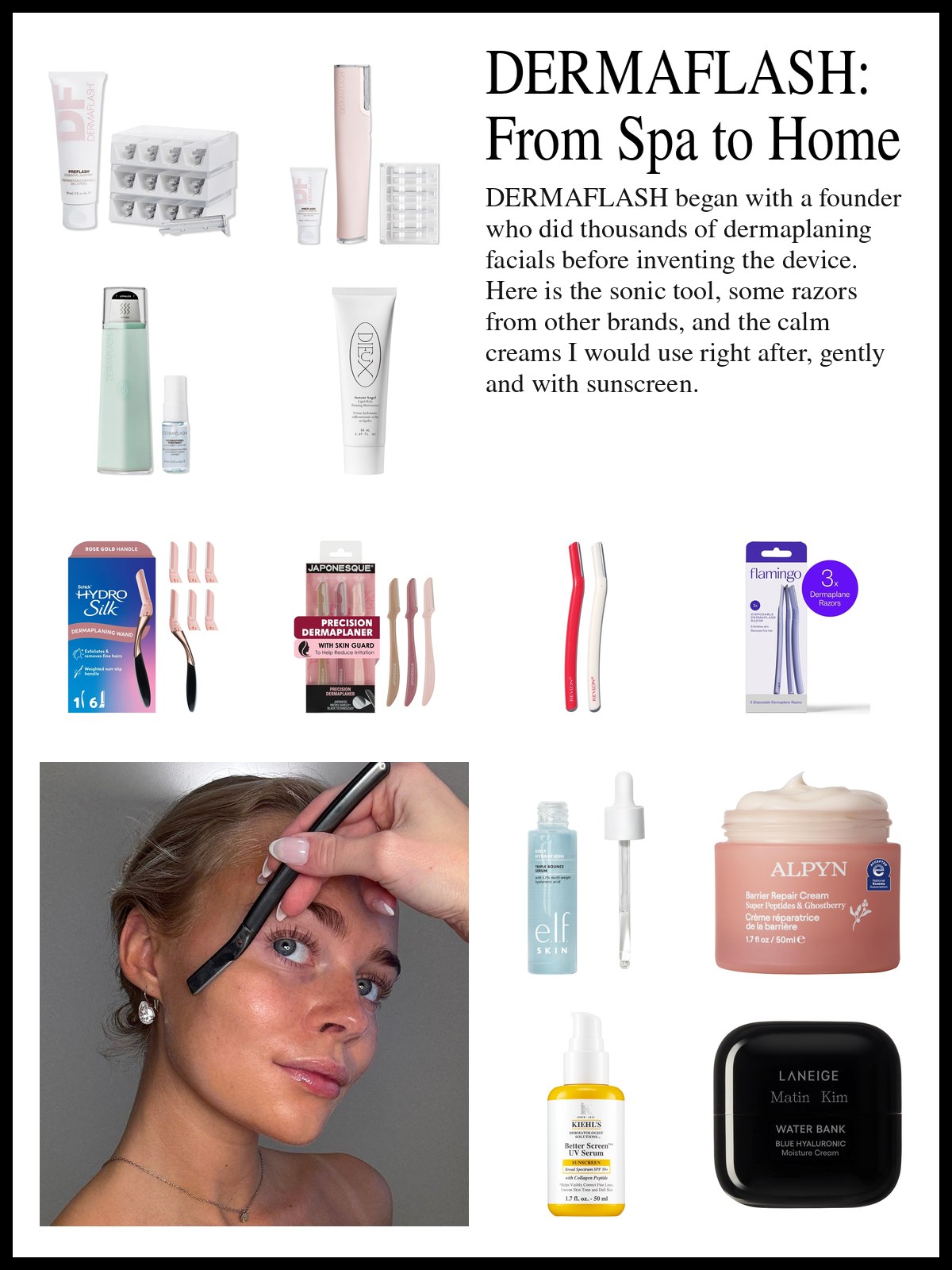
DERMAFLASH, from the sonic device to the refills


Razors and wands for the same job
Not everyone wants a device, and a handheld razor does the same basic job in a more manual way. These are the ones I would look at, and the differences are small but real.
The Schick Hydro Silk Dermaplaning Wand is the one with the most recognizable razor feel, so it suits people who already shave their legs with a familiar tool. The JAPONESQUE Precision Dermaplaner Facial Brush Razors are slim and angled, made for the small contours around the chin and jawline. The Revlon High Precision Dermaplaning Face Defuzzer is a small, tidy pen-style tool for the brow area and the upper lip. Flamingo's Dermaplane Facial Razors are a straightforward multipack, and the up&up Dermaplane Facial Disposable Razors, 4 ct are the same idea in a plain package. Plum Beauty's Dermaplaning Facial Razors round out the group with a lightweight handle.
A few habits matter more than the brand on the handle. Start with clean, dry skin. Use a clean blade every time, since a dull or reused edge drags. Hold the skin taut and use light, short strokes at roughly the same angle, the way Cleveland Clinic describes it. Never press harder to get a closer result.
Think of these razors as a once-in-a-while task. The point is a smoother-feeling surface, so your serums and sunscreen sit a bit more evenly, not a new daily ritual. I also keep the blade away from the brows and hairline unless the tool is made for it, and I never go over the same spot again and again.
Dermaplaning razors and brow tools from other brands

Hydro Silk Dermaplaning Wand
Schick
$19.99

Precision Dermaplaner Facial Brush Razors
JAPONESQUE
$9.49

High Precision Dermaplaning Face Defuzzer
Revlon
$6.59

Dermaplane Facial Razors
Flamingo
$6.49

Dermaplane Facial Disposable Razors, 4 ct
up&up
$4.99

Dermaplaning Facial Razors
Plum Beauty
$4.99

Barefuzz Pro Dermaplaning Facial Trimmer
Skin Gym
$24

Weighted Razor
Hanni
$42
What goes on afterward
What goes on afterward matters as much as the tool. Skin right after dermaplaning can feel a little exposed, so I keep this part gentle and boring.
The e.l.f. SKIN Triple Bounce Serum Face Moisturizers are the light option for the evening, with a cushiony feel that does not weigh on skin. Alpyn's Super Peptide Barrier Repair Moisturizer is the richer pick when skin feels dry. The Laneige Water Bank Blue Hyaluronic Cream is the one I reach for when I want a bouncy, hydrated layer. Dieux's Instant Angel Lipid-Rich Firming Moisturizer and Innbeauty Project's Extreme Cream Firming & Barrier Repair Moisturizer are the two thicker creams here, better for nights when skin wants more padding.
Then there is Kiehl's Better Screen UV Serum SPF 50+, and I put it in this group on purpose. Cleveland Clinic advises moisturizing and continuing sunscreen after dermaplaning. DERMAFLASH's own FAQ goes further and recommends avoiding direct sun for 48 to 72 hours after using the flagship device. So the sunscreen goes on every morning, and the hat comes out on a bright day.
What I would skip: dermaplaning over a breakout or more than the brand suggests. Cleveland Clinic dermatologist Melissa Piliang advises skipping it during a breakout, and the flagship device's manual says not to use it on active acne. Also skip it on irritated or broken skin, and skip strong exfoliating acids on the same night.
Calm skin after: soothing serums, barrier creams and SPF

SKIN Triple Bounce Serum Face Moisturizers
e.l.f.
$12

Super Peptide Barrier Repair Moisturizer
Alpyn
$62

Better Screen UV Serum SPF 50+
Kiehl's
$45

Water Bank Blue Hyaluronic Cream
Laneige
$38

Instant Angel Lipid-Rich Firming Moisturizer
Dieux
$45

Extreme Cream Firming & Barrier Repair Moisturizer
Innbeauty Project
$50

Better Screen Miner-All UV Serum Mineral Sunscreen SPF 50+ with Cica Centella
Kiehl's
$36

Ultra Facial Advanced Repair Barrier Cream
Kiehl's
$48
My dermaplaning routine
Here is the routine I would follow. Cleanse, dry the skin fully, then use the device or a razor with light strokes, with a clean blade. Do it in the evening, once a week at most, and never over anything sore, irritated or broken.
Afterward, wipe nothing harsh across the skin, and skip anything with a strong scent for the rest of the night. Put on a simple hydrating serum, a barrier cream, and the next morning a sunscreen. If your skin feels hot or tight, wait a few days before the next round.
If anything stays red, sore or bumpy, check with a dermatologist before you pick up the blade again. A smoother-feeling surface is nice, but comfortable skin comes first.