Hair wax, pomade, clay and paste all promise hold, but they finish very differently. Here are the light waxes I start with, the shiny pomades, and the matte clays and pastes for texture.
Hair Wax, Pomade or Clay: Which Hold Belongs on Your Shelf
Blind Barber opened its first shop in New York's East Village in 2010, and I think of it whenever someone asks me how to start with hair wax. The shop was founded by Jeff Laub, Adam Kirschenbaum, Josh Boyd and Matt Breen, and it mixed a proper haircut with a lounge bar behind the shop. That mix tells you something: good styling product should feel like part of a ritual, not homework.
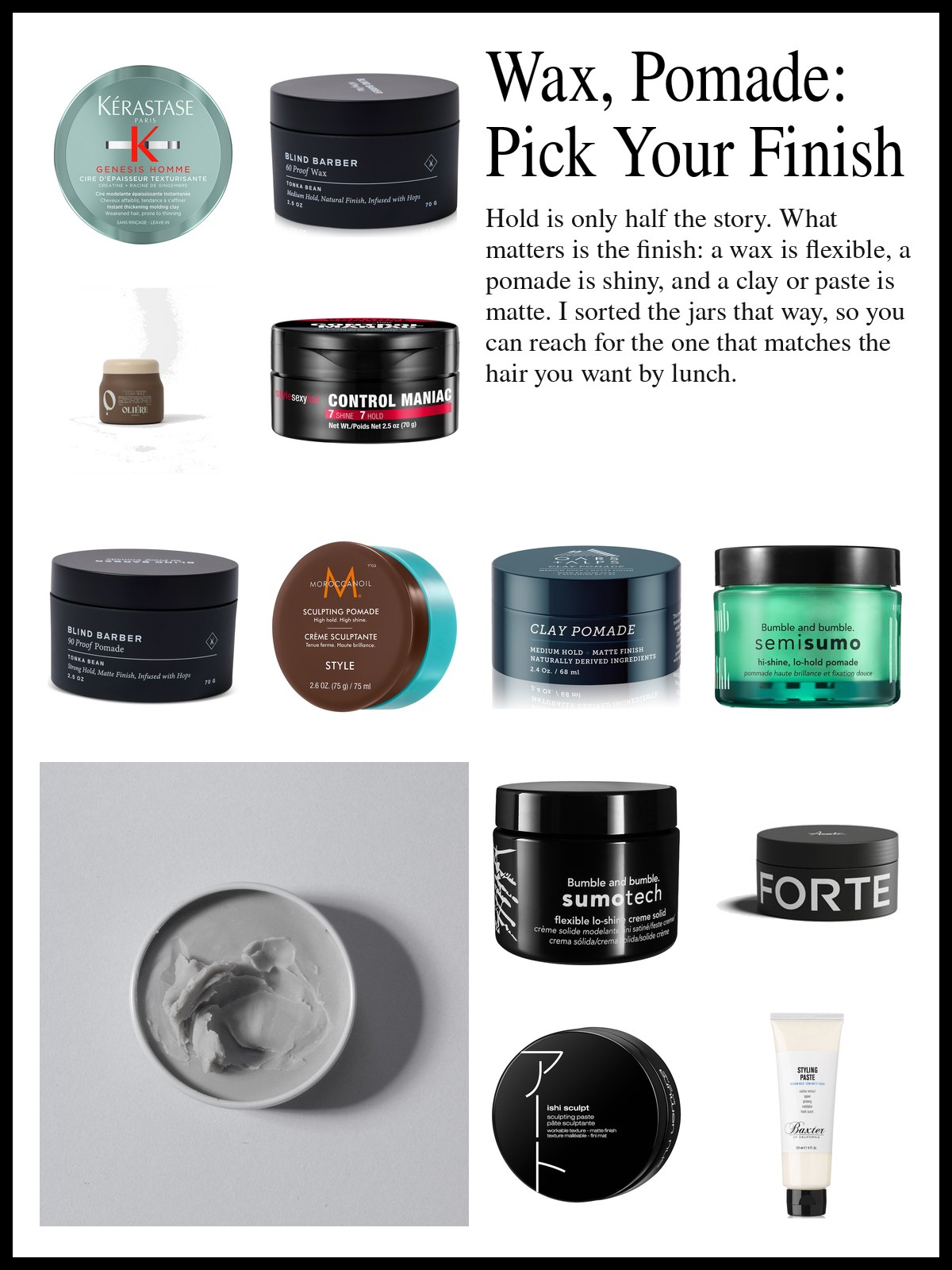
A wax is the gentlest place to begin. It is flexible, it moves when you run a hand through it, and it rarely looks stiff. Blind Barber's 60 Proof Wax is the easy starting point, a workable tin for a tousled finish. Kérastase's Genesis Homme Light-Hold Styling Wax Pomade, true to its name, is a light hold, for hair that should still look like hair, and it sits somewhere between a wax and a pomade.
Oliere Paris makes the Studio Kreimer Clay Wax, a hybrid of clay and wax that should land somewhere between the two finishes. And Sexy Hair's Style Control Maniac Styling Wax is the one for when you want a styling wax with a little more control.
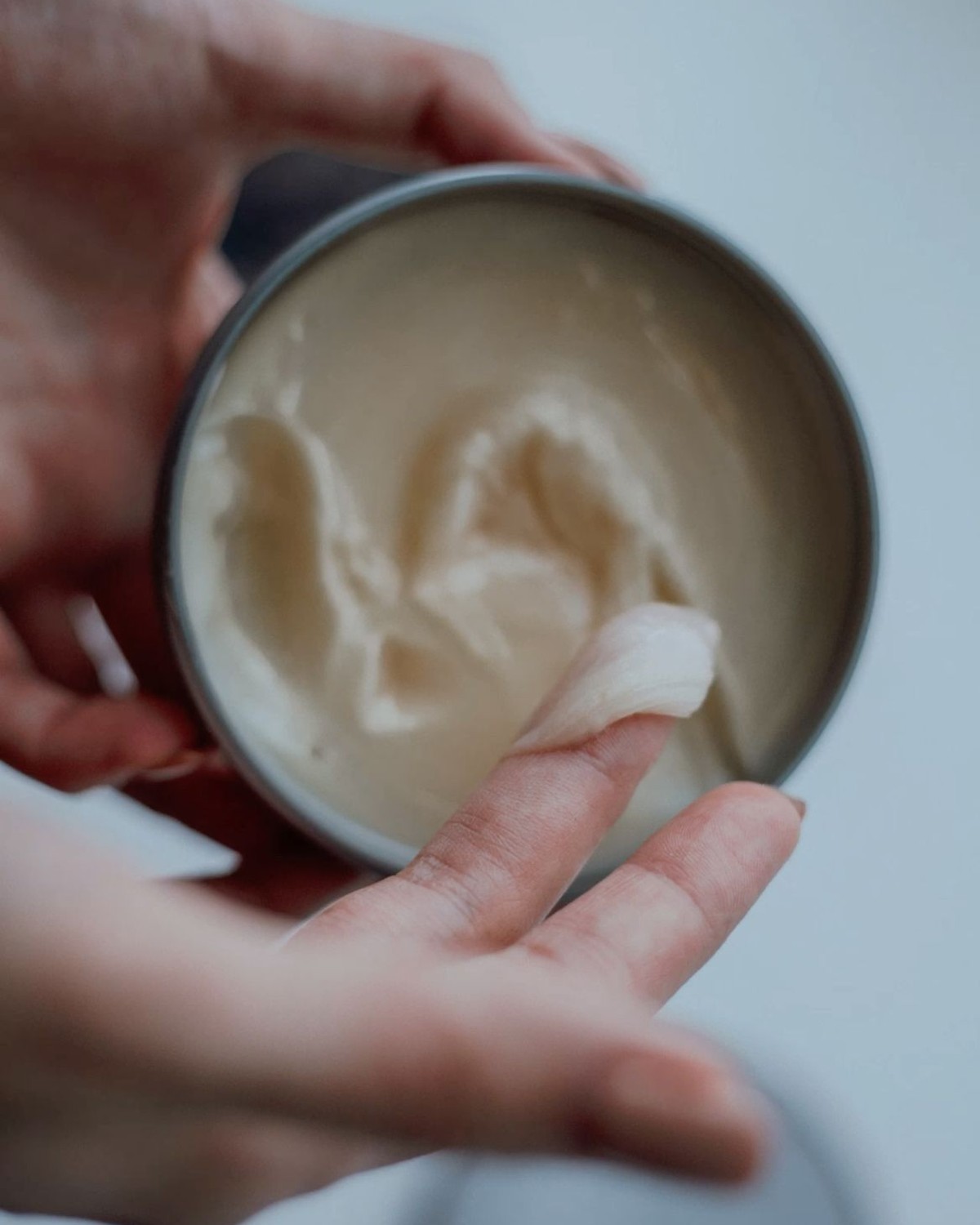
The trick with any wax is to use less than you think. Rub a pea-sized amount between your palms until it disappears, then work it through from the back to the front. If you can see the product, you used too much, and a wash is the only reset.


Pomades, when you want shine
Pomade has a reputation for being old-fashioned, and it is, in the best way. Barbers put the difference simply: pomade is shiny by default, clay is matte. It is a useful rule of thumb, not a law.
Baxter of California was founded in Los Angeles in 1965 by Baxter Finley, who launched Super Shape because he could not find skin care made for men. The brand says its Clay Pomade, launched in the 2000s, helped kick off the return of pomades. Its plain Pomade here is the classic, the one to comb through for a polished finish. Blind Barber's 90 Proof Pomade makes the same case in a newer tin.
Moroccanoil's Strong Hold High Shine Sculpting Pomade promises a firm hold and high shine, which suits a slick back or a sharp part. Bumble and bumble's Semisumo Hi-Shine Pomade is also glossy but more about shape and movement than a rigid shell. Oars + Alps' Clay Pomade is the compromise: some grip and some polish without either going too far.
A warm-up helps. Rub pomade into your hands until it turns glossy and clear, then smooth it over the top and sides. A fine-tooth comb finishes it, and a blast from the dryer on low sets the shape if you want it to hold through a long day.


Clays, pastes and putties for matte
Now for matte. Clays, pastes and putties are the choice when you want hair to look dry, textured and slightly undone, which is how most people like it now. They give grip without shine, and they work best on hair with some natural body.
Bumble and bumble's Sumotech Flexible Hold Cream Solid sits between a cream and a wax, so you get a flexible hold and some definition. Forte Series' Strong Hold Molding Paste with a matte finish is the firm one, good for thick hair that refuses to stay put through a commute. shu uemura's Ishi Sculpt Texturizing and Sculpting Hair Paste is the texturizing pick, for separation rather than a slick finish. Baxter of California's Styling Paste is a plain, everyday paste. American Crew's Fiber is a pliable, low-shine option that suits shorter cuts.
What I would skip: applying clay or paste to wet, dripping hair, where it clumps and pulls instead of spreading. Also skip heaping on more at midday, since old product plus new product reads as grease by evening. Instead, work a small extra amount between your fingertips, and dry hair only. If product builds up and leaves a white cast or a stiff feel, wash it out rather than layering.


How to choose and apply
To choose, start with the finish you want. Shine, reach for pomade. Matte with movement, use clay or paste. Soft and flexible, go with a wax. Then pick the hold: light for fine hair, firm for thick hair.
Start small, warm it in your palms, and work from the back forward. You can always add more, and taking it out means another wash. Keep the lid closed between uses so the tin stays workable, and wipe the rim clean. Always read the directions on the jar, since each formula asks for slightly different handling, and apply it with clean, dry hands so you can feel how much you are using.
One last test: check the mirror after an hour. If the style has dropped, step up the hold. If it looks crunchy, step it down. Hair tells you quickly, and the second try is always better than the first. Give each new jar at least three or four mornings before you decide, because your hands get better at it, and so does your sense of how much is enough. Keep one light product and one firm one, and you can cover most days and most haircuts without a cupboard full of jars.