Clothing
Clothing

Blazé Milano
Blaze Milano started in 2013 when three former Elle editors, Corrada Rodriguez d'Acri, Delfina Pinardi and Maria Sole Torlonia, decided no brand had ever built its entire range around one garment: the blazer. Every piece is still made in Italy, and the idea carries into dresses, skirts and knitwear built around the same sharp shoulder line.

McQueen
McQueen was founded in London in 1992 by Lee Alexander McQueen, who trained on Savile Row before building a house known for exacting tailoring and theatrical shows. Sarah Burton led the house from 2010 to 2023, and this edit narrows a large assortment down to the shapes worth building an outfit around.

ssstein
ssstein was founded in Tokyo in 2016 by the self-taught designer Kiichiro Asakawa, who built the label out of three trouser designs after years spent taking apart vintage clothing at his own shop, Carol. I focused on that trouser-first restraint in shirting and wide-leg pants.

Cecilie Bahnsen
Cecilie Bahnsen trained under John Galliano and Erdem before returning to her native Copenhagen in 2015 to start her own label, and that mix of Paris drama and Scandinavian ease still runs through everything she makes. This edit moves from the volume-driven dresses through easier tops and jackets to the sculptural skirts that close the range.

Varley
Lara and Ben Mead founded Varley in London in 2014, after a trip to Santa Monica showed them workout clothes moving naturally into the rest of the day, and DoubleSoft fabric arrived as that idea grew beyond pure activewear. My selection covers knitwear, outerwear, sweatshirts, bottoms and the pieces worn closest to the body.

Cristiano Marcheli
Cristiano Marcheli is an Athens label started in 2021 by designer Maria Chelioti, who named it for her late father and built the brand's palette around Milan and the Greek coast. This edit focuses on the kaftans, cover-ups and printed dresses that carry that warm weather point of view.

Loulou de Saison
Loulou de Saison started as Chloe Harrouche's Instagram account before becoming a Paris label in 2019, and it built its name on knitwear before adding tailoring and dresses. Notes on how that range now stretches from cashmere basics to occasion pieces, and where to start.

Marrakshi Life
Marrakshi Life started in 2013 when photographer Randall Bachner and Nicholas Minucciani moved from New York to Marrakech to work with local weavers on traditional flatbed looms. This edit sorts the maxi dresses built for a trip from the shirts and trousers likely to keep earning a spot at home.

MM6 Maison Margiela
MM6 Maison Margiela began in 1997 as Line 6, a more accessible offshoot of the house Martin Margiela and Jenny Meirens founded in Paris in 1988. This edit tracks how that numbered line bends ordinary wardrobe pieces, a trench, a knit, a boot, just enough to make you look twice.

Stouls
Aurélia Stouls launched her Paris label in 2004 with a machine-washable, stretch lamb leather T-shirt, after years spent designing footwear, including a stint at Thierry Mugler. You see that practical streak in leather trousers, dresses, tops and outerwear, all cut close to the body.

Themis Z
Themis Zouganeli built her lifestyle brand out of Athens, drawing patterns from Greek architecture and her own Mykonos summers rather than folk motifs, and the collections are still handmade by Greek artisans. The print moves from full-length maxi dresses into the separates that let it travel in smaller doses.

Liberowe
Talia Loubaton started Liberowe in London after a trip to India left her fixated on the narrow-collared tailoring she saw there, and she built the label's first jacket, the Raja, from that memory. The jackets set the tone, and the dresses, tops and trousers keep the same structure in softer fabrics.

Brunello Cucinelli
Brunello Cucinelli started in 1978 by dyeing cashmere in bright colors, an idea unusual enough at the time that a yarn merchant agreed to be paid later just to see it done. That material-first thinking runs from knitwear through dresses, bottoms, outerwear and accessories.

Escvdo
Escvdo was founded in Lima in 2013 by sisters Chiara and Giuliana Macchiavello, and it builds its dresses, tops and skirts around handwoven cotton made with artisan families in the Peruvian Andes. This edit sorts the label by category, dresses, tops and skirts, so the pattern work reads clearly against each shape.

Auralee
Auralee grew out of a Tokyo textile wholesaler in 2015, when designer Ryota Iwai began developing his own fabric rather than buying stock cloth, sourcing wool as far as Mongolia. I went through knitwear, bottoms and outerwear to see where fabric alone can carry a wardrobe.

Junya Watanabe
Junya Watanabe trained as a pattern maker under Rei Kawakubo at Comme des Garcons before Kawakubo backed his own namesake label, and that construction-first training still shows in how a familiar shape gets pushed here. The pieces here follow that tension between comfort and friction across a plush sweater, a croc-effect coat, tailoring and accessories.

Ami Paris
Alexandre Mattiussi presented the first Ami Paris collection in January 2011, naming the house after the French word for friend and his own initials. Both halves of the label are here, from heart-motif knitwear to the plainer shirts and denim underneath it.

Calvin Klein Collection
Calvin Klein built his label in New York in 1968 on clean, minimal cuts, a look sharp enough that Vogue put his coats on its cover within a year. You can see that restraint across the Collection line's dresses, shirting, trousers, outerwear and accessories.

Cordova
Cordova was started in 2016 by Jane and Cody Seim after the idea came to Jane on the slopes of Sun Valley, Idaho, where the couple later married. This edit looks at how the label's belted, tailored ski suits balance a fitted silhouette with the coverage a full day on snow actually requires.

Rixo
Rixo started in 2015 when Henrietta Rix and Orlagh McCloskey turned a shared love of vintage clothing into a hand-painted print label from their London flat. Notes on the dresses and separates that grew out of that idea, and how much print you actually want to live with.

Comme des Garçons Comme des Garçons
Comme des Garçons Comme des Garçons launched in 1993 as a more wearable, accessible women's diffusion line from Rei Kawakubo, sitting alongside Homme rather than the experimental main collection. This edit tracks how far the label pushes a plain shirt, jacket or trouser through fraying, peplum panels and exaggerated volume before it stops reading as basic.

Maria McManus
Maria McManus spent two decades as a merchandiser at Edun, Polo Ralph Lauren and Rag and Bone before starting her own New York label in 2020 on recycled and organic fibers. This edit looks at the wide-leg pants, jeans and fabric-first tops that carry that restraint through the whole range.

Doom Scrolling
Doom scrolling has become its own kind of downtime, hours spent half-watching and half-refreshing a feed that never resolves. The clothes here are not a fix for that habit, just a softer way to sit through it, a hoodie with some shape, a pant that still looks like clothes, glasses aimed at the screen itself. The angle is comfort with a little intention, not a claim that any of it makes the scrolling less bleak.
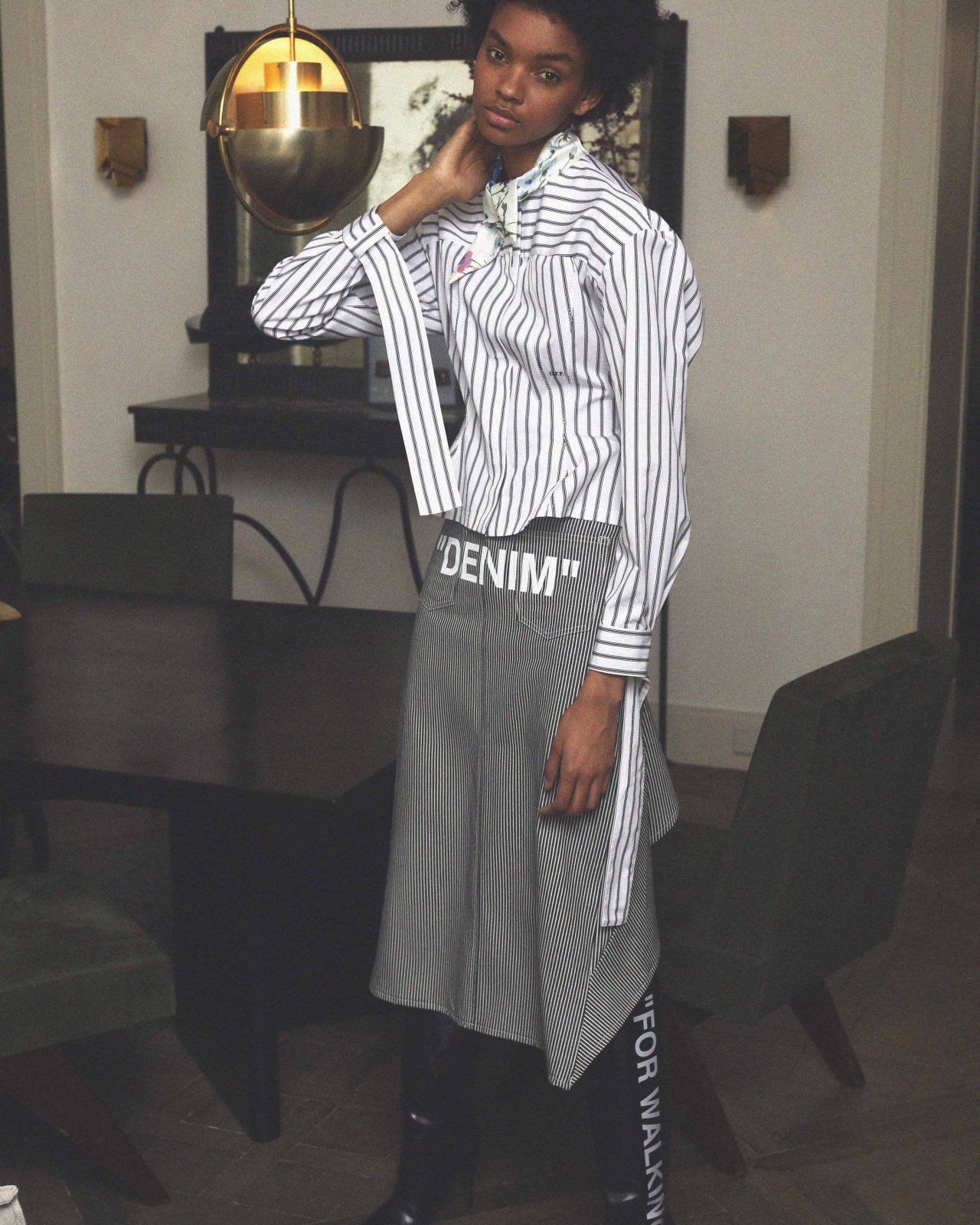
Off Whites Are The Neutral That Reads As A Decision
Off-White built its identity on treating design as annotation, printing quotation marks and diagonal hazard stripes across ordinary streetwear shapes. That vocabulary spread through mall fashion within a few years, so the graphic tees and the trucker jacket here read as the source material rather than a copy. This edit follows the L/AB diffusion graphics through to the one true outerwear piece, the Half Arrow trucker.