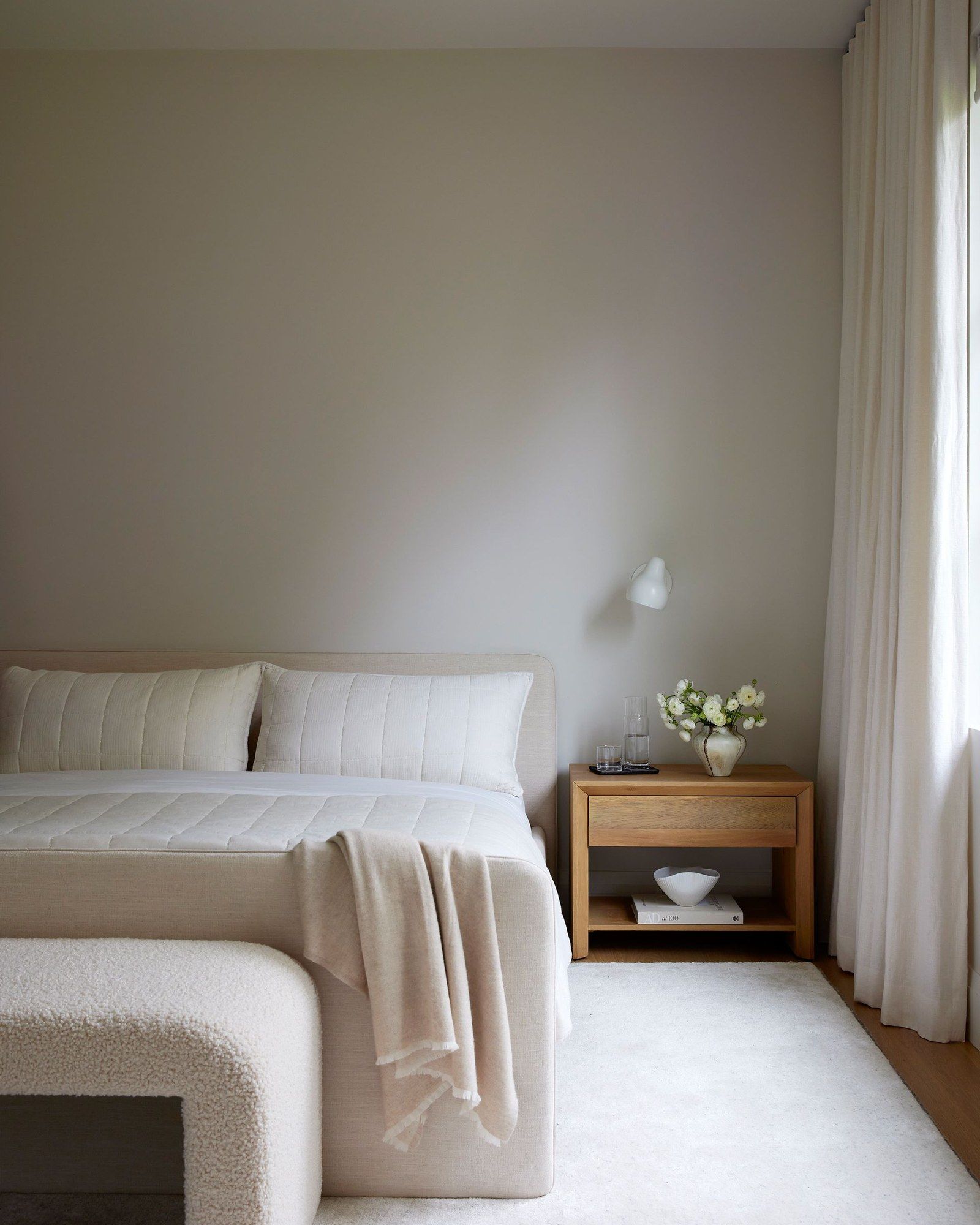
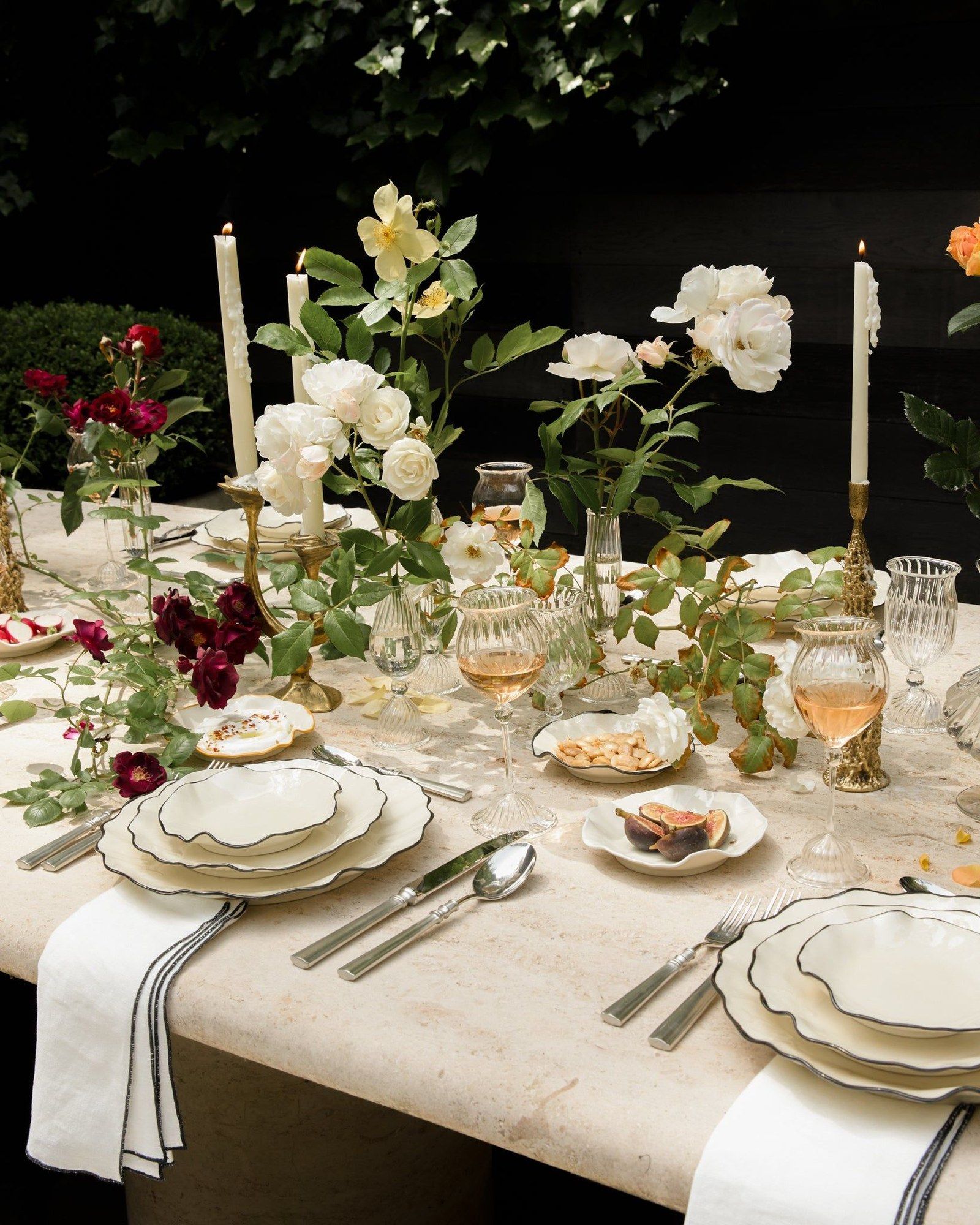
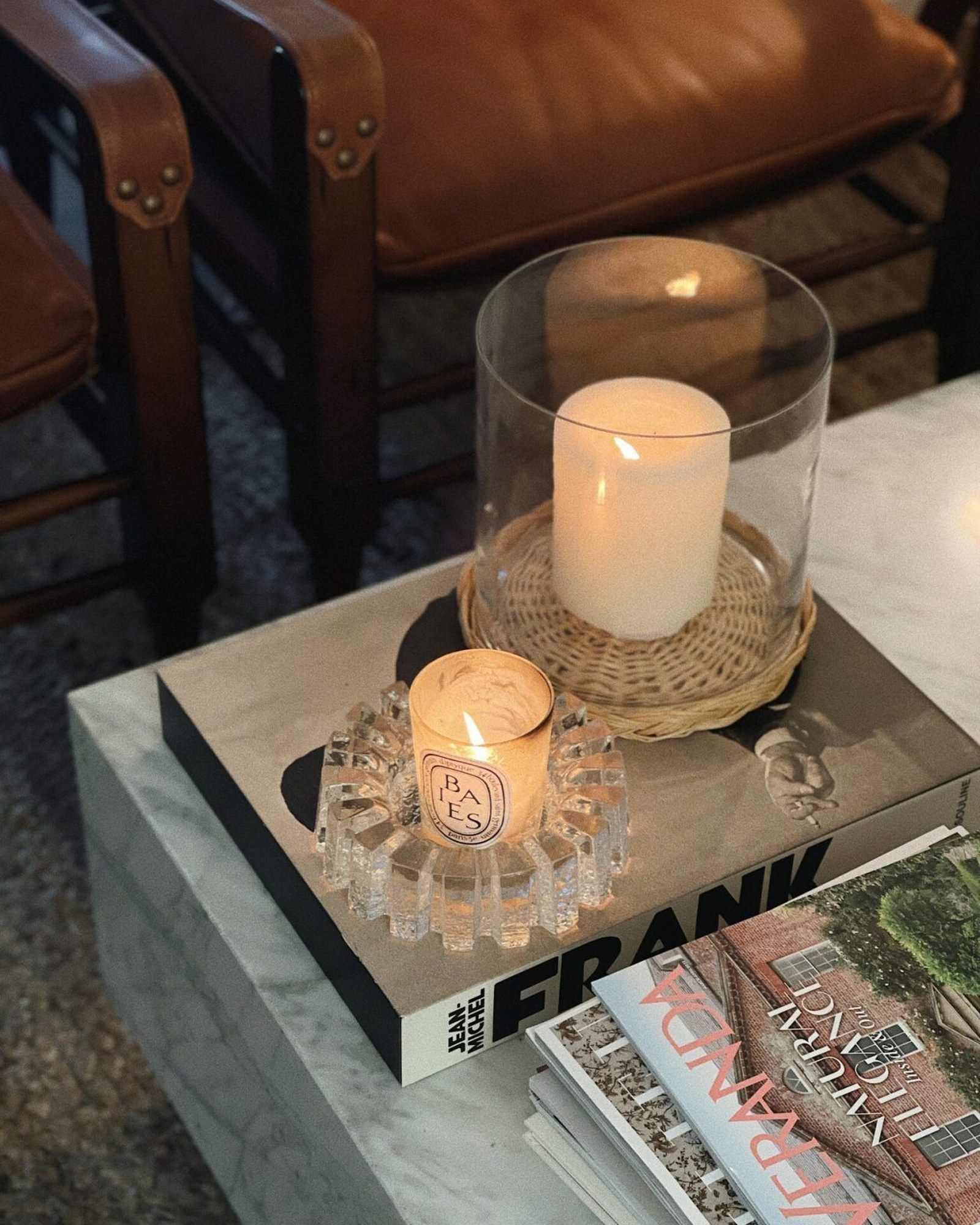
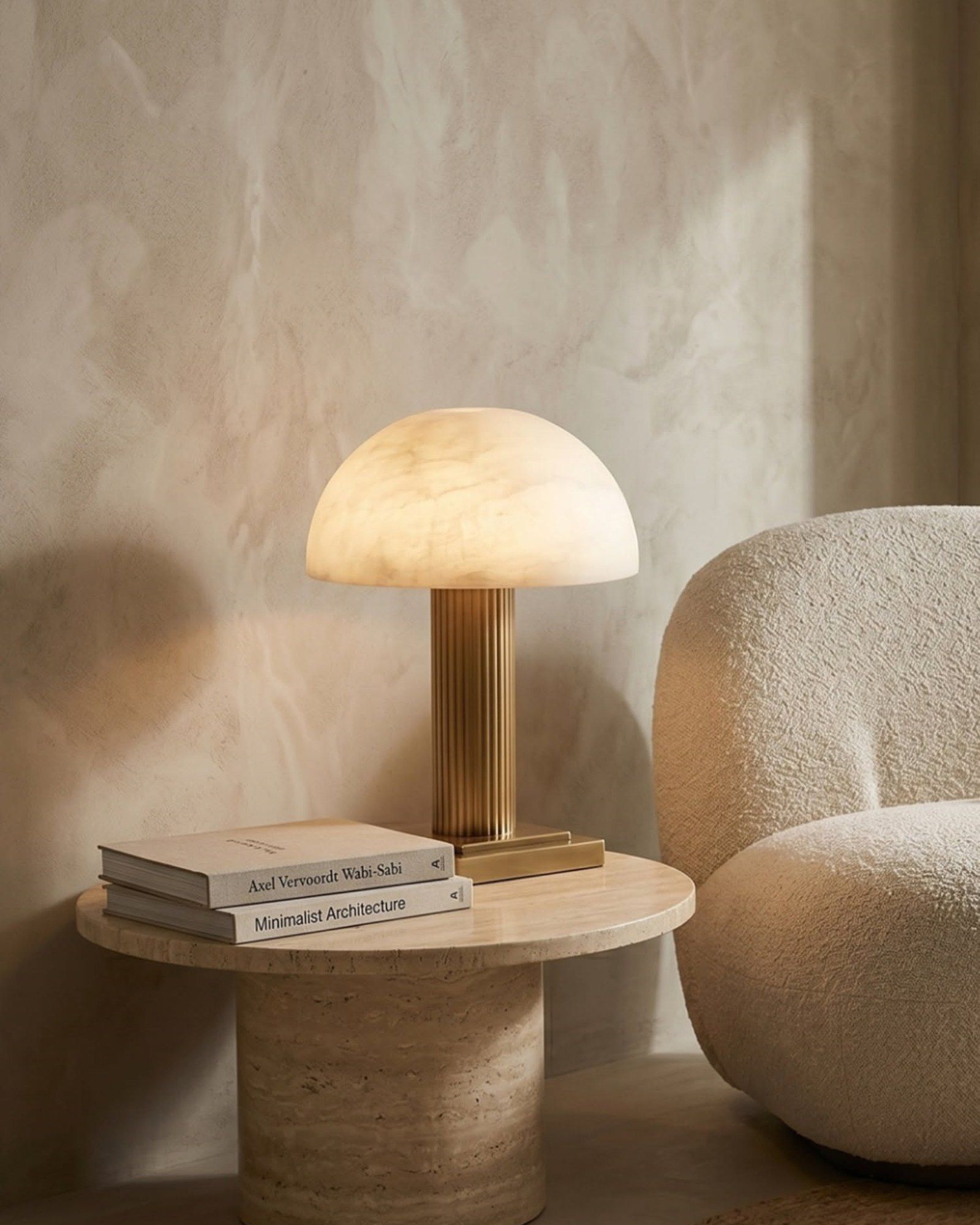
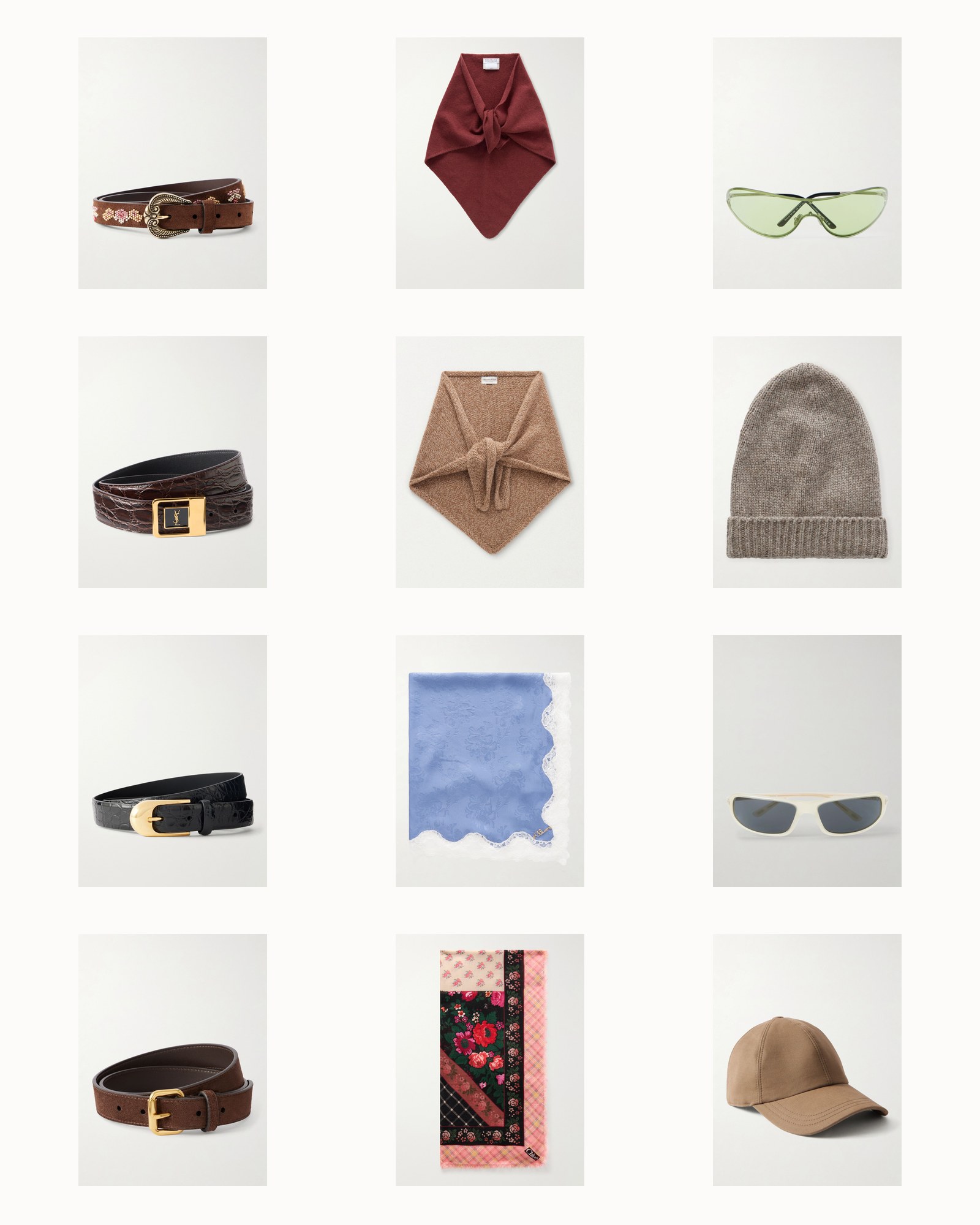
The personal edit has replaced the trend report as the way people find clothes, because a real wardrobe has logic that a trend list never does. What makes one work is inconsistency: the odd combinations nobody would put in a lookbook. This edit is built to be read as a closet rather than as a category page.
Someone Else's Closet, Borrowed

Shoes
Shoes come first because they are the most-repeated thing in any real wardrobe. Jelly sandals alongside proper heels is exactly the kind of contradiction that a trend report would edit out and a person would never notice. Practicality and vanity sitting in the same rack.

Jelly Sandals
Chloé
$610

Jelly Sandals
Chloé
$750

Jo PVC Flip Flop Sandals
Christopher Esber
$335

Jo PVC Flip Flop Sandals
Christopher Esber
$335

Georgie Suede Loafers
Gianvito Rossi
$995

Bea Rafia Ballet Flats
Odissi
$430

Gwyneth Leather Sandals
Gianvito Rossi
$845

Ponti Cotton Slippers
The Row
$870

Exclusive La Isla Kristine Leather Sandals
LUCASHEVA
$460

Burst Embellished Jelly Shoes
HEAVENLY JELLY
$260

Tee Flower-Detailed Satin Thong Sandals
Proenza Schouler
$1,290

Sharp Woven-Leather Kitten Pumps
Toteme
$1,100

Mesh Ballet Flats
ALAÏA
$1,190

Safi 55 Embellished Satin Mules
Ferragamo
$1,250

Bay Frayed Canvas Sandals
Jimmy Choo
$595

Jo PVC Flip Flop Sandals
Christopher Esber
$300

Ponti Cotton Slippers
The Row
$870

Clive Suede Ankle Boots
Khaite
$1,580

Strength Panelled Ballet Flats
Gabriela Hearst
$700

Boden Raffia Sandals
Khaite
$1,200

Freja Embellished Leather Thong Sandals
STAUD
$275

Memento Leather Flip Flop Sandals
Christopher Esber
$945

Jo PVC Flip Flop Sandals
Christopher Esber
$335

Exclusive La Isla Rosaire Leather Mules
Alameda Turquesa
$720
Beauty
Beauty belongs in a personal edit in a way it never belongs in a seasonal one. Nail lacquer, glow balm and hair treatments are the things that actually get used daily, and their presence is what makes a closet read as inhabited. Nobody photographs this part.

Exclusive La Isla Cosmica Glow Balm
Kindred Black
$185

Exclusive La Isla Nail Lacquer
SSONE
$25

Favorita Red Poppy Soap
Claus Porto
$26

Essential Blonzer Compact
Fara Homidi
$78

Seymour Body Duo Set
Commune
$207

The Comb No. 002
Crown Affair
$52

Shader Brush
Fara Homidi
$68

Nail Lacquer
SSONE
$25

Liquid Blender Brush
Westman Atelier
$125

The Dry Shampoo
Crown Affair
$48

Balancing Face Oil
Surya
$185

Rose Pale Hair Serum Mist
NONFICTION
$45

HydroBalm Tinted Lipstick
Westman Atelier
$50

Exclusive La Isla Nail Lacquer
SSONE
$25

HydroBalm Tinted Lipstick
Westman Atelier
$50

Exclusive La Isla Nail Lacquer
SSONE
$25

The Lip Duo
U Beauty
$98

Dry Texturizing Spray
Oribe
$52

Exclusive La Isla Starveil Shimmer Oil
Kindred Black
$165

Red Light Face Mask
HigherDOSE
$349
Bags
Bags stay small and mostly soft. Raffia totes and bucket shapes are warm-weather thinking carried stubbornly into a new season, which is what people genuinely do rather than what they are told to do. Wardrobes lag the calendar.

Small N/S Beau Raffia Tote Bag
The Row
$1,800

Jewel Bucket Bag
STAUD
$395

Charm Bag Chain
Saint Laurent
$1,200

Exclusive The Marlies Clutch
Marlies Grace
$495

Exclusive La Isla Mara Tasseled Raffia Bag
Marlies Grace
$275

Chelsea East/West Mesh Tote Bag
Proenza Schouler
$1,690

Exclusive La Isla Rope Beaded Pouch
Pura Utz
$510

Fringed Raffia Bucket Bag
Proenza Schouler
$850

Exclusive La Isla Milo Small Crocheted Tote Bag
Marlies Grace
$295

The Large Underwater Tote
UNDERWATER WEAVING STUDIO
$495

Large Reconstituted Piano Shawl Silk Bag
Conner Ives
$355

Ray Silk-Satin Pouch
The Row
$950

Small Kalispera Leather Bag
Etro
$2,150

Exclusive La Isla Wood-Beaded Mini Bag
Cordera
$370

Georgica Raffia Tote Bag
The Row
$2,500

The Minuit Taffeta Knot Bag
Mélisse
$265
Trousers
Trousers are the most-worn category and the least discussed. Crepe crops and voile balloon cuts are relaxed without being shapeless, and they explain more about how someone dresses than any statement piece would. Look here to understand the rest.

Ari Crepe Crop Pants
Leset
$280

Simona Voile Balloon Pants
DARKPARK
$660

Este Striped Drawstring Shorts
Citizens of Humanity
$238

Front & Center Jacquard Pants
Rosie Assoulin
$1,395

Exclusive Boudoir Embroidered Silk-Blend Shorts
Harris Tapper
$300

Cotton Boyfriend Pocket Sweatpants
Éterne
$295

Exclusive Whisper Lace-Trimmed Silk-Blend Shorts
Third Form
$240

Josephine Cotton Bermuda Shorts
Flore Flore
$260

Exclusive Whisper Lace-Trimmed Silk-Blend Shorts
Third Form
$240

Mio Chiffon Balloon Pants
The Frankie Shop
$195

Modal-Cotton Lounge Pants
Éterne
$165

Tie-Detailed Organic Cotton Pants
Toteme
$460

Knit Biker Shorts
Toteme
$320

Exclusive Bubbles Pants
Oseree
$1,145

Exclusive Georgette Mini Dress with Shorts
SLOAN
$500

Cotton Toggle-Hem Pants
Deiji Studios
$220
Tops
Tops follow the same split: a plain crepe tank next to an embroidered satin crop. That range within one category is the tell that this is a real wardrobe and not a styled proposition. Nobody's closet has a consistent formality level.

Ari Crepe Scoop Tank Top
Leset
$250

Embroidered Satin Cropped Top
Erdem
$2,395

Bes Cotton Bandeau Top
Flore Flore
$90

Upendo de Flor Embellished Cotton T-Shirt
Andres Otalora
$420

Lianna Pleated Top
By Malene Birger
$250

Exclusive La Isla Hydra Cotton Tank Top
Made Some
$135

Exclusive La Isla Carlota Fringed Cotton Lace Top
All That Remains
$395

Bolero Dress All In Glittered Top
Marie Adam-Leenaerdt
$1,245

Exclusive Eliza Bubble-Hem Top
Harris Tapper
$590

Silk Sarong Top
Christopher John Rogers
$1,495

Aline Hand-Beaded Corset Top
ILA THE BRAND
$850

Lamé Ribbed-Knit Top
Miu Miu
$1,520

Polly Smocked Silk-Chiffon Top
Khaite
$1,680

Exclusive Sculptural Silk Top
SLOAN
$715

Duke Cotton-Modal Tank Top
Éterne
$125

Isola Gathered Cotton Top
Ulla Johnson
$290
Dresses
Dresses lean crochet, silk and short. These are the pieces bought for specific occasions and then worn far more often than intended, which is the usual life cycle of a good dress. Occasion clothing that escaped.

Cotton Crochet Mini Dress
Magda Butrym
$7,400

Layered Silk Mini Dress
Ferragamo
$3,000

Exclusive Macy Dress
Harris Tapper
$830

Cruz Crepe Tie-Neck Maxi Dress
De La Vali
$715

Kira Draped Silk Maxi Dress
STAUD
$795

Marloe Cotton Crochet Dress
All That Remains
$470

Claudia Embellished Crepe Midi Dress
SIMKHAI
$1,150

Exclusive Mar Caribe Fringed Linen Maxi Dress
Andres Otalora
$1,080

Musical Flower Silk Mini Dress
Johanna Ortiz
$2,995

A La Mode Linen Jacquard Gown
Rosie Assoulin
$3,995

Floral Peplum Detail Cotton Midi Dress
Magda Butrym
$2,710

Exclusive Embroidered Midi Halter Dress
Diotima
$2,195

Rosie Striped Cotton Mini Dress
Posse
$330

Exclusive La Isla Lola Fringed Plaid Crepe Midi Dress
Posse
$460

Exclusive La Isla Ancona Linen Dress
Cala de la Cruz
$495

Eddie Crocheted Cotton Maxi Halter Dress
NILI LOTAN
$1,850
Jewelry
Jewelry is beaded, gold-plated and mixed. A personal collection accumulates rather than coordinates, and the mixture of fine and craft pieces here is what that looks like. Coherence is overrated in this category.

Yupay 24K Gold-Plated Necklace
CANO
$594

Mavis Beaded Necklace
Julietta
$295

Gold-Plated Vermeil Red Tiger Choker Necklace
Vertigo
$700

Robin N°2 Green Onyx Ring
Pascale Monvoisin
$1,520

Ain Mid Sterling Silver Earrings
Louis Abel
$340

Sunfish Copper and Brass Leather Earrings
Jacquemus
$550

Exclusive La Isla Jackie Jade And Rhodonite Earrings
Le Sundial
$690

Exclusive Pill Tarallo Sterling Silver Enamel Ring
Bea Bongiasca
$550

Myra Rhodium-Plated Brass Onyx and Resin Necklace
Julietta
$350

Lina Rhodium-Plated Brass Resin and Carnelian Cuff
Julietta
$295

Exclusive Thalassa Gold-Plated Multi-Stone Necklace
Julietta
$350

Isotta Rhodium-Plated Brass Mother-of-Pearl Earrings
Julietta
$300
Skirts
Skirts are few and unusual. Sequinned and skirtini shapes are the pieces that would never survive a buying meeting and do survive in an actual closet. This is the grid where the taste shows.

Bubble Skirtini
Oseree
$520

Exclusive La Isla Sequined Dupioni Mini Skirt
Chan Luu
$275

Barb Lace-Trimmed Satin Mini Skirt
Leset
$250

Crinkled Knit Skirt
Toteme
$560

Lian Pleated Maxi Skirt
By Malene Birger
$380

Sheer Georgette Midi Skirt
Prada
$1,790

Exclusive Silk Maxi Skirt
COLLEEN ALLEN
$1,050

Drawstring Midi Skirt
Onia
$285
Denim
Denim is minimal and rigid. Two straight-leg cuts is all a wardrobe like this needs, because the interest lives elsewhere. Restraint by disinterest rather than by discipline.


Accessories
Accessories are singular and specific: an aviator frame, a vintage watch. These are the pieces someone wears every day for a decade, and they are the opposite of a seasonal purchase. Real wardrobes are built around a few of these.


Outerwear
Outerwear is almost absent, which is itself informative. Two shearling jackets is the whole answer, and both are versions of the same idea. People buy far fewer coats than fashion coverage implies.


Knitwear
Knitwear is similarly small. Cashmere blankets and shirred cotton are comfort purchases rather than style ones. Every closet has this corner and nobody talks about it.


Also in the edit
The rest is where the personality concentrates: exclusives, organic cotton, one-off pieces that resist grouping. A trend report has no equivalent of this grid, which is precisely why personal edits are more useful. Read it as the part someone would actually defend.

Exclusive The Marlies Clutch
Marlies Grace
$495

Exclusive Coen Organic Cotton Poplin Shorts
The Anteros
$135

Cat-Eye Acetate Sunglasses
Saint Laurent
$495

Exclusive Chaimberlain Wrap Top
Harris Tapper
$390

InstaFacial® Collection Plasma
Dr. Diamond's Metacine
$200

The Rose Bud Embroidered Moire Knot Bag
Mélisse
$265

Nautilus Rhodium-Plated Resin And Shell Earrings
Julietta
$295

Albany Rigid Low-Rise Straight-Leg Jeans
MOUSSY VINTAGE
$395

Exclusive Macy Midi Skirt
Harris Tapper
$500

Gabi Raffia Bucket Hat
Janessa Leone
$285

The Resurfacing Compound
U Beauty
$228

Exclusive Harbor Striped Cotton Mini Shorts
LA VESTE
$160

Exclusive Piano Shawl Embroidered Silk Mini Shift Dress
Conner Ives
$1,175

Fringed Metallic Midi Skirt
Oscar de la Renta
$4,890

Bubble Glass and Brass Hoop Earrings
ALAÏA
$1,290

Lana Rigid Mid-Rise Straight-Leg Jeans
Agolde
$258

The Gingham Silk Taffeta Cargo Pants
DONNI.
$420

The Ruler High-Rise Straight-Leg Jeans
FRAME
$278

The Charlotte Large Raffia Bag
Lié Studio
$500

Exclusive Graff Embroidered Silk-Blend Jacket
Harris Tapper
$880
Our honest take
The reason personal edits outperform trend reports is that a real closet contains contradictions and a trend report cannot, since its entire job is to be consistent. Jelly sandals next to a silk dress is more instructive than any seasonal forecast, because it shows how someone resolves competing wants. Borrow the logic rather than the list.
Shop brands in this edit






















Next read
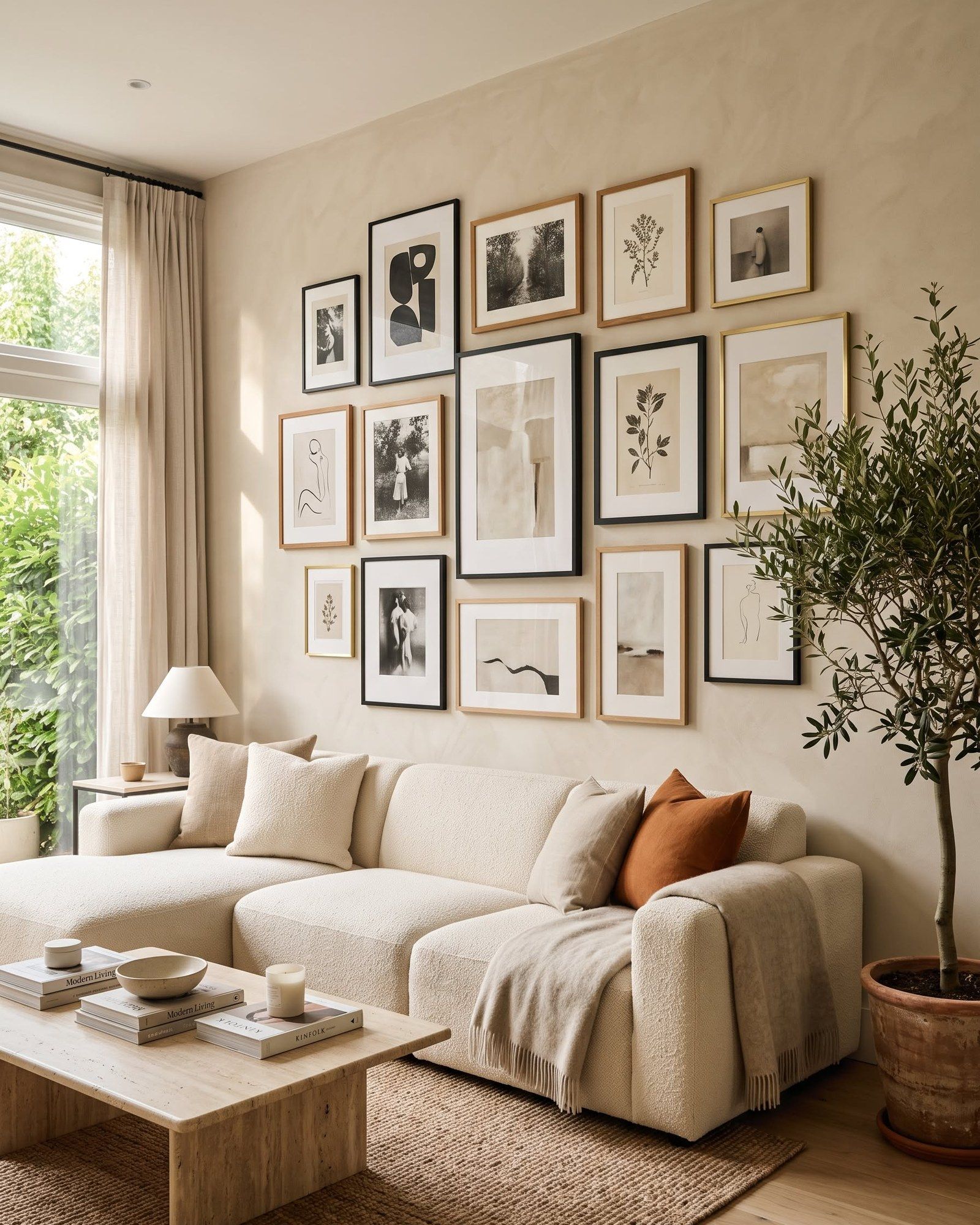
How To Buy Art For A Blank Wall
How to buy art for a blank wall: editioned prints, original works at auction prices, and sculpture for a shelf when the wall is not the answer.
Read Editorial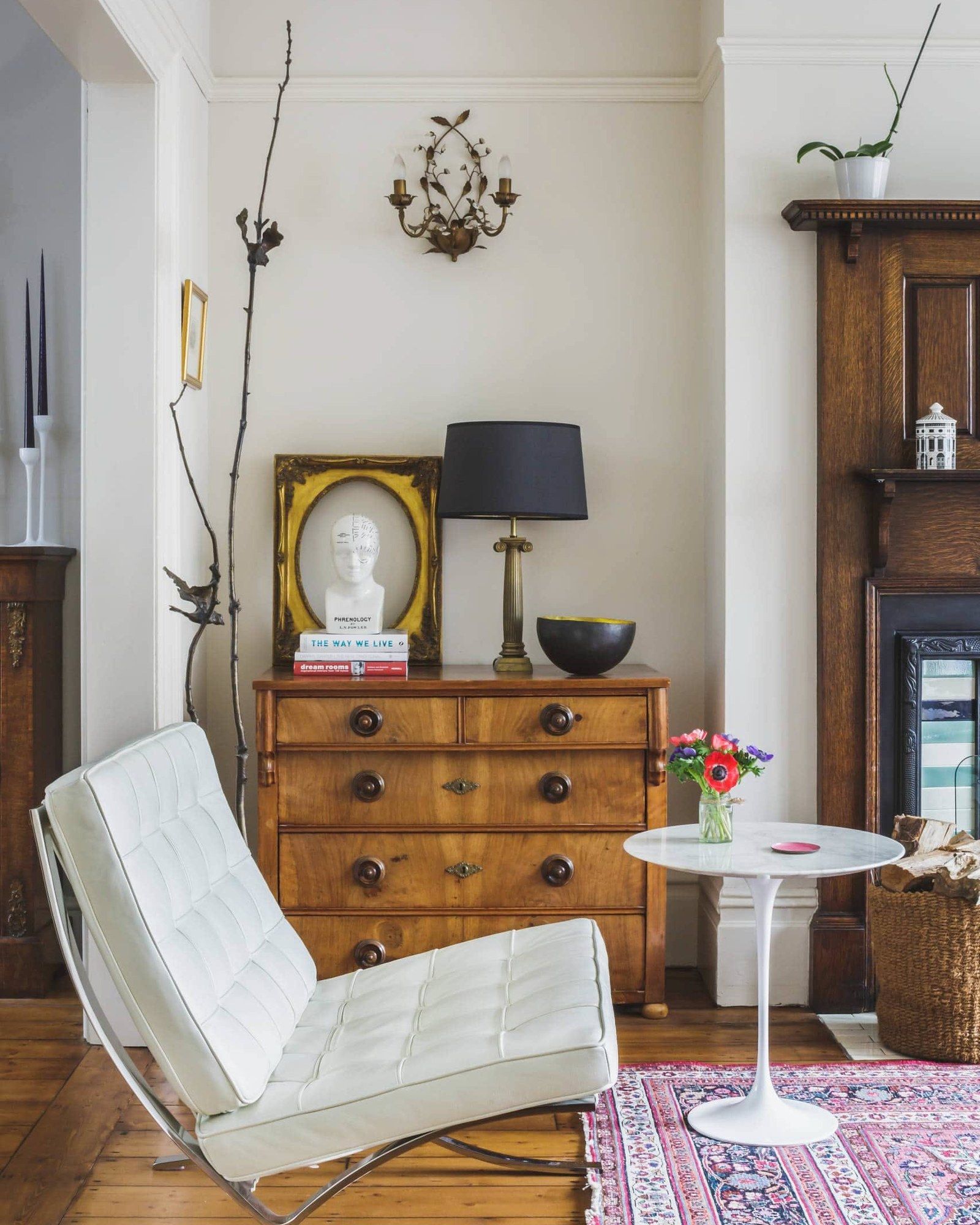
How To Mix Antique And New Furniture
How to mix antique and new furniture: one old anchor, a new soft layer, and a modern object that bridges the two.